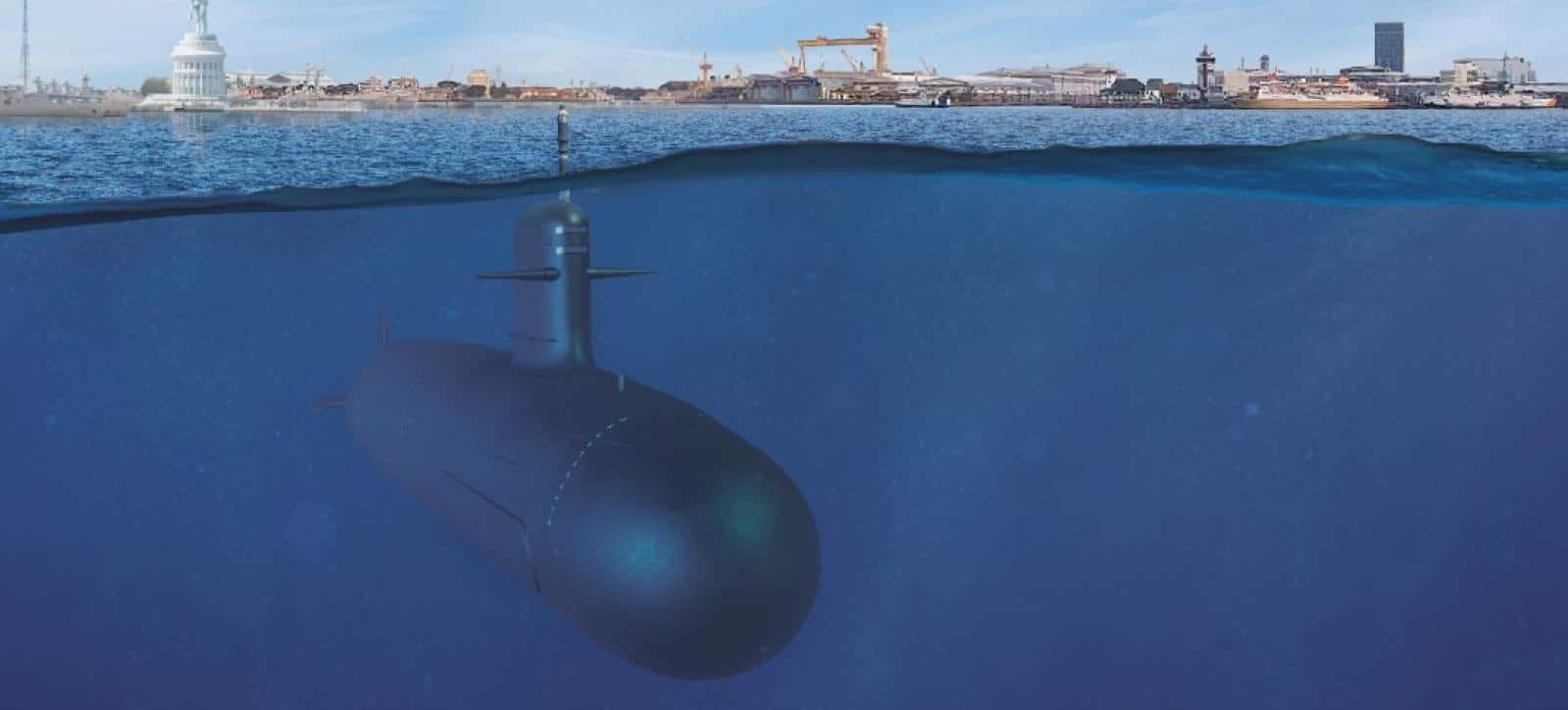
Indonesia chooses the DGK: Italy once again exports the future of submarines
What is DGK?
The DGK — Drass Galeazzi K, where the K designates conventional diesel-electric propulsion, the same NATO nomenclature that defines the legendary "silent killers" of the major manufacturers — is not your average midget. It's a category unto itself.
In numbers:
- 270 tons submerged
- 34 meters in length
- Crew: 9 submariners + up to 6 special forces operators
- Range: up to 4,000 nautical miles at 4 knots
- Armament: up to 4 heavy torpedoes
- Optional payloads: mines, UUVs, SDVs (including the DRASS DS8), mini-torpedoes, special operations equipment
This combination of dimensions, weapons capacity, and operational range is unique among compact submarines on the global market. Conventional midgets—vessels of 100 to 150 tons—lack a full sensor suite, advanced command and control capabilities, and sustained endurance. Large submarines, with displacements exceeding 1,000–1,550 tons, are incapable of operating in shallow waters: their movements are severely restricted, their exposure to detection increases critically, and if discovered, they have no realistic chance of evasion.
Sitio de la Comunidad Submarinista Latinoamericana.

www.elsnorkel.com
Signed contract for 2 unit DGK DRASS