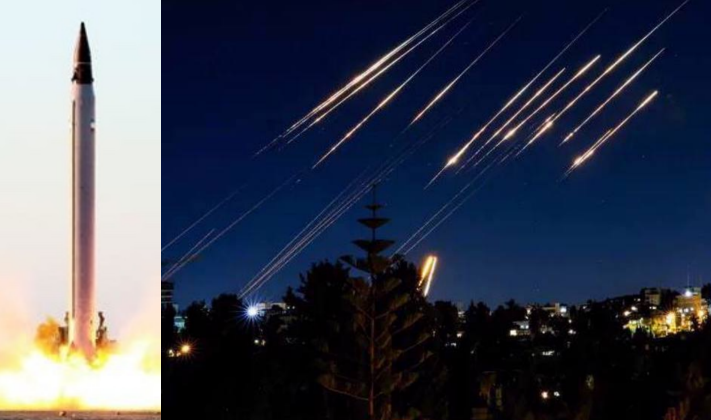
What stance will NATO take if Turkey and Israel clash?
In times of generalized unrest and insecurity for leaderships and societies where all traditional balances are being questioned, being under review, Turkey could not be an exception. In fact, it is a country that is trying to escape from the disproportionately greater insecurity compared to Greece, by “fleeing forward”. Faithful to the doctrine “the best defense is offense”, it seeks to create a favorable environment and the next day to find itself among the winners. And in terms of influence and mainly having expanded its borders.
The main current issue in Ankara is the Israeli strike on Doha, Qatar, aimed at further beheading the Hamas leadership in revenge for what happened on October 7, 2023, even though negotiations are underway for the release of more Israeli hostages. Turkey's frequent hosting of the organization's leaders and its support as an organization inspired by the Muslim Brotherhood have raised legitimate concerns that Turkey may also be targeted by Israel.
According to reports and publications in the Turkish media, Turkey has decided that it is not particularly worried, as it is a different size. But Iran was too. However, the Turks consider the probability low, with the main argument being its status as a NATO member state and the possibility of invoking Article 5! Although Ankara consistently diverges from allied policies (e.g. Ukraine where it also maintains close relations with Russia), it chooses to consider that the Alliance will come to its aid.
The Turks also fear an attempt at internal destabilization by the Israelis, while they consider themselves very strong militarily. In other words, they believe they are erecting a wall of deterrence against potential Israeli plans.
However, regarding the prospect of NATO involvement, the situation is beginning to resemble the corresponding problem in Greece! Israel is not a member state and Turkey is actively moving to sever any relationship between the Jewish state and the Atlantic Alliance. The Turkish reasoning, however, seems extremely problematic. It seems very optimistic for the Turks to believe that there will be no member states that will move to block any thought of Turkey's assistance in the event of military involvement with Israel. Besides, this should concern a threat to its territorial sovereignty, not an external one...
Greece is aware that, apart from NATO's behind-the-scenes mobilization to prevent an outbreak – or if it does occur to extinguish the “fire” – it cannot realistically expect NATO troops to intervene, because Turkey is an ally. Thus, the Turkish veto only invalidates the formal part regarding the treatment of the Jewish state as an ally. In the event of a Turkey-Israeli conflict, it is very risky to assume that Turkey will enjoy.
The revisionist nature of the Turkish strategy has begun to backfire on its initiators, with the result that dilemmas are piling up. Action brings reaction and Turkey could not be an exception to the rule. In the writer's opinion, Turkish revisionism has its roots in Turkish insecurity and the classic persecution syndrome that accompanies it. Common elements could also be distinguished in the psyche of Turks and Israelis, at least in the aspect that concerns historical insecurity, as a factor that determines the perception of both for their national security.
The revisionist nature of the Turkish strategy has begun to backfire on its initiators, with the result that dilemmas are piling up. Action brings reaction and Turkey could not be an exception to the rule. In the writer's opinion, Turkish revisionism has its roots in Turkish insecurity and the classic persecution syndrome that accompanies it. Common elements could also be distinguished in the psyche of Turks and Israelis, at least in the aspect that concerns historical insecurity, as a factor that determines the perception of both for their national security.
Of course, Ankara does not recognize the Kurds' right to create their own state, as it does for the Palestinians. For decades, it has chosen the violent Turkification of ethnic groups that historically inhabit present-day Turkish territory. It is doing the same in Thrace with the Pomaks and the Roma. Always within the framework of its revisionist planning. The Kurds, however, have historically posed a threat to the territorial integrity of present-day Turkey. They may reside in four different countries (Turkey, Syria, Iraq and Iran), but in Turkey they are by far the most populous component. Consequently, wherever a Kurdish state emerges, it will mobilize centrifugal tendencies.
This created a common interest among the countries hosting Kurdish communities. The game was known for a long time and all four of these countries were involved in it. However, when other issues arose between the countries hosting Kurdish communities, they were used as a tool to destabilize the opponent! In the current transitional phase of the international system, however, this game has changed. Iraq and Syria have gradually been destabilized, while Iran has also been targeted. And from this alone, Turkey has every reason to fear that its turn is coming.
However, the problem for Turkey is that it realizes that all these developments are a chain of events that are interconnected and that they blame exclusively on Israel! It is no exaggeration to claim that the Turks today consider the greatest threat to their national security to be the Jewish state.
Now, Turkey has gained direct contact with its main enemy on the Syrian front. The absence of self-criticism conceals, or so they think in Ankara, the fact that the conditions that led to this outcome were created by the Turks with their choices! By moving aggressively on the Syrian front, they did not correctly calculate how much Israel's security environment would be affected. Turkey was the orchestrator of both the overthrow of Assad in Syria and the establishment of the hardline Islamist Jolani (now Saraa).
However, the Israelis, who had been observing developments very closely from the beginning and having built very close relations with the Kurdish element of the region for decades, did not intend to let the new leadership develop into a regime, and even one dependent on Ankara. The significant difference is that the Jewish state does not let situations develop when it considers them potentially harmful to its national security, but actively moves to prevent any risk from developing into a fait accompli.
In short, it adopts a diametrically opposed stance to Greece. And it does not focus exclusively on its neighborhood, but attacks harshly against anyone who supports Turkey and is supported by it. The blow to Doha, Qatar, is also part of this context. Therefore, it is no surprise that it caused obvious concern among the Turks, who also offer asylum to Hamas. Although Turkey is obviously a different size, its arrogant assessments of strong deterrence, with little expectation of support from NATO, cannot disguise the generalized insecurity…