
Latest Thread
- Paraguay 🇵🇾 Navy
- Germany German arms export licences for Israel surge with focus on sub project
- France Wildfire news and updates
- Casual Discussion Did You Know?
- Bangladesh Bangladesh building first research vessel to explore the Bay
You are using an out of date browser. It may not display this or other websites correctly.
You should upgrade or use an alternative browser.
You should upgrade or use an alternative browser.
Mali|News & Discussions
- Thread starter Saithan
- Start date


Its a Turareg Tune I think. Turaegs and the Malians are really different from each other. Mali truly a tribal society has been for centuries hence why they are constantly clashing. Dogons are also clashing with the Main government.
Things are going badly for Mali's coup government. JNIM militants entered country's sole international airport in capital Bamako, set fire to the presidential 737.
Bamako airport is also home to Mali's TB2 and Su-25 contingent. Wagner militants were based in the airport in the past. One TB2 was seen taking off from the airport.
There are also unsubstantiated rumors of Sadat mercenaries being hit, Wagner being hit and TB2s being struck on the ground, with no proof to back them up.
Bamako airport is also home to Mali's TB2 and Su-25 contingent. Wagner militants were based in the airport in the past. One TB2 was seen taking off from the airport.
There are also unsubstantiated rumors of Sadat mercenaries being hit, Wagner being hit and TB2s being struck on the ground, with no proof to back them up.

Important development.
Instructor team working for Canik Academy provided training for Malian Armed Forces personnel in Bamako.
When we look at the Canik Academy staff we see that a big part of the instructors working there were previously part of the Turkish Navy's SOF (SAT). One of the instructors we see in the video is the director of the Canik Academy which is Ismail Dut. Ismail Dut is the 2015-2021 SAT Chief Instructor. He was active in SAT till 2021 and retired.
Instructor team working for Canik Academy provided training for Malian Armed Forces personnel in Bamako.
When we look at the Canik Academy staff we see that a big part of the instructors working there were previously part of the Turkish Navy's SOF (SAT). One of the instructors we see in the video is the director of the Canik Academy which is Ismail Dut. Ismail Dut is the 2015-2021 SAT Chief Instructor. He was active in SAT till 2021 and retired.
Important development.
Instructor team working for Canik Academy provided training for Malian Armed Forces personnel in Bamako.
When we look at the Canik Academy staff we see that a big part of the instructors working there were previously part of the Turkish Navy's SOF (SAT). One of the instructors we see in the video is the director of the Canik Academy which is Ismail Dut. Ismail Dut is the 2015-2021 SAT Chief Instructor. He was active in SAT till 2021 and retired.
After Wagner getting its as kicked numerous time in Mali by both Tuareg and Islamist militias. Malians no longer see them as reliable.
Will see what training the Turks will offer. Because Mali's problems all stem from the top to the bottom hence why they are not a effective fighting force.
Last edited:
Indeed, and by per the tweet, this is just training for the presidential guard so nothing changes. This I believe will be too little too late.Because Malis problems all stem from the top to the bottom hence why they are not a effective fighting force.
A private company can't give the kind of training you are thinking about. Somali model with the Gorgor commandos is confirmed to be working. If you want an actual unified fighting force, an army, get in touch with the Turkish army, not Canik.
This is not the kind of training that will turn the tides.After Wagner getting its as kicked nunerous time in Mali by both Tuareg and Islamist militias. Malians no longer see them as reliable.
Will see what training the Turks will offer. Because Malis problems all stem from the top to the bottom hence why they are not a effective fighting force.
This can greatly improve the individual skills of these soldiers and make them work better as a team in certain scenarios by implementing the tactics and techniques, including reworking SOPs on the basis of the newly transferred information and obtained additional skills.
Even if you have the best teams specialized in small unit tactics if they are not utilized as they should and they lack the needed support, they can't do anything meaningful.
War requires a coordinated effort, utilizing the different components of the forces you have at your disposal the best way possible. People thought that TB-2s will also be enough. Well, the reality is far from these assumptions...
This is not the kind of training that will turn the tides.
This can greatly improve the individual skills of these soldiers and make them work better as a team in certain scenarios by implementing the tactics and techniques, including reworking SOPs on the basis of the newly transferred information and obtained additional skills.
Even if you have the best teams specialized in small unit tactics if they are not utilized as they should and they lack the needed support, they can't do anything meaningful.
War requires a coordinated effort, utilizing the different components of the forces you have at your disposal the best way possible. People thought that TB-2s will also be enough. Well, the reality is far from these assumptions...
As much as conventional training is important but the Tuaregs and the Islamist terror groups all operate with unconventional means which really makes it hard for a conventional army to take care.
Not to mention vastness of Mali along with numerous tribal groups.
Sending in modern armies will not cut it. France won the conventional war but it got bogged down in a insurgency which made them quit. They constantly had to contend with the incompetence of the Malians. Malians are even fighting among themselves.
Its a true shitshow. I feel like proper training and the use of technicals and mraps are much more useful than tanks and infantry soldiers.
Best example of how Chad beat Libya as they used Toyotas which were much more suitable than tanks in wiping out the Libyan army.
More than 167 Malian soldiers are receiving military training in Morocco at the 2nd Parachute Infantry Brigade of the Royal Moroccan Armed Forces, as part of a program that includes parachute jumping and airdrops, with 500 additional soldiers joining soon.
The Royal Moroccan Armed Forces have extensive experience in military training and combating security threats, thanks to their frequent participation in international peacekeeping operations, global exercises, and cooperation with major militaries.
The Royal Moroccan Armed Forces have extensive experience in military training and combating security threats, thanks to their frequent participation in international peacekeeping operations, global exercises, and cooperation with major militaries.
T
TR_123456
Guest
You know Mali has only 10k soldiers at most?More than 167 Malian soldiers are receiving military training in Morocco at the 2nd Parachute Infantry Brigade of the Royal Moroccan Armed Forces, as part of a program that includes parachute jumping and airdrops, with 500 additional soldiers joining soon.
The Royal Moroccan Armed Forces have extensive experience in military training and combating security threats, thanks to their frequent participation in international peacekeeping operations, global exercises, and cooperation with major militaries.
No real weapons,no airforce no nothing,it cant even deal with terrorists.
That seasoned well..You know Mali has only 10k soldiers at most?
No real weapons,no airforce no nothing,it cant even deal with terrorists.
Yes, the Sahel states in general are weak, but remember, we are basically talking about new states. The population of AES is around 70 million, with a lot of minerals and resources. If they get the support they need in a region full of turmoil, then they can stand on their own feet.
In the case of Mali, they are getting Turkish-Russian-Chinese weapons.


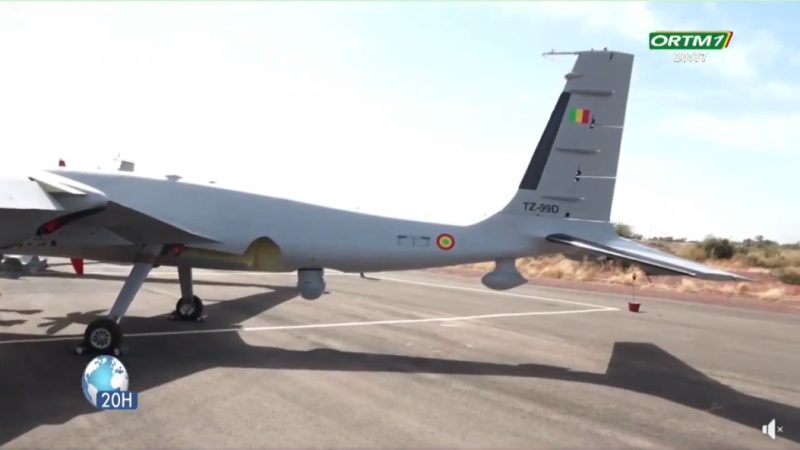
On the morning of April 1, 2025, the Mali Air Force encountered a major setback when one of its recently acquired Bayraktar Akinci drones was lost near Tinzaouaten, a remote town near the Algerian border in northern Mali.
The Algerian military claimed responsibility for shooting down the high-altitude, long-endurance unmanned combat aerial vehicle (UCAV).
The Ministry of National Defense announced in an official statement published on its Facebook page and website, that it had shot down a Malian drone over Tinzawatin after entering Algerian airspace over a distance of two kilometers.
This is the first time the Algerian Air Force has shot down a foreign drone, and it appears to be a clear message to the various countries making use of drones near its border. The detection and interception of the Malian drone was carried out by a unit belonging to the CFDAT.
Photographs of the wreckage, which included intact ROKETSAN MAM-T smart munitions and TEBER-81/82 laser/GPS guidance kits, circulated widely on social media.

ROKETSAN MAM-T smart munitions and TEBER-81/82 laser/GPS guidance kits near the downed drone wreckage.
Mali deployed it’s fleet of lethal drones against Tuareg rebel groups including the CSP-DPA.
The CSP-DPA, is a coalition primarily composed of Tuareg groups advocating for the independence of northern Mali—referred to as Azawad.
The loss of this advanced drone marks a critical moment in Mali’s conflict, raising questions about its military strategy, the effectiveness of its drone fleet, and the broader implications for security in the Sahel region.

The Akinci crash site.
The Bayraktar Akinci, developed by Turkey’s Baykar company, represents a leap forward in unmanned aerial technology. Unlike its predecessor, the widely used Bayraktar TB2, the Akinci is a high-altitude, long-endurance (HALE) drone designed for complex missions requiring extended range, heavy payloads, and advanced combat capabilities.
Powered by twin turboprop engines, the Akinci boasts a maximum takeoff weight (MTOW) exceeding 6 tonnes and can remain airborne for over 24 hours. This endurance, combined with its ability to operate at altitudes above 40,000 feet, makes it a formidable tool for surveillance, reconnaissance, and precision strikes.
The drone’s armament is equally impressive. It can carry a variety of munitions, including the ROKETSAN MAM-T (Mini Akıllı Mühimmat-T), a smart micro-munition designed for precision strikes against ground targets, and the TEBER-81/82 guidance kits, which convert conventional bombs into laser- and GPS-guided weapons.
These systems allow the Akinci to engage targets with pinpoint accuracy, a critical advantage in Mali’s sprawling northern deserts, where insurgents often operate in small, mobile groups. Additionally, the Akinci is equipped with advanced sensors, including synthetic aperture radar (SAR) and electro-optical/infrared (EO/IR) systems, enabling it to detect and track targets in diverse conditions, day or night.
Mali’s acquisition of at least two Akinci drones in December 2024 was a milestone in its military modernization efforts. The country had already integrated 17 Bayraktar TB2 drones into its arsenal since December 2022, making it one of Africa’s leading operators of Turkish-made UCAVs.
The TB2s proved their worth in November 2023 during the recapture of Kidal, a rebel stronghold in northern Mali. In that operation, drone strikes disrupted CSP-DPA defenses, forcing fighters to abandon their positions without engaging in sustained ground combat. The Akinci was expected to build on this success, offering greater range and firepower to tackle the persistent insurgent threat in Mali’s vast and sparsely populated north.
The downing of the Akinci near Tinzaouaten is more than a tactical loss—it’s a strategic blow to Mali’s counter-insurgency campaign. Tinzaouaten, located in the Kidal Region near the Algerian frontier, is a hotspot for rebel activity, smuggling, and cross-border militancy. The area’s rugged terrain and proximity to Algeria provide insurgents with natural cover and supply routes, making it a challenging environment for military operations.
The Malian Armed Forces (Fama) have increasingly relied on drones to compensate for their limited manpower and resources. Mali’s northern territory spans over 800,000 square kilometers, much of it desert or semi-arid land, where traditional ground operations are logistically taxing and often ineffective against agile insurgent groups.
The Akinci, with its ability to loiter over target areas for extended periods and deliver precise strikes, was seen as a force multiplier, enabling Mali to monitor and neutralize threats without risking large troop deployments. Its loss so soon after entering service—less than four months after delivery—exposes vulnerabilities in this approach and may force a reevaluation of Mali’s reliance on unmanned systems.
The incident also raises questions about how the drone was brought down. While the Malian government has not released an official statement, the Algerian claims and the wreckage photos suggest it was destroyed by ground fire, possibly anti-aircraft weapons or a man-portable air-defense system (MANPADS).
Such a development could alter the dynamics of the conflict, as Mali’s remaining drones—both Akinci and TB2 models—may now face heightened risks during operations.
The CSP-DPA, formed as a coalition of Tuareg and other northern ethnic groups, has been fighting for autonomy or independence since the early 2010s, with the conflict intensifying after the 2012 rebellion that briefly established Azawad as a de facto state. Although French-led interventions and Malian military operations have reclaimed much of the territory, the insurgents have persisted, leveraging their knowledge of the terrain and support from local communities.
The FLA, a newer player in the conflict, has aligned with the CSP-DPA to challenge Mali’s central government and its allies.
This escalation comes at a time when Mali’s security situation is already precarious. The withdrawal of French forces in 2022 and the end of the United Nations MINUSMA mission in 2023 left a vacuum that the Malian government has struggled to fill. The Fama, supported by the Russian Wagner Group, has prioritized northern operations, but the loss of the Akinci could strain this partnership and expose coordination challenges between Malian forces and their mercenaries.
Mali’s experience with the Akinci reflects a broader trend in modern warfare, where drones have become indispensable tools for nations facing asymmetric threats. Across Africa, countries like Burkina Faso, Ethiopia, Somalia, and Libya have adopted the Akinci, while the TB2 has seen action in conflicts from the Horn of Africa to the Maghreb.
Turkish drones gained international attention during the 2020 Nagorno-Karabakh war, where they decimated Armenian defenses, and in Libya, where they shifted the balance in favor of the Government of National Accord. Their affordability—compared to manned aircraft—and versatility have made them a game-changer for militaries with limited budgets.
For Mali, drones have been particularly valuable in combating the diffuse threats of insurgency and terrorism. The Sahel region, encompassing Mali, Niger, and Burkina Faso, has seen a surge in violence from jihadist groups like Jama’at Nasr al-Islam wal Muslimin (JNIM) and the Islamic State in the Greater Sahara (ISGS), alongside separatist movements like the CSP-DPA. Drones offer a way to monitor vast areas, strike targets with minimal collateral damage, and reduce the risks to soldiers in hostile environments.
However, the Tinzaouaten incident underscores the limitations of drone-centric strategies. While unmanned systems provide tactical advantages, they are not invincible. Rebel groups, often underestimated, can adapt by acquiring countermeasures or exploiting operational weaknesses, such as predictable flight patterns or vulnerabilities to ground fire. The loss of the Akinci may prompt Mali and other drone-reliant nations to invest in electronic warfare capabilities, decoys, or improved intelligence to protect their fleets.
The downing of the Akinci has ramifications beyond Mali’s borders, given the interconnected nature of security in the Sahel. Neighboring countries like Niger and Burkina Faso, also grappling with insurgencies, rely on Mali to contain threats that could spill across borders. A weakened Malian military could embolden rebel and jihadist groups, destabilizing the region further. Algeria, which shares a long border with Mali, has a vested interest in preventing escalation near Tinzaouaten, as it could disrupt its own security efforts against smuggling and militancy.
The loss of the Bayraktar Akinci is a wake-up call for Mali’s military leadership. While the government has yet to comment officially, the incident demands a reassessment of its northern strategy. Replacing the drone will be costly, and Mali’s limited budget—already stretched by economic sanctions from ECOWAS in 2022 and ongoing development needs—may delay acquisitions. In the interim, the Fama could shift focus to its remaining TB2s, though their lighter payloads and shorter range limit their effectiveness compared to the Akinci.
Longer term, Mali must address the root causes of the insurgency, including governance failures, ethnic tensions, and economic marginalization in the north. Drones alone cannot resolve these issues, and over-reliance on military solutions risks alienating communities that might otherwise support the state. The Tinzaouaten incident could galvanize efforts toward a more balanced approach, combining technology with diplomacy and development.
 www.military.africa
The Algerian military claimed responsibility for shooting down the high-altitude, long-endurance unmanned combat aerial vehicle (UCAV).
The Ministry of National Defense announced in an official statement published on its Facebook page and website, that it had shot down a Malian drone over Tinzawatin after entering Algerian airspace over a distance of two kilometers.
This is the first time the Algerian Air Force has shot down a foreign drone, and it appears to be a clear message to the various countries making use of drones near its border. The detection and interception of the Malian drone was carried out by a unit belonging to the CFDAT.
Photographs of the wreckage, which included intact ROKETSAN MAM-T smart munitions and TEBER-81/82 laser/GPS guidance kits, circulated widely on social media.
ROKETSAN MAM-T smart munitions and TEBER-81/82 laser/GPS guidance kits near the downed drone wreckage.
Mali deployed it’s fleet of lethal drones against Tuareg rebel groups including the CSP-DPA.
The CSP-DPA, is a coalition primarily composed of Tuareg groups advocating for the independence of northern Mali—referred to as Azawad.
The loss of this advanced drone marks a critical moment in Mali’s conflict, raising questions about its military strategy, the effectiveness of its drone fleet, and the broader implications for security in the Sahel region.
The Akinci crash site.
The Bayraktar Akinci
The Bayraktar Akinci, developed by Turkey’s Baykar company, represents a leap forward in unmanned aerial technology. Unlike its predecessor, the widely used Bayraktar TB2, the Akinci is a high-altitude, long-endurance (HALE) drone designed for complex missions requiring extended range, heavy payloads, and advanced combat capabilities.
Powered by twin turboprop engines, the Akinci boasts a maximum takeoff weight (MTOW) exceeding 6 tonnes and can remain airborne for over 24 hours. This endurance, combined with its ability to operate at altitudes above 40,000 feet, makes it a formidable tool for surveillance, reconnaissance, and precision strikes.
The drone’s armament is equally impressive. It can carry a variety of munitions, including the ROKETSAN MAM-T (Mini Akıllı Mühimmat-T), a smart micro-munition designed for precision strikes against ground targets, and the TEBER-81/82 guidance kits, which convert conventional bombs into laser- and GPS-guided weapons.
These systems allow the Akinci to engage targets with pinpoint accuracy, a critical advantage in Mali’s sprawling northern deserts, where insurgents often operate in small, mobile groups. Additionally, the Akinci is equipped with advanced sensors, including synthetic aperture radar (SAR) and electro-optical/infrared (EO/IR) systems, enabling it to detect and track targets in diverse conditions, day or night.
Mali’s acquisition of at least two Akinci drones in December 2024 was a milestone in its military modernization efforts. The country had already integrated 17 Bayraktar TB2 drones into its arsenal since December 2022, making it one of Africa’s leading operators of Turkish-made UCAVs.
The TB2s proved their worth in November 2023 during the recapture of Kidal, a rebel stronghold in northern Mali. In that operation, drone strikes disrupted CSP-DPA defenses, forcing fighters to abandon their positions without engaging in sustained ground combat. The Akinci was expected to build on this success, offering greater range and firepower to tackle the persistent insurgent threat in Mali’s vast and sparsely populated north.
The downing of the Akinci near Tinzaouaten is more than a tactical loss—it’s a strategic blow to Mali’s counter-insurgency campaign. Tinzaouaten, located in the Kidal Region near the Algerian frontier, is a hotspot for rebel activity, smuggling, and cross-border militancy. The area’s rugged terrain and proximity to Algeria provide insurgents with natural cover and supply routes, making it a challenging environment for military operations.
The Malian Armed Forces (Fama) have increasingly relied on drones to compensate for their limited manpower and resources. Mali’s northern territory spans over 800,000 square kilometers, much of it desert or semi-arid land, where traditional ground operations are logistically taxing and often ineffective against agile insurgent groups.
The Akinci, with its ability to loiter over target areas for extended periods and deliver precise strikes, was seen as a force multiplier, enabling Mali to monitor and neutralize threats without risking large troop deployments. Its loss so soon after entering service—less than four months after delivery—exposes vulnerabilities in this approach and may force a reevaluation of Mali’s reliance on unmanned systems.
The incident also raises questions about how the drone was brought down. While the Malian government has not released an official statement, the Algerian claims and the wreckage photos suggest it was destroyed by ground fire, possibly anti-aircraft weapons or a man-portable air-defense system (MANPADS).
Such a development could alter the dynamics of the conflict, as Mali’s remaining drones—both Akinci and TB2 models—may now face heightened risks during operations.
The CSP-DPA, formed as a coalition of Tuareg and other northern ethnic groups, has been fighting for autonomy or independence since the early 2010s, with the conflict intensifying after the 2012 rebellion that briefly established Azawad as a de facto state. Although French-led interventions and Malian military operations have reclaimed much of the territory, the insurgents have persisted, leveraging their knowledge of the terrain and support from local communities.
The FLA, a newer player in the conflict, has aligned with the CSP-DPA to challenge Mali’s central government and its allies.
This escalation comes at a time when Mali’s security situation is already precarious. The withdrawal of French forces in 2022 and the end of the United Nations MINUSMA mission in 2023 left a vacuum that the Malian government has struggled to fill. The Fama, supported by the Russian Wagner Group, has prioritized northern operations, but the loss of the Akinci could strain this partnership and expose coordination challenges between Malian forces and their mercenaries.
Drones in Modern Warfare: A Double-Edged Sword
Mali’s experience with the Akinci reflects a broader trend in modern warfare, where drones have become indispensable tools for nations facing asymmetric threats. Across Africa, countries like Burkina Faso, Ethiopia, Somalia, and Libya have adopted the Akinci, while the TB2 has seen action in conflicts from the Horn of Africa to the Maghreb.
Turkish drones gained international attention during the 2020 Nagorno-Karabakh war, where they decimated Armenian defenses, and in Libya, where they shifted the balance in favor of the Government of National Accord. Their affordability—compared to manned aircraft—and versatility have made them a game-changer for militaries with limited budgets.
For Mali, drones have been particularly valuable in combating the diffuse threats of insurgency and terrorism. The Sahel region, encompassing Mali, Niger, and Burkina Faso, has seen a surge in violence from jihadist groups like Jama’at Nasr al-Islam wal Muslimin (JNIM) and the Islamic State in the Greater Sahara (ISGS), alongside separatist movements like the CSP-DPA. Drones offer a way to monitor vast areas, strike targets with minimal collateral damage, and reduce the risks to soldiers in hostile environments.
However, the Tinzaouaten incident underscores the limitations of drone-centric strategies. While unmanned systems provide tactical advantages, they are not invincible. Rebel groups, often underestimated, can adapt by acquiring countermeasures or exploiting operational weaknesses, such as predictable flight patterns or vulnerabilities to ground fire. The loss of the Akinci may prompt Mali and other drone-reliant nations to invest in electronic warfare capabilities, decoys, or improved intelligence to protect their fleets.
The downing of the Akinci has ramifications beyond Mali’s borders, given the interconnected nature of security in the Sahel. Neighboring countries like Niger and Burkina Faso, also grappling with insurgencies, rely on Mali to contain threats that could spill across borders. A weakened Malian military could embolden rebel and jihadist groups, destabilizing the region further. Algeria, which shares a long border with Mali, has a vested interest in preventing escalation near Tinzaouaten, as it could disrupt its own security efforts against smuggling and militancy.
The loss of the Bayraktar Akinci is a wake-up call for Mali’s military leadership. While the government has yet to comment officially, the incident demands a reassessment of its northern strategy. Replacing the drone will be costly, and Mali’s limited budget—already stretched by economic sanctions from ECOWAS in 2022 and ongoing development needs—may delay acquisitions. In the interim, the Fama could shift focus to its remaining TB2s, though their lighter payloads and shorter range limit their effectiveness compared to the Akinci.
Longer term, Mali must address the root causes of the insurgency, including governance failures, ethnic tensions, and economic marginalization in the north. Drones alone cannot resolve these issues, and over-reliance on military solutions risks alienating communities that might otherwise support the state. The Tinzaouaten incident could galvanize efforts toward a more balanced approach, combining technology with diplomacy and development.
Algeria shoot down Mali’s newly acquired Akinci Drone
On the morning of April 1, 2025, the Mali Air Force encountered a major setback when one of its recently acquired Bayraktar Akinci drones was lost near Tinzaouaten, a remote town near the Algerian …
www.military.africa
Bamako, Mali – An unprecedented battlefield partnership between a separatist movement and an al-Qaeda affiliate has transformed the conflict in northern Mali, shifting the military balance and deepening divisions over how, if at all, the war can end.
When the Azawad Liberation Front (FLA) and Jama’at Nusrat al-Islam wal-Muslimin (JNIM) launched a joint offensive on April 25, 2026, the conflict entered a phase unlike any before.
A war that had long pitted the Malian state against multiple armed groups gave way to a coordinated campaign stretching from Kidal and Anefis to Tilemsi, Gao and Sevare, posing the most serious challenge to the Malian army in years and to Russia’s Africa Corps, the Kremlin-backed force that replaced the Wagner Group in Mali.
Since then, the fighting has been marked by simultaneous assaults, ambushes, drone strikes and attacks on military convoys, with all sides claiming significant battlefield gains.
Bamako says it is working to restore state authority and dismantle what it calls a “terrorist alliance” between the FLA and JNIM.
The FLA says it remains committed to independence for Azawad, the name separatists use for northern Mali, while JNIM portrays the war as part of a campaign to “liberate” Mali and overthrow the government, which it accuses of relying on Russian forces.
More significant than the offensive itself, however, is the unprecedented military cooperation between a nationalist separatist movement and an al-Qaeda affiliate.
Their political ambitions remain fundamentally different, yet their cooperation has already reshaped the conflict and could have far-reaching implications for security across the Sahel.
The partnership emerged after the collapse of the 2015 Algiers Peace Agreement, which sought to end years of fighting between Bamako and northern armed groups through greater decentralisation and political representation, but whose implementation repeatedly faltered.
Successive military coups after 2020 reshaped Mali’s political leadership and security strategy. The Economic Community of West African States (ECOWAS) suspended Mali and imposed sanctions, while Russia deepened its military role by deploying the Wagner Group in late 2021.
After Russia folded the Wagner Group’s operations into the state-controlled Africa Corps, renewed fighting left neither the government nor northern armed groups able to impose a lasting settlement.
![Colonel Mohamed Issa, centre, one of the FLA's most prominent military commanders [Photo: Courtesy of the Azawad Liberation Front (FLA)]](/proxy.php?image=https%3A%2F%2Fwww.aljazeera.com%2Fwp-content%2Fuploads%2F2026%2F07%2FCOL-Mohamed-Issa-1785041292.jpeg%3Fw%3D770%26resize%3D770%252C433%26quality%3D80&hash=ef35fa07d6553347fe3acc5d2ecce69a "Colonel Mohamed Issa, centre, one of the FLA's most prominent military commanders [Photo: Courtesy of the Azawad Liberation Front (FLA)]") Colonel Mohamed Issa, centre, one of the FLA’s most prominent military commanders [Photo: Courtesy of the Azawad Liberation Front (FLA)]
Colonel Mohamed Issa, centre, one of the FLA’s most prominent military commanders [Photo: Courtesy of the Azawad Liberation Front (FLA)]
It presents itself as a secular nationalist movement seeking independence for Azawad, while JNIM seeks to overthrow governments it considers illegitimate and establish governance based on its interpretation of Islamic law.
Yet senior officials from both groups told Al Jazeera those ideological differences have been set aside to confront a common enemy.
Colonel Mohamed Issa, a senior FLA officer, said the movement remained committed to an independent Azawad, arguing that previous peace agreements repeatedly collapsed because successive governments in Bamako failed to honour them.
Negotiations, he said, would only be acceptable if they recognised Azawad’s right to separate.
Issa rejected suggestions of an ideological alliance, describing the relationship as a battlefield arrangement against a common enemy.
He said the JNIM-affiliated fighters operating alongside the FLA were exclusively Azawadis rather than members of the group’s wider regional network, arguing they were motivated primarily by defending their communities against the Malian army and what he described as Russian “mercenaries”.
Suleiman, a senior JNIM field commander who requested that only his first name be used for security reasons, described the relationship in broader terms.
He said the group approved operational coordination with the FLA after internal consultations because fighters on both sides largely came from “one people” caught up in the same conflict and because their liberation goals had become “relatively unified”.
He also claimed the FLA had accepted Islamic legal arbitration by local religious scholars, one of JNIM’s core objectives, a point the FLA itself did not raise. Bamako, meanwhile, has described the relationship as a “JNIM/FLA terrorist alliance” that threatens Mali’s sovereignty.
The differing accounts illustrate both the strength and the fragility of the arrangement. For now, shared battlefield interests appear to outweigh ideological differences. Whether that remains true as the conflict evolves is far less certain.
FLA officials say working alongside JNIM has enabled both groups to divide responsibilities and pool expertise in attacks on military bases and supply convoys.
![A destroyed vehicle at the site of recent fighting in northern Mali [Photo: Courtesy of the Azawad Liberation Front (FLA)]](/proxy.php?image=https%3A%2F%2Fwww.aljazeera.com%2Fwp-content%2Fuploads%2F2026%2F07%2FMali-army-3-1785041272.jpeg%3Fw%3D770%26resize%3D770%252C578%26quality%3D80&hash=d4f5af9c62e275e6ffedf440e94f1559 "A destroyed vehicle at the site of recent fighting in northern Mali [Photo: Courtesy of the Azawad Liberation Front (FLA)]") A destroyed vehicle at the site of recent fighting in northern Mali [Photo: Courtesy of the Azawad Liberation Front (FLA)]
A destroyed vehicle at the site of recent fighting in northern Mali [Photo: Courtesy of the Azawad Liberation Front (FLA)]
Bamako disputes casualty figures released by the armed groups and insists its forces retain the initiative. Even so, the conflict has become markedly more sophisticated, with simultaneous attacks across distant locations, engagements lasting several days and ambushes targeting reinforcements before they reach the front lines.
Drones have assumed an increasingly prominent role, serving not only as reconnaissance platforms but increasingly as strike weapons against vehicles and military positions. Malian forces, backed by Russia’s Africa Corps, continue to rely heavily on air power, yet months of sustained fighting suggest neither side has secured a decisive advantage.
JNIM sources describe a funding model built on regional commercial networks, organised zakat collections and resources accumulated over years, including proceeds linked to earlier al-Qaeda kidnapping-for-ransom operations.
The FLA says it relies primarily on donations organised by tribal leaders, traders and community associations.
Officials from both groups also acknowledged that individuals linked to the movements participate in illicit economies, including trafficking across the Sahara, although the extent to which those activities finance the war remains difficult to verify.
Weapons have proved as important as funding. Arms have flowed across the Sahel since the collapse of Libya in 2011, providing armed groups with a steady source of equipment.
The latest fighting has opened another supply channel: weapons and military vehicles captured from Malian forces now form an increasingly important part of both groups’ arsenals.
The Malian army retains a clear advantage in air power, backed by Russia’s Africa Corps. Yet the FLA and JNIM continue to mount coordinated operations across much of northern Mali.
![An armed man carries a weapon in a desert area of northern Mali, where government forces and armed groups have been fighting for control of territory [Photo: Courtesy of the Azawad Liberation Front (FLA)]](/proxy.php?image=https%3A%2F%2Fwww.aljazeera.com%2Fwp-content%2Fuploads%2F2026%2F07%2FFLA2-1785041279.png%3Fw%3D770%26resize%3D770%252C1023%26quality%3D80&hash=5eb8749d58dad1eb00553f43c0754a9d "An armed man carries a weapon in a desert area of northern Mali, where government forces and armed groups have been fighting for control of territory [Photo: Courtesy of the Azawad Liberation Front (FLA)]") An armed man carries a weapon in a desert area of northern Mali, where government forces and armed groups have been fighting for control of territory [Photo: Courtesy of the Azawad Liberation Front (FLA)]
An armed man carries a weapon in a desert area of northern Mali, where government forces and armed groups have been fighting for control of territory [Photo: Courtesy of the Azawad Liberation Front (FLA)]
The military standoff reflects a wider political deadlock. Bamako remains committed to preserving Mali’s territorial integrity, the FLA insists on independence for Azawad and JNIM continues to seek the overthrow of the government.
None has shifted position since the latest fighting began, and nothing on the battlefield has yet forced any of them to do so.
Those competing objectives also cast doubt on how long the two groups can continue fighting together. Their partnership rests on a common enemy rather than a shared political vision, making its future uncertain.
What began as a confrontation between the state and separate armed movements has evolved into a conflict shaped by competing visions of sovereignty, separatism, rule by al-Qaeda-linked armed groups and the involvement of external powers.
Unless those competing ambitions – territorial unity, independence and regime change – are addressed alongside the fighting, a negotiated settlement is likely to remain elusive.
Whatever happens next, the partnership forged in April 2026 has already changed the course of the war in northern Mali. Whether it endures or fractures under the weight of its competing ambitions, it has created a new military and political reality whose consequences are likely to extend well beyond Mali’s borders.

 www.aljazeera.com
When the Azawad Liberation Front (FLA) and Jama’at Nusrat al-Islam wal-Muslimin (JNIM) launched a joint offensive on April 25, 2026, the conflict entered a phase unlike any before.
A war that had long pitted the Malian state against multiple armed groups gave way to a coordinated campaign stretching from Kidal and Anefis to Tilemsi, Gao and Sevare, posing the most serious challenge to the Malian army in years and to Russia’s Africa Corps, the Kremlin-backed force that replaced the Wagner Group in Mali.
Since then, the fighting has been marked by simultaneous assaults, ambushes, drone strikes and attacks on military convoys, with all sides claiming significant battlefield gains.
Bamako says it is working to restore state authority and dismantle what it calls a “terrorist alliance” between the FLA and JNIM.
The FLA says it remains committed to independence for Azawad, the name separatists use for northern Mali, while JNIM portrays the war as part of a campaign to “liberate” Mali and overthrow the government, which it accuses of relying on Russian forces.
More significant than the offensive itself, however, is the unprecedented military cooperation between a nationalist separatist movement and an al-Qaeda affiliate.
Their political ambitions remain fundamentally different, yet their cooperation has already reshaped the conflict and could have far-reaching implications for security across the Sahel.
The partnership emerged after the collapse of the 2015 Algiers Peace Agreement, which sought to end years of fighting between Bamako and northern armed groups through greater decentralisation and political representation, but whose implementation repeatedly faltered.
Successive military coups after 2020 reshaped Mali’s political leadership and security strategy. The Economic Community of West African States (ECOWAS) suspended Mali and imposed sanctions, while Russia deepened its military role by deploying the Wagner Group in late 2021.
After Russia folded the Wagner Group’s operations into the state-controlled Africa Corps, renewed fighting left neither the government nor northern armed groups able to impose a lasting settlement.
How the alliance took shape
On paper, cooperation between the FLA and JNIM appears unlikely. The FLA traces its roots to northern separatist movements that declared the independence of Azawad during the 2012 rebellion, a claim never recognised by the Malian state or the international community.
It presents itself as a secular nationalist movement seeking independence for Azawad, while JNIM seeks to overthrow governments it considers illegitimate and establish governance based on its interpretation of Islamic law.
Yet senior officials from both groups told Al Jazeera those ideological differences have been set aside to confront a common enemy.
Colonel Mohamed Issa, a senior FLA officer, said the movement remained committed to an independent Azawad, arguing that previous peace agreements repeatedly collapsed because successive governments in Bamako failed to honour them.
Negotiations, he said, would only be acceptable if they recognised Azawad’s right to separate.
Issa rejected suggestions of an ideological alliance, describing the relationship as a battlefield arrangement against a common enemy.
He said the JNIM-affiliated fighters operating alongside the FLA were exclusively Azawadis rather than members of the group’s wider regional network, arguing they were motivated primarily by defending their communities against the Malian army and what he described as Russian “mercenaries”.
Suleiman, a senior JNIM field commander who requested that only his first name be used for security reasons, described the relationship in broader terms.
He said the group approved operational coordination with the FLA after internal consultations because fighters on both sides largely came from “one people” caught up in the same conflict and because their liberation goals had become “relatively unified”.
He also claimed the FLA had accepted Islamic legal arbitration by local religious scholars, one of JNIM’s core objectives, a point the FLA itself did not raise. Bamako, meanwhile, has described the relationship as a “JNIM/FLA terrorist alliance” that threatens Mali’s sovereignty.
The differing accounts illustrate both the strength and the fragility of the arrangement. For now, shared battlefield interests appear to outweigh ideological differences. Whether that remains true as the conflict evolves is far less certain.
A shifting balance of power
The partnership has altered not only the battlefield but the way the war is fought.FLA officials say working alongside JNIM has enabled both groups to divide responsibilities and pool expertise in attacks on military bases and supply convoys.
Bamako disputes casualty figures released by the armed groups and insists its forces retain the initiative. Even so, the conflict has become markedly more sophisticated, with simultaneous attacks across distant locations, engagements lasting several days and ambushes targeting reinforcements before they reach the front lines.
Drones have assumed an increasingly prominent role, serving not only as reconnaissance platforms but increasingly as strike weapons against vehicles and military positions. Malian forces, backed by Russia’s Africa Corps, continue to rely heavily on air power, yet months of sustained fighting suggest neither side has secured a decisive advantage.
The war economy
Long-established financing and trafficking networks continue to sustain both sides.JNIM sources describe a funding model built on regional commercial networks, organised zakat collections and resources accumulated over years, including proceeds linked to earlier al-Qaeda kidnapping-for-ransom operations.
The FLA says it relies primarily on donations organised by tribal leaders, traders and community associations.
Officials from both groups also acknowledged that individuals linked to the movements participate in illicit economies, including trafficking across the Sahara, although the extent to which those activities finance the war remains difficult to verify.
Weapons have proved as important as funding. Arms have flowed across the Sahel since the collapse of Libya in 2011, providing armed groups with a steady source of equipment.
The latest fighting has opened another supply channel: weapons and military vehicles captured from Malian forces now form an increasingly important part of both groups’ arsenals.
Can either side win?
There is little to suggest the conflict is nearing an end.The Malian army retains a clear advantage in air power, backed by Russia’s Africa Corps. Yet the FLA and JNIM continue to mount coordinated operations across much of northern Mali.
The military standoff reflects a wider political deadlock. Bamako remains committed to preserving Mali’s territorial integrity, the FLA insists on independence for Azawad and JNIM continues to seek the overthrow of the government.
None has shifted position since the latest fighting began, and nothing on the battlefield has yet forced any of them to do so.
Those competing objectives also cast doubt on how long the two groups can continue fighting together. Their partnership rests on a common enemy rather than a shared political vision, making its future uncertain.
A war without an endgame
Three months into the latest offensive, northern Mali remains locked in a conflict with no obvious end in sight. The partnership between the FLA and JNIM has reshaped the military landscape, while Bamako continues to reject any outcome that could weaken Mali’s territorial integrity.What began as a confrontation between the state and separate armed movements has evolved into a conflict shaped by competing visions of sovereignty, separatism, rule by al-Qaeda-linked armed groups and the involvement of external powers.
Unless those competing ambitions – territorial unity, independence and regime change – are addressed alongside the fighting, a negotiated settlement is likely to remain elusive.
Whatever happens next, the partnership forged in April 2026 has already changed the course of the war in northern Mali. Whether it endures or fractures under the weight of its competing ambitions, it has created a new military and political reality whose consequences are likely to extend well beyond Mali’s borders.
Why Mali’s northern conflict has entered a dangerous new phase
A separatist–al-Qaeda alliance has shifted the balance of power in northern Mali and complicated efforts to end the war.


