
Chinese had already had YJ-20 on Type 055s; last month they tested it on a smaller Type 052D.
View attachment 82913
New 054B maybe have VLS capability also.

Latest Thread
Chinese had already had YJ-20 on Type 055s; last month they tested it on a smaller Type 052D.
View attachment 82913

Logically, if it is possible to accommodate ICBM range ballistic missiles in a submarine, it should be possible to fit a medium range anti ship ballistic missile like Tayfun Missile on a destroyer.What's the feasibility of putting the anti-ship variant of Tayfun on a destroyer? I know it would need a completely new design compared to TF-2000. But as far as I'm aware there is no examples of ship-launched BMs.
Is this because ships are more susceptible to being hit by submarines this it's not worth adding such weapons as they will be one big fat juicy target? Or are there genuine hurdles to adding BMs to a ship, other than just the size? Whilst we're on this topic, what would be the feasibility of adding the AShW variant of Tayfun to a submarine?
Really stupid questions, but I'm very curious.
@Anmdt
You are looking at the Chinese setup from an American centric viewpoint. They have 3 types of VLS in service. Older Soviet revolver style, Mk-41 adjacent one and the new universal one. The one we could call an Mk-41 equivalent was placed on Type 054 frigates. Older Type 052Cs all use the Soviet style VLS for S300. But all their modern destroyers, that is the Type 052D and the Type 055 come with the new much larger "universal" VLS, that also come in two sizes. But the base length universal VLS is larger and taller than the strike length Mk-41. Strike Length new Chinese VLS as I understand are placed on all new destroyers, at least 2x8 form. Those are not YJ-20 specific, their other modern ASM, the YJ-18 is also very long.Logically, if it is possible to accommodate ICBM range ballistic missiles in a submarine, it should be possible to fit a medium range anti ship ballistic missile like Tayfun Missile on a destroyer.
As per @Sanchez ’s post, Chinese had originally fitted medium range YJ20 AShBMs to their 15units of 13000ton type055 mega destroyers. But recently they added them to their 35 units of 7700ton 052D destroyers too.
YJ 20 missiles’s has a diameter of less then 850mm, and a length of under 9metres. So it needs a special VLS to accommodate this size.
Our MIDLAS strike size is 1.2 to 1.4 metre per cell width and 8m in length.
Tayfun block-3 has probably a diameter of 610mm like the block-1, and an approximate length of 6.5m to 8m. A special cell configuration should allow fitting this missile in to our destroyers.


Roketsan hasn't had much oppurtunity to work on a common cell size for future application, neither did The TN i presume. We went ahead with Mk41 dimensions for sake of the commonality for whatever we have or don't have.What's the feasibility of putting the anti-ship variant of Tayfun on a destroyer? I know it would need a completely new design compared to TF-2000. But as far as I'm aware there is no examples of ship-launched BMs.
Is this because ships are more susceptible to being hit by submarines this it's not worth adding such weapons as they will be one big fat juicy target? Or are there genuine hurdles to adding BMs to a ship, other than just the size? Whilst we're on this topic, what would be the feasibility of adding the AShW variant of Tayfun to a submarine?
Really stupid questions, but I'm very curious.
@Anmdt

I class is a bit to small for adequate USV. Large surface vessels like TF2000 or other ships be it a new frigate or support ship. I do think a dedicated USV carrier is useful kinda like aircraft carrier but with USVs. Also Larger vls like KVLs II can be used for longer ranged interceptors and make it easier for lets say Roketsan to integrate their missiles.Do we really need 1000km ranged, huge , fire hazardous ballistic missiles launch from frigates at that moment? IMO no. Turkish Navy should adapt USVs, UAV in frigates. İstif class could carry and maintain 2-3 USV?
View attachment 82924
Is it possible to fit Marlin USV in İstif class?
View attachment 82925
IMO dedicated USV carrier is wrong strategy. Navy could multiply effectiveness of current warships using USB. İntegration of USVs with İstif class would double its ASW as well as antiship and air defense capabilities. It is more reasonable than expensive destroyers.dedicated USV carrier is useful

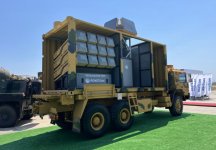
You cannot just integrate an USV onto an existing ship as if putting on another rhib, a Marlin USV weighs 20 tons, you cannot just put it on anywhere. Even smaller ones like Ulaq weighs 6-8 tons and these numbers are with smaller payloads.İntegration of USVs with İstif class would double its ASW as well as antiship and air defense capabilities.
Then need to create long range (4000-5000 miles)and big (200-250 ton) unmanned warships. Like ocean going trawlers. Kinda naval loyal wingman.You cannot just integrate an USV onto an existing ship as if putting on another rhib, a Marlin USV weighs 20 tons, you cannot just put it on anywhere. Even smaller ones like Ulaq weighs 6-8 tons and these numbers are with smaller payloads.

That is definitely one option and several countries have been actually looking it into it as far as I can remember. And the other option is, obviously, a dedicated USV mothership that could deploy them when necessary and resupply and rearm them for 2 or 3 deployments at least in water. Basically a 100-120 meter ship, at the very least, with space within its hull fully dedicated to being an USV (and UUV) workshop while the deck space is used for sensors and mid/short range air defence to create a local area of denial to protect itself.Then need to create long range (4000-5000 miles)and big (200-250 ton) unmanned warships. Like ocean going trawlers. Kinda naval loyal wingman.

 Unmanned Tuzla class ship could lunch torpedoes, AShM, SAMs

If Turkish Navy had today couple Dearsan's F142 frigates(5500tons) , even US Navy would be interested in.
View attachment 82888
View attachment 82889
Anyways, is there any chance if Göksur VLS applied to İstif class without deck penetration since high end CENK-D radar deserves more missiles?
View attachment 82887
View attachment 82890
In my opinion the plan is almost obvious for the future fleet, and i very much doubt I+ class at this point;If the Turkish Navy is going to focus on a 5000-6000 tons intermediate class, making this ship all about surface weapons or overloading it with AAW missiles makes zero sense. We already have the 8500+ ton TF-2000 project coming up for heavy area air defense duties anyway. Also, keeping Istif class within its own tonnage limits is way better for engineering stability instead of trying to cram everything in there.
An intermediate class of this size should primary focus on blue-water Anti-Submarine Warfare (ASW). But making a real ASW ship isnt just about putting a sonar and torpedos on it. Submarines fight with their ears, so how quiet the ship itself is what actually matters. A standard surface combatant and a proper ASW frigate are completely different under the hood. An ASW ship needs a hybrid propulsion system like CODLAG so it can shut down its main engines and cruise almost completely silent on electric motors while hunting submarines. The whole acoustic design must be built around this. Engines and generators need to sit on special shock mounts (raft mounting) to stop vibrations from leaking into the water, and the hull shape needs to be perfectly optimized to minimize cavitation noise. Instead of wasting precious space with tons of VLS cells, the design should prioritize low-frequency towed array sonars (TASS/VDS) and a large hangar that can operate two ASW helos and/or sub-hunting USVs at the same time.
Long story short, if we are spending budget on a 5500-ton platform, the goal shouldn't be packing it with missiles, it should be building an acoustically flawless, ultra-quiet hunter that can stay at deep seas for weeks.
From a budgetary and fleet planning perspective, it makes way more sense to limit the expensive TF-2000 destroyers to 6 hulls and shift that massive funding to build 6 units of this intermediate ASW class. In the long run, with around 8 to 12 Istif class frigates keeping the baseline, 6 hulls of this 5500-ton ASW ship would be perfect. Based on the 1/3 logistics rule; having 6 ships guarantees that we can constantly deploy 2 of them to support ocean going task groups at any given time. Giving up a couple of over-expensive TF-2000 air defense platforms creates enough budget to build a solid 6-ship ASW backbone, providing a much healthier balance for blue-water operations without breaking the bank.
Besides, if we look at the baseline, from the second ship onwards, Istif class already gained its strategic VLS capability. If we think about the future potential batch like hulls 9 to 12, a very limited tonnage increase and a smart revision on the main mast can significantly boost its mid-layer air defense capability. Since the Turkish Navy operates surrounded by enclosed internal seas like the Aegean and Black Sea, upgrading the future Istif hulls this way turns the baseline into a much more comprehensive, all-round capability. It effectively secures our inner seas while allowing the 5500-ton dedicated ASW hunter and TF-2000 to project power in the deep blue waters. To sum it up, if we are spending budget on a 5500-ton platform, the goal shouldn't be packing it with missiles; it should be an ultra-quiet hunter, while leaving the mid-tier defense to an evolved Istif baseline.
I wanted to ask for a while, but keep forgetting, but looking at Sea of Islands (Aegean), what type of naval vessel would be good for patroling the area ?In my opinion the plan is almost obvious for the future fleet, and i very much doubt I+ class at this point;
1-8 I-Class as is (2-8 is different to first hull).
1-4 Tepe (TF-2000 as is)
From 5th, it will be a TF-2000 light configuration with 48 VLS. The first hull will be laid down after 1st Tepe has been launched. It will likely be 1+5 hulls.
Ada Class ships will receive an upgrade after Barbaros MLU.
Why do i doubt the I+ class:
Navy needs a capable multi purpose ship class for light patrol / flotilla escort duties prioritizing comfort of the crew, endurance, large hangar area for multi-purpose operations, towed array sonar / VDS capability and USV/UUV operations. An upscaled I-Class may not answer to these needs, and foremost, Navy is almost sure that 48 VLS is the minimum requirement for a multi purpose frigate given current threat scenarios.


