
Pokemonte13
Contributor


Last edited:

Latest Thread
 www.navalnews.com


The news that the Turkish Naval Forces will proceed with hulls three and four of the Bayraktar class is genuinely good, What I want to raise is a design question that becomes more relevant with each new hull: why are these new hulls still going to sea without a hangar?EXCLUSIVE NEWS | Two More Tank Landing Ships (LST) to Be Built for the Turkish Navy!
The contract for 2+6 National Coast Guard vessels was signed in July 2025, with the first vessel planned for delivery in 26 months. This means delivery in 2027, commissioning in 2028, and delivery of the second vessel in 2028. The construction of the 6 vessels under option is expected to be quite rapid.Gözünüzü seveyim ya, bir de bizim Sahil Güvenlik güclerine el atalim amk...
I miss news and progress for TCG.
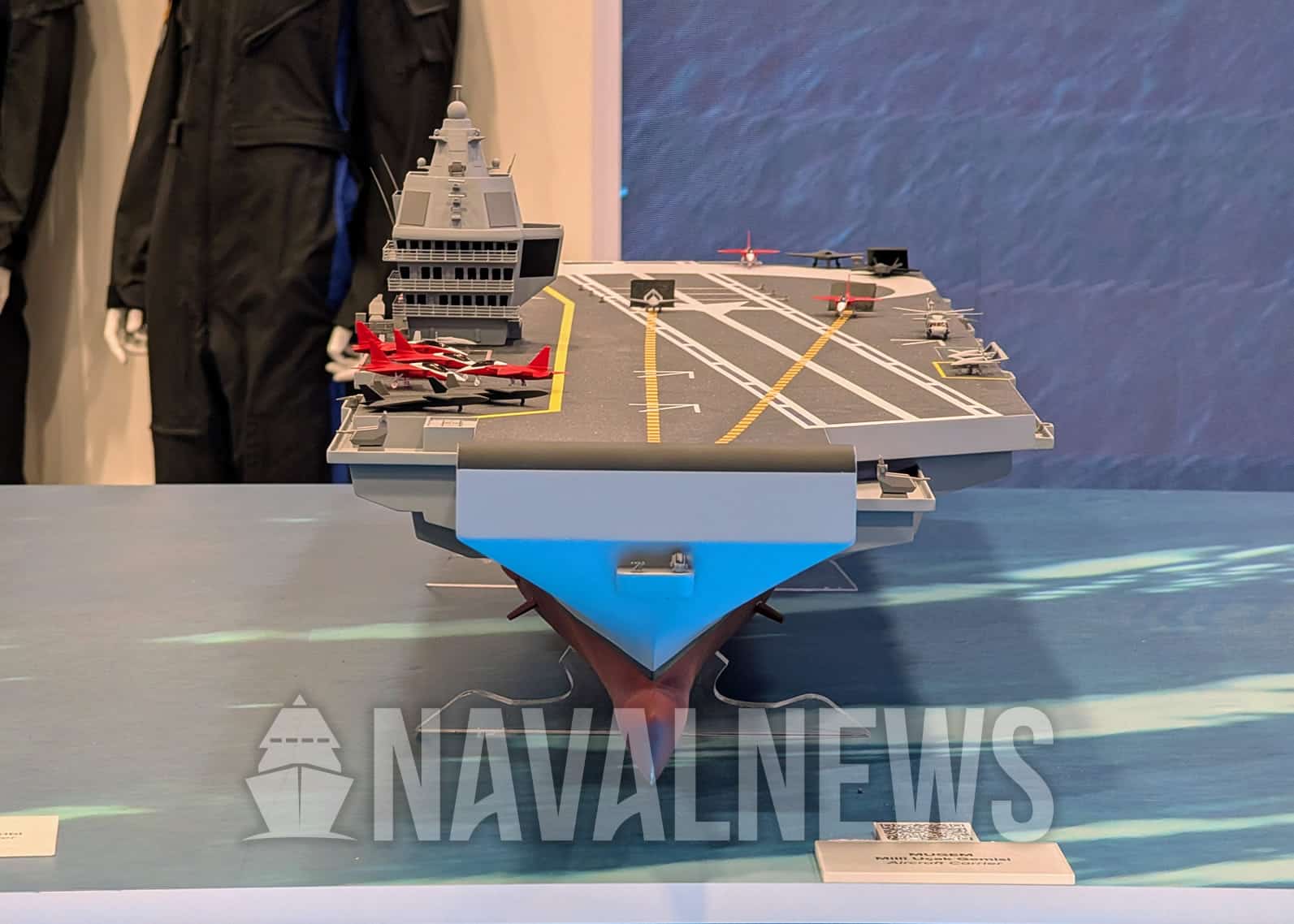
"More interesting is the accommodation number: 2,500 personnel is much higher than the 800 crew figure that was mentioned earlier. This likely reflects the total accommodation capacity including the air wing personnel, staff, and other embarked forces, not just the ship’s company."Turkish Navy Confirms 2032 Delivery Date for MUGEM Aircraft Carrier - Naval News
Rear Admiral Hakan Uçar, Commander of the Turkish Navy’s Naval Technical Command (formerly head of the Design Project Office), gave a detailed presentation on Türkiye’s indigenous aircraft carrier MUGEM at the Combined Naval Event (CNE) 2026, held in Farnborough, UK, from 19 to 21 May.
Are these the preparations for our „12 Islands“?EXCLUSIVE NEWS | Two More Tank Landing Ships (LST) to Be Built for the Turkish Navy!
Old Bey Class LSTs are ancient, they are goners. Osmangazi will probably stay. Just much needed modernization of the amphibious fleet. LCT buildup is the same, there's no real increase in numbers; just replacing the old ones usually on a one by one basis. Increasing capability while keeping the numbers. Which is okay as we already have a pretty large amphib fleet.Are these the preparations for our „12 Islands“?
Mate, check the crew numbers of other aircraft carriers. 2500 is middle of the road for carriers, nothing out of the ordinary."More interesting is the accommodation number: 2,500 personnel is much higher than the 800 crew figure that was mentioned earlier. This likely reflects the total accommodation capacity including the air wing personnel, staff, and other embarked forces, not just the ship’s company."
2500 personnel. An Istif carries 125. Gabya carry 220, Barbaros carry 180. Anadolu have 300+, carry up to 700 marines, and some 50 flight crew. MUGEM will not have a welldeck, and air cav ops would hamper the actual fixed wing operations; we can surmise it won't ever carry a marine battalion like Anadolu is supposed to.
We can deduce some small numbers. We know drones still require lots of flight personnel, air wing will be much larger as well. But I don't really understand that 2500 number. That's still 20 frigates worth of people. As a comparison, QE's have about 700 personnel and can accommodate 1600 people. We already have issues with navy personnel numbers. Looks like MUGEM will be very light on automation.
Compare it to the Est. 80,600 tonnes (79,300 long tons; 88,800 short tons) full load Queen Elizabeth AC of the UK Royal Navy.Mate, check the crew numbers of other aircraft carriers. 2500 is middle of the road for carriers, nothing out of the ordinary.
SubmarinesWould you prefer MUGEM or 6 modern submarines?
Depends on what you want to be as a country.Would you prefer MUGEM or 6 modern submarines?
I stand corrected, I thought that was around 2,500 as well. However, it still makes sense to me given that we will have 3 different type of aircraft (perhaps 4), multiple VLS, RCWS, CIWS, PDMS, USVs and UUVs on the ship and if we go with 3 shifts to have 24 hour coverage without burning out the crew + air wing, we can't just have a skeleton crew.Compare it to the Est. 80,600 tonnes (79,300 long tons; 88,800 short tons) full load Queen Elizabeth AC of the UK Royal Navy.
679 crew, not including air element; total berths for up to 1,600.
Submarines, without a doubt. We have 3 potential enemy navies (at least) in the Mediterranean, the French, Greeks and Israelis, alongside their air forces. 6 more submarine would help us far more than an aircraft carrier to secure Mediterranean and would cost much, much, much less, even without accounting for every single other ship we need around the carrier.Would you prefer MUGEM or 6 modern submarines?
We will have 12 modern submarines and a MUGEM.Would you prefer MUGEM or 6 modern submarines?
Would you prefer MUGEM or 6 modern submarines?


