• Forum restore complete (see latest announcement thread)

Pakistan Pakistan Economy Updates

Fatman17

Experienced member
Moderator
Defence News Editor
Pakistan Moderator
Messages
3,076
Reactions
24 2,422
Nation of residence
Pakistan
Nation of origin
Pakistan
The October 20 report said the plant would initially depend entirely on imported raw materials and components.
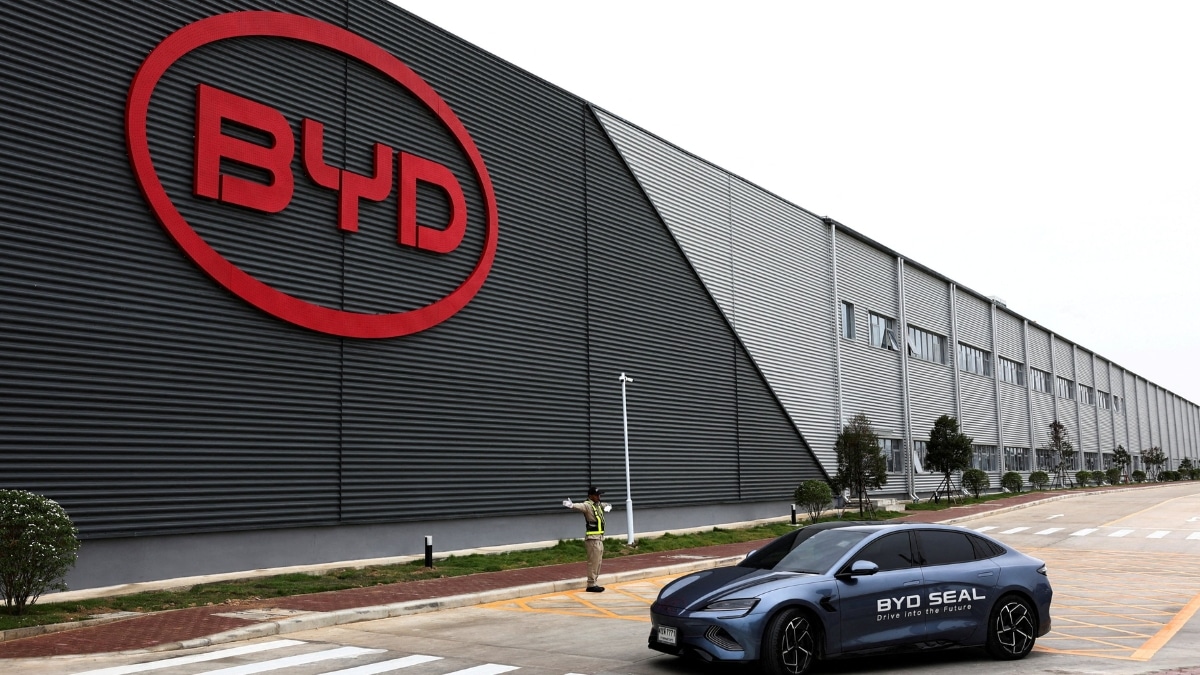
However, the company plans to increase local sourcing gradually, with a long-term target of obtaining up to 80% of production inputs locally to improve cost competitiveness and reduce reliance on imports.
Chinese automobile brands have grown to capture roughly 20% (about a fifth) of the passenger car market in Pakistan. [1]

Market Share & Growth Highlights
  • Overall Share: Chinese-backed and Chinese-origin brands have surged from a small novelty to roughly 20% of the passenger vehicle market. [1]
  • Key Brands in Pakistan:
    • Master Changan Motors Limited (MCML): Stands as the top-selling Chinese automaker in Pakistan, having crossed 50,000 locally produced units with popular models like the Changan Alsvin, Oshan X7, Karvaan, and Deepal EVs.
    • Sazgar / Haval & Tank: The Haval H6 crossover and Tank brand have climbed rapidly, regularly ranking among the best-selling SUV and overall light-vehicle choices (with Haval H6 and Tank holding significant segment shares and pushing into top monthly sales slots).
    • New Entrants & EVs: Brands like BYD, MG, Chery, and upcoming players like XPENG are expanding the electric vehicle (EV) and hybrid landscape in Pakistan. [1, 2, 3, 4, 5]
  • Legacy Brand Shift: While Japanese giants like Suzuki, Toyota, and Honda still hold the majority combined volume, legacy dominance is declining—Suzuki's market share dropped to around 32% year-to-date in 2026 as competition from Chinese crossovers and budget alternatives intensifies. [1, 2]
 

Fatman17

Experienced member
Moderator
Defence News Editor
Pakistan Moderator
Messages
3,076
Reactions
24 2,422
Nation of residence
Pakistan
Nation of origin
Pakistan

Pakistan Rice Exports to China: A Growing Market​

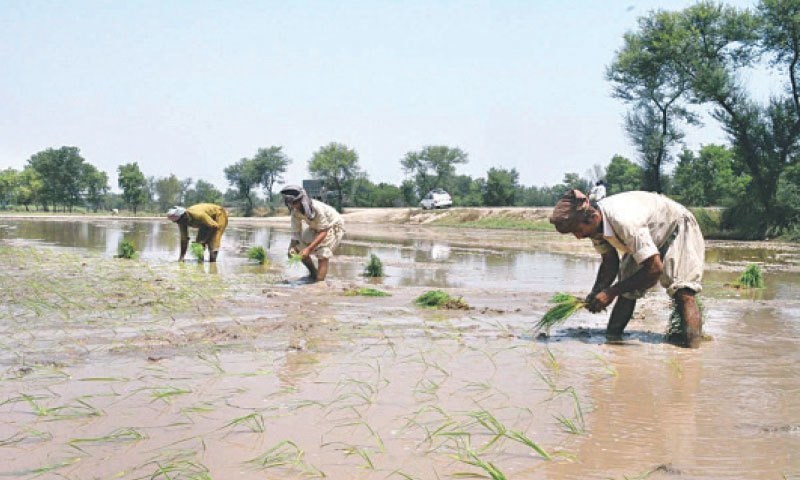
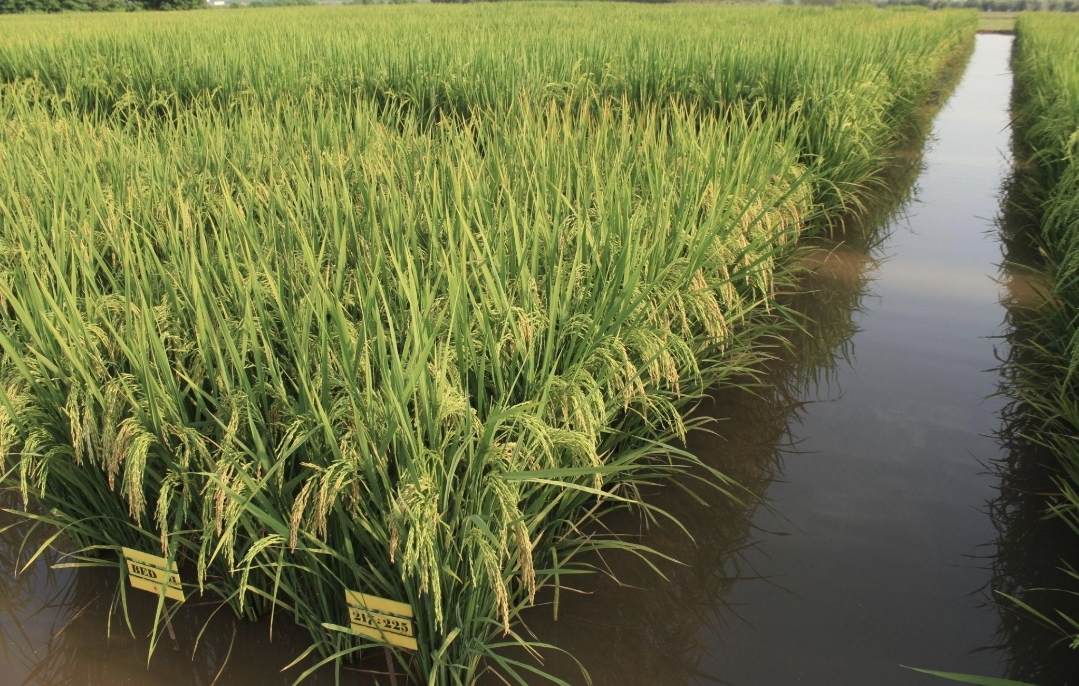
The increase represents more than a rise in shipment volumes. It points to an opportunity for Pakistan to diversify its agricultural export destinations, attract investment in food processing and build stronger commercial relationships with Chinese importers. APP’s reporting on Chinese customs data shows that demand has extended across several rice categories, including milled long-grain rice and broken rice. Guangdong was the leading destination for Pakistani rice during January–July 2026, importing products worth $41.64 million. Beijing and Jiangxi were also significant markets.
 

Fatman17

Experienced member
Moderator
Defence News Editor
Pakistan Moderator
Messages
3,076
Reactions
24 2,422
Nation of residence
Pakistan
Nation of origin
Pakistan
Power companies have repeatedly written to CPPA-G seeking payment of their overdue receivables, with the issue reaching the Prime Minister’s Office on several occasions, the sources said.

The latest request for government intervention came from Port Qasim Electric Power Company (PQEPC), whose Chief Executive Officer Wang Dongfeng wrote to the ministers for finance, planning, and energy, seeking assistance in recovering the company’s outstanding payments.
 

Fatman17

Experienced member
Moderator
Defence News Editor
Pakistan Moderator
Messages
3,076
Reactions
24 2,422
Nation of residence
Pakistan
Nation of origin
Pakistan
Size of economy

According to NAC, based on the latest figures of the national accounts aggregates for FY2026, the overall size of the economy stands at Rs126.4 trillion, i.e., $450.4 billion, as compared to Rs114.9 trillion, i.e., $408.7 billion in the previous year.

Further, per capita income in PKR for FY2026 is 531,897/- i.e., $1896/, the NAC data showed.

Unregulated economy is estimated to be 30% of the regulated economy. $ 150 billion. This sector doesn't pay any taxes 🙄
 

Fatman17

Experienced member
Moderator
Defence News Editor
Pakistan Moderator
Messages
3,076
Reactions
24 2,422
Nation of residence
Pakistan
Nation of origin
Pakistan

Pakistan Rice Exports to China: A Growing Market​

The increase represents more than a rise in shipment volumes. It points to an opportunity for Pakistan to diversify its agricultural export destinations, attract investment in food processing and build stronger commercial relationships with Chinese importers. APP’s reporting on Chinese customs data shows that demand has extended across several rice categories, including milled long-grain rice and broken rice. Guangdong was the leading destination for Pakistani rice during January–July 2026, importing products worth $41.64 million. Beijing and Jiangxi were also significant markets.
 

Fatman17

Experienced member
Moderator
Defence News Editor
Pakistan Moderator
Messages
3,076
Reactions
24 2,422
Nation of residence
Pakistan
Nation of origin
Pakistan
Pakistan Keeps Returning to the IMF. Are We Fixing the Economy — or Preserving the System That Keeps Breaking It?

At Harvard, Pakistan's Finance Minister explained how the economy had been stabilised. Nobel laureate Daron Acemoglu and Professor Atif Mian raised a far more uncomfortable question: Why does Pakistan keep returning to economic crisis despite decades of reforms and IMF programmes?

This was one of the most thought-provoking discussions on Pakistan's economic future I have watched. Held at the Harvard Pakistan Conference 2026, it featured Finance Minister Muhammad Aurangzeb, Daron Acemoglu (MIT) and Atif Mian (Princeton), moderated by former SBP Governor Dr Reza Baqir.

Essential viewing for policymakers, political leaders, business leaders and especially our young generation.

The contrast could hardly have been sharper.

The Finance Minister highlighted the govt's stabilisation achievements: falling inflation, rebuilding reserves, meeting debt obligations, fiscal discipline, tax reforms & privatisation. These achievements deserve recognition.

But while the Minister focused on how Pakistan had avoided another collapse, Acemoglu and Atif questioned why our economic and political system keeps producing crises in the first place.

Acemoglu focused on failing institutions: elite capture, weak democratic accountability, dysfunctional governance, poor education and inadequate human development. His analysis challenged the belief that economic prosperity can emerge without transforming the institutions that determine who holds power, who enjoys privileges and who has opportunities.

Atif Mian challenged Pakistan's distorted economic incentives and lack of a forward-looking strategy.

Why does a country with abundant sunshine remain burdened by expensive energy arrangements and imported fuels? Why do real estate speculation, protected businesses and rent-seeking generate better returns than innovation, manufacturing and competitive exports? And why do we celebrate rising remittances without questioning our failure to create productive opportunities for talented Pakistanis at home?

Then comes the AI revolution. With millions of children out of school, poor learning outcomes and chronic underinvestment in human capital, how can Pakistan compete in a world where knowledge, skills and innovation increasingly determine prosperity?

What struck me most was not what the Finance Minister said — but what remained largely unanswered.

He acknowledged population growth and climate change, but offered little substantive response to the deeper questions about education, human development, dysfunctional institutions, rule of law, elite capture and the political economy that repeatedly defeats reform.

Central takeaway: Pakistan's problem is not merely that governments fail to implement reforms. It is that our political and institutional arrangements reward those who benefit from resisting them.

We have spent decades treating the symptoms of economic failure while leaving its underlying causes largely intact.

Stabilisation prevents collapse. Institutional transformation creates prosperity.

The real test of leadership is not whether Pakistan completes another IMF review, but whether it has the vision and courage to transform the institutions, incentives and power structures that make repeated rescues necessary.

Watch the discussion:

youtu.be/9n73alPaBIo

#PakistanEconomy #Governance #Institutions #HumanDevelopment #DaronAcemoglu #AtifMian

youtu.be/9n73alPaBIo?si…


Fatman17

Experienced member
Moderator
Defence News Editor
Pakistan Moderator
Messages
3,076
Reactions
24 2,422
Nation of residence
Pakistan
Nation of origin
Pakistan
Pakistan's Greatest Obstacle to Prosperity: Those Who Benefit from Its Failure to Reform

Insights drawn from Nobel laureate Daron Acemoglu’s remarks at the Pakistan Conference at Harvard (“From Potential to Performance”, 12 April 2026) confront us with an uncomfortable truth: Pakistan’s recurring economic crises are not merely failures of economic management. They are symptoms of a political and institutional system that resists fundamental change.

▪️ The crisis is structural, not temporary. For over three decades, Pakistan has fallen behind its regional peers. External shocks cannot explain persistent institutional decay, poor education and stagnant productivity.

▪️ Elite capture is at the heart of the problem. Concentrated political, military and economic power protects privileges, undermines competition and obstructs meaningful reform.

▪️ The obstacle is political, not technical. Genuine reform redistributes economic opportunity — and ultimately power. Those benefiting from existing arrangements have strong incentives to resist change, even when the nation stands to prosper.

▪️ The AI divide begins with the education divide. With millions of children out of school and dismal learning outcomes, Pakistan risks falling further behind as technology transforms the global economy.

▪️ Democracy and accountability are central to prosperity. Sustainable development requires inclusive institutions, rule of law, a capable state and an empowered society that can hold those in power accountable.

Fiscal discipline and IMF programmes can prevent collapse. But they cannot, on their own, create prosperity while the underlying political economy continues to reward the privileged few and deny opportunity to the many.

Acemoglu's deeper message is that those benefiting from the status quo have little incentive to surrender their privileges voluntarily. Change must also be demanded by society.

Pakistan does not lack diagnoses or reform prescriptions. What it lacks is a political and institutional environment in which meaningful reform becomes unavoidable.

The defining question: How do we build the institutions, public trust and collective pressure needed to make that happen?
 

Fatman17

Experienced member
Moderator
Defence News Editor
Pakistan Moderator
Messages
3,076
Reactions
24 2,422
Nation of residence
Pakistan
Nation of origin
Pakistan
While this venture mentioned multiple minerals as of interest, the focus of the partnership is on developing antimony, in particular. Antimony is a metallic element that is silver-blue white, flaky and brittle, and is used in multiple sectors such as electrical, battery systems, semiconductors, and energy. Perhaps, the most important use of antimony, however, is for military purposes, where it serves as a key material in the production of night vision goggles, bullet casings, tanks, explosives, flares, nuclear weapons, and infrared sensors used in missiles.
 

Follow us on social media

Top Bottom