


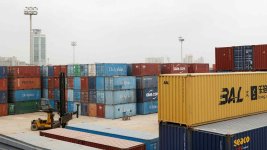
Karachi Port processed 8,313 containers in just 24 days this March — matching its entire 2025 annual volume in less than a month. That is not a rounding error. It is a 1,423% surge that tells you everything about where global trade is heading when the world’s most critical maritime chokepoint goes dark. Pakistan is emerging as a critical node in the new trade architecture forced into existence by the Strait of Hormuz crisis, and the speed of this shift has caught even seasoned logistics operators off guard. With containers stacking up at South Asia Pakistan Terminal, Hutchison Port, and Karachi Gateway Terminal, the question is no longer whether Pakistan benefits from the disruption — it is whether the country can scale fast enough to make this a permanent structural advantage.
Record Surge at Karachi Port — 24 Days Equal a Full Year
The numbers deserve a second look because they are genuinely unprecedented. In the full year of 2025, Karachi Port processed approximately 8,300 TEUs of transshipment cargo. In just the first 24 days of March 2026, that figure was exceeded — 8,313 containers were handled, representing a 1,423% increase compared to the prior year’s total. Karachi Port received 8,000 containers and dispatched 3,500, with 4,500 remaining in the port balance.
To put that in perspective: that is like a regional airport suddenly handling Heathrow-level traffic overnight. The infrastructure was not built for this pace. And yet, it is absorbing it — which tells you something about what $62 billion in CPEC investment actually bought.

Pakistan Emerges as Global Trade Hub as Hormuz Crisis Reroutes Shipping | TECHi
Karachi Port processes 8,313 containers in 24 days — matching its entire 2025 volume. Pakistan emerges as a global trade hub as the Strait of Hormuz…
Attachments
-
 1775254043795.jpeg90.4 KB · Views: 100


