• Forum restore complete (see latest announcement thread)

TR Propulsion Systems

zio

Contributor
Messages
531
Reactions
11 801
Nation of residence
Turkey
Nation of origin
Turkey
mavi batu.I calculated its almost double powerful interms of jenerator of the milgems generators which is up to 2400kVA according to işbir,so two mavi batu can replace 4 generators of milgems,but I do not know how suitable is to reduce number of generators on the ship.
IMG_2406.jpeg
IMG_2407.jpeg
 
Last edited:

Spitfire9

Contributor
Think Tank Analyst
Messages
1,267
Reactions
17 1,661
Nation of residence
United Kingdom
Nation of origin
United Kingdom
I don't know so I'm asking in case someone can answer...

Civil aero-engine OEM's used to run performance improvement packages whereby every few years an engine PIP would be released, perhaps improving engine performance by 1%-2%. Perhaps they still do. Do military engine OEM's not offer such upgrades over the years?

I think of this in the context of EJ200. After 20 years in service it might by now have reached 95kN wet thrust if there were a PIP system for the engine. Perhaps not of great interest to Turkiye but could have been of interest to India'a Tejas Mk2 programme. Possibly Gripen E, too.

When I think of it, this might be relevant to TF35000, whereby a lower thrust but reliable initial production version could be introduced earlier followed by a gradual improvement in thrust without reducing reliability.

Thanks for any replies.
 

Yasar_TR

Experienced member
Staff member
Administrator
Messages
4,270
Reactions
258 22,300
Nation of residence
United Kingdom
Nation of origin
Turkey
I don't know so I'm asking in case someone can answer...

Civil aero-engine OEM's used to run performance improvement packages whereby every few years an engine PIP would be released, perhaps improving engine performance by 1%-2%. Perhaps they still do. Do military engine OEM's not offer such upgrades over the years?

I think of this in the context of EJ200. After 20 years in service it might by now have reached 95kN wet thrust if there were a PIP system for the engine. Perhaps not of great interest to Turkiye but could have been of interest to India'a Tejas Mk2 programme. Possibly Gripen E, too.

When I think of it, this might be relevant to TF35000, whereby a lower thrust but reliable initial production version could be introduced earlier followed by a gradual improvement in thrust without reducing reliability.

Thanks for any replies.
Good point!
Now let us look at F110 engine:
It originated from the F101 engine originally developed for the B1 bomber in late 1970’s. So in effect the PIP package of F101 is the F110.

Then a stealthy version of the F110 appeared without the afterburner. That was F118. These propelled B2 bomber.

In 2003 they started using 4th generation single crystal turbine blades. But no new nomenclature was used.

After at MTU in mid 1990’s , the EJ200 engineers in Germany developed Blisk technology, the same tech was applied to the F110-GE129 engines in early 2000’s. They were named F118 and F110GE-129EPE (or F110GE132).
GE started using additive technologies in the manufacturing processes.
The goal is to produce an engine that is more fuel efficient without compromising performance. Small incremental changes do happen. Sometimes they are translated in to the nomenclature of the engine. Sometimes it is not mentioned or publicised.

If you look at the EJ200 :

The Eurojet EJ200 engine, which entered service in 2003, has undergone continuous, incremental upgrades to its hardware and software rather than a single, massive overhaul, thanks to its modular, future-proof design.

Key upgrades and enhancements include:

Since it’s first use the engine’s Digital Engine and Software and Control Systems (DECMU): has been updated to provide, at minimum, a 15% increase in thrust.

The introduction of advanced high-pressure (HP) turbine blades with enhanced cooling technology—developed in collaboration with FiatAvio and Rolls-Royce—allows for higher operating temperatures and better performance.

The engine was designed to allow for "growth steps" without requiring a complete redesign. Future, planned stages involve upgrading the low-pressure (LP) compressor and turbine to potentially increase dry thrust to 17535lbf and wet thrust to 27000lbf. (This was offered to us for the initial TFX design.)

(TVC) thrust vectoring control has been developed and tested to provide improved pitch, vector control, and aerodynamic performance, particularly for future aircraft upgrades which also came with 10-15% more thrust..

Enhancements to power generation have allowed the engine to meet the higher electrical power demands of modern, upgraded radar systems like the ECRS Mk2.

But these have not been translated in to the open nomenclature as one would expect.

 

Zafer

Experienced member
Messages
5,650
Reactions
15 8,712
Nation of residence
Turkey
Nation of origin
Turkey
TEI considers this a done deal. This tech combined with other complementary technologies like coatings and cooling features will probably already get us to 1580+°C TIT level. This piece of news brings more confidence in the timely making of the TF35k engine by TEI and partners. This level can now be considered baseline upon which TEI should be making improvements for both performance and reliability. Some other technologies however do not build on top of this but are a different method of making things which will probably be revealed going forward after this technology is already implemented as part of an early generation of the TF35k family engines.
 
Last edited:

IC3M@N FX

Contributor
Messages
700
Reactions
3 30 1,432
Nation of residence
Germany
Nation of origin
Turkey
Yeah, that doesn't make sense to me either. Maybe it refers to being ready for mass production—not just mastering the technology, but being able to manufacture and scale it industrially.
 

Zafer

Experienced member
Messages
5,650
Reactions
15 8,712
Nation of residence
Turkey
Nation of origin
Turkey
They literally use that technology in TS-1400 and TF-6000. Also the link i provided is from that tweet.
There are more news in the post over the info at the link, like implementation on rig level and engine level. TS1400 engine implementation was earlier and probably some of the complementary technologies like cooling holes were not fully implement on it as those turbine blades are tiny. TF10k blades are larger but as the blades become even larger probably different methods need to be implemented so we can expect more updates. SAHA Expo is in two weeks, we may hope to get up close and personal with TF35k blades.
 
Last edited:

Zafer

Experienced member
Messages
5,650
Reactions
15 8,712
Nation of residence
Turkey
Nation of origin
Turkey
Source for this figure?
This is my guess based on the performance levels of some modern day engines shown in the table below. I would expect a threshold level be passed with the TF35k engine.

HDUtDL0XAAAGSzk
 
Last edited:

Zafer

Experienced member
Messages
5,650
Reactions
15 8,712
Nation of residence
Turkey
Nation of origin
Turkey
Alloys' performance stops improving at around 1400 °C and additional performance is achieved mostly through cooling. Small blades offer little real estate to implement cooling and larger blades can host more cooling features hence deliver better peak performance. Also 5 years passed since the time of this implementation, we can expect improvements.
 
Last edited:

Zafer

Experienced member
Messages
5,650
Reactions
15 8,712
Nation of residence
Turkey
Nation of origin
Turkey
Snecma M88 achieves 1577 °C with air cooled, ceramic coated, single crystal turbine blades made from a new AM1 alloy (N-18 alloy in the final production engines),

So it is reasonable to consider matching this performance level for the TF35k engine.

 
Last edited:

Zafer

Experienced member
Messages
5,650
Reactions
15 8,712
Nation of residence
Turkey
Nation of origin
Turkey
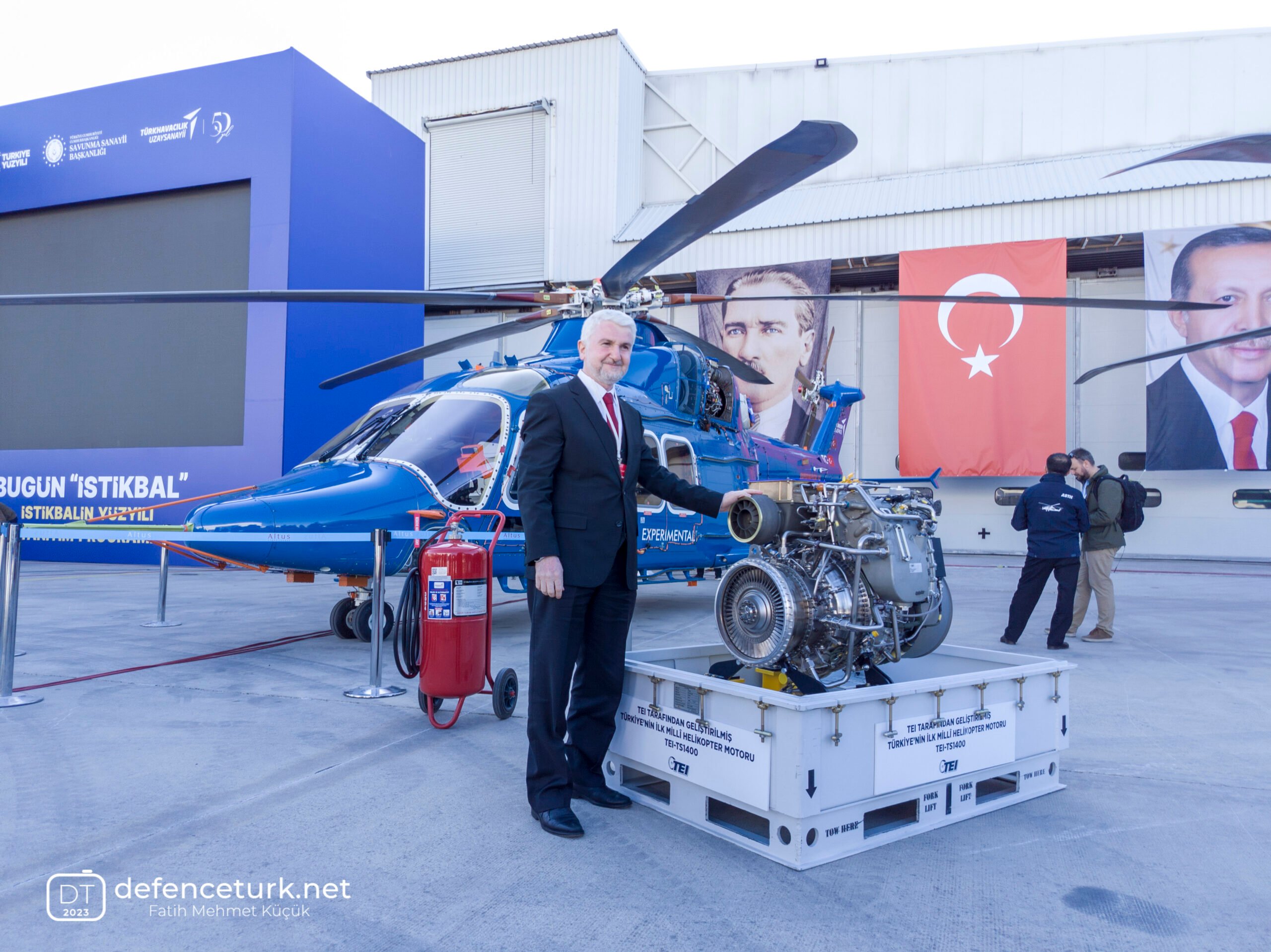
TS1400 helicopter engine uses the first generation of TEI single crystal blade technology and TF35000 engine will use the TEI third generation single crystal technology.

Birinci nesil kristal ile TS1400’e uyguladık, 3. Nesil ile TF35000’de uğraşıyoruz, 4 ve 5’inci nesil için çalışıyoruz.


Yasar_TR

Experienced member
Staff member
Administrator
Messages
4,270
Reactions
258 22,300
Nation of residence
United Kingdom
Nation of origin
Turkey
Single crystal turbine blades have brought the capability of having higher tolerances with which to work when designing turbofan jet engines.

Directionally Solidified turbine blades were the start of this process.

When molten metal is allowed to cool slowly it forms crystals.

If you pull a molten material along its longitudinal molecular axis you create directionally stable crystalline structures. They lose their pliability. But become much harder and difficult to snap under load.

By using this cooling method and directionally solidifying Nickel Super Alloys, layers upon layers of crystallised material is obtained. Blades made by this method when under extreme heat and strain, will see their layers start moving over each other giving boundary grain problems and failures in the end.
To overcome this problem the directionally solidified blades are cast as single crystals by controlling heat extraction in a vacuum.

By adding different exotic rare earth elements to the mix you achieve a newer and more durable generation of single crystal blade.
Although each generation of blade imparts an increase of TIT of around 30 to 50 degrees Celsius, together with the accompanying ceramic treatment the overall additional heat durability advantage could be as much as 100 to 150 Celsius.

Apart from imparting a heat advantage, newer generation blades’ creep degradation resistance is increased too. This gives a longer life to the engine in question.
But going beyond 3rd generation in these blades become economically unviable.
 

Yasar_TR

Experienced member
Staff member
Administrator
Messages
4,270
Reactions
258 22,300
Nation of residence
United Kingdom
Nation of origin
Turkey
Source, apparently TEI team does not care about this.
Nothing to do with not caring about it. From a technical achievement point they will try to obtain the technology whatever the cost. They decided to use 1st generation single crystal blades on TF6000, even though they had access to 3rd gen blades. Because that achieved the right results.

GE and P&W in 2004 developed 4th generation crystal blades and GE used it in f110 engines. But in mass production it is a different story. The F110-GE-129 and F110-GE-132 models widely utilize second-generation single-crystal superalloys, such as René N5 and PWA 1484

The GE F414 engine predominantly utilizes second generation single-crystal nickel superalloy turbine blades in its high-pressure turbine.

IHI used 5th generation crystal blades in their XF9 5th generation jet engine. They too would be inclined to use no more than 3rd gen in mass production unless the user insists and is prepared to pay the premium.

Almost all commercial engine manufacturers use 2nd gen single crystal blades in hp sections.
 
Last edited:

IC3M@N FX

Contributor
Messages
700
Reactions
3 30 1,432
Nation of residence
Germany
Nation of origin
Turkey
Correct me if I'm wrong...

The 3rd+ generation (TEI TF 35000) must contain at least 6% rhenium for 1580–1650 °C

The 4th generation must contain high levels of both rhenium and ruthenium for 1650–1750 °C
 

Yasar_TR

Experienced member
Staff member
Administrator
Messages
4,270
Reactions
258 22,300
Nation of residence
United Kingdom
Nation of origin
Turkey
Correct me if I'm wrong...

The 3rd+ generation (TEI TF 35000) must contain at least 6% rhenium for 1580–1650 °C

The 4th generation must contain high levels of both rhenium and ruthenium for 1650–1750 °C
These are arbitrary numbers. It all depends on how well your cooling processes are applied and how good your ceramic coating is. Russian AL41 class engines use Directionally Solidified blades (NOT single crystal) but achieve a TIT of 1645+ degrees Celsius. Even as high as 1700 degrees Celsius is quoted. To achieve nearly 20000lbf dry 35000 wet thrust.
 
Last edited:

Zafer

Experienced member
Messages
5,650
Reactions
15 8,712
Nation of residence
Turkey
Nation of origin
Turkey
Users want to maintain technological edge over the competition, if it makes sense for them they will bear the cost and ante up the money. Countries that can source the raw materials that go into making of the high end alloys domestically can use them to be on top of the game. The cost is only a matter for the foreign buyer while domestic users pay only a fraction comparatively. It is natural to have science going a few generations ahead while the industry only employs what is achieved acceptably well. Going above and beyond what is acceptable is only a matter of priorities and resource allocation once you have the technology of making it.

What is too costly today maybe mainstreram tomorrow. So TEI should definitely pursue pushing its capabilities to further levels in this branch of blade making.
 

Follow us on social media

Top Bottom