

Lets start.

Latest Thread
 www.roketsan.com.tr
 www.stm.com.tr

I hope one of our companies will develop a VTOL drone that we can properly use from our ships.BAHA was added to the scouts of the Turkish Armed Forces
Working on the "digital unity" concept, taking into account the needs in the future operational environment, HAVELSAN has started to put unmanned systems into use at home and abroad.
While the unmanned ground vehicle BARKAN, the first member of the digital union, entered the inventory during the year, BAHA was added to it before the end of the year.
HAVELSAN, which achieved export success in Africa and Central Asia with BAHA this year, has also made the vehicle available for use by security forces in the country. BAHA was put into service after successful tests. Thus, BAHA was added to the national unmanned aerial vehicle systems that entered the inventory of the Turkish Armed Forces.
BAHA was developed to meet the needs of modern armies.
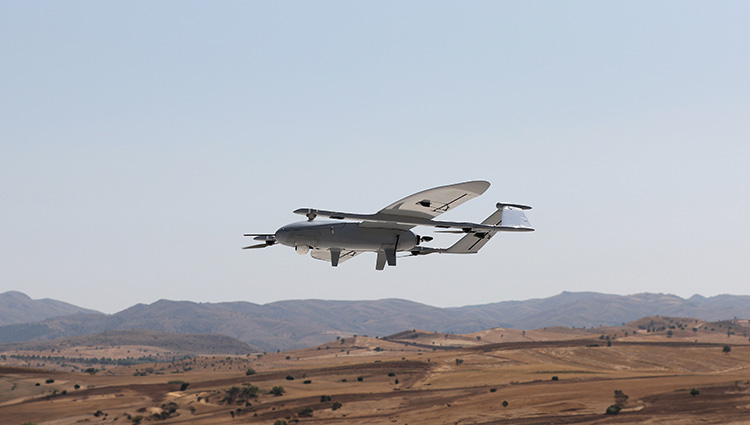
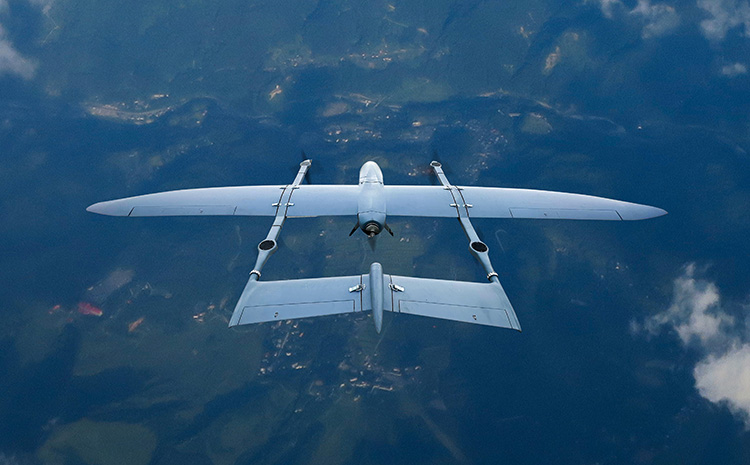
BAHA, which stands out with its vertical landing and take-off capability, fully autonomous mission capability, and modular architecture that allows the integration of different payloads, can operate jointly with all unmanned systems with its additional superior features.
The system, which is powered by a gasoline engine in horizontal travel, uses electric motors in vertical take-off and landing.
BAHA, which can stay in the air for up to 6 hours with its gasoline engine (up to 2 hours with its electric engine) and operate at altitudes of up to 15 thousand feet, can offer a range of up to 80 kilometers.
BAHA, which can carry a payload of up to 5 kilograms, has a wingspan of 3.7 meters.
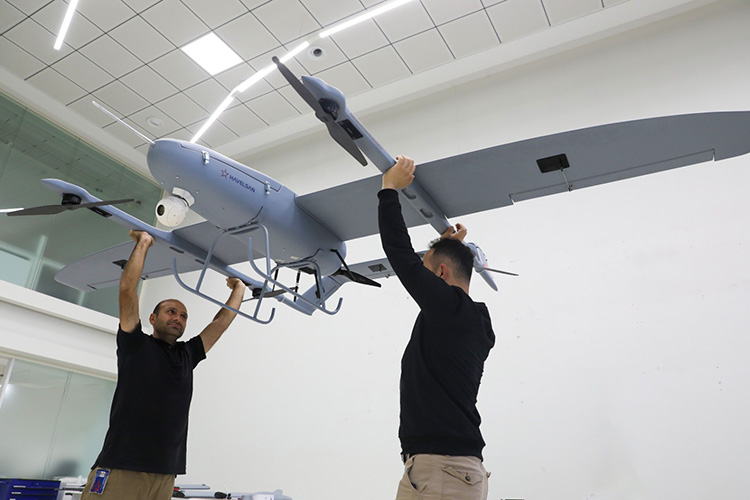
The system can be easily set up by 2 people, operated by a single person, and can be ready for duty within minutes.
The system, which has been tested in different regions, harsh climates and operational conditions to date, has been improved with the feedback of security forces.
BAHA, tracking, detection and area protection, intelligence, electronic warfare, coastal and border security, energy transmission and oil-gas lines inspection, anti-smuggling and anti-terrorism, public order, narcotic plant detection, residential thermal measurement, forest fire management, post-disaster assessment It can be used in tasks such as bilge and environmental pollution detection, agricultural practices and cartography.
Contributed to search and rescue during the earthquake
BAHA participated in the work carried out after the earthquakes in Kahramanmaraş and provided video support to the teams.
BAHA, which met the need for images with its ability to fly under clouds when it became difficult to take images with UAVs due to adverse weather conditions, contributed to obtaining the first information about settlements where transportation was not possible.
BAHA is said to have a range of 80 km. If we could use it on İstif class frigates, this kamikaze could significantly increase our situational awareness against unmanned marine vehicles.I hope one of our companies will develop a VTOL drone that we can properly use from our ships.
It could help but I was thinking something bigger that we can arm and launch from our ships like a helicopter, or maybe even to replace them. But I agree that something that can loiter and hunt USVs after they are detected like BAHA or Alpagut could help protect our ships.BAHA is said to have a range of 80 km. If we could use it on İstif class frigates, this kamikaze could significantly increase our situational awareness against unmanned marine vehicles.

BAHA was added to the scouts of the Turkish Armed Forces
Working on the "digital unity" concept, taking into account the needs in the future operational environment, HAVELSAN has started to put unmanned systems into use at home and abroad.
While the unmanned ground vehicle BARKAN, the first member of the digital union, entered the inventory during the year, BAHA was added to it before the end of the year.
HAVELSAN, which achieved export success in Africa and Central Asia with BAHA this year, has also made the vehicle available for use by security forces in the country. BAHA was put into service after successful tests. Thus, BAHA was added to the national unmanned aerial vehicle systems that entered the inventory of the Turkish Armed Forces.
BAHA was developed to meet the needs of modern armies.
BAHA, which stands out with its vertical landing and take-off capability, fully autonomous mission capability, and modular architecture that allows the integration of different payloads, can operate jointly with all unmanned systems with its additional superior features.
The system, which is powered by a gasoline engine in horizontal travel, uses electric motors in vertical take-off and landing.
BAHA, which can stay in the air for up to 6 hours with its gasoline engine (up to 2 hours with its electric engine) and operate at altitudes of up to 15 thousand feet, can offer a range of up to 80 kilometers.
BAHA, which can carry a payload of up to 5 kilograms, has a wingspan of 3.7 meters.
The system can be easily set up by 2 people, operated by a single person, and can be ready for duty within minutes.
The system, which has been tested in different regions, harsh climates and operational conditions to date, has been improved with the feedback of security forces.
BAHA, tracking, detection and area protection, intelligence, electronic warfare, coastal and border security, energy transmission and oil-gas lines inspection, anti-smuggling and anti-terrorism, public order, narcotic plant detection, residential thermal measurement, forest fire management, post-disaster assessment It can be used in tasks such as bilge and environmental pollution detection, agricultural practices and cartography.
Contributed to search and rescue during the earthquake
BAHA participated in the work carried out after the earthquakes in Kahramanmaraş and provided video support to the teams.
BAHA, which met the need for images with its ability to fly under clouds when it became difficult to take images with UAVs due to adverse weather conditions, contributed to obtaining the first information about settlements where transportation was not possible.

I am on the opinion that every base should posses such a system. It adds another layer of surveillance and a serious boost in capabilities. Unfortunately while Turkiye advances on bigger UAV designs we are lacking real below-cloud UAV capability.I have been keeping an eye on this class of UAV. Like Orlan-30 and RQ-21.
This type of UAV provide operational flexibility to the field commanders. For
example, if sending a TB-2 becomes too risky due to lack of localised friendly air superiority, or capable enemy ADA presence, you may send a BAHA to do ISR into enemy's operational depth and provide targeting for GMLRS strikes. Due to its relatively simple design and cost effectiveness, it is attrit-able. It has the sweet stop between range, payload and affordability. And it can fielded down to battalion.
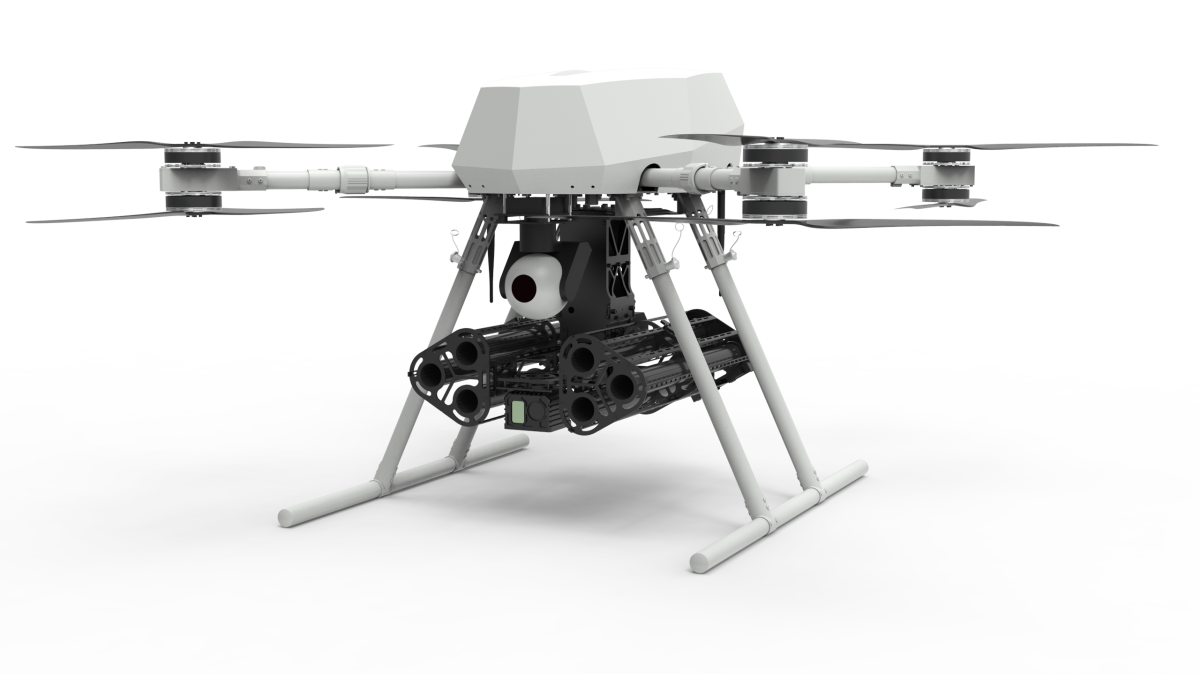
Although I am expecting a better payload, like this one.
View attachment 64335
They're doing assembly. But they do a solid job.@Bogeyman Brother, which was the company that recently started developing an advanced E/O payload for this class of UAVs?

 www.blitztech.com.tr
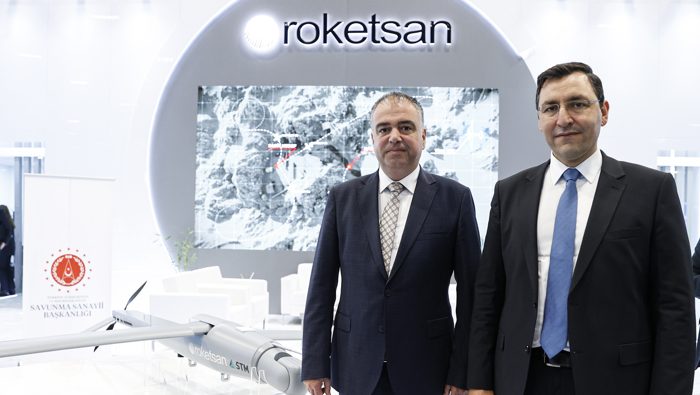
 haber.aero
He is so far from the reality of the battlefield that I don't even know why I bother commenting.What an eye opening interview from STM's Güleryüz. He clearly tells that he and his company have no clear idea of what future drone warfare looks like.

STM, FPV drone sistemleri hakkında ne düşünüyor?
STM Genel Müdürü Özgür Güleryüz, Antalya'da düzenlenen Savunma ve Havacılık Sanayiinde Küresel Stratejiler Konferansı 2024'te gdh defence'in FPV drone sistemleri hakkındaki sorularını yanıtladı.gdh.digital
"The war environment shows us this: Instead of products with a much longer delivery time, there are certain solutions that you can make in a very short, easy way. We should not forget this here: Sometimes very cheap solutions can be effective, but what we see now are just videos. Maybe there are 50 flights, but only one of them is successful. Those are the ones shared with you. The vast majority of them do not work in electronic warfare environments."
It's baffling to me that not once does he mention ways to circumvent EW heavy environments like simple AI solutions that we are now seeing being worked on, which will show itself on the ground in 1-2 years at most.
"As STM, which develops systems under the guidance of our state and in line with its needs, we say the following: The cheapest solution may not always be the best solution. Of course, the war environment is different. You may or may not be able to procure products, you can talk about creating certain solutions with what you have, but our biggest motivation is to provide the most technically competent product, the most successful product and the safest product possible."
Where Alpagut? It's been 2 years, no first tests made. Anka 3 had a shorter development time.
"Launched in 2022 at SAHA Expo, ALPAGUT, the Smart loitering munition System's entry into mass production has been postponed. The UAV, developed in partnership with STM and ROKETSAN, was planned to make its first flight in 2023 and be put into mass production at the end of the year.
Kaynak: haber.aero"
Türk İHA projesi beklenen tarihten uzakta!
2022 yılında SAHA Expo'da lansmanı yapılan Akıllı Dolanan Mühimmat Sistemi ALPAGUT'un seri üretime girişi ertelendi. STM ve ROKETSAN ortaklığıyla geliştirilen
Better question, where Alpagu? That thing is still yet to be delivered to TSK, 5 years later. From STM's own publication in 2020:
"Turkey's new kamikaze Alpagu will be available to security forces towards the end of the year"
This availability is yet to happen.
We urgently need another company to replace STM in this field.

I think this is confirmation bias, just as you don't see failed FPV drone attacks from Ukraine, we are not seeing many videos of successful Kargu attacks. Otherwise I need someone to explain it to me why we and around 10 more countries keep buying this drone.STM Kargu 2 managed to destroy itself without destroying the target once again.
By the way, according to some sources the last news of 3 neutralized terrorists by Kargu are false. The sources claim that Boyga neutralized them by dropping a munition on them.
Kargu 2 remains from its last strike in Tal Rifat, Syria.
View attachment 65896
STM Boyga
Actually the field in which we are using these is far more transparent than what most of the people think. When something gets hit, it is known what and from where it got hit. Casualties are almost immediately identified or in the worst case they are identified a couple of days later.I think this is confirmation bias, just as you don't see failed FPV drone attacks from Ukraine, we are not seeing many videos of successful Kargu attacks. Otherwise I need someone to explain it to me why we and around 10 more countries keep buying this drone.
First of all, Kargu is more or less a claymore that can fly, comparing it to Shahed is a bit apples to oranges, its main goal is to saturate an area with shrapnel. You wouldn't expect a claymore to destroy a car or do the same damage as a mortar round to a fortification.Actually the field in which we are using these is far more transparent than what most of the people think. When something gets hit, it is known what and from where it got hit. Casualties are almost immediately identified or in the worst case they are identified a couple of days later.
While I am following the developments closely, I am not the best source for these things, but when I share information here I am mainly quoting people with better sources than me, including sources feeding information directly from the field. They are not people that would discredit a product just like that. What I am trying to say is that when Kargu attacks, we know it attacked. Unfortunately we know by the visual confirmation of its parts and the lack of casualties.
I will be very happy if Kargu is what it is supposed to be, but it is not. I really don't know the reason why Kargu is bought, maybe it is the software and the non-stop pro-Kargu propaganda that is going on in the media, maybe it is something different (I don't want to enter a political discussion), but the reality is that kargu is not even near as effective on the field as shown by the media.
EDIT: I can show you what Iranian drones did yesterday to a car or munition dropping drones of the SAA to SNA positions. Not even comparable.
I am not even talking about Shaheds. There are many different designs used in Syria basically made from trash that work better than Kargu when it comes to their purpose: To kill people. Iranians, SAA, HTS, all they are moving forward with innovation that suits them and meet their expectations.First of all, Kargu is more or less a claymore that can fly, comparing it to Shahed is a bit apples to oranges, its main goal is to saturate an area with shrapnel. You wouldn't expect a claymore to destroy a car or do the same damage as a mortar round to a fortification.
I don't follow the media propaganda about it, nor am I the greatest fan of the government, but just looking at it I see a drone that we bought in hundreds and have exported to 10 or more countries again in the number of hundreds. Last news about it I remember reading was Japanese officials asking about it in their defence event. Now, I don't have sources that can verify or disprove how effective it is, but I honestly can't see how we can politically pressure or maneuverer this many countries to buy a completely ineffective drone, unless we are literally giving it away.
Again, I have no skin in the game, I'm just confused why so many think it is ineffective while countries seem to keep buying it.
Maybe I'm old, or maybe because of where I was during my time, but if a soldier is having a hard time carrying a drone that weighs less than 10kgs, there is a problem with fitness in the army. Although, I'll admit no idea how much the case itself weighs, so let's call it 15, but my point is, a soldier should be able to carry that as long as necessary, along with their usual load, since they won't give it to the machine gunner or marksman or poor sob who is carrying the rocket or grenade launcher.I am not even talking about Shaheds. There are many different designs used in Syria basically made from trash that work better than Kargu when it comes to their purpose: To kill people. Iranians, SAA, HTS, all they are moving forward with innovation that suits them and meet their expectations.
For example currently there is a high in the usage of FPV drones against opposition targets with great success. Unfortunately it is the forces we support that are giving casualties to drones and these same drones will be used against TSK positions very soon as well. They are from a Russian origin and are mass produced for cheap.
View attachment 65899
View attachment 65898
Nobody should get me wrong. Kargu looks good enough in terms of a platform (the quadrocopter itself), its specs and software may be very good, but the results we see, concerning lethality are nowhere near satisfying for a drone of this price and specs. In the end of all our discussions we concluded that most probably the factor which is limiting Kargu's lethal outcomes is the warhead. Well, there are other warhead options which we don't see being delivered and used as this configuration below. We have a drone which is capable to operate without GPS, autonomously, uses AI, can operate in a swarm. What we see is a single drone used somewhere in Syria against a terrorist, blowing itself to pieces, all the AI, software, cutting edge technology gone without even wounding him. We are talking about tens of thousands of dollars here. I don't accept this.
View attachment 65900
I also find it wrong to use such a thing against a threat like we see in Syria. Drones that are used in this role must be simple enough to mass produce, mass deploy, simple cheap drones. Their package also must be light and compact enough for a soldier to carry around. I am not talking about Ukraine grade simple/cheap, I am talking about simple, cheap, safe and refined drone that is plain enough to use without fear of bankruptcy in scenarios that we face in Syria for example.
Upgrade the warhead on Kargu, deliver it in swarms to relevant units and leave them on stand by for different cases where we face EW threats, need the sophisticated software, swarm capability and call it a day.
What I am thinking about for the budget drone is a simplified, low cost version of Rafael's Spike Firefly. It is low in weight, compact and one man deployable in a practical way. It can be carried within a platoon without a problem compared to the giant carrying package of Kargu which is an absolute nightmare.
View attachment 65901
Pair it with a little bigger battery than that of the Firefly, a cheap EO made by Aselsan, slightly enlarged version of the explosive part of the MKE Ozok hand grenade and that's it. Also important: Don't make it with a directed charge! I suspect that the low lethality of Kargu may be due to the enemy seeing the drone and running (instinctively) to the side where the warhead is not effective.
If the 40mm simple VOG-25 which doesn't have either proximity fuses, directed charges or anything else is enough to obliterate almost everything it falls close to, then I think a modified version of Ozok will be enough to obliterate infantry and even lightly armored vehicles easily.
View attachment 65902


