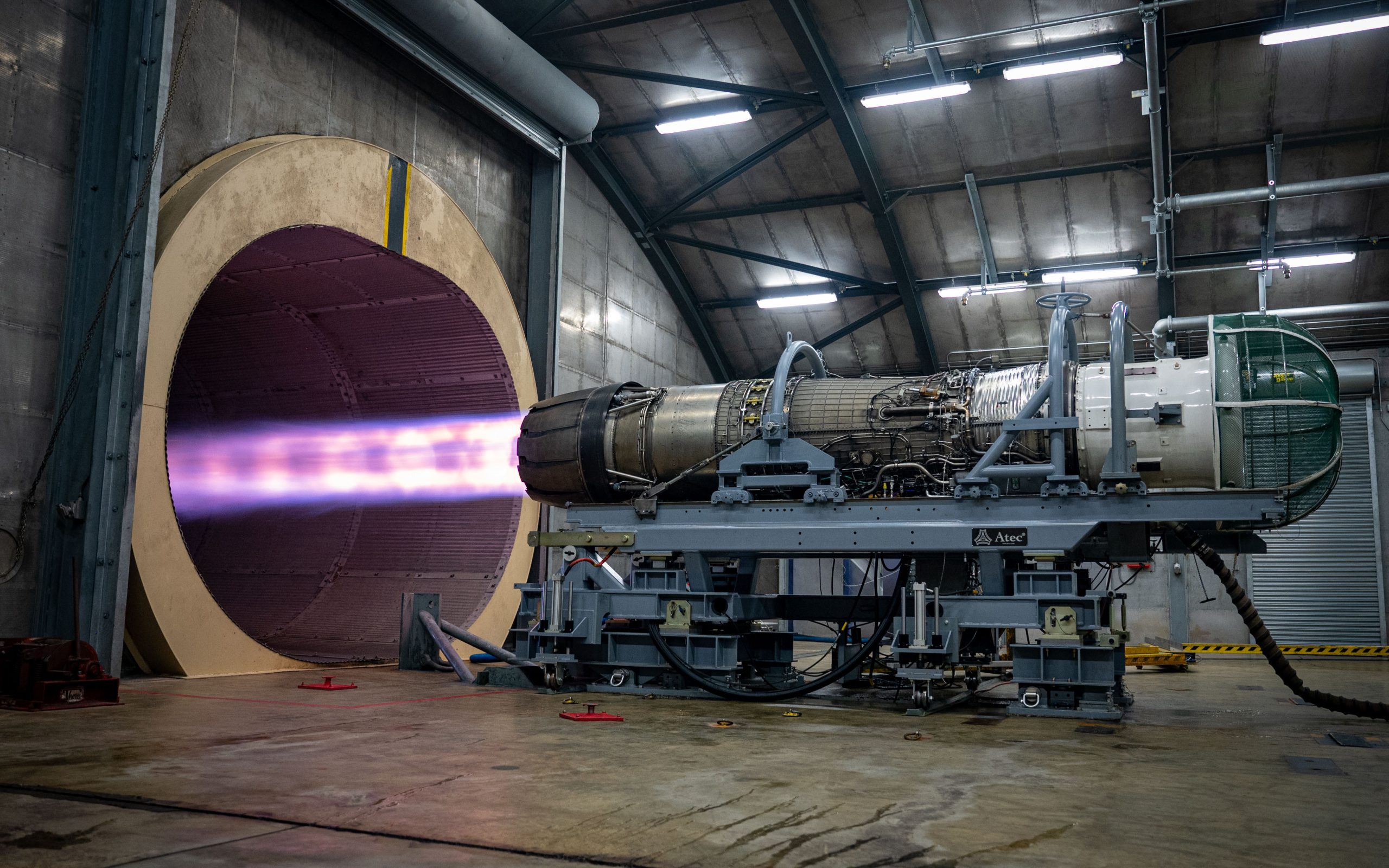
TR Air-Force TF-X KAAN Fighter Jet

dBSPL

Experienced member
Think Tank Analyst
DefenceHub Ambassador
Messages
2,809
Reactions
118 14,278
Nation of residence
Turkey
Nation of origin
Turkey
The best solution would be to lend the four S-400 batteries to Azerbaijan (officially classified as a sale) and station them there permanently; should new developments arise in the Middle East or the Aegean that require a reassessment, the four batteries could be transferred back (repurchase).

The transport route is also considerably shorter; it would be operational again on Turkish soil within a day.
The idea of selling the S-400s to Azerbaijan with an option to buy them back later just does not work under US sanctions. The US Congress explicitly demands that Türkiye get rid of the ownership entirely and "irreversibly." On top of that, Russia’s "End-User Certificate" legally blocks transferring these batteries to any third country without Moscow's official green light. From a logistical standpoint, dismantling, moving, and setting up these massive systems takes weeks, making it technically impossible to bring them back to Türkiye within a single day during a crisis. So, this scenario neither provides the legal fix Washington is looking for nor aligns with military realities.

Besides, there is no need for such convoluted workarounds because it looks like both sides have already agreed on a technical solution behind the scenes. US Vice President JD Vance’s recent statement confirms this, noting that Türkiye has met certain technical requirements to comply with US laws, and the White House is now in the review and verification phase. This shows that Ankara and Washington have finalized a legally sound middle ground, which likely involves keeping the batteries locked away under NATO supervision or at Incirlik, and the administration is just doing a final check before presenting the deal to Congress.

As a final piece of speculation, Foreign Minister Hakan Fidan’s recent meeting with Vladimir Putin raises the question of whether a direct return of the systems to Moscow could be a remote possibility. While this remains entirely unconfirmed, a total buy-back by Russia would serve as the ultimate way to resolve the ownership issue if the current technical tracks with Washington ever hit a dead end.
 
Last edited:

Sanchez

Experienced member
Moderator
Think Tank Analyst
DefenceHub Diplomat
Messages
4,057
Reactions
121 18,505
Nation of residence
Turkey
Nation of origin
Turkey

IC3M@N FX

Contributor
Messages
655
Reactions
3 30 1,349
Nation of residence
Germany
Nation of origin
Turkey

MPs’ objections persist
Gregory Meeks, the most senior Democrat on the House Foreign Affairs Committee, reiterated his objection, stating that the government had not provided sufficient information regarding the sale process.

Democratic MPs Chris Pappas and Dina Titus also reiterated their opposition to the sale of the F-35 to Turkey, with Titus announcing that she would table a joint motion to block the sale of the engines.

In contrast, according to information from Reuters, the Trump administration has decided to press ahead with the sale process despite the objections in Congress.

That won’t achieve anything if the Senate blocks it. Trump would have to threaten the Senate and the Democrates & Republicans People, and make it clear to them that this is solely about the US and American interests, and not about Greece or Israel. I doubt he has enough power to do that.
 

boredaf

Experienced member
Messages
2,203
Solutions
1
Reactions
42 6,478
Nation of residence
United Kingdom
Nation of origin
Turkey


That won’t achieve anything if the Senate blocks it. Trump would have to threaten the Senate and the Democrates & Republicans People, and make it clear to them that this is solely about the US and American interests, and not about Greece or Israel. I doubt he has enough power to do that.
Republicans have the majority at least until the mid terms in November and they will do whatever Trump tells them to do, the worst Democrats can do is to delay things for one voting session or two through filibuster, nothing more.
 

mTT

Contributor
Messages
948
Reactions
13 2,672
Nation of residence
Turkey
Nation of origin
Turkey

HLtFPyQWsAAPsJ8.jpg

KAAN's Heart: F110 Engine Procurement Timeline and the Critical 15 Days​


Timeline​


June 24: Official Start
The formal review process begins as the State Department notifies Congress under the Arms Export Control Act (AECA).


15 CRITICAL DAYS FOR TURKEY
Since Turkey is a NATO member, the review period is 15 days; for non-NATO countries, this can extend up to 30 days.


July 9: End of Review
At close of business, Congress's legal right to intervene in the sale expires and the decision becomes final.


June 24 – July 9: Possible Scenarios​


Scenario A: Congressional Silence
The most likely outcome; if Congress does not object within 15 days, the deal officially enters into force on July 10.


Scenario B: Congressional Objection & Veto Wall
Even if a "Joint Resolution of Disapproval" is introduced, overriding President Trump's veto requires a 2/3 majority — currently seen as unlikely given the current Congressional composition.


Scenario C: Emergency Authority
If a deadlock risk arises in Congress, the President can invoke AECA Section 36 to immediately cancel the 15-day period and approve the sale by executive signature alone.


Why Are 15 Days So Critical?​


Lobbying Activity Restricted
The narrow timeframe does not leave enough time for anti-sale lobbies to generate public pressure or stall the process in committees.


$705 Million Package
Once approved, the massive procurement and production timeline between TAI and General Electric officially launches.


Strategic Advantage of NATO Membership​

TURKEY (NATO Member)Non-NATO Countries
Legal Review Period15 Days30 Days
DeadlineJuly 9, 2026July 24, 2026
Lobbying Risk Level🔵 Low (Limited Time)🔴 High (Ample Time)
Political Bargaining SpaceVery NarrowWide


HKY

Member
Messages
20
Reactions
36
Nation of residence
Turkey
Nation of origin
Turkey
What’s so funny? We told the Americans, "Either you give us the F110, or we’ll copy it under the name 'Güçhan'." And they gave in .
 

boredaf

Experienced member
Messages
2,203
Solutions
1
Reactions
42 6,478
Nation of residence
United Kingdom
Nation of origin
Turkey
What’s so funny? We told the Americans, "Either you give us the F110, or we’ll copy it under the name 'Güçhan'." And they gave in .
The fact that you, or anyone really, believe that shite was real and those people could actually copy and build it. It is bloody hilarious. Also, I've got a bridge to sell in Istanbul, are you interested?
 

Pokemonte13

Contributor
Messages
924
Reactions
11 1,726
Nation of residence
Germany
Nation of origin
Turkey
You should try to sell your bridge to americans. They seem to have swallowed the bait.
They dont care about some frankenstein F110 engine that doesn't even have any credibility. They would just sanction us. Also if the engine were true the overall timeframe would probably be just as long as Tf35000 if its not complete clone of F110 engine.
 

Yasar_TR

Experienced member
Staff member
Administrator
Messages
4,139
Reactions
250 21,630
Nation of residence
United Kingdom
Nation of origin
Turkey
For a bulk order of 329 engines for 136 f15EX for the US , GE was given a contract of 1.58billion dollars in 2021. That puts each engine at just under 5 million dollars.


700million dollar contract, at a price of 7 million a piece, should cover 100 engines for 40 jets. Otherwise 14 million dollars a piece for 50 engines to cover 20 jets is like “daylight robbery”. Normal price for these engines is between 6 to 8 million dollars for small runs
According to this paper :

In June 2026, the formal notification went to Congress for more than 80 GE F110 engines, approved for Türkiye. The announcement landed days before the NATO summit, framed publicly as a gesture of alliance solidarity.

This makes more sense with respect to the 700million dollar price tag. Approximately 8 million dollars per engine is more like the standard price you would expect for a production run of this size. Especially if you consider the fact that GE is already producing 329 engines for US’s 136 f15EX jets.


Saithan

Experienced member
Denmark Correspondent
DefenceHub Diplomat
Messages
9,703
Reactions
65 21,760
Nation of residence
Denmark
Nation of origin
Turkey
I would not put it past any Greek or Israeli lobby groups with knowledge to have already prepared a long report on why we should not get the report and have likely started circulating it.


Be pessimistic, and be positively surprised.
 

dBSPL

Experienced member
Think Tank Analyst
DefenceHub Ambassador
Messages
2,809
Reactions
118 14,278
Nation of residence
Turkey
Nation of origin
Turkey
The package of 80 F110-GE-129E engines currently under the U.S. approval process, combined with the existing initial inventory of 10 engines, establishes a tangible logistics pool of 90 engines for the KAAN program. When military logistics standards are applied to this twin-engine platform, the distribution of the total inventory indicates a clear capability baseline: 14 engines are actively allocated for the flight and system integration activities of the 7 test airframes (flying prototypes) to be produced within the scope of the program. Meanwhile, it is envisioned that the 3 advanced prototypes advancing to the tactical and weapon integration phase could serve within the Turkish Air Force test squadron as part of Operational Test and Evaluation (OT&E) activities. When the remaining engine volume is calculated based on the universally accepted 15-20% Depot-Level Maintenance (DLM) and operational redundancy margin in twin-engine jet inventory management, it fully secures the production of 2 combat squadrons consisting of 16 aircraft each (32 operational airframes in total) for the Turkish Air Force.

Consequently, this procurement stands as the most rational bridge solution capable of sustaining the Mission Capability Rate (MCR) of the early-stage combat KAAN fleet without any risk during the critical threshold until the indigenous turbofan engine project (TEI TF35000) achieves serial production readiness. Therefore, the polemics detached from logistical realities running on social media regarding the inability to field a 5th-generation aircraft with the F110 engine or the insufficiency of the procurement are mostly nonsense at this stage. Getting the project back on track was the key. Thousands of tests and approval procedures related to sensor requirements and operational concepts will be almost complete once the domestically produced engine arrives.
 
Top Bottom