
Latest Thread
You are using an out of date browser. It may not display this or other websites correctly.
You should upgrade or use an alternative browser.
You should upgrade or use an alternative browser.


If we had the time and/or the fighter jet, we too would have been willing to wait years. But we have neither. The Kaan project must not face delays like the Altay or Hürkuş programs. We were fortunate with the Altay; the era of conventional tanks came to an end due to the FPV revolution. However, there is still no vehicle capable of replacing the fighter jet or surpassing its effectiveness.We talk about days, weeks or months. Others about years or decade of delays.
One example, the FCAS project of Germany. 9 years just for CDP with an ending of the whole project.

Wait a little longer and manned jets will already become obsolete. Kızılelma is starting its service life soon and within a few years it has the potential to make manned fighters look like liability rather than power.If we had the time and/or the fighter jet, we too would have been willing to wait years. But we have neither. The Kaan project must not face delays like the Altay or Hürkuş programs. We were fortunate with the Altay; the era of conventional tanks came to an end due to the FPV revolution. However, there is still no vehicle capable of replacing the fighter jet or surpassing its effectiveness.
In that case, let's cancel this very costly Kaan project! After all, the Kızılelma powered by the TF6000 engine is set to enter the inventory in early 2027. The TF10000 will undergo its first ignition sometime in 2027. Presumably, by 2032, we will have Kızılelma squadrons that are combat-ready in every respect.Wait a little longer and manned jets will already become obsolete. Kızılelma is starting its service life soon and within a few years it has the potential to make manned fighters look like liability rather than power.
Right?
Wait a little longer and manned jets will already become obsolete. Kızılelma is starting its service life soon and within a few years it has the potential to make manned fighters look like liability rather than power.
US said, F-35 will be the last manned fighter jet. Now, they developed a 6. Gen. manned fighter jet.
myNameJeff-17
Active member
Massive copeWait a little longer and manned jets will already become obsolete. Kızılelma is starting its service life soon and within a few years it has the potential to make manned fighters look like liability rather than power.
Yes, I think it will drag on until 2027Tusas CEO Dr Demiroglu has been giving out new dates and at the same time trying to divert attention from delayed Kaan P1 first flight with small news about other stuff. .
“KAAN is an aircraft in which all major systems—with the exception of just two—have been developed domestically. Its landing gear and actuators—the components that drive the movement of control surfaces—are domestically produced. Its oxygen system, radar, and munitions are also domestic; in short, it is truly a domestic product. We are also continuing our efforts to ensure that its engine becomes domestically produced in the coming years. KAAN is our most challenging and technologically advanced platform, boasting a level of domestic content that rivals even our land vehicles. Ground operations are currently underway for the first test prototype, designated “DAP-1.” Whether in October or November, we hope to see KAAN take to the skies this year.”
“We have one gasoline-powered, propeller-driven vertical take-off platform called ‘Gölge’; all our other platforms are jet-powered. We are working across three different categories: one platform with a range of up to 300 kilometers, another in the 600-kilometer range, and a third in the 1,000-kilometer range. All of them have successfully passed tests for aerial launching, catapult and ramp launching, and RATO (Rocket-Assisted Take-Off) launching. We have now entered mass production—not in the sense of traditional aviation mass production, but with production volumes closer to those of the automotive industry. Our goal is to establish a system where a platform rolls off the production line every hour or every two hours.”
Are we going to believe this?
He is the harbinger of deadline-delay . Not a single word he has uttered about Kaan P1 first flight has come true.
Second part, especially the last sentence is the biggest BS there is if you take Tusas’s past performance as norm. Seeing is believing. Put your money where your mouth is.
In Turkish:
Ayinesi iştir kişinin lafa bakılmaz
In his first detailed broadcast updates following his appointment, he stated that the P1 and P2 prototypes were expected to take flight by the end of 2025.
later date Shifts: The expected first flight timeline for the P1 was later adjusted to April or May 2026, then to May or June 2026, and eventually pushed toward late 2026 after it began ground taxi trials on July 31, 2026
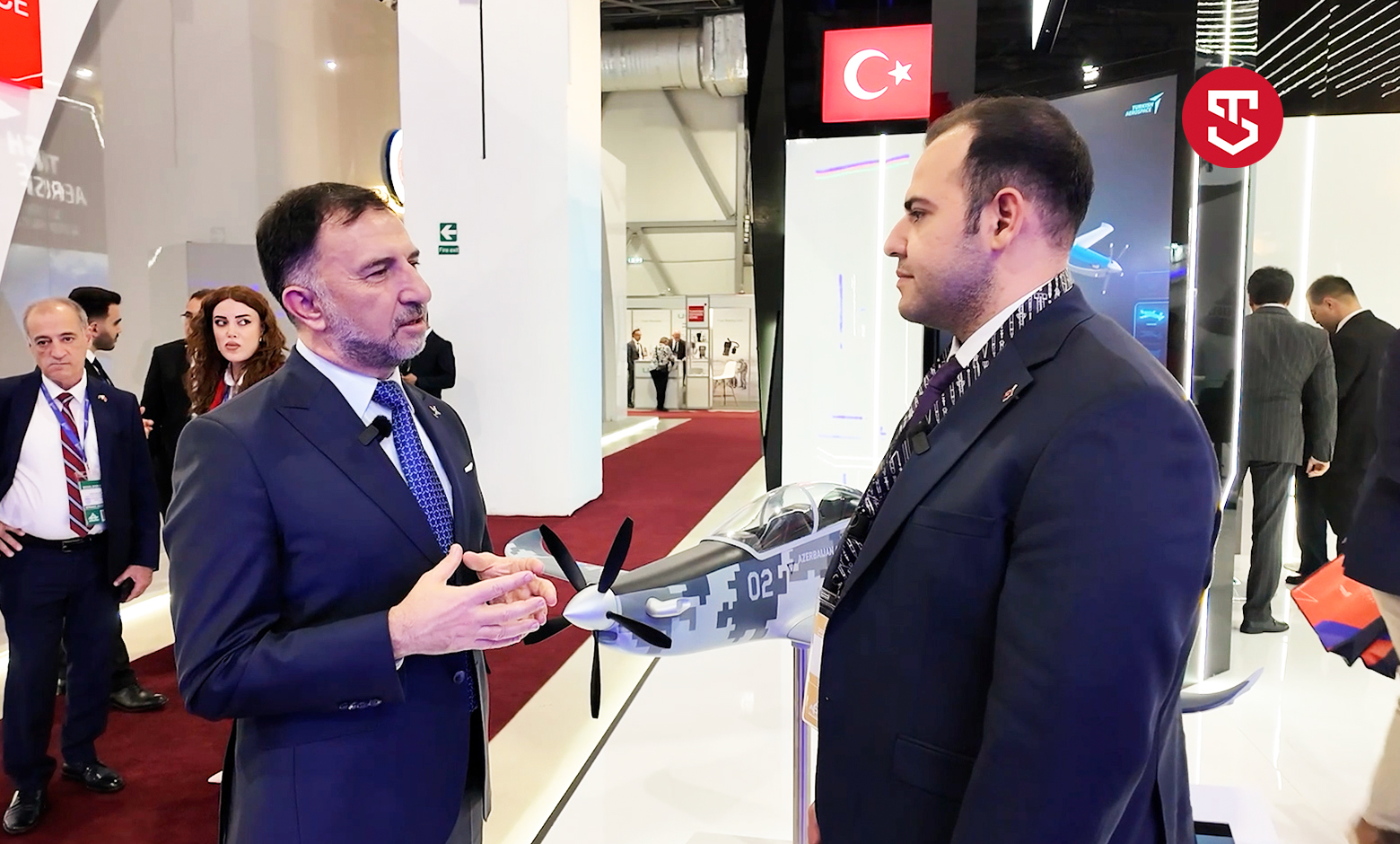
Mehmet Demiroğlu Açıkladı: KAAN, HÜRJET ve HÜRKUŞ'ta Son Durum Ne? | SavunmaSanayiST
Bakü'de düzenlenen ADEX 2026'da SavunmaSanayiST'ye konuşan TUSAŞ Genel Müdürü Dr. Mehmet Demiroğlu, HÜRKUŞ-2'nin ilk ihracatından HÜRJET ve KAAN'ın geleceğine kadar birçok konuda açıklamalarda bulundu.www.savunmasanayist.com


You know Kizilelma is a bomber,right?Wait a little longer and manned jets will already become obsolete. Kızılelma is starting its service life soon and within a few years it has the potential to make manned fighters look like liability rather than power.
KIzılelma can evolve into anything you want. With every iteration it can improve its capabilities like how smart phones evolved, it is a smart device.You know Kizilelma is a bomber,right?
Watch the video where Kızılelma shot down a jet drone the next time you want to call Kızılelma a bomber, perhaps you meant Anka3, even Anka3 will probably be able to shoot a plane out of the sky.
Last edited:
A few years back in an event in Istanbul Selçuk Bayraktar talked about that but it is not easy to get people out of their comfort zone where they want to stick with the old school. There is a paradigm change happening, unless a big pitfall suddenly appears we will probably fly today's manned planes in unmanned configuration going forward. No need to invest in pilot training, no need to take decades to make a plane. You can roll out new planes every 18 months like you are making a consumer product.In that case, let's cancel this very costly Kaan project! After all, the Kızılelma powered by the TF6000 engine is set to enter the inventory in early 2027. The TF10000 will undergo its first ignition sometime in 2027. Presumably, by 2032, we will have Kızılelma squadrons that are combat-ready in every respect.
Right?


Kizilelma was designed and is predominantly for air combat. It is not going to be as stealthy as an Anka-3. It will be good for BVR engagements against 4th and 4.5 generation fighters with our F16s in the background. As a bomber it can be used only in less contested airspace and/or with stand off ammunition at its disposal. Of course it needs to utilise its IWBs efficiently and effectively for that.You know Kizilelma is a bomber,right?
Anka-3 is designed as the deep strike bomber. With TF6000 and IWBs it is ideal for that purpose.
These sentences are constructed using the future tense. I, too, believe these predictions will come true, but unlike the FPV revolution, this is not yet a reality. That is why the Kaan must be inducted into the inventory without delay. Moreover, as you pointed out, manned aircraft and her drones will fly together in the initial phase; even if the drones are ready, this concept will not work if the Kaan is not ready in time.A few years back in an event in Istanbul Selçuk Bayraktar talked about that but it is not easy to get people out of their comfort zone where they want to stick with the old school. There is a paradigm change happening, unless a big pitfall suddenly appears we will probably fly today's manned planes in unmanned configuration going forward. No need to invest in pilot training, no need to take decades to make a plane. You can roll out new planes every 18 months like you are making a consumer product.
I still disagree,havent seen anything confirming your assessment of the Kizilelma.Kizilelma was designed and is predominantly for air combat. It is not going to be as stealthy as an Anka-3. It will be good for BVR engagements against 4th and 4.5 generation fighters with our F16s in the background. As a bomber it can be used only in less contested airspace and/or with stand off ammunition at its disposal. Of course it needs to utilise its IWBs efficiently and effectively for that.
Anka-3 is designed as the deep strike bomber. With TF6000 and IWBs it is ideal for that purpose.
Yeah,havent seen anything indicating it can be a fighter in the future.KIzılelma can evolve into anything you want. With every iteration it can improve its capabilities like how smart phones evolved, it is a smart device.
Watch the video where Kızılelma shot down a jet drone the next time you want to call Kızılelma a bomber, perhaps you meant Anka3, even Anka3 will probably be able to shoot a plane out of the sky.
For me it is a bomber,nothing more.
These sentences are constructed using the future tense. I, too, believe these predictions will come true, but unlike the FPV revolution, this is not yet a reality. That is why the Kaan must be inducted into the inventory without delay.Moreover, as you pointed out, manned aircraft and her drones will fly together in the initial phase; even if the drones are ready, this concept will not work if the Kaan is not ready in time.
Kızılelma does not rely on another plane to do its thing. It does not need Kaan.
Kaan will come with a foreign engine until 2030-2032 which is a big risk as the engines can come rigged/hacked while Kızılelma can be flown with TEI engines in the foreseeable future. Kaan can take all the time it wants to come into play until the TF35000 engine enters the scene which is when we can call it fully Turkish made.
Last edited:
I still disagree,havent seen anything confirming your assessment of the Kizilelma.
Are you saying that our first 2 squadrons of Kaans will not be FOC? A high performance air combat capable KE with local afterburning engines also won't come before 2030s.Kaan will come with a foreign engine until 2030-2032 which is a big risk as the engines can come rigged/hacked while Kızılelma can be flown with TEI engines in the foreseeable future. Kaan can take all the time it wants to come into play until the TF35000 engine enters the scene which is when we can call it fully Turkish made.


KE is built from the ground up to be an unmanned fighter. It might not be as capable as Kaan, but in the short term it serves as both a stopgap and experiment until better engines are available.
Kaan is built to absolutely dominate the skies, there is no comparison.
We need both cutting edge and cost effective systems. In a sense Kizilelma is both, but Kaan is a monster with no corners cut.
Kaan is built to absolutely dominate the skies, there is no comparison.
We need both cutting edge and cost effective systems. In a sense Kizilelma is both, but Kaan is a monster with no corners cut.
There is a paradigm change.
Are you saying that our first 2 squadrons of Kaans will not be FOC? A high performance air combat capable KE with local afterburning engines also won't come before 2030s.
You wouldn't think a foreign engine would be a problem a few years back but today a foreign engine is a bullet shot at your feet when it comes to that. Even an ejection seat may decide to eject the pilot when it is not meant to so it is a vulnerability when it is foreign made.
KE AB engine is expected to be first run in 2027, I would put it on an unmanned plane by end of 2028, it is an unmanned plane after all and every next engine is built on the experience that comes before and is made faster.
Who needs to dogfight when you can only fight and shoot down the opponent before it outruns you. Air combat is not the air combat of the past anymore and KE more than likely will make it happen.
That's not how any of this worked, ever.You wouldn't think a foreign engine would be a problem a few years back but today a foreign engine is a bullet shot at your feet when it comes to that. Even an ejection seat may decide to eject the pilot when it is not meant to so it is a vulnerability when it is foreign made.
TF6000 first ran in march 2024. Hopefully first article will be delivered to Baykar for tests in the next 6 months. So that's 3 years from first lighting to first installation. Not flight, installation.KE AB engine is expected to be first run in 2027, I would put it on an unmanned plane by end of 2028
It takes half the time for the next engine. Mr. Akşit said this, of course there is a limit to it but look at how fast RR develops.That's not how any of this worked, ever.
TF6000 first ran in march 2024. Hopefully first article will be delivered to Baykar for tests in the next 6 months. So that's 3 years from first lighting to first installation. Not flight, installation.
Last edited:


