If the US Congress (both the House of Representatives and the Senate) attempts to block the
$700 million deal for the GE F110 engines for the Turkish TAI KAAN program, Donald Trump has two highly effective legal mechanisms to push the sale through anyway.
US arms export law (specifically the
Arms Export Control Act / AECA) is structurally designed to give the executive branch the upper hand in foreign and national security policy.
Here are the concrete options Trump can utilize:
1. The Presidential Veto
For Congress to block an arms sale, both chambers must pass a
Joint Resolution of Disapproval within a strict statutory timeframe—which is
15 calendar days for NATO allies like Turkey after formal notification.
- Trump's Counter: If Congress manages to pass the resolution, the President can simply issue a presidential veto.
- The Congressional Hurdle: To override a presidential veto, Congress requires a two-thirds majority in both the House and the Senate. In US history, Congress has never successfully overridden a veto on an arms export. Achieving such a massive bipartisan supermajority against Trump’s explicit policy goals is politically highly improbable.
2. The Emergency Declaration
Section 36 of the
Arms Export Control Act contains a built-in escape clause for the executive branch. If the President formally states that "an emergency exists which requires the proposed sale in the national security interests of the United States," the mandatory congressional review period is completely waived.
- Trump's Counter: He can bypass Congress entirely via an executive decree, framing the engine delivery as vital for securing NATO’s southern flank or stabilizing the Black Sea region. The State Department can then issue the export licenses to General Electric immediately.
- Precedent: Trump famously used this exact lever during his first term (May 2019) to bypass a blocking Congress for an $8.1 billion arms deal with Saudi Arabia and the UAE.
3. Administrative Tranching and Strategy
Should Trump want to avoid a direct, high-profile clash with Capitol Hill, his administration can use tactical adjustments under the
America First Arms Transfer Strategy:
- Splitting the Order: The administration could theoretically break the large order down into smaller individual packages or maintenance contracts that fall below the statutory dollar-value thresholds requiring formal congressional notification. While legally complex for a major engine program, it serves as a method to blur the lines of congressional oversight.
-
Unless Congress can muster a historic, veto-proof two-thirds majority in both chambers, it can only delay, debate, and politically criticize the deal—it cannot fundamentally stop it. If Trump chooses to use the F110 engines as a geopolitical tool, the legal authority rests firmly in his hands.
This raises the question of whether Trump has Balls of Steel to override Congress and the Senate. After all, to announce on national television that he would be giving Turkey and Erdogan a gift that would make him happy, only to turn up empty-handed, would be a scandal and a huge embarrassment.



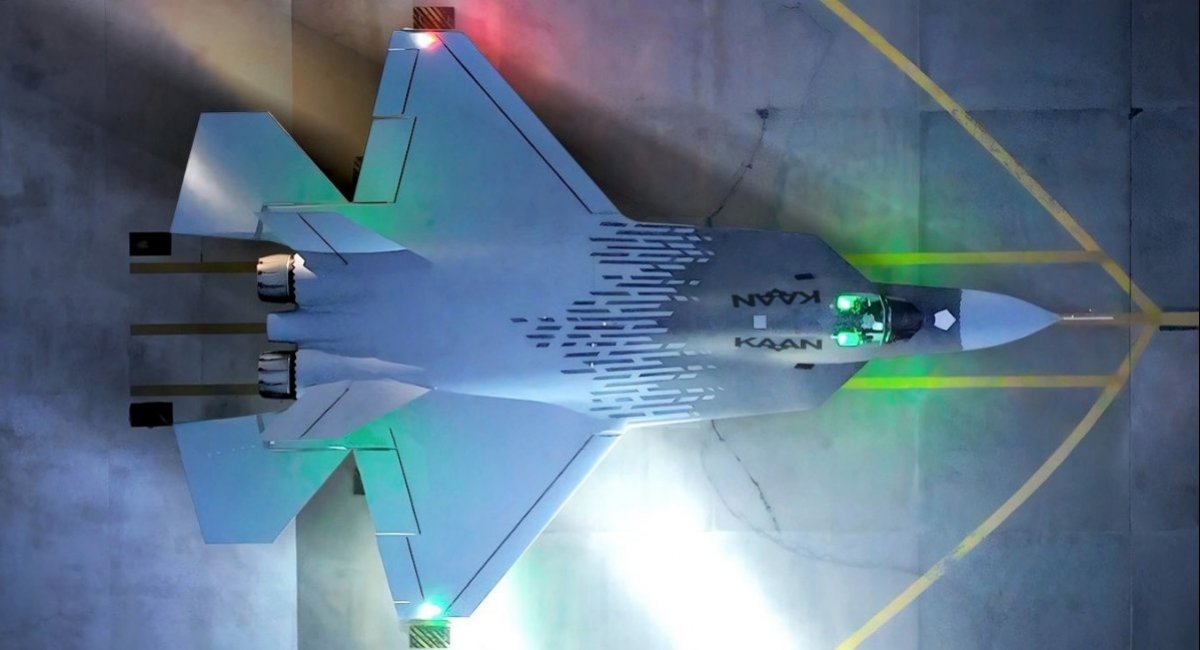


 , as the MSB Research and Development Centre has neither Factories nor test Center, let alone the technological know-how in Engine Manufacturing or the relevant metallurgical formulas and expertise. I believe that the Air Supply and Maintenance Centre (1. Hava İkmal Bakım Merkezi) in Eskişehir, which is capable of carrying out comprehensive maintenance work and manufacturing spare parts, could, in collaboration with a partner, assemble a F-110 ‘Frankenstein’ engine as Güçhan using its own parts and spare parts from stock – there aren’t that many engine manufacturers in Turkey, if you take TEI out of the equation; that could have helped – perhaps with Kale in an advisory role? According to the Ministry of Defence, there are six operational prototypes; I believe this to be the case, they made up of Original Parts, Spare Parts and in-house Parts/Components.


