Τα πρώτα ελληνικά μαχητικά 5ης γενιάς F-35 θα φτάσουν σε περίπου δύο χρόνια, οπότε ας απαντήσουμε αυτό το κρίσιμο ερώτημα

www.pentapostagma.gr
Will Greece be able to control the F-35 software?
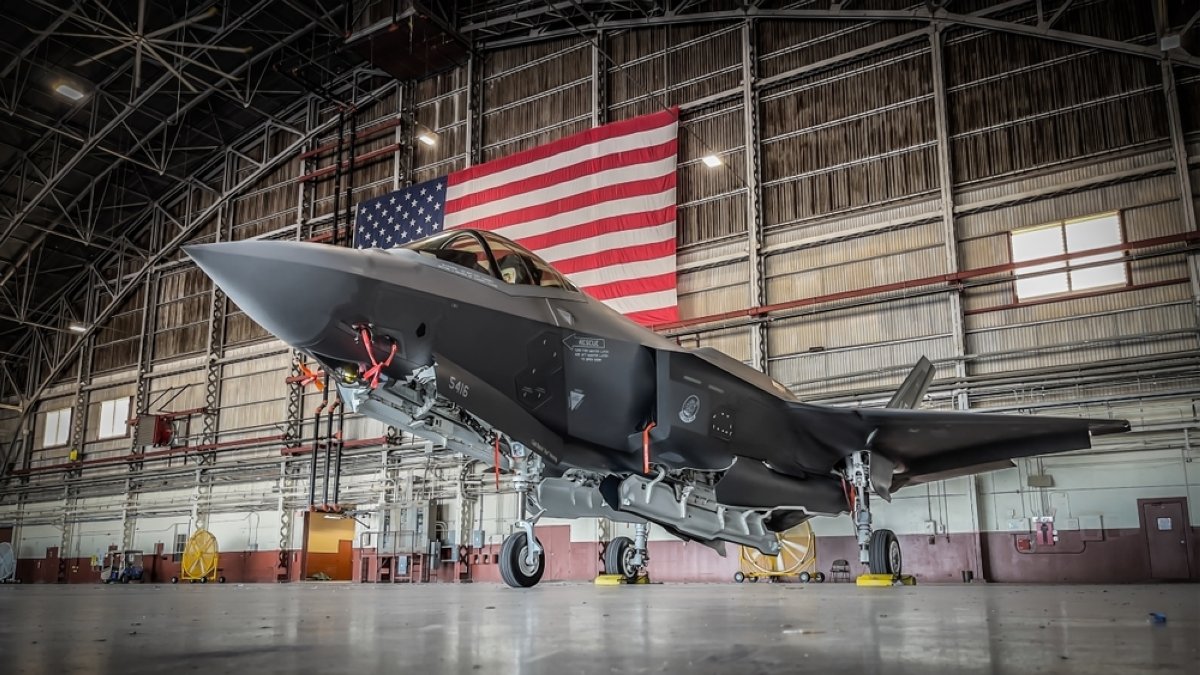
One of the biggest questions surrounding Greece's acquisition of the F-35 isn't about stealth, radar, or the missiles they'll be able to carry. It's about something much harder to see with the naked eye: who really controls the software that makes the aircraft what it is.
Because the F-35 is not just a fighter jet with a powerful engine and an advanced radar. It is essentially a flying computer, in which software determines a huge part of its capabilities. Sensor processing, data fusion, electronic warfare, threat recognition, weapons management and a large part of the pilot's operational picture depend on it.
And here lies the big question for Greece: when we receive our own F-35As, will we really be able to decide for ourselves what they will do, modify their software, and install whatever we want? Or will we still be dependent on the United States for critical upgrades and data?
The answer is much more complex than a simple "yes" or "no."
It's Not Just a Simple Aircraft
To first understand the problem, we need to separate two things that are often confused: the software of the aircraft itself and the mission data it uses.
The F-35 has an extremely complex sensor system. The AESA radar, Distributed Aperture System, electro-optical system and electronic warfare systems collect vast amounts of information. The aircraft must then process it, correlate it and present it to the pilot as a clear picture of the battlefield as possible.
This is the famous sensor fusion.
But for the F-35 to recognize that a particular signal may come from an enemy radar or air defense system, it needs data. And that's where Mission Data Files come in.
Mission Data Files, or MDFs, contain information about the electromagnetic environment, threats, and other data that helps the aircraft understand what it sees and hears. The US side itself has explained that this data allows the F-35 to detect, recognize, correlate, and engage threats across the entire electromagnetic spectrum.
So, having the plane doesn't automatically mean you have absolute control over everything it knows and can do.
And this is extremely important for Greece.
Greece signed the Letter of Offer and Acceptance in 2024 for the supply of 20 F-35A, with the right for another 20 aircraft, while the first delivery is expected by the Greek Ministry of National Defense from 2028.
The US approval of the potential sale includes, among other things, software, technical data, training, electronic warfare systems, support and other services required to operate the system. However, the same document classifies some of the data as classified and explains that certain technological information cannot be made public because it could allow an adversary to develop countermeasures.
And here we must be very careful.
There is no publicly documented statement from the United States that simply says that “allies do not know all the capabilities of the F-35.” What there is, however, is something much more interesting: the program involves classified capabilities and different levels of access to software, data, and technical information.
In other words, the fact that a country is an F-35 operator does not automatically mean that it gains access to the source code or every technical detail of the system.
This has been evident for years. The American program has maintained control of the F-35’s core software, while the countries that operate the aircraft have developed different types of capabilities around the system.
The typical example is the United Kingdom, which as a key partner in the program has secured a particularly high level of participation and operational dominance. But even the closest partners do not operate as if they have bought the source code of a commercial computer and can freely change it.
This is also the most important point for Greece.
Greece will be able to operate its F-35s, integrate them into its own chain of command, plan missions and use their available capabilities. However, this does not mean that it will be able to unilaterally open the code and change the way the aircraft's basic systems operate.
The F-35 may have extremely advanced sensors, but its effectiveness also depends on how well it knows the environment in which it is going to operate.
That is why Mission Data Files are created.
Australia and the United Kingdom have jointly established a Reprogramming Laboratory at Eglin Air Force Base in Florida. This laboratory develops, tests and validates Mission Data Files for the F-35s of these countries. In 2024, Australia, Canada and the United Kingdom strengthened their cooperation in this area, creating 80 Squadron for this specific mission.
This shows us something very important.
F-35 countries can gain a real and meaningful ability to adapt their mission data to their own operational needs, without this meaning that they write the basic software of the aircraft from scratch.
Australia, for example, has invested in advanced sovereign mission data reprogramming capabilities and in its own support systems, precisely to increase its national autonomy.
And this is the model that is of real interest to Greece.
The ideal scenario is not necessarily for Athens to have the full source code of the F-35. That would be extremely difficult and is not the operating model of the program.
The real challenge is for Greece to be able to create, control and manage as much of the national mission data as possible, to have trained personnel, infrastructure and a secure process so that the Greek F-35s can be adapted to Greek operational needs.
For a country like Greece, which is located in a particularly demanding environment in the Aegean and Eastern Mediterranean, this may be almost as important as the aircraft market itself.
But there is a second level of dependency: major upgrades.
The F-35 continues to evolve. Block 4 is a massive modernization effort with new capabilities in weapons, electronic warfare, target recognition, and other systems. Technology Refresh 3, or TR-3, is a key technological foundation for many of these future capabilities.
And here we see in practice that software is now as critical as metal.
The US Government Accountability Office has recorded significant delays in the TR-3 and Block 4. According to the 2025 report, the reduced Block 4 program is expected to be completed in 2031 at the earliest, about five years later than originally planned, while several capabilities are being pushed even further into the future.
So when Greece receives its first F-35s, it will not be buying a “final” aircraft that will remain the same for 30 years.
It will buy a platform that will continue to evolve through software, hardware and new capabilities.
And that means that Greece’s operational autonomy will not only depend on what the contract says about the 20 or 40 aircraft. It will depend on how much access the Greek side will have to the data, the infrastructure, the technical support, the training and, most importantly, the ability to adapt the system to its own needs.
There is also an important myth that needs to be dispelled.
There is no publicly documented “switch” that Washington can simply flip and stop the Greek F-35s from flying. The real dependency is more complex and far more serious: spare parts, maintenance, technical support, certified upgrades, software, Mission Data Files, and the entire global support infrastructure.
This has been recognized for years by other countries. Australian parliamentary committees have expressed concerns that reliance on the global support system, ALIS and mission data could affect Australia’s sovereign ability to decide when, where and how to use its F-35 capability.
So, what is the answer to the title question?
Greece is not going to have complete, absolute ownership over every line of code in the F-35. It will not be able to open the core software and freely modify the way the radar, electronic warfare systems, or sensor fusion work.
However, it can gain a significant degree of operational autonomy, provided it invests in the right infrastructure and gains greater capabilities to manage its own Mission Data Files, mission, training and support.
And this is perhaps the most accurate picture of the Greek F-35.
They will neither be “American aircraft that Greece is simply borrowing,” nor fully independent Greek systems.
They will be Greek F-35s within an American-controlled global ecosystem.
And the real strategic value for Greece will be determined by how much of this ecosystem it will be able to control on its own.
Because ultimately, in the F-35, the most important thing you buy is not just the aircraft.
You are buying access to a vast network of sensors, software, data, weapons, support, and information.
And in a future war, the one who controls the data and can update it faster than the opponent may have an advantage that is not visible in the fighter’s external appearance or its price.