• Forum restore complete (see latest announcement thread)

TR Navy Navy|News & Discussions

Aloster

Active member
Messages
82
Reactions
1 130
Nation of residence
Turkey
Nation of origin
Turkey
Latest missile corvette Ukraine sank was hit in the same place one after another, they literally tore the ship open with the first and blew the second kamikaze drone in that same space, you can find the video easily.


That wouldn't be reliable at all, drones can simply manoeuvre away from the barrier and if the barrier far too long for them to get around, it would be far too long/heavy to be thrown into the water. Not to mention it would be chaotic and dangerous as fuck to try to throw something in the water in the hopes that it might stop a drone from hitting.
" Not to mention it would be chaotic and dangerous as fuck to try to throw something in the water in the hopes that it might stop a drone from hitting."

Maybe it isn't bad idea maybe we can use modified floating Tamgec munition (M58 MICLIC) (100m length with 10m width effective area) with delayed and contact activation to create floating explosive barrier . I know it isn't ideal but it can increase survivability of the ship also it is very quick action munition. Also after action it can be detonated.
For example as an application method 6 munition can be fired at same time from one port side 1 back to front, 1 back to back , 1 front to back, 1 front to front , 1 middle to front , 1 middle to back with all of them 80>x>60 degree. Original tamgeç too heavy for this (2800 kg all set) job but it can be lighter. Effective Width can be reduced to 2 m and also net size distance can be defined 70 cm between for each explosive charge . So one set (6 munition) about 3000 kg it can be acceptable for a ship.

M58 MICLIC​

The MICLIC system consists of an M353 3½ ton (3,175 kg)[6] or M200A1 2½ ton (2,268 kg) trailer (or M200 tracked trailer) chassis, a launcher assembly, an M147 firing kit, an M58A3 line charge and a 5-inch (127mm) MK22 Mod 4 rocket. The line charge is 350 feet (107 meters) long and contains 5 pounds (2.27 kg) per linear foot of C-4 explosive. In the event a MICLIC fails to detonate normally, it can be manually activated by time-delay fuses every few feet along the length of it.
 

boredaf

Experienced member
Messages
2,271
Solutions
1
Reactions
42 6,661
Nation of residence
United Kingdom
Nation of origin
Turkey
" Not to mention it would be chaotic and dangerous as fuck to try to throw something in the water in the hopes that it might stop a drone from hitting."

Maybe it isn't bad idea maybe we can use modified floating Tamgec munition (M58 MICLIC) (100m length with 10m width effective area) with delayed and contact activation to create floating explosive barrier . I know it isn't ideal but it can increase survivability of the ship also it is very quick action munition. Also after action it can be detonated.
For example as an application method 6 munition can be fired at same time from one port side 1 back to front, 1 back to back , 1 front to back, 1 front to front , 1 middle to front , 1 middle to back with all of them 80>x>60 degree. Original tamgeç too heavy for this (2800 kg all set) job but it can be lighter. Effective Width can be reduced to 2 m and also net size distance can be defined 70 cm between for each explosive charge . So one set (6 munition) about 3000 kg it can be acceptable for a ship.

M58 MICLIC​

The MICLIC system consists of an M353 3½ ton (3,175 kg)[6] or M200A1 2½ ton (2,268 kg) trailer (or M200 tracked trailer) chassis, a launcher assembly, an M147 firing kit, an M58A3 line charge and a 5-inch (127mm) MK22 Mod 4 rocket. The line charge is 350 feet (107 meters) long and contains 5 pounds (2.27 kg) per linear foot of C-4 explosive. In the event a MICLIC fails to detonate normally, it can be manually activated by time-delay fuses every few feet along the length of it.
Any weight you add to the ship with something like that has to come by taking that weight out from something else. And again, you don't have a guarantee that USV will not just get out of the way, or that the line would be strong enough to explode it. And what are you going to do if there are multiple USV coming one after the net is fired?

It would be much simpler and effective to use 25mm guns or a missile like Umtaş or a loitering munition like Alpagut.
 

Aloster

Active member
Messages
82
Reactions
1 130
Nation of residence
Turkey
Nation of origin
Turkey
Any weight you add to the ship with something like that has to come by taking that weight out from something else. And again, you don't have a guarantee that USV will not just get out of the way, or that the line would be strong enough to explode it. And what are you going to do if there are multiple USV coming one after the net is fired?

It would be much simpler and effective to use 25mm guns or a missile like Umtaş or a loitering munition like Alpagut.
Yes I don't have a guarantee that USV will not just get out of the way . But this time consuming process for USV . Ship gain some time for self defense with 25mm guns or a missile like Umtas. I'm pretty sure the 5 pounds C-4 line would be strong enough to explode USV look to Russian tanks which hit by drones their charge not too bigger than it. Also my example layout from attack direction create two line defense at intersection enough to stop two USV. You can think that as last chance defense.
 

dBSPL

Experienced member
Think Tank Analyst
DefenceHub Ambassador
Messages
2,871
Reactions
123 14,521
Nation of residence
Turkey
Nation of origin
Turkey
It is logical if we ignore the need to access these ports, not a practical solution, just a protective one. It is like installing cages around a tank going into urban warfare without increasing situational awareness or adding gunshot detection systems. Nor does it provide any protection against UUVs that may use a retractable periscope/SATCOM and pass through.

How deep should these structures be? Is it 2 metres, 3 metres? There is no end to it, and it is impractical to make it go all the way to the bottom with 10-15 metres. Also, once some of them are hit, they will sink and make a passageway for other USVs, an explosion can create a 4-5 metre gap to let another USV through.

We should have modular structures like this to close the harbour entrance if necessary, but before that it is also necessary to have ULAQ PSVs at each base, coupled with sensors (underwater and surface surveillance) etc.

There is a saying in Turkish, "Alemin akıllısı" So in the end, this the first thought even a common person on the street would have said this, if you have mentioned of port protection, even something employed since historical times.​
Üstad, as I wrote above, my main focus is on whether another layer can be added as an emergency-situation in the defense of main combatants cruising close to coastal areas against asymmetric elements such as kamikaze swarm boats. These unmanned kamikaze boats are probably the biggest asymmetric threat that naval enthusiasts will be thinking about the most in the coming period, and therefore we are likely to see many new approaches even on an experimental scale in the coming period. Although the example I gave may sound a bit absurd, what I actually mean is to create a physical barrier that will prevent the kamikaze from coming into contact with the hull sheet. Therefore, there may be approaches with a very different mechanism in implementation based on same logic.

Even leaving aside IR and RF countermeasures, electronic decoys, etc., a medium level combatant frigate can track and illuminate multiple surface targets simultaneously. Also that can have at least two close-range engagement systems, and if we add stabilized 20/30mm turrets bot sides, a total of at least 3 close-range weapon systems in each direction can have coordination through running over common combat system. I don't know the status of the Russian navy in terms of this combat management system, navionics, but the current NATO systems standards are quite good in this regard.

The scenario I assumed was what to do in a situation where a frigate or destroyer on the move, with all search and tracking systems on and weapons systems working effectively, is able to neutralize most of the kamikaze boats that manage to get into close engagement as a swarm, but one or two manage to reach a dangerous distance. I just thinking aloud on how the point of detonation of a kamikaze boat can be stay out from the hull sheet when the countermeasure systems are breached.
 

dBSPL

Experienced member
Think Tank Analyst
DefenceHub Ambassador
Messages
2,871
Reactions
123 14,521
Nation of residence
Turkey
Nation of origin
Turkey
" Not to mention it would be chaotic and dangerous as fuck to try to throw something in the water in the hopes that it might stop a drone from hitting."

Maybe it isn't bad idea maybe we can use modified floating Tamgec munition (M58 MICLIC) (100m length with 10m width effective area) with delayed and contact activation to create floating explosive barrier . I know it isn't ideal but it can increase survivability of the ship also it is very quick action munition. Also after action it can be detonated.
For example as an application method 6 munition can be fired at same time from one port side 1 back to front, 1 back to back , 1 front to back, 1 front to front , 1 middle to front , 1 middle to back with all of them 80>x>60 degree. Original tamgeç too heavy for this (2800 kg all set) job but it can be lighter. Effective Width can be reduced to 2 m and also net size distance can be defined 70 cm between for each explosive charge . So one set (6 munition) about 3000 kg it can be acceptable for a ship.

M58 MICLIC​

The MICLIC system consists of an M353 3½ ton (3,175 kg)[6] or M200A1 2½ ton (2,268 kg) trailer (or M200 tracked trailer) chassis, a launcher assembly, an M147 firing kit, an M58A3 line charge and a 5-inch (127mm) MK22 Mod 4 rocket. The line charge is 350 feet (107 meters) long and contains 5 pounds (2.27 kg) per linear foot of C-4 explosive. In the event a MICLIC fails to detonate normally, it can be manually activated by time-delay fuses every few feet along the length of it.
Against the kamikaze boat threat, loitering mini-drones, compactly packaged and held in the launcher ready to fire, can also offer an effective solution. A countermeasure configured solely and directly against asymmetric threats from the surface. Since reaction time is a critical factor here, an additional layer can be created with such munitions before the threat element enters a critical distance. I think STM's Alpagut solution can be used to work on naval countermeasure studies against these asymmetric surface threats.
 
Last edited:

boredaf

Experienced member
Messages
2,271
Solutions
1
Reactions
42 6,661
Nation of residence
United Kingdom
Nation of origin
Turkey
Against the kamikaze boat threat, loitering mini-drones, compactly packaged and held in the launcher ready to fire, can also offer an effective solution. A countermeasure configured solely and directly against asymmetric threats from the surface. Since reaction time is a critical factor here, an additional layer can be created with such munitions before the threat element enters a critical distance. I think STM's Alpagut solution can be used to work on naval countermeasure studies against these asymmetric surface threats.
Russians just lost another ship, a landing ship this time, to a kamikaze USV. I hope we are looking at ways to stop them and looking at it hard.

And I agree with you, I think Alpagut could make a great countermeasure against them. 60 kms of range, an hour of loitering time and supposed to be really effective against moving targets. At something like 50 kgs a piece, we could have a launcher and it could easily be reloaded after use.
 

Anmdt

Experienced member
Naval Specialist
Professional
Messages
5,804
Solutions
2
Reactions
148 26,908
Nation of residence
Turkey
Nation of origin
Turkey
Üstad, as I wrote above, my main focus is on whether another layer can be added as an emergency-situation in the defense of main combatants cruising close to coastal areas against asymmetric elements such as kamikaze swarm boats. These unmanned kamikaze boats are probably the biggest asymmetric threat that naval enthusiasts will be thinking about the most in the coming period, and therefore we are likely to see many new approaches even on an experimental scale in the coming period. Although the example I gave may sound a bit absurd, what I actually mean is to create a physical barrier that will prevent the kamikaze from coming into contact with the hull sheet. Therefore, there may be approaches with a very different mechanism in implementation based on same logic.

Even leaving aside IR and RF countermeasures, electronic decoys, etc., a medium level combatant frigate can track and illuminate multiple surface targets simultaneously. Also that can have at least two close-range engagement systems, and if we add stabilized 20/30mm turrets bot sides, a total of at least 3 close-range weapon systems in each direction can have coordination through running over common combat system. I don't know the status of the Russian navy in terms of this combat management system, navionics, but the current NATO systems standards are quite good in this regard.

The scenario I assumed was what to do in a situation where a frigate or destroyer on the move, with all search and tracking systems on and weapons systems working effectively, is able to neutralize most of the kamikaze boats that manage to get into close engagement as a swarm, but one or two manage to reach a dangerous distance. I just thinking aloud on how the point of detonation of a kamikaze boat can be stay out from the hull sheet when the countermeasure systems are breached.
I agree with using these modular floating systems at bases as a last resort, even coupled with floating sensor stations, as @Saithan has been suggesting for years. For ships, such systems will give way to what we had in the past, which was used against torpedoing aircraft: "torpedo belts". Ships today are compressed to the smallest possible size to do the same job, so adding such a concept would require a complete rethink of design practices. Not impossible per se, I think it would also change our perception of hull design.​
Russians just lost another ship, a landing ship this time, to a kamikaze USV. I hope we are looking at ways to stop them and looking at it hard.

And I agree with you, I think Alpagut could make a great countermeasure against them. 60 kms of range, an hour of loitering time and supposed to be really effective against moving targets. At something like 50 kgs a piece, we could have a launcher and it could easily be reloaded after use.
ScanEagle is what we've needed for years, another thing we haven't lifted a finger for together with GIHA. "TB2-3 is all we need, scrap the others" seems to be the prevailing idea among bureaucrats these days.​
 

dBSPL

Experienced member
Think Tank Analyst
DefenceHub Ambassador
Messages
2,871
Reactions
123 14,521
Nation of residence
Turkey
Nation of origin
Turkey
Russians just lost another ship, a landing ship this time, to a kamikaze USV. I hope we are looking at ways to stop them and looking at it hard.

And I agree with you, I think Alpagut could make a great countermeasure against them. 60 kms of range, an hour of loitering time and supposed to be really effective against moving targets. At something like 50 kgs a piece, we could have a launcher and it could easily be reloaded after use.
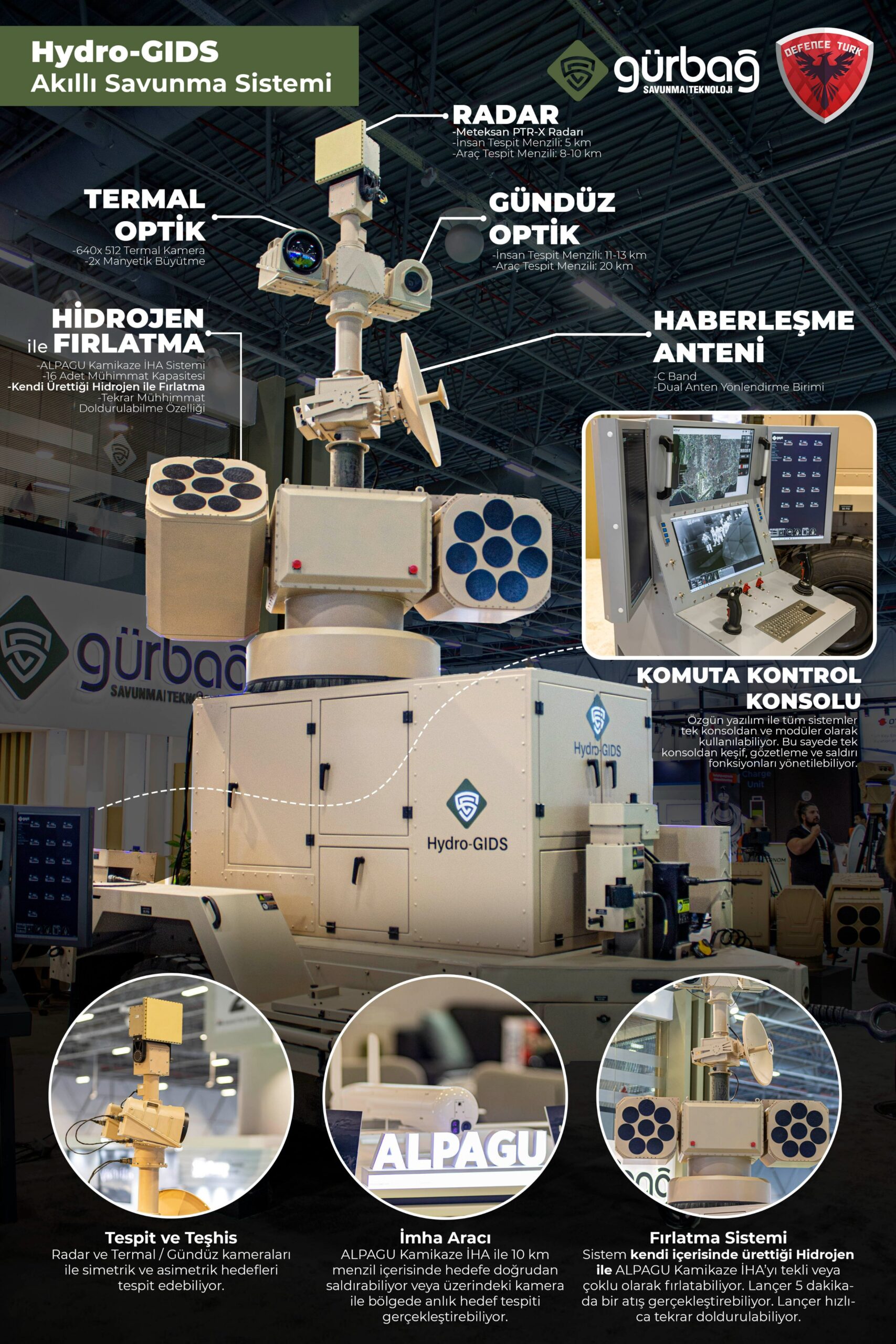
I am thinking that the Hydro-GIDS system could be reconfigured to be installed on navy ships. With two launchers, each with 4/5 ALPAGUTs**, E/O system, Radar mast, and communication antennas, it would be a great countermeasure solution for these kamikaze USVs. If power management can be integrated on vessel, this weapon station can be extremely compact, it can be integrated into the superstructures of our combatant and support ships, including MILGEM corvettes, without the need for major modifications. I hope that this is exactly what we are currently working on.
hydro-gids-scaled.jpg

**(What I mean here is a loitering munition that can cruise very close to sea level, has high maneuverability, can detect and track targets, and can carry a warhead of more than 10kg)
 
Last edited:

Bogeyman 

Experienced member
Professional
Messages
9,925
Reactions
76 33,074
Website
twitter.com
Nation of residence
Turkey
Nation of origin
Turkey
01.04%2F1%2FNew%20folder%20(19)%2FNew%20folder%20(12)%2F20240216_2_62586641_97807709.jpg


Submarines get energy from domestic solutions


New ones are being added to the domestic power electronics solutions developed to meet Turkey's needs in high technology products.

As a result of these efforts, technologies developed by Turkish engineers are replacing the products supplied from abroad in the past.

ASPOWER Energy, which has more than 30 years of experience in power electronics, also contributes to these efforts with its strong R&D team.

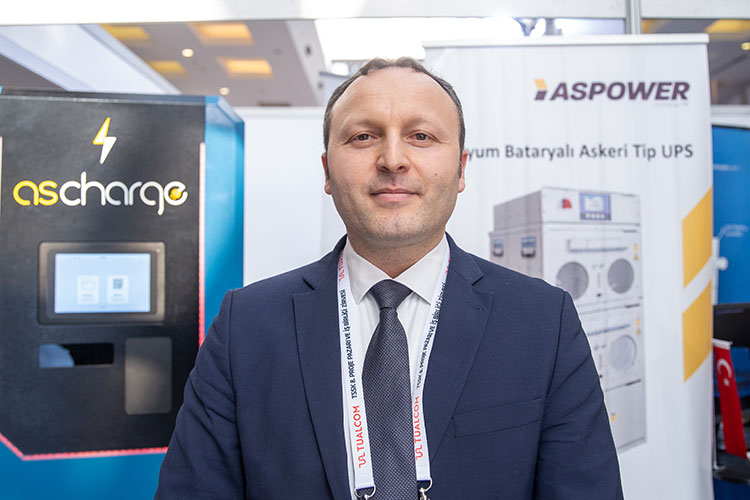
ASPOWER General Manager Ramazan Demir, in his statement to the AA correspondent, said that they operate to carry out R&D-based studies on power electronics.

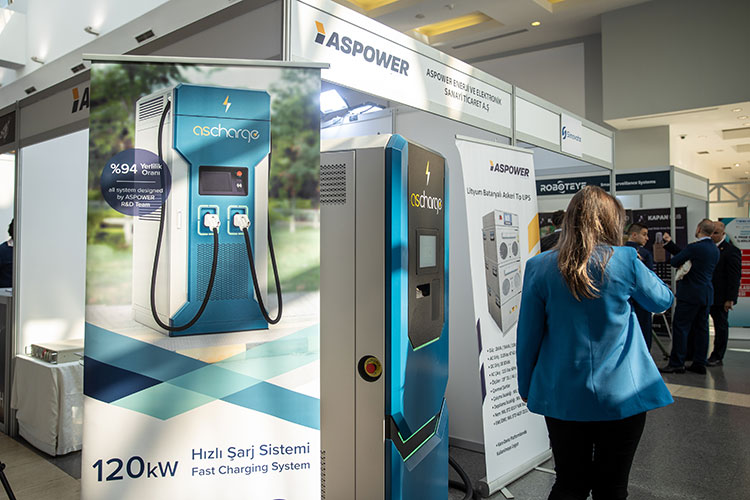
Stating that they have carried out international studies with more than 25 engineers in the R&D center, Demir said that in this context, AC-DC converters (converters), inverters (inverters, solar inverters), rectifiers (battery charging system, rectifier, heli-start rectifier), frequency It develops different power electronics products such as converters, uninterruptible power supplies, mobile power supplies and battery storage systems. Demir stated that they started to develop and produce electric vehicle charging systems since 2019.

01.04%2F1%2FNew%20folder%20(19)%2FNew%20folder%20(12)%2F20240216_2_62586641_97807711.jpg


Demir stated that the hardware, software and mobile application aspects of electric vehicle charging systems are on the mass production line and that units have been established in 22 different cities from Çanakkale to Kars. Demir noted that they can remotely access, monitor and update these devices with internet of things technology, and offer charging system solutions for different electric vehicles.

Products that have proven themselves in the field are ready for new tasks
Ramazan Demir gave information that various power electronic systems such as lithium battery-backup uninterruptible power supplies, frequency converters, rectifiers and battery charging systems, which they developed specifically for the needs, are used in different military ships.

In this context, Demir stated that 2, 5, 10 kilowatt uninterruptible power supplies are actively working on different ship platforms such as MİLGEM 5, MİLGEM Pakistan, TCG Oruç Reis frigates, and that the units they put forward are located on different ships with their battery system and power supply system.

Demir said, "We use standard or specially developed power systems that are required to increase the quality of electrical energy in naval platforms, coastal and port power supply systems and ground support systems of air platforms, ensure its uninterruption, convert it into the desired parameters (voltage, current, frequency) and store it." Various rectifiers, inverters, uninterruptible power supplies, frequency converters, battery charging systems and storage systems reaching megawatts are actively used in the field.” said.

Mentioning that submarines move under water with the electrical energy they receive from batteries, Demir emphasized that they aspire to quickly use the charging system solutions that have proven themselves in the field during the Coastal Supply System tender process by adjusting them to the desired powers.

94 percent locality rate

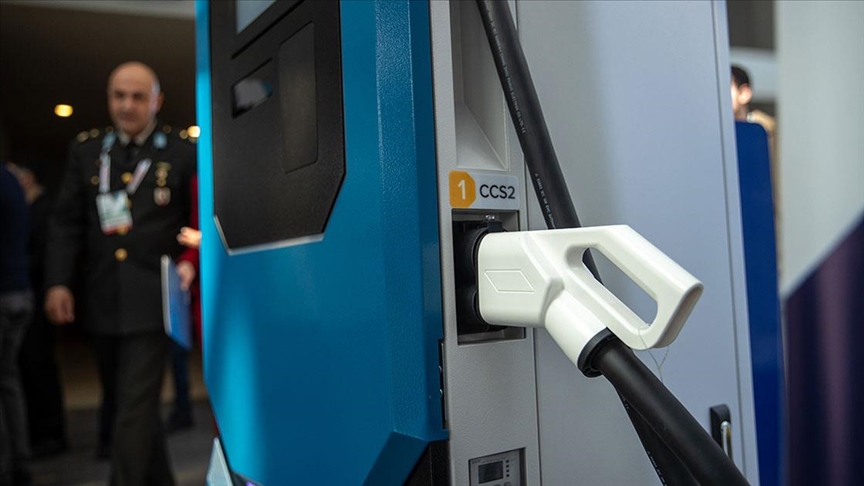
Explaining that submarines can charge their batteries with the Coastal Supply System on the shore before going on a mission and operate with this energy, Demir said that the batteries can be charged without starting the generators thanks to the charging systems to be installed on the shore.

Demir stated that the electric vehicle charging systems used in the field can charge submarines by adapting them to military standards and needs.

Stating that different foreign products were used in the charging of submarines in the past, Demir emphasized that domestic charging systems established with the efforts of local companies have started to emerge recently. Ramazan Demir stated that their own R&D teams were also involved in the work in this process, and that they could use the experience they gained with electric vehicle charging systems on the submarine side by increasing the same technology to the desired power values.

Stating that the localization rate is over 94 percent, Demir noted that work on the remaining sub-components continues.

Domestic systems are in effect, new ones are on the way

Stating that there have been different projects in the past in which the ASPOWER R&D team was involved in the Submarine Charging System, Demir said, "The systems in question serve new and old type submarines."

The Presidency of Defense Industries also recently announced a tender for the Coastal Supply System Project. In this context, systems will be provided to provide charging of submarine systems from shores and ports. ASPOWER also submitted an offer for this project with its capabilities.


dBSPL

Experienced member
Think Tank Analyst
DefenceHub Ambassador
Messages
2,871
Reactions
123 14,521
Nation of residence
Turkey
Nation of origin
Turkey

Somali territorial waters will be protected by the Turkish navy for 10 years. During this period, the construction, personnel training, doctrination and equiping of the Somali navy will be carried out with the Turkish naval forces. Presumably, the scope of the TURKSOM mission will also be expanded, and a new naval base will be built outside the existing infrastructure. In addition to the Turkish navy's support in building the Somali naval force and protecting Somali territorial waters, Somalia will also become a far-end supply base for Turkish naval forces.

I expect that some of the platforms in reserve or soon to be removed from active inventory could be used in the construction of the Somali navy. With the heavy arms embargo on Somalia would be eased, the ongoing train-and-equip missions in Somalia would be deepened.

Somalia will increase its importance in Turkish geopolitics and therefore in the plans of the Turkish navy in the coming period. In a more general framework, it would not be a wrong prediction that our navy will enter a period of overseas expansion. Apart from Somalia, the construction of the base area in the Cyprus is waiting to start, and two other points in Africa have strong possibilities, and perhaps another supply base in the seas connected to the Indian Ocean may be on the agenda in the coming period.
 
Last edited:

Anmdt

Experienced member
Naval Specialist
Professional
Messages
5,804
Solutions
2
Reactions
148 26,908
Nation of residence
Turkey
Nation of origin
Turkey

Somali territorial waters will be protected by the Turkish navy for 10 years. During this period, the construction, personnel training, doctrination and equiping of the Somali navy will be carried out with the Turkish naval forces. Presumably, the scope of the TURKSOM mission will also be expanded, and a new naval base will be built outside the existing infrastructure. In addition to the Turkish navy's support in building the Somali naval force and protecting Somali territorial waters, Somalia will also become a far-end supply base for Turkish naval forces.

I expect that some of the platforms in reserve or soon to be removed from active inventory could be used in the construction of the Somali navy. With the heavy arms embargo on Somalia would be eased, the ongoing train-and-equip missions in Somalia would be deepened.

Somalia will increase its importance in Turkish geopolitics and therefore in the plans of the Turkish navy in the coming period. In a more general framework, it would not be a wrong prediction that our navy will enter a period of overseas expansion. Apart from Somalia, the construction of the base area in the Cyprus is waiting to start, and two other points in Africa have strong possibilities, and perhaps another supply base in the seas connected to the Indian Ocean may be on the agenda in the coming period.
Let the airborne guys enjoy their day we can discuss this in a week or so :).
 

Sanchez

Experienced member
Moderator
Think Tank Analyst
DefenceHub Diplomat
Messages
4,193
Reactions
127 19,054
Nation of residence
Turkey
Nation of origin
Turkey
I expect that some of the platforms in reserve or soon to be removed from active inventory could be used in the construction of the Somali navy.
Thinking about it, any platforms we may retire, would not be a great pick for operating costs. Burak Class avisos maybe? I'm thinking lots of Yonca and Ares boats and even 1 or 2 lightly armed Hisar Class OPVs in the future. Maybe we can send the first two Hisars after opearting them for a few years. Add 2-4 Aksungurs and you get yourself a nice fleet.

For our own use, this calls for updating the Hisar Class size from 8 to 10 asap...
 

Afif

Experienced member
Moderator
Bangladesh Correspondent
DefenceHub Diplomat
Bangladesh Moderator
Messages
5,139
Reactions
104 10,047
Nation of residence
Bangladesh
Nation of origin
Bangladesh

Somali territorial waters will be protected by the Turkish navy for 10 years. During this period, the construction, personnel training, doctrination and equiping of the Somali navy will be carried out with the Turkish naval forces. Presumably, the scope of the TURKSOM mission will also be expanded, and a new naval base will be built outside the existing infrastructure. In addition to the Turkish navy's support in building the Somali naval force and protecting Somali territorial waters, Somalia will also become a far-end supply base for Turkish naval forces.

I expect that some of the platforms in reserve or soon to be removed from active inventory could be used in the construction of the Somali navy. With the heavy arms embargo on Somalia would be eased, the ongoing train-and-equip missions in Somalia would be deepened.

Somalia will increase its importance in Turkish geopolitics and therefore in the plans of the Turkish navy in the coming period. In a more general framework, it would not be a wrong prediction that our navy will enter a period of overseas expansion. Apart from Somalia, the construction of the base area in the Cyprus is waiting to start, and two other points in Africa have strong possibilities, and perhaps another supply base in the seas connected to the Indian Ocean may be on the agenda in the coming period.

That is a very positive strategic decision that Somalia made. Although I am not sure what kind fo navy they can build in next 10 years. It is better to start with a decent coast guard. Their economy is too small for a navy.
 

dBSPL

Experienced member
Think Tank Analyst
DefenceHub Ambassador
Messages
2,871
Reactions
123 14,521
Nation of residence
Turkey
Nation of origin
Turkey
Thinking about it, any platforms we may retire, would not be a great pick for operating costs. Burak Class avisos maybe? I'm thinking lots of Yonca and Ares boats and even 1 or 2 lightly armed Hisar Class OPVs in the future. Maybe we can send the first two Hisars after opearting them for a few years. Add 2-4 Aksungurs and you get yourself a nice fleet.

For our own use, this calls for updating the Hisar Class size from 8 to 10 asap...
Üstad, what came to mind were the Dogan class boats. These can serve as patrol boats. After seeing no hurry in the TTHB for years, its sudden acceleration leaves such an impression on me. The boats to be decommissioned can be transferred to Somalia and Libya. Although they are old boats, they will be easier to operate than the Burak class. Training processes can be faster as they will be transferred from the inventory. Of course, these are pure speculations based on no information. If there is a sponsor, our shipyards can immediately start building a new MILGEM, or Dearsan can built a whole brand new navy from scratch, no problem. lol
 

boredaf

Experienced member
Messages
2,271
Solutions
1
Reactions
42 6,661
Nation of residence
United Kingdom
Nation of origin
Turkey
That is a very positive strategic decision that Somalia made. Although I am not sure what kind fo navy they can build in next 10 years. It is better to start with a decent coast guard. Their economy is too small for a navy.
It is probably a mix between what you would call coast guard and navy, and they'll big it up as a strong navy.
 

_Mu_

Active member
Messages
58
Reactions
4 194
Nation of residence
Egypt
Nation of origin
Egypt
Their economy is too small for a navy.

"Somalia has untapped reserves of numerous natural resources, including uranium, iron ore, tin, gypsum, bauxite, copper, salt and natural gas "​

They just need a reliable partner and Turkey could play that role with mutual benefit. They would both achieve substantial benefits, and unlike Djibouti, Somalia has fewer international actors and local support for Turkish presence is so great .
In addition ,Turkey has already laid a solid ground through the past few years. The local Somalis experienced how positive their role is compared to other countries that had a chance there. A very revealing example you can observe is when some UAE and Bahraini soldiers were killed recently by a Somali soldier. You would be surprised how the news was circulating with joy and calls for deporting the rest

Australian and Chinese oil companies have been granted licenses for finding petroleum and other natural resources in the country. An oil group listed in Sydney, Range Resources, anticipates that the Puntland province in the north has the potential to produce 5 billion barrels (790×106 m3) to 10 billion barrels (1.6×10⁹ m3) of oil.[62] As a result of these developments, the Somali Petroleum Company was created by the federal government.

In the late 1960s, UN geologists also discovered major uranium deposits and other rare mineral reserves in Somalia. The find was the largest of its kind, with industry experts estimating the deposits at over 25% of the world's then known uranium reserves of 800,000 tons.[63] In 1984, the IUREP Orientation Phase Mission to Somalia reported that the country had 5,000 tons of uranium reasonably assured resources (RAR), 11,000 tons of uranium estimated additional resources (EAR) in calcrete deposits, as well as possibly up to 150,000 tons of uranium speculative resources (SR) in sandstone and calcrete deposits.[64] Somalia concurrently evolved into a major world supplier of uranium, with American, UAE, Italian and Brazilian mineral companies vying for extraction rights.[65] Link Natural resources have a stake in the natural resources of the central region, Kilimanjaro Capital has a stake in the 1,161,400 acres Amsas-Coriole-Afgoi (ACA) Block, which includes uranium exploration.[66] Besides uranium, an unspecified quantity of yttrium, a rare earth element and costly mineral, was also found in the country.[63]
 

Anmdt

Experienced member
Naval Specialist
Professional
Messages
5,804
Solutions
2
Reactions
148 26,908
Nation of residence
Turkey
Nation of origin
Turkey

Somali territorial waters will be protected by the Turkish navy for 10 years. During this period, the construction, personnel training, doctrination and equiping of the Somali navy will be carried out with the Turkish naval forces. Presumably, the scope of the TURKSOM mission will also be expanded, and a new naval base will be built outside the existing infrastructure. In addition to the Turkish navy's support in building the Somali naval force and protecting Somali territorial waters, Somalia will also become a far-end supply base for Turkish naval forces.

I expect that some of the platforms in reserve or soon to be removed from active inventory could be used in the construction of the Somali navy. With the heavy arms embargo on Somalia would be eased, the ongoing train-and-equip missions in Somalia would be deepened.

Somalia will increase its importance in Turkish geopolitics and therefore in the plans of the Turkish navy in the coming period. In a more general framework, it would not be a wrong prediction that our navy will enter a period of overseas expansion. Apart from Somalia, the construction of the base area in the Cyprus is waiting to start, and two other points in Africa have strong possibilities, and perhaps another supply base in the seas connected to the Indian Ocean may be on the agenda in the coming period.
Actually thinking a little we come to a simple conclusion;
1708686978080.jpeg


1708686959184.png

And few with these;
1708687641162.jpeg


Lastly, after a Navy is trained, few of these for rapid intervention.
1708687535927.jpeg

Minimal needed infastructure for maintenance, easy to operate, highly protected and agile systems for CO&IN and anti-piracy.

NTPB + Inspection Boats + Ares OPV. These two are very suitable to launch a Navy from scratch. NTPB is a multi-purpose, small craft that is easy to handle in shipyards (that can be even lifted and maintained on the Pier, not requiring a Dock. Or improve Inspection boats a little with a STAMP;

NTPB costs $10 million, each inspection boat goes as low as $1 million or even less, a larger variant with STAMP shall not cost a lot either and there are larger versions of the Inspection Boat.

We can subsidize them all, train the crew / personnel within 3 years and field in 5 years and then make of the costs. But prior to these, we need skilled fisherman and fisheries that can operate at those seas, utilize high tech equipment and marine research to make use of the sources. I am doubting if we have any enterprise level skilled fishermen, companies from north would be likely holders of the license we grant.
 
Top Bottom