
Latest Thread
You are using an out of date browser. It may not display this or other websites correctly.
You should upgrade or use an alternative browser.
You should upgrade or use an alternative browser.

I would say it wouldn't even be possible without those stepsThe biggest gain of Hürjet to Turkish Aviation, Turkish Airforce, TEI, TAI, etc is the experience and know how. Thanks to Hürjet project, KAAN development has been smoother and faster.

It will perform 4 flights

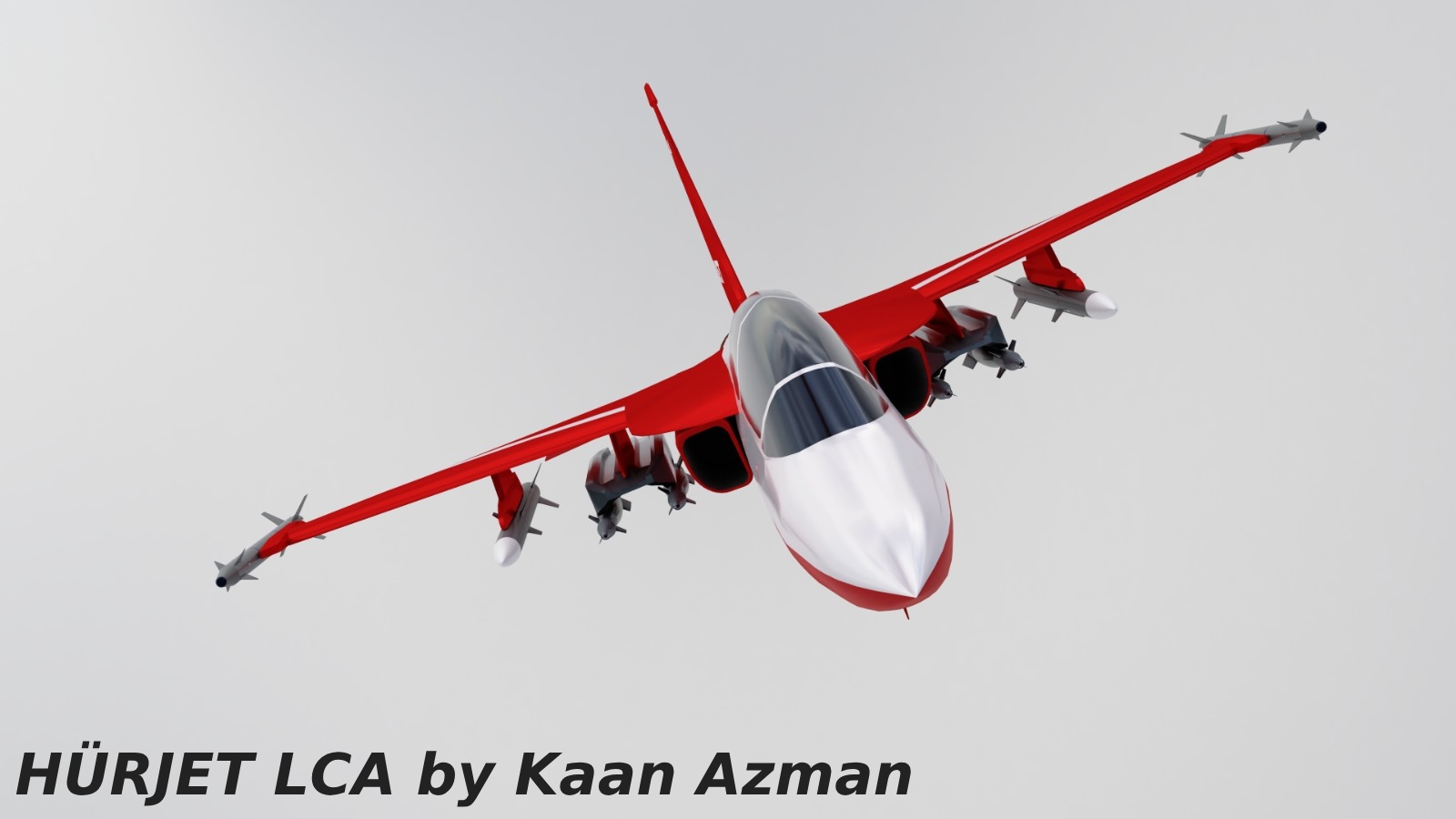
Many thanks to Kaan Azman for the visualization of the 'homemade' light fighter jet. I still believe that if a suitable engine solution can be created, a possible naval/LCA variant of this platform could potentially attract a very significant number of air forces, including the Turkish air force.

You're far too optimistic mate. I'm sure we're going to buy enough Hürjet to subsidise the investment TAI made in it, but apart from that, I can't see "a very significant number of air forces" tripping over themselves to get it.
Many thanks to Kaan Azman for the visualization of the 'homemade' light fighter jet. I still believe that if a suitable engine solution can be created, a possible naval/LCA variant of this platform could potentially attract a very significant number of air forces, including the Turkish air force.
Light attack variant of Hürjet will have to compete against other more mature planes while also carrying far less payload. We would not only be competing against Western companies but also Russians and Chinese in trying to sell it as they all have a plane or two that fits the same bill. And all of those competitors can give loans to any potential buyers, just like Koreans have been doing with T-50, or rather FA-50. And even if we could finance the deals, who are those countries that are looking to buy light attack jets and are going to pick us over other options AND can actually pay for them? No more than a handful, and maybe some more that we maybe shouldn't even consider selling.
And please, let's not even talk about a carrier version, I honestly think it is insulting to our navy. It would be a waste of time, money and other resources to navalise Hürjet, with a payload less than 3000 kg I doubt its hardpoints could even carry Atmaca, which weighs something like 650 kgs. Not to mention the inherit lack of stealth, I mean come on, you can't be seriously wanting us to use Hürjet on an actual aircraft carrier in 2040s? It's embarrassing. We'd be much better of using KE and Anka-3/4 and making more "drone motherships" instead of wasting resources on an aircraft carrier.

I'm sure we have people who know the height of HÜRJET's landing gear because I wonder if it is enough for a central hardpoint for fuel tanks or cruise missiles.

There were two designs once that we were contemplating about:


It is a shame that the second one with single engine version was chosen.
Otherwise we wouldn’t be too far away from having indigenous engines for our trainer/light attack aircraft now. Two TF10000 engines would have been ideal for this plane. OK! It would have been more expensive to build and maintain, albeit marginally. But also we wouldn’t be in an engineless position now. At least in a few years from now we should be able to provide TF10000 engines.
Besides it would have been ideal for our carrier based operations too. (Apart from vertical take off and landing planes like F35Bs, Harriers and F35Cs, all carrier operated fighters are twin engined. Even the Indians are going for the twin engined Tejas for their carriers.)
Having chosen the single engined Hurjet for trainers doesn’t stop us going for a twin engined and modified version, with better stealth characteristics, so that it portrays a lower RCS as well.
For light attack and carrier based operations it could be a no brainer to build a twin engined Hurjet-2 which would give us a basis of commonality of production of parts and a cheap twin engined higher thrust, longer operational radius plane with better payload capabilities. (it is most likely that a good deal more thrust is going to be attained from the TF10K engine.)
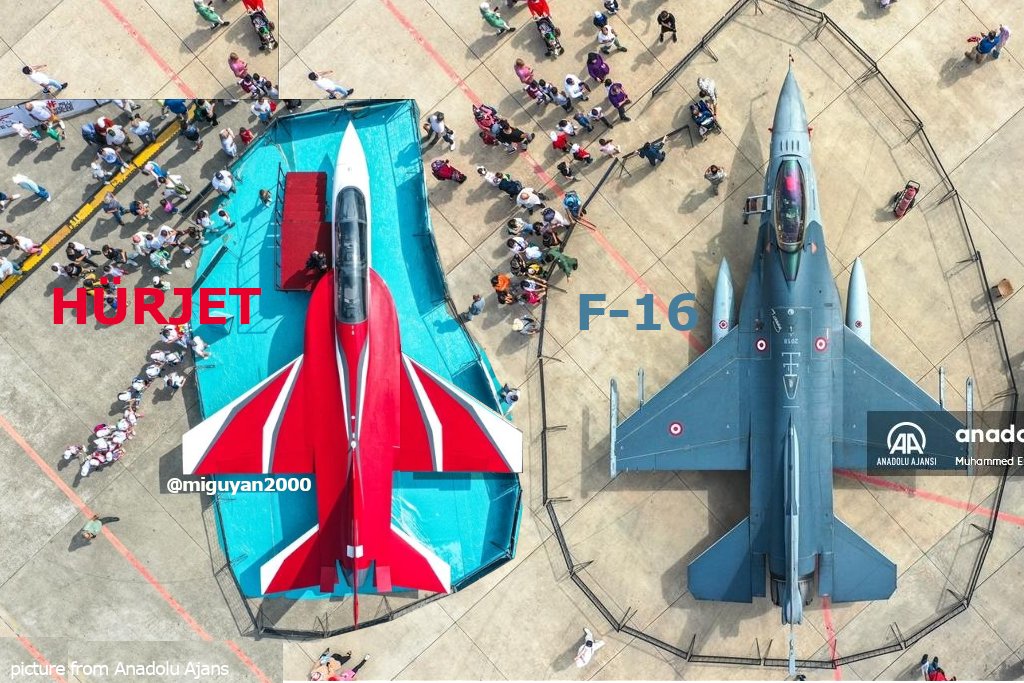
In time it could prove to be the more economical replacement of our f16s with a stealthy twin engined new Hurjet version 2. After all there isn’t such a big difference between those two in terms of size!

Food for thought.
It is a shame that the second one with single engine version was chosen.
Otherwise we wouldn’t be too far away from having indigenous engines for our trainer/light attack aircraft now. Two TF10000 engines would have been ideal for this plane. OK! It would have been more expensive to build and maintain, albeit marginally. But also we wouldn’t be in an engineless position now. At least in a few years from now we should be able to provide TF10000 engines.
Besides it would have been ideal for our carrier based operations too. (Apart from vertical take off and landing planes like F35Bs, Harriers and F35Cs, all carrier operated fighters are twin engined. Even the Indians are going for the twin engined Tejas for their carriers.)
Having chosen the single engined Hurjet for trainers doesn’t stop us going for a twin engined and modified version, with better stealth characteristics, so that it portrays a lower RCS as well.
For light attack and carrier based operations it could be a no brainer to build a twin engined Hurjet-2 which would give us a basis of commonality of production of parts and a cheap twin engined higher thrust, longer operational radius plane with better payload capabilities. (it is most likely that a good deal more thrust is going to be attained from the TF10K engine.)
In time it could prove to be the more economical replacement of our f16s with a stealthy twin engined new Hurjet version 2. After all there isn’t such a big difference between those two in terms of size!
Food for thought.


While I am not expert I also suggested we might built something that would be capable enough and cheaper than KAAN. KAAN will be a capable fighter, but for sure more expensive to maintain and operate.There were two designs once that we were contemplating about:
View attachment 69370
View attachment 69372
It is a shame that the second one with single engine version was chosen.
Otherwise we wouldn’t be too far away from having indigenous engines for our trainer/light attack aircraft now. Two TF10000 engines would have been ideal for this plane. OK! It would have been more expensive to build and maintain, albeit marginally. But also we wouldn’t be in an engineless position now. At least in a few years from now we should be able to provide TF10000 engines.
Besides it would have been ideal for our carrier based operations too. (Apart from vertical take off and landing planes like F35Bs, Harriers and F35Cs, all carrier operated fighters are twin engined. Even the Indians are going for the twin engined Tejas for their carriers.)
Having chosen the single engined Hurjet for trainers doesn’t stop us going for a twin engined and modified version, with better stealth characteristics, so that it portrays a lower RCS as well.
For light attack and carrier based operations it could be a no brainer to build a twin engined Hurjet-2 which would give us a basis of commonality of production of parts and a cheap twin engined higher thrust, longer operational radius plane with better payload capabilities. (it is most likely that a good deal more thrust is going to be attained from the TF10K engine.)
In time it could prove to be the more economical replacement of our f16s with a stealthy twin engined new Hurjet version 2. After all there isn’t such a big difference between those two in terms of size!
View attachment 69373
Food for thought.
I think it might make sense if we built something that would be considered Gen 4.5 with some stealth characteristics. We know that low observability and sensor package carry a significant importance in today's air warfare. We will be talking about a decent capability in BVR engagements in A2A role and also a good capability in A2G, especially if we can introduce a loyal wingman in combination with a supersonic drones that would act as additional, mobile munition racks that would be commanded by the Hurjet II. As you suggested it may evolve into a carrier based fighter and a potent future stealth solution for a replacement for the F-16s. I mean why not? We are going to acquire an aircraft carrier so we will have to figure out what are we going to put on it. I am a bit concerned by the fact that we don't have an alternative to an eventual F-35B or F35C option.
I remember that in the opening of the Operation Olive Branch 72 F-16s operated in the same time in the air. Yes, the exact number had a symbolic importance at that time, but still that's a lot of fighters in the same time. Imagine a Hurjet II commanding a 2-3 or maybe more loyal wingmen, configured according to the specific need of the operation. They may be tasked with ISR, EW, A2G, A2A payloads and countless combinations of these. The need for so many manned jets in the air will be gone and we would also optimize the whole communication process by eliminating ground stations role and will free a capacity in terms of drone operators by giving the command to the Hurjet II's second pilot that will be acting as a mission support platforms commander.
We can built a good number of them for the lighter tasks in terms of capability requirements, that would supplement perfectly the already big drone fleet we built and we are continuing to improve upon, build KAAN in smaller numbers for when higher capability is needed in accordance to our economy strength.
The Hurjet II would also have an export potential as I am not aware of something that would fit in the specs as "stealth, low cost, 4.5 Gen" fighter. it may be the perfect option for economically weaker countries that may want to posses a capability not very far from the 5th and 6th Generation platforms in the future at a fraction of the cost. If I am wrong, correct me please, but I think the fact that it would be a stealth fighter by itself is a huge leap in terms of capabilities compared to all the current 4-4.5 Geneneration operational fighters. Just combine it with the future proof avionics and the capable sensor package and munitions that we are capable of producing and you got the perfect solution, at least for me, based on my non-expert look at the situation.


''if we built something that would be considered Gen 4.5 with some stealth characteristics.'' As a matter of fact this is the definition of the current form of KAAN as it is now... I strongly belive that we should focus on KAAN for the export markets as well... we should not ignore the development cost of new plane and a new engine... we should be providing a better option than Russian, French, Swedish and Chinese alternatives both economicly and technically ... and in addition to that buying a military aircraft is not only an economic and technicall decision but political decision as well KAAN in a 4,5 gen form is rewarding enough to take such a political risk for customers as well...otherwise realisticly speaking there is not much space in this specific market segmentWhile I am not expert I also suggested we might built something that would be capable enough and cheaper than KAAN. KAAN will be a capable fighter, but for sure more expensive to maintain and operate.
I think it might make sense if we built something that would be considered Gen 4.5 with some stealth characteristics. We know that low observability and sensor package carry a significant importance in today's air warfare. We will be talking about a decent capability in BVR engagements in A2A role and also a good capability in A2G, especially if we can introduce a loyal wingman in combination with a supersonic drones that would act as additional, mobile munition racks that would be commanded by the Hurjet II. As you suggested it may evolve into a carrier based fighter and a potent future stealth solution for a replacement for the F-16s. I mean why not? We are going to acquire an aircraft carrier so we will have to figure out what are we going to put on it. I am a bit concerned by the fact that we don't have an alternative to an eventual F-35B or F35C option.
I remember that in the opening of the Operation Olive Branch 72 F-16s operated in the same time in the air. Yes, the exact number had a symbolic importance at that time, but still that's a lot of fighters in the same time. Imagine a Hurjet II commanding a 2-3 or maybe more loyal wingmen, configured according to the specific need of the operation. They may be tasked with ISR, EW, A2G, A2A payloads and countless combinations of these. The need for so many manned jets in the air will be gone and we would also optimize the whole communication process by eliminating ground stations role and will free a capacity in terms of drone operators by giving the command to the Hurjet II's second pilot that will be acting as a mission support platforms commander.
We can built a good number of them for the lighter tasks in terms of capability requirements, that would supplement perfectly the already big drone fleet we built and we are continuing to improve upon, build KAAN in smaller numbers for when higher capability is needed in accordance to our economy strength.
The Hurjet II would also have an export potential as I am not aware of something that would fit in the specs as "stealth, low cost, 4.5 Gen" fighter. it may be the perfect option for economically weaker countries that may want to posses a capability not very far from the 5th and 6th Generation platforms in the future at a fraction of the cost. If I am wrong, correct me please, but I think the fact that it would be a stealth fighter by itself is a huge leap in terms of capabilities compared to all the current 4-4.5 Geneneration operational fighters. Just combine it with the future proof avionics and the capable sensor package and munitions that we are capable of producing and you got the perfect solution, at least for me, based on my non-expert look at the situation.
Last edited:

Since KAAN is a 5th gen design from the get-go and 5th gens are designed with modularity in mind, it would make the most sense to market the KAAN as not a 6th and 5th gen fighter, but in some cases a 4.5 gen fighter as well.
If the KAAN is as modular as other well-publicized 5th gens claim to be, it would make sense to develop different hardware packages to cater different generational aspects for different buyers' demands.
Individual airframes can be sold as 4.5th, 5th, 5.5th or 6th gen fighters to those who interested, who sometimes might be the same buyer.
This would maximize the export profits whilst delivering us from the burden of developing a brand new, "cheaper" aircraft.
This would also usher in opportunities of upgrade package deals to be sold to those who'd like to deploy rapid strengthening of their air forces who face sudden, irreconcilable threats to their security situation.
If this idea of mine is implemented, I'd like to see the top of the line(6th gen) variant of the KAAN be named as "KAAN SLX" as a tongue-in-cheek reference to our domestic automotive culture.
If the KAAN is as modular as other well-publicized 5th gens claim to be, it would make sense to develop different hardware packages to cater different generational aspects for different buyers' demands.
Individual airframes can be sold as 4.5th, 5th, 5.5th or 6th gen fighters to those who interested, who sometimes might be the same buyer.
This would maximize the export profits whilst delivering us from the burden of developing a brand new, "cheaper" aircraft.
This would also usher in opportunities of upgrade package deals to be sold to those who'd like to deploy rapid strengthening of their air forces who face sudden, irreconcilable threats to their security situation.
If this idea of mine is implemented, I'd like to see the top of the line(6th gen) variant of the KAAN be named as "KAAN SLX" as a tongue-in-cheek reference to our domestic automotive culture.
Yes, KAAN is 4.5 Gen right now, but is designed as a 5th Generation and it is destined to be such. As far as I remember they even started an exploration into a 6th Gen capability boost.''if we built something that would be considered Gen 4.5 with some stealth characteristics.'' As a matter of fact this is the definition of the current form of KAAN as it is now... I strongly belive that we should focus on KAAN for the export markets as well... we should not ignore the development cost of new plane and a new engine... we should be providing a better option than Russian, French, Swedish and Chinese alternatives both economicly and technically ... and in addition to that buying a military aircraft is not only an economic and technicall decision but political decision as well KAAN in a 4,5 gen form is rewarding enough to take such a political risk for customers as well...otherwise realisticly speaking there is not much space in this specific market segment
What am I thinking for this double engine Hurjet II is something that wouldn't be too far away from an F-16's load capacity, carrier deployable and cheaper than KAAN 5th or 4.5 Gen versions.
I think something like this, 15-20 years from now may have some success in the emerging markets in Africa for example that can't afford a KAAN and/or don't want to go Chinese or Russian with it.
There were two designs once that we were contemplating about:
View attachment 69370
View attachment 69372
It is a shame that the second one with single engine version was chosen.
Otherwise we wouldn’t be too far away from having indigenous engines for our trainer/light attack aircraft now. Two TF10000 engines would have been ideal for this plane. OK! It would have been more expensive to build and maintain, albeit marginally. But also we wouldn’t be in an engineless position now. At least in a few years from now we should be able to provide TF10000 engines.
Besides it would have been ideal for our carrier based operations too. (Apart from vertical take off and landing planes like F35Bs, Harriers and F35Cs, all carrier operated fighters are twin engined. Even the Indians are going for the twin engined Tejas for their carriers.)
Having chosen the single engined Hurjet for trainers doesn’t stop us going for a twin engined and modified version, with better stealth characteristics, so that it portrays a lower RCS as well.
For light attack and carrier based operations it could be a no brainer to build a twin engined Hurjet-2 which would give us a basis of commonality of production of parts and a cheap twin engined higher thrust, longer operational radius plane with better payload capabilities. (it is most likely that a good deal more thrust is going to be attained from the TF10K engine.)
In time it could prove to be the more economical replacement of our f16s with a stealthy twin engined new Hurjet version 2. After all there isn’t such a big difference between those two in terms of size!
View attachment 69373
Food for thought.
While I am not expert I also suggested we might built something that would be capable enough and cheaper than KAAN. KAAN will be a capable fighter, but for sure more expensive to maintain and operate.
I think it might make sense if we built something that would be considered Gen 4.5 with some stealth characteristics. We know that low observability and sensor package carry a significant importance in today's air warfare. We will be talking about a decent capability in BVR engagements in A2A role and also a good capability in A2G, especially if we can introduce a loyal wingman in combination with a supersonic drones that would act as additional, mobile munition racks that would be commanded by the Hurjet II. As you suggested it may evolve into a carrier based fighter and a potent future stealth solution for a replacement for the F-16s. I mean why not? We are going to acquire an aircraft carrier so we will have to figure out what are we going to put on it. I am a bit concerned by the fact that we don't have an alternative to an eventual F-35B or F35C option.
I remember that in the opening of the Operation Olive Branch 72 F-16s operated in the same time in the air. Yes, the exact number had a symbolic importance at that time, but still that's a lot of fighters in the same time. Imagine a Hurjet II commanding a 2-3 or maybe more loyal wingmen, configured according to the specific need of the operation. They may be tasked with ISR, EW, A2G, A2A payloads and countless combinations of these. The need for so many manned jets in the air will be gone and we would also optimize the whole communication process by eliminating ground stations role and will free a capacity in terms of drone operators by giving the command to the Hurjet II's second pilot that will be acting as a mission support platforms commander.
We can built a good number of them for the lighter tasks in terms of capability requirements, that would supplement perfectly the already big drone fleet we built and we are continuing to improve upon, build KAAN in smaller numbers for when higher capability is needed in accordance to our economy strength.
The Hurjet II would also have an export potential as I am not aware of something that would fit in the specs as "stealth, low cost, 4.5 Gen" fighter. it may be the perfect option for economically weaker countries that may want to posses a capability not very far from the 5th and 6th Generation platforms in the future at a fraction of the cost. If I am wrong, correct me please, but I think the fact that it would be a stealth fighter by itself is a huge leap in terms of capabilities compared to all the current 4-4.5 Geneneration operational fighters. Just combine it with the future proof avionics and the capable sensor package and munitions that we are capable of producing and you got the perfect solution, at least for me, based on my non-expert look at the situation.
I'd argue that we would be better off with designing and producing a 1 engine smaller Kaan rather than 2 engine Hürjet. As capable as it might be, I don't see Hürjet as an effective solution for an aircraft carrier in any way. We are going to have a proper ac in late 2030s at earliest and more likely in 2040s, there is no way a 4th gen plane can still operate safely in 10-15 to 20 ears time.


I understand and to a degree not rejecting the idea of a single engined sister plane to KAAN.I'd argue that we would be better off with designing and producing a 1 engine smaller Kaan rather than 2 engine Hürjet. As capable as it might be, I don't see Hürjet as an effective solution for an aircraft carrier in any way. We are going to have a proper ac in late 2030s at earliest and more likely in 2040s, there is no way a 4th gen plane can still operate safely in 10-15 to 20 ears time.
But let us look at the current situation and contemplate with the bird in hand rather than the ones in the bush. We still don’t have a concrete physical presence of that indigenous engine that may power that single engined plane. Yet we have a TF6K that is working and being readied for prototype production. Also a single engined KAAN will not be cheap.
Smaller diameter engines are easier and cheaper to produce. Our TF6K engine is being designed as a stealthy engine and the size of it makes it more feasible to be upgraded to a level that is close to double the thrust levels than what TEI has been advertising. I remember reading about the grapevine news that already at this early stages it is developing 6700+lbf thrust levels. That sort of thrust from two engines are actually similar to what a single GE-F414 engine develops. That one engine propels Gripen-E to 2Mach speed with a usable payload of 7200kg, MTOW of 16500kg and a combat range of 810Nmiles.
It would be more economical and clever to employ a Stealthy Hurjet with twin engines from a carrier whereby we know we can build that plane and don’t have any outer force hampering our engine choice. Per hour cost of a plane like that will be cheaper than a KAAN, no matter how economically you produce that baby KAAN.
In an ideal world a single engined KAAN sounds good. But today we have a flying Hurjet in hand and a working engine that will be available within a couple of years.
Just to put a close perspective to twin engined Hurjet’s use; If I remember correctly, Sweden’s Gripen-E is fully navalised against salt water corrosion and as a delta wing design is inherently stealthy. Plus thanks to Akaer, who were also responsible for Hurjet’s airframe design, is an extremely manoeuvrable plane. It can take off land on short runways.
Glad that Hürjet exists and the nobel thing about TAI is nobody asked for Hürjet it was TAI's own decision to manufacture it. Glad they did Otherwise we could not have all these disccusions... twin engine Hürjet .... navalized Hürjet .... Hürjet for AC... an aircraft nobdy asked for become the savior

Last edited:
A lot of parts could be designed to be common. Airframe design has to be addressed. Probably more of a delta wing construction will have to be applied."Stealthy twin engine hürjet" is not hürjet and the airframe would have 0 common parts with the hürjet. Better just make twin engine KE or Anka 3
Parts of fuselage, interiors and avionics can be common. A stealth Hurjet doesn’t have to be as stealthy as KAAN or F35. A compromised design that will give good stealth characteristics with a solid design that will not detract too much from original Hurjet can be made.
They are going to navalise Hurjet, and alter its airframe anyway. By making it twin engined we may overcome the possible engine handicap and increase the thrust available to facilitate shorter runway usage for take offs.
Just a thought!


so many question marks...if we gonna go for AC eventually a new aircraft design becomes inevitable almost in all scenarios
1- if USA approves the supply of engine for navalised Hurjet (which definitly needs structural changes anyway) for our AC, inherit limitations of Hürjet should be compensated with UAVs like KIZILELMA, ANKAIII, TB 3 ....and hard to say that Hürjet will be the primary asset of AC in this case
2- A twin engine (enhanced TF 6000-10000) aircraft design may be not necesarly a Hürjet variant but an aircraft with inevitable commonalities with HÜRJET and may be KAAN which still destined to be a stop gap solution but which can act as the primary asset of the AC untill the arrival of a real 5 gen AC based naval aircraft
3- Navalised KAAN
1- if USA approves the supply of engine for navalised Hurjet (which definitly needs structural changes anyway) for our AC, inherit limitations of Hürjet should be compensated with UAVs like KIZILELMA, ANKAIII, TB 3 ....and hard to say that Hürjet will be the primary asset of AC in this case
2- A twin engine (enhanced TF 6000-10000) aircraft design may be not necesarly a Hürjet variant but an aircraft with inevitable commonalities with HÜRJET and may be KAAN which still destined to be a stop gap solution but which can act as the primary asset of the AC untill the arrival of a real 5 gen AC based naval aircraft
3- Navalised KAAN
Last edited:
But Hürjet is nothing like Gripen, in fact, it is even inferior to Korean T-50 in terms of payload despite using the same engine. Comparing Hürjet to Gripen, even its first iteration is an insult to Gripen and unfair to Hürjet.I understand and to a degree not rejecting the idea of a single engined sister plane to KAAN.
But let us look at the current situation and contemplate with the bird in hand rather than the ones in the bush. We still don’t have a concrete physical presence of that indigenous engine that may power that single engined plane. Yet we have a TF6K that is working and being readied for prototype production. Also a single engined KAAN will not be cheap.
Smaller diameter engines are easier and cheaper to produce. Our TF6K engine is being designed as a stealthy engine and the size of it makes it more feasible to be upgraded to a level that is close to double the thrust levels than what TEI has been advertising. I remember reading about the grapevine news that already at this early stages it is developing 6700+lbf thrust levels. That sort of thrust from two engines are actually similar to what a single GE-F414 engine develops. That one engine propels Gripen-E to 2Mach speed with a usable payload of 7200kg, MTOW of 16500kg and a combat range of 810Nmiles.
It would be more economical and clever to employ a Stealthy Hurjet with twin engines from a carrier whereby we know we can build that plane and don’t have any outer force hampering our engine choice. Per hour cost of a plane like that will be cheaper than a KAAN, no matter how economically you produce that baby KAAN.
In an ideal world a single engined KAAN sounds good. But today we have a flying Hurjet in hand and a working engine that will be available within a couple of years.
Just to put a close perspective to twin engined Hurjet’s use; If I remember correctly, Sweden’s Gripen-E is fully navalised against salt water corrosion and as a delta wing design is inherently stealthy. Plus thanks to Akaer, who were also responsible for Hurjet’s airframe design, is an extremely manoeuvrable plane. It can take off land on short runways.
And come on mate, GE-F414 has something like 20k thrust with afterburners and over 10k without iirc, while we are talking about 10k thrust with afterburners (6k dry) with TF10k. Even Gripen's RR engine was more powerful than TF10k is supposed to be. I know you're talking about a twin engined Hürjet but you should know better than me that you can't just slap a second engine on an existing design and call it a day. TAI would have to design that almost from scratch and it would have to go through every phase all over again.
And you keep saying stealthy Hürjet but geometry of a plane is a giant part of its stealth capabilities. Hürjet is not stealthy. At all. Sure we can slap a coat of radar absorbing paint on it and load it up with sensors and countermeasures and increase its survival chances, but it isn't going to change the fact that it has to carry whatever payload it has on its wings and it'll light up on a radar no matter what you try and it doesn't even have the little advantage of the delta wing.
We don't have a twin engine jet in hand mate, it is as far out in the bush as single engine Kaan might be. And I would much rather we work on something that actually has a chance to work in the future than waste precious time and resources trying to turn a 4th gen trainer jet into something it has no business being in the first place.
Who gives a flying fuck about how cheap it is to produce or fly, we are talking about putting a jet on an aircraft carrier that is going to cost a billion or two here. What is the point of having an aircraft carrier if you're going to half-arse the jet you are going to put on it?


