
Latest Thread
- Russia Project 885M nuclear-powered submarine *Novosibirsk* strikes a target at a range of 1,200 km with a Kalibr missile.
- Space Brazil ties up with India's Skyroot Aerospace to develop Satellite Launch Vehicle
- Bangladesh Opinion Bangladesh’s intelligence challenge
- Open-source AI for exploiting cyber vulnerabilities
- Engineering Atomic Machines: Matter Compiler
You are using an out of date browser. It may not display this or other websites correctly.
You should upgrade or use an alternative browser.
You should upgrade or use an alternative browser.


Seems like the video guy had a sneak peek at the latest design.Looks matured.
Radom


I get your point but what I mean is this:
“5th gen” isn’t wrong, it’s just limiting.
Yes, the term isn’t strict, and yes, other 5th gens also command loyal wingmen. That part is true.
But the issue isn’t the definition... it’s the perception game.
Other countries freely call unfinished prototypes “next gen” because they understand that branding shapes expectations, funding, political support, and export potential long before the aircraft is complete.
We’re the only ones voluntarily putting our own project into a smaller box.
Not because KAAN lacks ambition, but because we downplay it.
Credibility isn’t the problem.
Türkiye today has more credibility in aerospace than many assume and certainly enough to describe KAAN as a next-gen program in development, the same way GCAP, FCAS, NGAD or even Checkmate are framed.
So the point is not “KAAN can’t be 5th gen.”
The point is:
Why limit ourselves when others don’t?
If everyone else is playing the perception game while we voluntarily undersell our own work, I just can’t accept that, so I’ll do everything I can to fix it. Better late than never.
This is such a weird hang up to have and a hill to die on. Whether arbitrary or not, fighter jet generations have been a part of aviation terminology for 3 or 4 decades and they are universally accepted and used. You have a problem with calling Kaan a 5th gen fighter? Go and tell that to Tusas. And SSB. And Air force. And everyone in between because everyone and their mums are calling it a 5th gen plane.
And those other countries are calling their new projects "next gen" because all of them, well maybe except for Su-75, are working on 6th gen aircrafts and 6 comes after 5. China has already been flying theirs, probably US as well and while those two are leading the way, two European coalitions are still working on theirs; but the crux of the matter is, all of them are planning on those jets to be different than the 5th gen fighters they already have.
I mean, if you want to shadowbox and argue online why it should be called "next gen" while people in charge of the project are calling it 5th gen, go ahead mate, its your life after all but there has to be a better use of your time, I hope.
Indonesia's order for 48 KAAN aircraft has reinforced Turkey's success in 5th-generation fighter jet production and the trust placed in TAI. TAI is simultaneously continuing its work on the 6th-generation fighter jet. Indonesia, the first country to join the National Combat Aircraft (MMU) KAAN project, has once again brought Turkey to the global spotlight with the 48-unit order it announced following the memorandum of understanding. Turkish Aerospace Industries Inc. (TAI) General Manager Dr. Mehmet Demiroğlu stated that this order demonstrates Turkey's trust in Turkey, noting that they have already initiated preliminary work on the 6th generation. He stated that the 6th-generation project is not something to be undertaken after the KAAN reaches a certain level. Demiroğlu, emphasized that KAAN and the 6th generation are ongoing parallel projects, saying, "We planned to develop the 6th generation features as quickly as possible on our own platforms and implement them in KAAN." Source: haber.aero
https://haber.aero/ozel-roportajlar/kaan-6nci-nesil-ucak-demiroglu-tusas/
I have this feeling that no one is totally right or totally wrong! we are all catching bits and pieces of the truth...
Last edited:

This is such a weird hang up to have and a hill to die on. Whether arbitrary or not, fighter jet generations have been a part of aviation terminology for 3 or 4 decades and they are universally accepted and used. You have a problem with calling Kaan a 5th gen fighter? Go and tell that to Tusas. And SSB. And Air force. And everyone in between because everyone and their mums are calling it a 5th gen plane.
And those other countries are calling their new projects "next gen" because all of them, well maybe except for Su-75, are working on 6th gen aircrafts and 6 comes after 5. China has already been flying theirs, probably US as well and while those two are leading the way, two European coalitions are still working on theirs; but the crux of the matter is, all of them are planning on those jets to be different than the 5th gen fighters they already have.
I mean, if you want to shadowbox and argue online why it should be called "next gen" while people in charge of the project are calling it 5th gen, go ahead mate, its your life after all but there has to be a better use of your time, I hope.
I’m not “dying on a hill” over terminology. I’m pointing out a strategic communication mistake.
When SSB or TUSAŞ use “5th gen,” they’re speaking in a legacy framework because that’s the only globally recognized scale from the past. That doesn’t mean it’s the smartest label going forward.
Other countries brand their unfinished programs as “next gen” because perception matters in defence politics, exports, partnerships, and long-term influence.
We, on the other hand, voluntarily pick the lowest possible label and then wonder why our work is undervalued internationally.
That’s the entire issue.
I’m not arguing KAAN isn’t 5th gen... I’m saying calling it only 5th gen is limiting and outdated when the rest of the world uses broader, more strategic terminology.
If others are playing the perception game, I don’t see why we should handicap ourselves for free.
And yes, even if I’m the only one pointing it out, I’ll keep doing it. Better late than never.
P.S. If it helps ease your mind, I’ve already reached out to TUSAŞ and the relevant officials about this. There’s nothing wrong with that; my goal was never to arm-wrestle with anyone here, only to point out what I believe is an important issue.
If it’s being perceived as a competition, then the discussion has clearly gone beyond my intention and been misunderstood.
Some talk about the “5th generation” label like it’s a sacred oath written in blood and the fate of the universe depends on defending it

Relax guys! it’s just a category, not a holy scripture.
Last edited:
highly doubt that.... not only the presentaion but the content as well strongly feels like created by AISeems like the video guy had a sneak peek at the latest design.
Source: Prepared with various news sites, offical sources and analysis by the defence industry media team
descriptions of all videos in the channel are copy paste the exact same.
Kaan will be a testing bed for many 6th-gen capabilities, but KAAN won't be a 6th-gen system ever.
These are cross-sections of the B-2 Spirit and the F-35A from the front and side
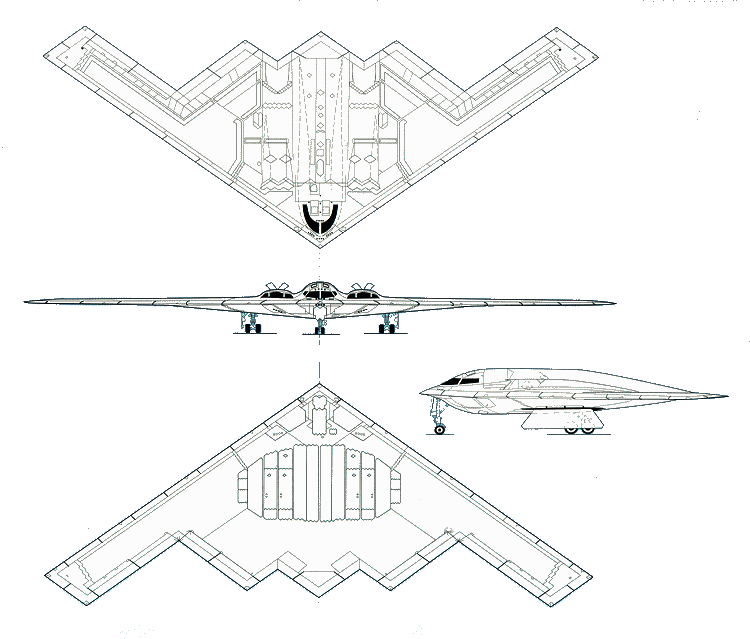
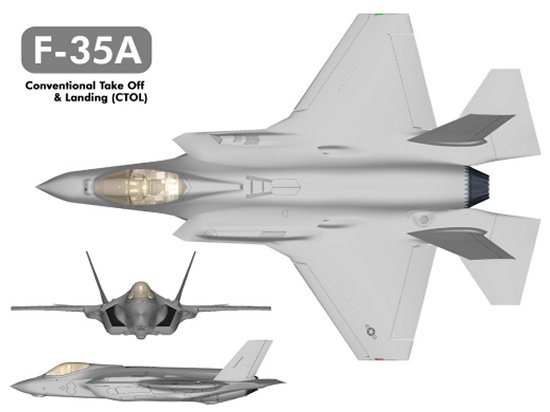
There is a reason why real 6th-gen aircraft are without a tail. 6th-gen aircraft require better 360-degree stealth in a wider frequency range (not just the frequency range of the fire control radars) compared to 5th-gen, and this can only be achieved by removing the tail unless someone comes up with a technology that achieves required level of stealth with tails (there is none as of today). With tails, it is especially bad from the sides. Canards also add RCS, but not as much as tails. RCS of canards can also be controlled in real time with software. Eurofighter has that ability. That is why the US F-47 got rid of tails to increase stealth, but trade-off is canards to have that extra agility/maneuverability required from a fighter. China did this with wingtip control surfaces
Advances in aviation enabled tailless designs to have agility/maneuverability that comes close to fighters with tails, even at supersonic speeds. That was not the case in the past. B-2 is basically a subsonic bomber with a limited flight envelope. Tempest won't be a real 6th gen unless it gets rid of its tail.
6th gen also requires next-generation adaptive cycle/variable cycle engines. Those bring increased fuel efficiency and thrust. The American engine basically starts as a turbofan and operates as a turbojet at higher speeds and altitudes. China goes further; the engine that China is developing starts as a turbofan, functions like a turbojet at higher speeds, and operates like a ramjet at even higher speeds and altitudes, which covers 0 to Mach 3+ range. American ACE can probably be applied to existing 5th gen with air inlet modification/redesign (one of the reasons why they are hesitating to install it on F-35) but i doubt the Chinese version can be used on any existing aircraft. Enginewise other projects have nothing that comes close to those 2. Not even a drawing, let alone a prototype.
Any capability other than these 2 can also be deployed on 5th gen aircraft. You can install stronger radars, better EO sensors, high-bandwidth datalinks, and advanced MUM-T functions. You can increase power production, especially if you have a big twin-engine 5th-gen fighter like KAAN. It will be more difficult with F-35, but possible. Fighters like KAAN and Tempest can't be 6th generation in the future. We can call them 6th gen, but unless they match the capabilities of the American and Chinese fighters, this will remain a marketing gimmick.
I actually agree with many of the technical points you raised, especially regarding tailless architectures and broadband 360° stealth. Aerodynamically and signature-wise, tailless designs do offer advantages, and adaptive-cycle engines will be a major milestone. No disagreement there.
But here’s the issue:
The strict criteria you’re listing don’t match what the actual 6th-generation programs are doing.
Not in the US, not in Europe, not in China.
1. Tailless design is NOT a global requirement and the proof is overwhelming.
GCAP (UK–Japan–Italy) → Has vertical tails. Still marketed as 6th gen.
FCAS (France–Germany–Spain) → Also has tails. Still officially 6th gen.
If “real 6th gen must be tailless,”
then every single one of these programs is disqualified.
Clearly, the world’s leading aerospace countries don’t see tail fins as the absolute barrier you describe; not for stealth, not for classification.
2. 360° broadband stealth is NOT exclusively tied to tailless platforms.
A tail raises the design challenge, but it does not prevent next-gen stealth, otherwise GCAP & FCAS wouldn't exist in their current forms.
3. Adaptive/variable-cycle engines also do not define a generation barrier.
ACE (Adaptive Cycle Engines) GE XA100, Pratt XA101can be retrofitted into existing 5th gens with inlet redesigns.
Even the USAF says this openly.
If a technology is retrofittable to a 5th gen,
it cannot logically be the defining element of a new generation.
China’s tri-mode turbine/ramjet hybrid is ambitious,
but again nothing prevents future airframes (including KAAN) from adopting parallel technologies when mature.
4. Nearly all other “6th-gen features” are also retrofittable.
high-power AESA
IRST evolution
AI copilot
MUM-T & loyal wingman control
high-bandwidth datalinks
electronic attack suites
onboard power growth
sensor fusion upgrades
All of these can go on a 5th gen platform especially a large twin-engine design like KAAN.
So saying “KAAN can never be 6th gen” is not a technical conclusion but it’s speculation based on incomplete data.
5. The real inconsistency: limiting KAAN with rules no one else follows.
You said:
> “We can call them 6th gen but…”
Well, they are doing exactly that calling tailed jets “6th gen.”
France, UK, Germany, Italy, Japan… none of them agonize over tails, inlet philosophy, or ACE maturity when branding.
So the logical next step is simple:
Let us call KAAN ‘next gen’ as well just like everyone else labels their own jets.
Why should Türkiye be the only country limiting itself with criteria that even the originators of the programs ignore?
If the French, British, Germans, Italians, Japanese, Chinese, and Americans don’t burden themselves with this level of self-imposed restriction…
why on earth should we?

Because those countries are operating 5th gen planes and are working on or planning to work on6th gen planes. As 5th gen planes already exist, 6th gen planes, by definition, are the next gen planes. 6 comes after 5, next one comes after the one that already exists. We are working on a 5th gen plane by definitions already exist and used, planning to work on 6th gen based on Kaan in the future. A generation that already exists and in use cannot be, by default, next gen.Let us call KAAN ‘next gen’ as well just like everyone else labels their own jets.
Why should Türkiye be the only country limiting itself with criteria that even the originators of the programs ignore?
If the French, British, Germans, Italians, Japanese, Chinese, and Americans don’t burden themselves with this level of self-imposed restriction…
why on earth should we?
You created some psy-op in your mind mate when all they are doing is talking about 6th gen aircrafts. Nobody is trying to make a new 5th gen plane and call it next gen. China made both J-20 and J-35 *after* F-22 and F-35 already came to be and they didn't call their jets "next gen". What you are suggesting is like making the equivalent of PS5 and calling it next gen; all the while PS5 already exist and Sony is working on PS6. It is simply illogical, and quite frankly, irrelevant.
Because those countries are operating 5th gen planes and are working on or planning to work on6th gen planes. As 5th gen planes already exist, 6th gen planes, by definition, are the next gen planes. 6 comes after 5, next one comes after the one that already exists. We are working on a 5th gen plane by definitions already exist and used, planning to work on 6th gen based on Kaan in the future. A generation that already exists and in use cannot be, by default, next gen.
You created some psy-op in your mind mate when all they are doing is talking about 6th gen aircrafts. Nobody is trying to make a new 5th gen plane and call it next gen. China made both J-20 and J-35 *after* F-22 and F-35 already came to be and they didn't call their jets "next gen". What you are suggesting is like making the equivalent of PS5 and calling it next gen; all the while PS5 already exist and Sony is working on PS6. It is simply illogical, and quite frankly, irrelevant.
That argument only works if ‘generations’ were some universal certified system but they aren’t.
Countries label their programs based on development philosophy, not release order.
Europe calls Tempest/FCAS ‘6th gen’ despite clearly evolutionary designs and unlike what’s being claimed, they don’t even have a domestic 5th-gen predecessor to succeed in the first place.
The label signals where the program is going, not what already exists.
Our people, on the other hand, are terrified of reactions:
‘What will foreigners say if we call Kaan 6th gen now?’
Meanwhile those same foreigners don’t care at all.
This is where TUSAŞ leadership should simply say:
We started modestly, but the tech roadmap evolved. Calling this plane strictly 5th-gen undersells the work.
Because it does.
And honestly, even if KAAN outperforms the F-35 tomorrow, critics, rivals, adversaries still won’t give credit just like they did to China before it proving itself via Pakistan against India.
So yes:
Let’s call them 6th gen. Including KAAN.
They aren’t crying over numbers somehow only we are...

Dear members, don’t you think this argument/discussion has been going on long enough? It is clear that you are not going to change @Pilatino ’s mind. He is well anchored with his ideas.
I think it is time to agree to disagree. Otherwise the thread is being cluttered with this idea being repeated over and over again. This will lead to most stuff you have spent time posting to be deleted.
Please take the hint and release the thread from this futile argument.
I think it is time to agree to disagree. Otherwise the thread is being cluttered with this idea being repeated over and over again. This will lead to most stuff you have spent time posting to be deleted.
Please take the hint and release the thread from this futile argument.
Dear members, don’t you think this argument/discussion has been going on long enough? It is clear that you are not going to change @Pilatino ’s mind. He is well anchored with his ideas.
I think it is time to agree to disagree. Otherwise the thread is being cluttered with this idea being repeated over and over again. This will lead to most stuff you have spent time posting to be deleted.
Please take the hint and release the thread from this futile argument.
Alright,
We don’t have to agree; discussions would be boring if everyone thought the same anyway.
Let’s keep the thread clean and focus on KAAN itself as you suggested. I’ll save my ideas about it for another day and another village.

recommendation: obviously this is an intresting subject which deserves a separate thread where our members can discuss freely about other countries 6 gen projects and determining factors in generation distinctions.
Any post not related to KAAN will be deleted
Any post not related to KAAN will be deleted
Last edited:
All posts related to 6th generation fighter aircrafts have been moved to

 defencehub.live
Please carry on discussing it there.
Sixth Generation Fighter Aircrafts
Only the US and China will have real 6th gens. Other projects are more like 5.5th gen that can be achieved with KAAN project.
defencehub.live
Please carry on discussing it there.

BalkanTurk90
Contributor

SAHA Istanbul KAAN poster :
Lools like F22 , amazing fighter jet
i hope its finish design

Lools like F22 , amazing fighter jet
i hope its finish design


It that official art from TAI?SAHA Istanbul KAAN poster :
Lools like F22 , amazing fighter jet
i hope its finish design
View attachment 78596
Isn't it kind of become smaller?SAHA Istanbul KAAN poster :
Lools like F22 , amazing fighter jet
i hope its finish design
View attachment 78596
Like KF21-size

Khagan1923
Contributor
Probably not.It that official art from TAI?
Not real, AI.It that official art from TAI?
You sure?


