

Latest Thread
You are using an out of date browser. It may not display this or other websites correctly.
You should upgrade or use an alternative browser.
You should upgrade or use an alternative browser.


Launch window announced! 12th July to 4th August!
Mission is a success! Vikram-1 put all payloads in orbit!
Getting to orbit on the first-ever test flight is not a small feat. This is a huge achievement for Skyroot Aerospace!
Per what I've heard, they've got 2 more Vikram rockets in production. Hope they get to their initially desired cadence of one launch every month!

Doing this on first try is not normal feat. Looking into their designs, they built a lot of redundancies.Mission is a success! Vikram-1 put all payloads in orbit!
Getting to orbit on the first-ever test flight is not a small feat. This is a huge achievement for Skyroot Aerospace!
Per what I've heard, they've got 2 more Vikram rockets in production. Hope they get to their initially desired cadence of one launch every month!

Mission is a success! Vikram-1 put all payloads in orbit!
Getting to orbit on the first-ever test flight is not a small feat. This is a huge achievement for Skyroot Aerospace!
Per what I've heard, they've got 2 more Vikram rockets in production. Hope they get to their initially desired cadence of one launch every month!
Absolutely loved the flash of the initial ignition, I felt such relief when it cleared the tower itself.... I was worried earlier when a hold was placed on the launch for a while (wondering what the issue was).
Then the onboard cam footage, the much younger teams and new faces in mission control, their cheering/excitement etc....it was all new great feeling.
I didn't expect things to go this perfectly, but they did. It makes sense though given level of detailed efforts they put in that has been posted in here already...they didn't rush.
Hope it gives great impetus to agnikul mission and their booster recovery objective.
Some highlights:
On the launchpad prior to first flight...
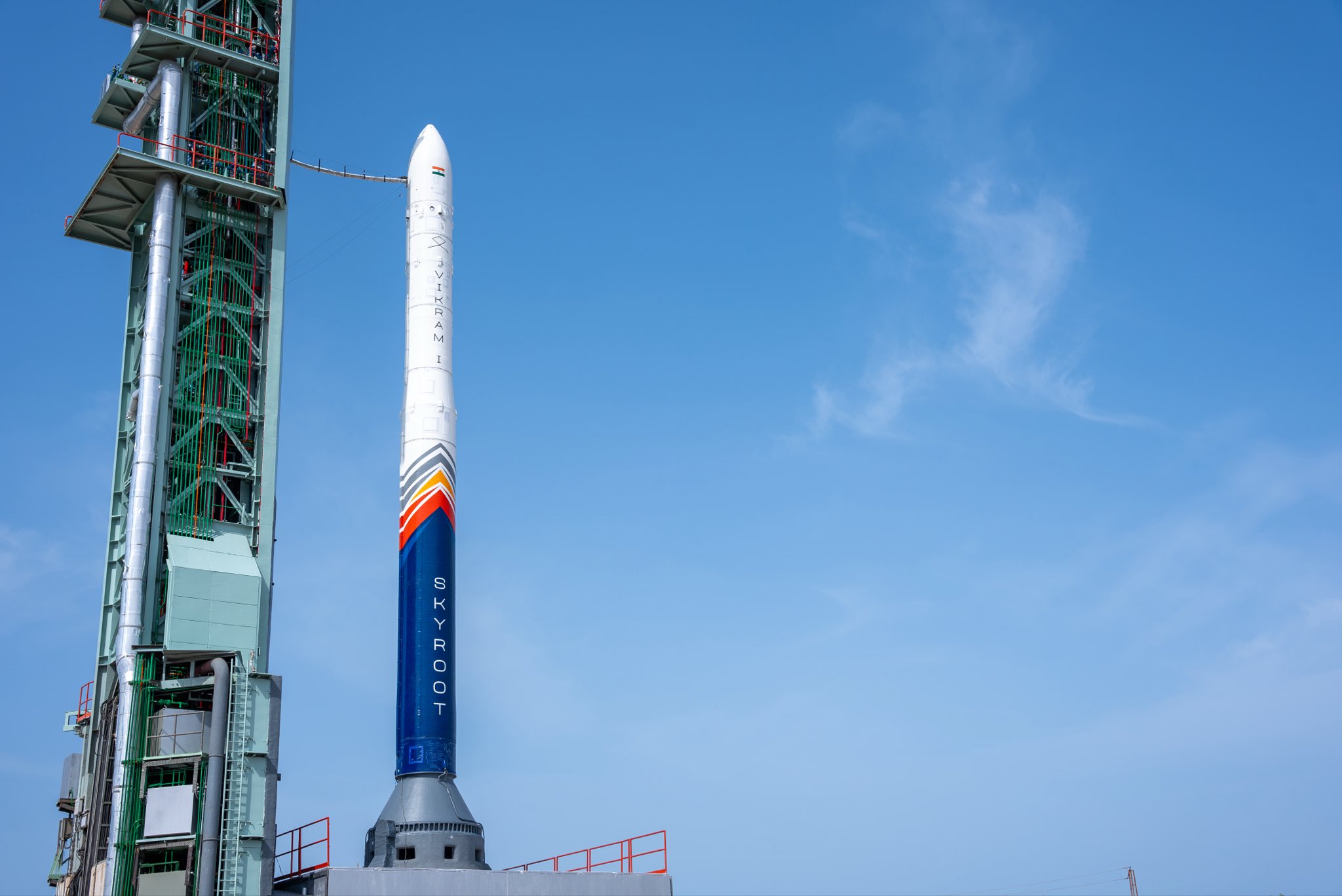
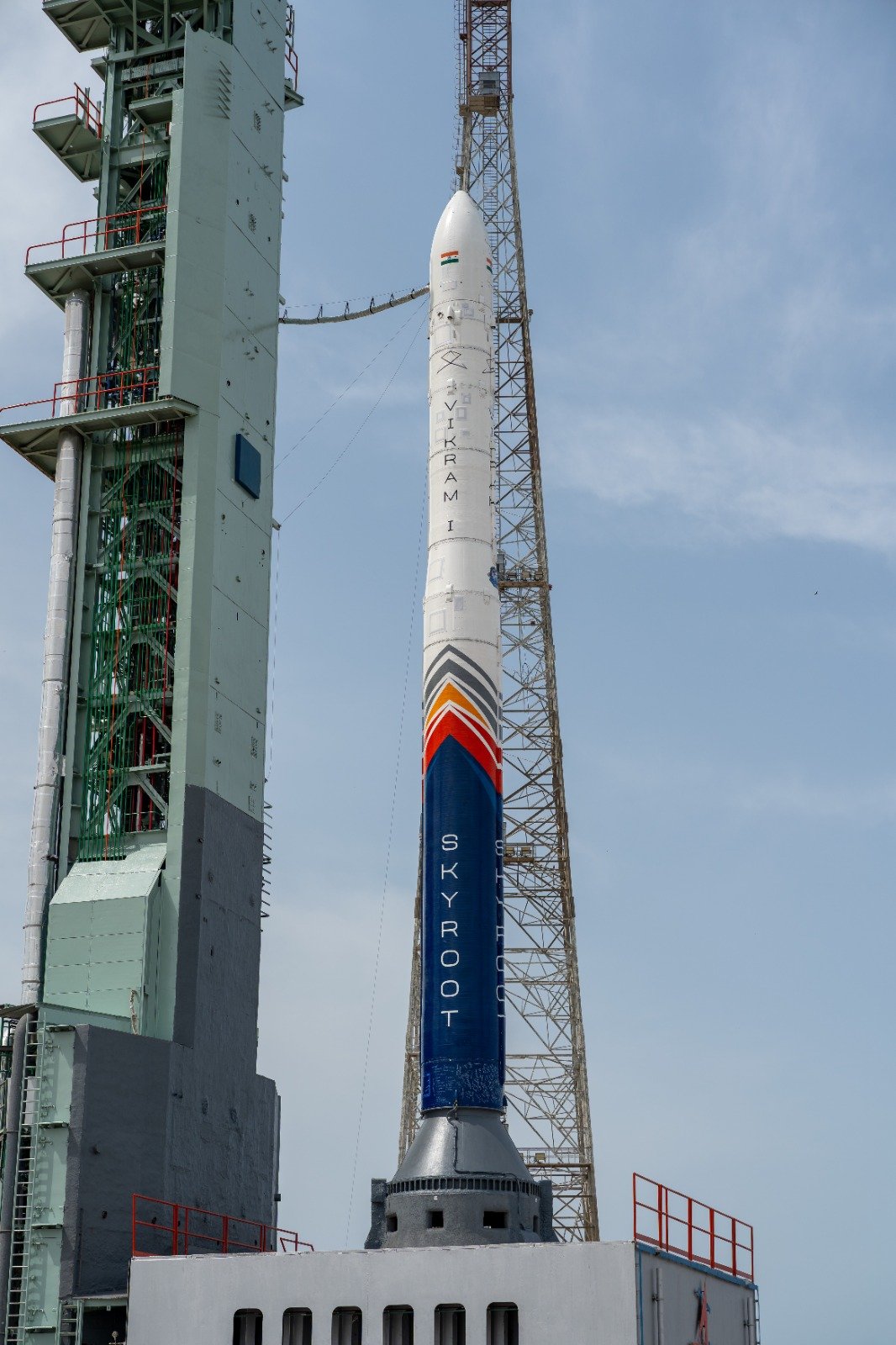
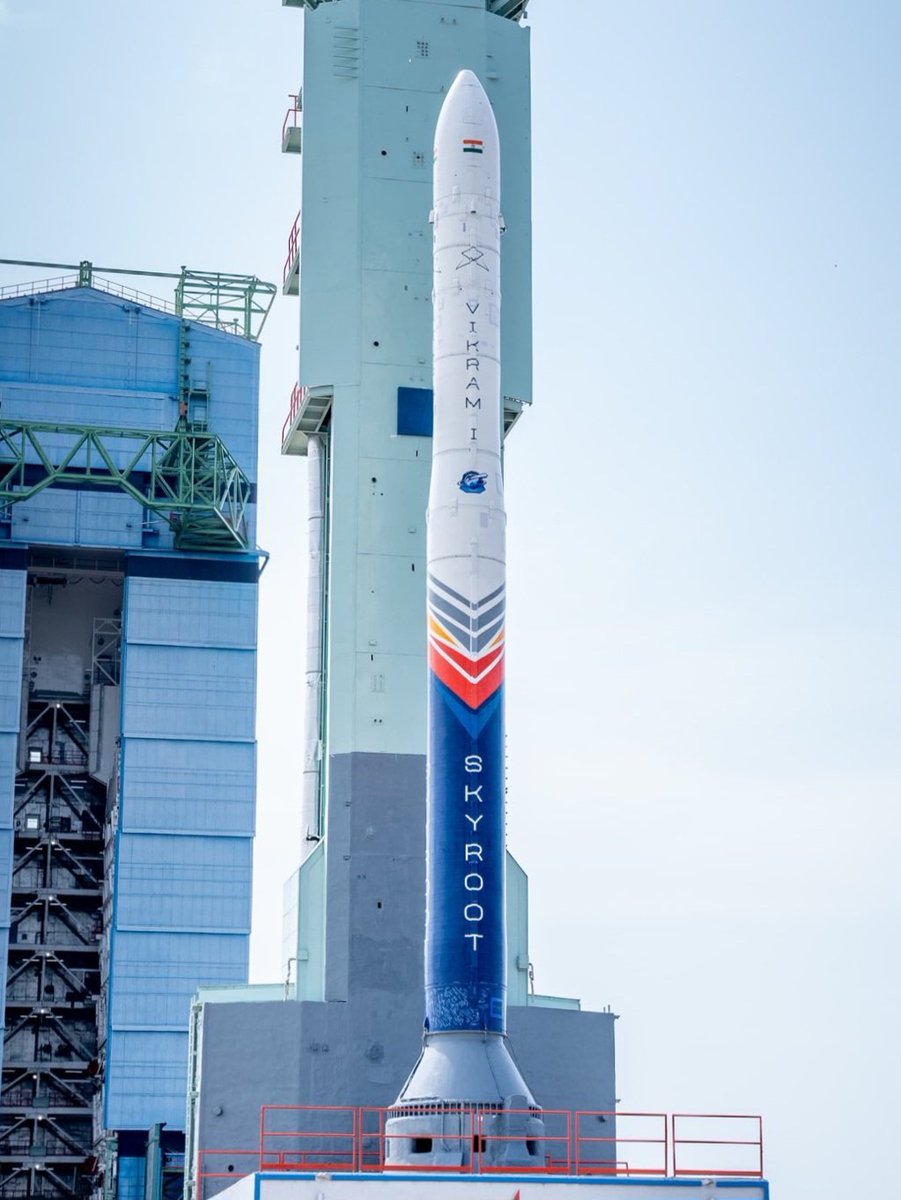
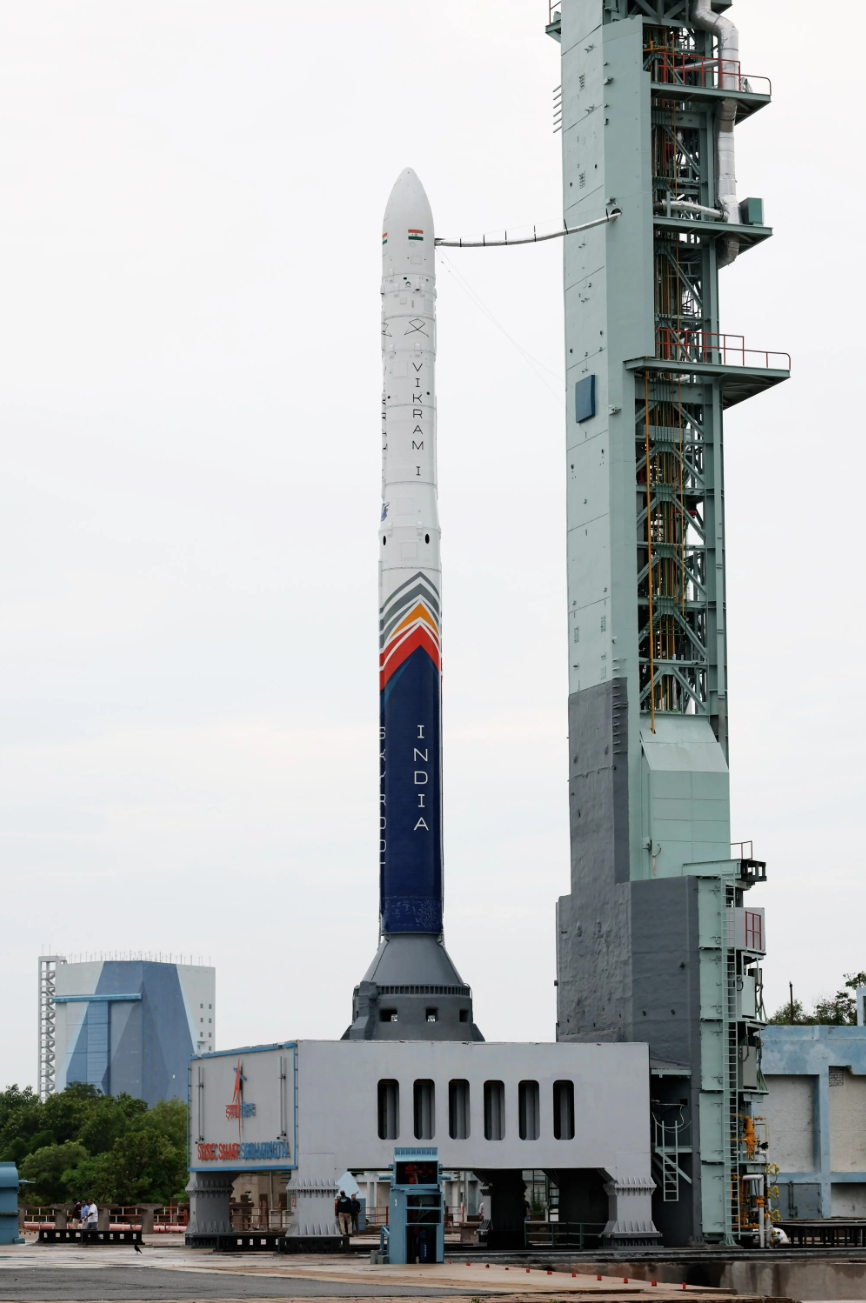
Mission patch:
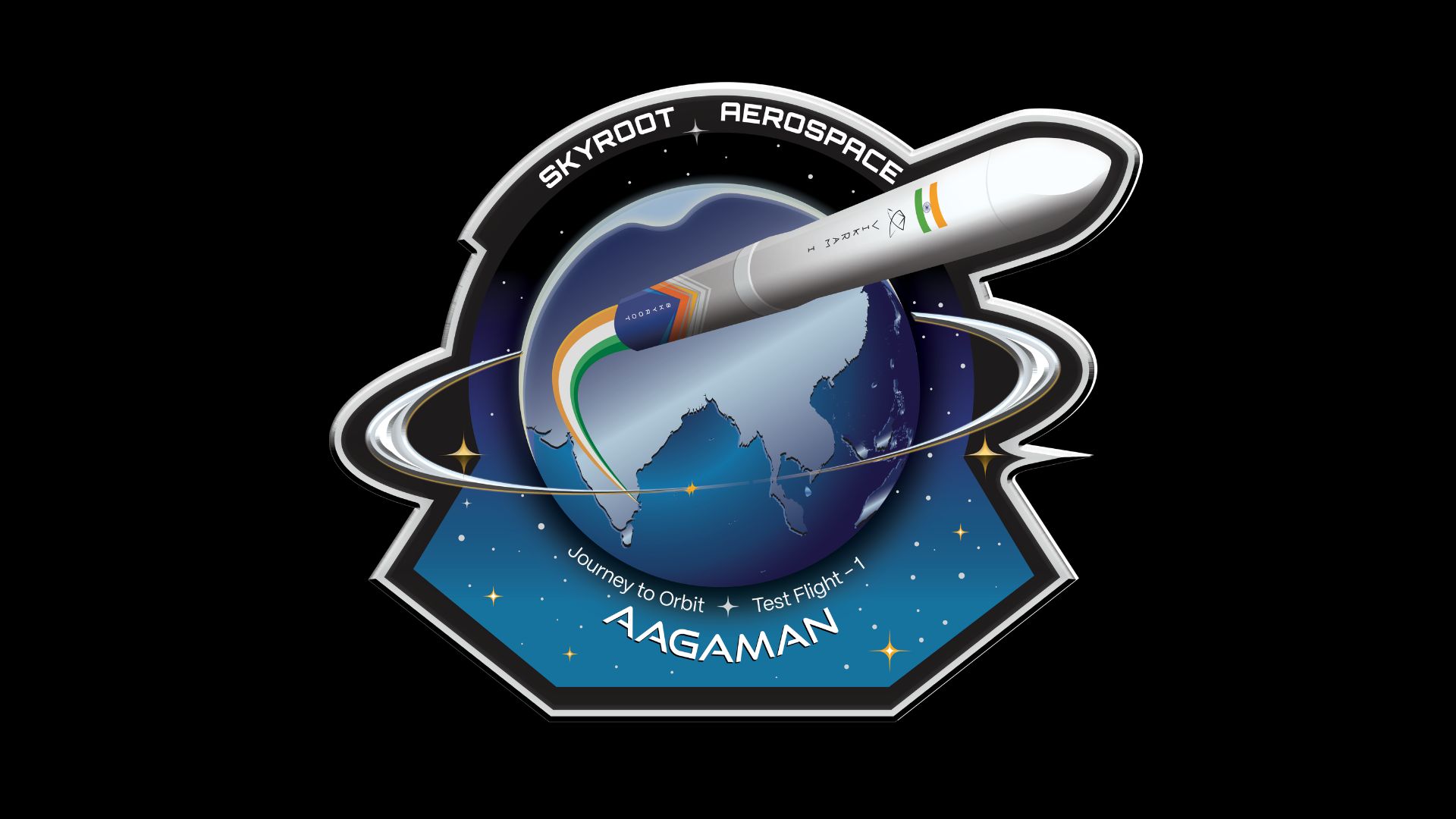
The date of flight has more significance...
Unless you count Rocket Lab as a New Zealand company (which may not be entirely factual, at least not anymore), Skyroot Aerospace is actually the first non-American & non-Chinese private company to have made it to orbit. Like you said, several others (European, Australian) have tried, but none outside the US/China have succeeded so far.
 Orbital Sciences
SpaceX
Rocket Lab
 i-Space
Galactic Energy
Virgin Orbit
Astra
Firefly Aerospace
Space Pioneer
LandSpace
Orienspace
Blue Origin
 Skyroot Aerospace
Mission patch:
The date of flight has more significance...
Congratulations!
Commercial space companies in Japan, Europe and Australia have also attempted it, but with less successful results.
Great success for India.
Unless you count Rocket Lab as a New Zealand company (which may not be entirely factual, at least not anymore), Skyroot Aerospace is actually the first non-American & non-Chinese private company to have made it to orbit. Like you said, several others (European, Australian) have tried, but none outside the US/China have succeeded so far.
Orbital Sciences SpaceX Rocket Lab i-Space Galactic Energy Virgin Orbit Astra Firefly Aerospace Space Pioneer LandSpace Orienspace Blue Origin Skyroot Aerospace
Last edited:


Chandrayaan-5 update: Isro, Jaxa teams meet to decide what it will do on the Moon
Isro and Jaxa scientists met in Bengaluru to firm up Chandrayaan-5 lander-rover interfaces and payload plans. The work will shape LUPEX's search for lunar water ice and broader Moon studies.

Skyroot to build its own launch pad as Vikram-1 makes history on maiden flight
After Vikram-1 reached orbit on its maiden mission, Skyroot said it plans to build its own launch pad. The move points to a faster launch schedule as India's private space sector expands.
"Indian space startup Skyroot Aerospace has revealed plans to build its own launch pad as it prepares to significantly increase launch frequency in the coming years."
Good to see the engagement with younger generation...this will drive human talent resources for India longer term.


I hate you for your Space capabilities.Skyroot to build its own launch pad as Vikram-1 makes history on maiden flight
After Vikram-1 reached orbit on its maiden mission, Skyroot said it plans to build its own launch pad. The move points to a faster launch schedule as India's private space sector expands.www.indiatoday.in
"Indian space startup Skyroot Aerospace has revealed plans to build its own launch pad as it prepares to significantly increase launch frequency in the coming years."
Good to see the engagement with younger generation...this will drive human talent resources for India longer term.


I hate you for your Space capabilities.
*plays MC Hammer's "cant touch this" *

AgniKul Cosmos bets on reusable rockets to make launches on demand and affordable; eyes early 2027 for Mission 2
AgniKul Cosmos aims for affordable, on-demand launches with reusable rockets, targeting Mission 2 in early 2027 for recovery trials.
New Delhi:
On July 18, a seven-storey rocket lifted off from Sriharikota. Vikram-1 climbed into a 450 km orbit and released four payloads. It was India's first privately built rocket to reach orbit. Skyroot Aerospace had just made history.
The moment mattered beyond the launch pad. It proved something investors had been betting on for years: Indian spacetech companies can build real hardware, not just pitch decks.
And the money is following. Indian spacetech startups have now raised $871 million across 285 companies, according to Tracxn. Skyroot leads with $150 million. Pixxel, Agnikul, and Digantara follow close behind
(More at link)
AgniKul Cosmos bets on reusable rockets to make launches on demand and affordable; eyes early 2027 for Mission 2
AgniKul Cosmos aims for affordable, on-demand launches with reusable rockets, targeting Mission 2 in early 2027 for recovery trials.www.thehindubusinessline.com
Looking forward to this as well as Astrophel Aerospace's Hopper experiment that is supposed to happen this year or the next.
Astrophel Aerospace
Astrophel Aerospace is an Indian space-tech company building affordable, dedicated launch vehicles for small satellites.
 www.astrophelaerospace.in
I think these two companies (Agnikul & Astrophel) are the closest to cracking booster reusability for small/medium rockets. Though EtherealX is aiming for full-reusability (booster + upper stage) on a larger rocket, that will take more time and more funding to build...as will ISRO's gigantic NGLV.
This is by far the most consequential private-sector space development in the country. Yes, even more than Skyroot's maiden launch in many ways.
If Astrobase can productionize their 800 kN LOX-Methane cycle, it means we've essentially cracked an indigenous Merlin 1D-class (nearly) reusable engine. Except it's Methane instead of RP-1/Kerosene, so in a way even better, like Raptor. Of course being an FFSC it's much more complex & advanced than Merlin's G-G cycle (it's closer to Raptor in that sense, though much less powerful). This can be scaled later though, given enough investment.
But even the existing 800-kN design has so many applications. Cluster about a dozen of them together, you've essentially got a Falcon 9-class rocket.
Can't wait for Friday!
I figured that engine is too small to be an upper stage motor for any sizeable rocket so I looked it up and apparently, Manastu's GP-LAM is the engine behind Latitude's Auxiliary Propulsion System (APS) on the upper stage of their rocket, not the main motor, which is their own 'Navier'.

GP-LAM
GP-LAM is a 300 N thruster using non-toxic MS289 green propellant, ideal for upper stages of Launch Vehicles, OTVs & GEO spacecraft. Compact, modular and safe, it enables LEO circularization, GTO-GEO transfer, trajectory correction, and collision avoidance, enabling a range of advanced orbital...
 manastuspace.com
The APS is designed to assist in circularization/fine-tuning of the orbit insertion, as well as enable eventual de-orbitation of the upper stage (space debris mitigation):
Our launcher - Latitude
Meet Zephyr, built on proven flight technologies. Designed and built in France, our launcher is compact yet powerful, capable of carrying 200 kg to LEO.
^^ See Step 7 and Step 9 of their launch animation halfway down the page.
Glad to see component-level industry developing into an export-ready stage, and in a critical segment like propulsion!
New Delhi:
On July 18, a seven-storey rocket lifted off from Sriharikota. Vikram-1 climbed into a 450 km orbit and released four payloads. It was India's first privately built rocket to reach orbit. Skyroot Aerospace had just made history.
The moment mattered beyond the launch pad. It proved something investors had been betting on for years: Indian spacetech companies can build real hardware, not just pitch decks.
And the money is following. Indian spacetech startups have now raised $871 million across 285 companies, according to Tracxn. Skyroot leads with $150 million. Pixxel, Agnikul, and Digantara follow close behind
(More at link)
Great to hear, especially as a million $ in India gets you a LOT farther than a million $ in the US.
Astrobase was able to prototype an FFSC engine with a seed funding of $10 million! Yes, in some ways they are able to benefit from the knowledge base & infrastructure of ISRO but still that's a huge achievement as ISRO itself hasn't even attempted an FFSC cycle yet!
Oh and I've seen in some interviews of Skyroot's founders that there has been significant 'reverse brain-drain' in the space sector in recent years i.e. many Indian-origin professionals working in US spacetech sector coming back to work with domestic companies.
Everything said & done, this is awesome progress within just ~6 years of the space sector being opened up to full-scale private investment.

