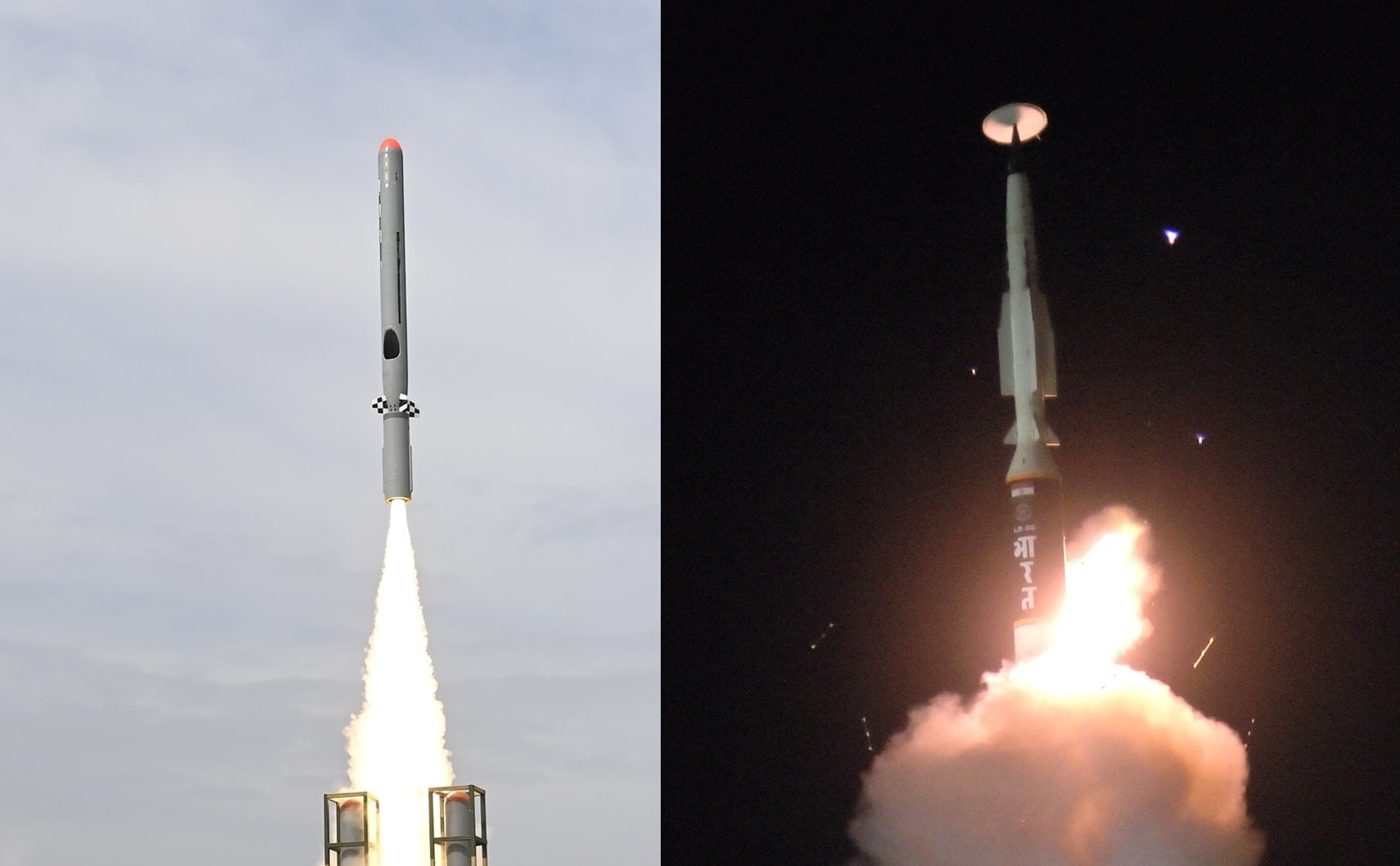
There’s been some debate about the missile recently tested by DRDO, so let me break it down. Specifically, I’m focusing on how the second stage of such missiles works. There are two main types of second-stage propulsion:
- Unpropelled – Where the second stage simply coasts.
- Propelled – Where the second stage is powered.
This particular missile falls under the propelled category. But what sets it apart from a regular two-stage ballistic missile? Let me explain.
The Problem with Regular Ballistic Missiles
To hit ranges of about 1500 km or more, typical ballistic missiles follow a high-arching trajectory that takes them out of the atmosphere (into space) before coming back down. This approach makes them vulnerable to interception in two key phases:
- Mid-course: Systems like SM-3 interceptors can target the missile while it’s in space.
- Re-entry: Systems like THAAD can shoot it down during its descent.
Here’s where a new idea comes in. Instead of taking the missile out of the atmosphere, you could keep it inside the atmosphere the whole time. This is called a
quasi-ballistic trajectory, and it essentially renders defenses like SM-3 and THAAD useless because they’re designed for higher-altitude engagements.
What’s a Quasi-Ballistic Missile?
A quasi-ballistic missile doesn’t zoom up into space; it stays within the atmosphere (at a max height of ~50 km, like the Shaurya missile). This means it’s harder to detect and track with early-warning radars, giving adversaries much less time to respond.
Quasi-ballistic missiles differ from
MARVs (maneuverable reentry vehicles) like China’s DF-21 and DF-26. MARVs do go up to ~300-400 km before descending. They rely on terminal-phase maneuvering to dodge systems like THAAD or Patriot. But since MARVs follow a higher trajectory, they’re still more detectable than quasi-ballistic missiles.
Connecting Quasi-Ballistic Missiles to Hypersonic Glide Vehicles (HGVs)
Now let’s talk about hypersonic glide vehicles (HGVs) or, as I prefer to call them,
hypersonic maneuverable vehicles (HMVs). These are hypersonic-speed missiles that can maneuver mid-course,
within the atmosphere. There are lots of design variations (cones, semi-cones, etc.), but here’s the gist of how they work.
Unlike pure ballistic missiles, HGVs have
lift surfaces to generate lift, which increases their range. They don’t just follow a predictable arc. Some HGVs are purely unpowered gliders, while others use propulsion to either stay powered the whole way (sacrificing range) or to glide and then reignite for certain phases.
Adding propulsion gives an HGV a huge advantage because it can:
- Regain lost speed during sharp maneuvers.
- Extend its range significantly compared to an unpowered glider.
Control surfaces also make them far more maneuverable, making it even harder for interceptors to predict and target their path. Some HGV designs rely purely on shockwave riding for stability, but adding proper control surfaces makes them much more versatile.
What I Think a “True” Hypersonic Maneuverable Vehicle Should Be
For an ideal HGV, I’d say it needs three things:
- A throttleable rocket motor – So it can recover lost speed during maneuvers.
- Lift surfaces – For gliding (whether powered or unpowered phase).
- Control surfaces – For better mid-course maneuverability.
The missile DRDO tested seems to check these boxes, though I do think its lift surfaces look a bit small compared to a half-conical waverider design. But hey, design trade-offs are always a thing in missile engineering.