

You are using an out of date browser. It may not display this or other websites correctly.
You should upgrade or use an alternative browser.
You should upgrade or use an alternative browser.
Live Conflict Iran-Israel Conflict (2025)
- Thread starter UkroTurk
- Start date


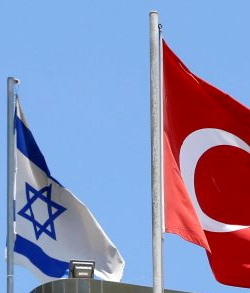
Israel-Iran War: ‘Dry Run’ for a Future War with Turkey?
The question now is whether the rockets and drones now striking Tel Aviv and Tehran could just years from now fly toward Istanbul and Ankara and whether Turkish warplanes—including U.S. manufactured fighter-jets—take off from Turkish bases to strike at Israel.
 www.aei.org
By Michael Rubin
National Security Journal
Key Points and Summary – The current war between Israel and Iran, rooted in decades of irreconcilable differences, could be a “dry run” for a future conflict between Israel and Turkey.
Turkish President Recep Tayyip Erdoğan is following a similar path as Iran’s ayatollahs: pursuing a domestic military industry, building a nuclear program under a civilian guise, and acting as a state sponsor of terror by supporting groups like Hamas and Hezbollah.
This trajectory, combined with anti-Israel rhetoric, creates a dangerous parallel.
The West must avoid repeating its past diplomatic failures with Iran by ignoring the potential threat from Turkey.
Could the Israel-Iran War be a Dry Run for an Israel-Turkey War?
The war between Israel and Iran, countries separated by more than 1,000 miles, represented the failure of more than four decades of diplomacy.
Ever since Ayatollah Ruhollah Khomeini first led “Death to Israel” chants and then his successor Ali Khamenei restarted Iran’s nuclear program in 1989, the events of the last three days have been foreshadowed, if not inevitable.
Both countries have planned for this week’s events. Israel thoroughly compromised the Islamic Republic’s security apparatus and defense establishment.
For the Islamic Revolutionary Guard Corps’ top leadership, there was simply no place to hide; Supreme Leader Ali Khamenei himself is likely operating on borrowed time.
While Khamenei both bragged about the precision of Iranian weaponry, his supposed fatwa against the acquisition of nuclear weapons provided cover for Iranian nuclear scientists to do the opposite.
A generation of diplomats not only failed but their wishful thinking by believing both Iranian reformers had power and that they differed meaningfully on ideology rather than tactics made the current conflict worst. Had they forced Khamenei to drink from the metaphorical “chalice of poison” that Khomeini cited in July 1988 to explain his agreement to a ceasefire with Saddam Hussein’s Iraq, the current war might never have occurred.
The Turkey Problem
The missiles and drones might still be flying. Still, the West might already be making the same mistake twice by ignoring the reality that Turkey’s President Recep Tayyip Erdoğan is setting his country down the same path as Khomeini and Khamenei did in Iran.
Erdoğan, like the Iranian supreme leaders, takes public pride in his country’s domestic military industry. And Turkey, like Iran just a few decades ago, now builds a nuclear plant in an earthquake zone ostensibly to generate electricity but also likely to provide cover for a more covert nuclear program. Formal designation or not, Turkey, like Iran before it, is also acting as a state sponsor of terror. Erdoğan has been unapologetic about his support for Hamas, and has even allowed senior Hamas operatives to plan attacks on the Jewish state from their Turkish safe haven.
More recently and quietly, Erdoğan’s regime has helped Hezbollah launder money to continue its terror. In short, as the Islamic Republic’s demise threatens to orphan Hamas and Hezbollah, Erdoğan is stepping in to become their foster parent. Erdoğan’s castigate of Jews and the Jewish state up to and including calls for Israel’s annihilation also parallel Khomeini and Khamenei’s calls to wipe Israel off the face of the map.
The question now is whether the rockets and drones now striking Tel Aviv and Tehran could just years from now fly toward Istanbul and Ankara and whether Turkish warplanes—including U.S. manufactured fighter-jets—take off from Turkish bases to strike at Israel. Indeed, Turkey’s presence in NATO is a complication, but only if NATO actually both recognizes Israel as an aggressor and chooses to implement Article V. Here, NATO’s need for consensus could actually work against Turkey if the United States chooses to wield its de facto veto.
Hopefully, such a scenario will not come to place, but it is essential to both recognize Erdoğan’s true ambition and to confront the possibility head on of an Israel-Turkey war that would be far more destructive to both countries than even the current Israel-Iran war. Rather than assess NATO through the lens of wishful thinking, it is crucial to coerce Turkey away from its current path, using “Maximum Pressure” sanctions if need be.
There simply is no meaningful difference today between President Joe Biden bailing Iran out from first term Trump’s maximum pressure and Trump today embracing and even aiding Erdoğan even as he makes his malign ambitions for the region clear.

Angry Turk !!!
Contributor

@mods
Allowing articles from michael rubin to be posted here is the same as nordic monitor or any pkk/ypg article. Delete that shit...
Allowing articles from michael rubin to be posted here is the same as nordic monitor or any pkk/ypg article. Delete that shit...


Israel-Iran War: ‘Dry Run’ for a Future War with Turkey?Israel-Iran War: ‘Dry Run’ for a Future War with Turkey?
The question now is whether the rockets and drones now striking Tel Aviv and Tehran could just years from now fly toward Istanbul and Ankara and whether Turkish warplanes—including U.S. manufactured fighter-jets—take off from Turkish bases to strike at Israel.
By Michael Rubin
National Security Journal
Key Points and Summary – The current war between Israel and Iran, rooted in decades of irreconcilable differences, could be a “dry run” for a future conflict between Israel and Turkey.
Turkish President Recep Tayyip Erdoğan is following a similar path as Iran’s ayatollahs: pursuing a domestic military industry, building a nuclear program under a civilian guise, and acting as a state sponsor of terror by supporting groups like Hamas and Hezbollah.
This trajectory, combined with anti-Israel rhetoric, creates a dangerous parallel.
The West must avoid repeating its past diplomatic failures with Iran by ignoring the potential threat from Turkey.
Could the Israel-Iran War be a Dry Run for an Israel-Turkey War?
The war between Israel and Iran, countries separated by more than 1,000 miles, represented the failure of more than four decades of diplomacy.
Ever since Ayatollah Ruhollah Khomeini first led “Death to Israel” chants and then his successor Ali Khamenei restarted Iran’s nuclear program in 1989, the events of the last three days have been foreshadowed, if not inevitable.
Both countries have planned for this week’s events. Israel thoroughly compromised the Islamic Republic’s security apparatus and defense establishment.
For the Islamic Revolutionary Guard Corps’ top leadership, there was simply no place to hide; Supreme Leader Ali Khamenei himself is likely operating on borrowed time.
While Khamenei both bragged about the precision of Iranian weaponry, his supposed fatwa against the acquisition of nuclear weapons provided cover for Iranian nuclear scientists to do the opposite.
A generation of diplomats not only failed but their wishful thinking by believing both Iranian reformers had power and that they differed meaningfully on ideology rather than tactics made the current conflict worst. Had they forced Khamenei to drink from the metaphorical “chalice of poison” that Khomeini cited in July 1988 to explain his agreement to a ceasefire with Saddam Hussein’s Iraq, the current war might never have occurred.
The Turkey Problem
The missiles and drones might still be flying. Still, the West might already be making the same mistake twice by ignoring the reality that Turkey’s President Recep Tayyip Erdoğan is setting his country down the same path as Khomeini and Khamenei did in Iran.
Erdoğan, like the Iranian supreme leaders, takes public pride in his country’s domestic military industry. And Turkey, like Iran just a few decades ago, now builds a nuclear plant in an earthquake zone ostensibly to generate electricity but also likely to provide cover for a more covert nuclear program. Formal designation or not, Turkey, like Iran before it, is also acting as a state sponsor of terror. Erdoğan has been unapologetic about his support for Hamas, and has even allowed senior Hamas operatives to plan attacks on the Jewish state from their Turkish safe haven.
More recently and quietly, Erdoğan’s regime has helped Hezbollah launder money to continue its terror. In short, as the Islamic Republic’s demise threatens to orphan Hamas and Hezbollah, Erdoğan is stepping in to become their foster parent. Erdoğan’s castigate of Jews and the Jewish state up to and including calls for Israel’s annihilation also parallel Khomeini and Khamenei’s calls to wipe Israel off the face of the map.
The question now is whether the rockets and drones now striking Tel Aviv and Tehran could just years from now fly toward Istanbul and Ankara and whether Turkish warplanes—including U.S. manufactured fighter-jets—take off from Turkish bases to strike at Israel. Indeed, Turkey’s presence in NATO is a complication, but only if NATO actually both recognizes Israel as an aggressor and chooses to implement Article V. Here, NATO’s need for consensus could actually work against Turkey if the United States chooses to wield its de facto veto.
Hopefully, such a scenario will not come to place, but it is essential to both recognize Erdoğan’s true ambition and to confront the possibility head on of an Israel-Turkey war that would be far more destructive to both countries than even the current Israel-Iran war. Rather than assess NATO through the lens of wishful thinking, it is crucial to coerce Turkey away from its current path, using “Maximum Pressure” sanctions if need be.
There simply is no meaningful difference today between President Joe Biden bailing Iran out from first term Trump’s maximum pressure and Trump today embracing and even aiding Erdoğan even as he makes his malign ambitions for the region clear.
You see, for them Iran is already finished.

Wow this is just pathetic.
Truth Social
Truth Social is America's "Big Tent" social media platform that encourages an open, free, and honest global conversation without discriminating on the basis of political ideology.truthsocial.com

Tabmachine
Committed member


sometimes its good to study the propaganda of the enemy. It's honestly so shameless though, that this smalll minority is literally pursuing delusions of grandeur on the backs of others. They dont even see how undignified it is to be so parasitic.@mods
Allowing articles from michael rubin to be posted here is the same as nordic monitor or any pkk/ypg article. Delete that shit...
honestly i think the extremeness of how people are kissing his ass, is partly to mock him as wellWow this is just pathetic.

It looks like... everyone won:

 www.bankingnews.gr
Iran celebrates "victory", Israel triumphs... – Everyone wins, Trump nominated for... Nobel Peace Prize
A geopolitical paradox is unfolding in the Middle East, with Iran and Israel simultaneously celebrating their “victory,” following the recent military escalation that nearly blew up the entire region.
Tehran is preparing for grand public celebrations on June 24, marking what it calls its “victory over Israel,” despite the fact that there was no surrender on the part of its adversary.
On the other side, Israel maintains the same rhetoric: victory and imposing its power.
The Home Front Command announced that all internal restrictive measures will be lifted from June 25, gradually returning to everyday life.
Airports, schools, synagogues and public services will reopen normally.
In a geopolitical narrative where everyone declares victory, former US President Donald Trump is reportedly emerging as… a champion of diplomacy.
Republican Congressman Buddy Carter officially nominated Trump for the Nobel Peace Prize, claiming that he played a catalytic role in resolving the Iran-Israel conflict and preventing the number one financier of international terrorism, namely Iran, from acquiring a nuclear arsenal.
Το Ιράν πανηγυρίζει «νίκη», το Ισραήλ θριαμβολογεί... – Όλοι βγήκαν κερδισμένοι, ο Trump υποψήφιος για... Νόμπελ Ειρήνης
Το Ιράν πανηγυρίζει «νίκη», το Ισραήλ θριαμβολογεί... – Όλοι βγήκαν κερδισμένοι, ο Trump υποψήφιος για... Νόμπελ Ειρήνης
www.bankingnews.gr
Iran celebrates "victory", Israel triumphs... – Everyone wins, Trump nominated for... Nobel Peace Prize
A geopolitical paradox is unfolding in the Middle East, with Iran and Israel simultaneously celebrating their “victory,” following the recent military escalation that nearly blew up the entire region.
Tehran is preparing for grand public celebrations on June 24, marking what it calls its “victory over Israel,” despite the fact that there was no surrender on the part of its adversary.
On the other side, Israel maintains the same rhetoric: victory and imposing its power.
The Home Front Command announced that all internal restrictive measures will be lifted from June 25, gradually returning to everyday life.
Airports, schools, synagogues and public services will reopen normally.
In a geopolitical narrative where everyone declares victory, former US President Donald Trump is reportedly emerging as… a champion of diplomacy.
Republican Congressman Buddy Carter officially nominated Trump for the Nobel Peace Prize, claiming that he played a catalytic role in resolving the Iran-Israel conflict and preventing the number one financier of international terrorism, namely Iran, from acquiring a nuclear arsenal.
Σοκ από μυστικές υπηρεσίες ΗΠΑ: Φιάσκο η αμερικανική επίθεση, άθικτο το Fordow — Συνεχίζεται το πυρηνικό πρόγραμμα του Ιράν
Σοκ από μυστικές υπηρεσίες ΗΠΑ: Φιάσκο η αμερικανική επίθεση, άθικτο το Fordow — Συνεχίζεται το πυρηνικό πρόγραμμα του Ιράν
www.bankingnews.gr
Let's now see what exactly the famous bombing of Fordow by the US B-2 strategic bombers ordered by Trump in the early hours of Sunday 24/6 achieved and did not achieve.
The installation in Fordow, according to data from the International Atomic Energy Agency (IAEA), is located 100 meters below rocky ground.
As BN emphasized in its previous publication, such depths are impossible to penetrate by any conventional aerial bomb, even by the powerful GBU-57.
Reliable sources such as Fox News and Iranian agencies confirm that the attacks focused on the surface entrances of the complex – not on the uranium enrichment plant itself. Nor were there any seismic signs, radiation leaks or movements of the civilian population.
In short: the target remained intact.
The strike had no strategic substance, but was propaganda in nature. It was a surgically planned act of projection:
• To the US domestic audience, a few weeks before the crucial election battle.
• To Israel, as proof that Washington “supports its ally militarily”.
• To Iran, as a message: “Our patience is running out – return to negotiations or the next strike will be real”.
Nevertheless, the absence of a substantial military pursuit reveals that this is a communications explosion, not a military escalation.
Tehran was not taken by surprise. On the contrary, it had already removed most of its enriched uranium from Fordow and Isfahan, transferring it—presumably—to underground or mobile facilities, out of range of American bombs. This means that:
• The infrastructure for building a nuclear weapon remains intact.
• Rumors of a nuclear warhead test in northern Iran, near Semnan, are being reinforced by the recent 5.2-magnitude earthquake—which had no natural causes in the region.
The tactic is very reminiscent of the North Korean model: first denial, then underground development of capabilities, and finally a fait accompli.
An earthquake that shook central Iran on June 20 sparked a flurry of rumors and questions about nuclear tests.
In particular, a 5.2-magnitude earthquake struck 35 kilometers southwest of the Semnan region in Iran at 20:49 Greek time.
Earlier in May, satellite images were published revealing the existence of a new, previously unknown nuclear facility in the Semnan region of Iran - close to the epicenter of the earthquake.
The facility is tentatively named the Keshet Facility and, according to information from Western intelligence agencies, is a tritium extraction plant - a radioactive isotope unrelated to the peaceful use of nuclear energy.
As noted, the facility appears to have been camouflaged to resemble a chemical plant, a tactic that is not uncommon in regimes attempting to conceal military activities.
In fact, in the same area, a very short distance away, is one of the largest missile bases of the Revolutionary Guards (IRGC), which reinforces suspicions about the strategic importance of the site and the real role of the Keshet Facility.
It is recalled that in the same geographical area, a 4.6 magnitude earthquake was recorded on October 5, 2024.
Iran is pursuing a strategy of enemy fatigue: it avoids full-frontal conflict, responds surgically, builds international support (Russia, China, BRICS), quietly arms itself, and holds the threat of nuclear power as a bargaining chip.
Trump, for his part, is playing on three fronts simultaneously:
1. Domestically, to show determination.
2. Internationally, to push for Iran to return to the 2015 agreement.
3. Politically, to neutralize his opponents within the Republican Party.
The US attack on Iran did not destroy uranium, nor did it disrupt the nuclear program.
It was a well-planned show of force, for the sake of political impression and diplomatic blackmail.
But Tehran did not budge, did not hesitate, and certainly did not cower.
Instead, it officially entered a long-game phase – with the goal of becoming a regional nuclear power.
And the question is no longer whether Iran will acquire a nuclear weapon.
The question is:
Who – and when – will be able to prevent it?

I congratulate both sides for the theater they played, Israel and America attacked Iran but they did not target the enriched uranium, Iran attacked Israel but did not damage any military areas especially military airports! It has produced the necessary material to deceive its own people in three countries, in this war, the targets in the background are more important than the visible ones, the real targets will be revealed after the war.
Watch carefully for the impacts that will affect Syria, Iraq and Türkiye.
Watch carefully for the impacts that will affect Syria, Iraq and Türkiye.
sometimes its good to study the propaganda of the enemy. It's honestly so shameless though, that this smalll minority is literally pursuing delusions of grandeur on the backs of others. They dont even see how undignified it is to be so parasitic.
honestly i think the extremeness of how people are kissing his ass, is partly to mock him as well
I read somewhere that their ballistic missiles dont have the accuracy to be used strategically. If they aim for say an air defence installation its unliky to hits its mark, it will be close but yet too far too do any damage. Hence why they just launched missiles into Isreali cities and hoped for the best.
Because rationally the first thing you would take out are Isreali air defences, then after that whatever you deem to be the next most strategic assets in order of importance.
Every time Turkiye used her drones, the first point of call was always to hit air defences first. However i do agree that for the most part maybe 95% of the Isreali/Iranian conflict its been pure theatre. Before these recents strikes the Iranians never killed any isrealis in prior strikes.


This conflict is interesting because it shows the difference between the military that relies on ballistic missiles and the military which relies on air force.This ''war'' showed Irans military capabilities which accounts to zero/zilch/nada/nothing,yet they celebrate the ceasefire as a victory.
What a joke.
* Iranian has very weak air force and one of the largest in the world ballistic missile force.
* Israel has very strong air force and no virtually ballistic missiles.
So here are concluisions:
1) Modern Air force >>> Ballistic missiles. Israel could hit any target in Iran (unless its 60 meters under ground), Iran could only terrorize civilians.
2) Manned aircraft still dominate and cant be replaced by drones. Nearly a thousand Shahed drones launched by Iran achieved nothing at all (could not even terrorize civilians).
3) Modern air force always beats air defence. Since Vietnam and Yom Kippur war, air defence always miserably fails (and even in Vietnam and Yom Kippur wars air defence only managed to inflict casualties but could not save its forces and assets).
Israel did not attack random civilians like Iran that makes Israel more moral.what makes this israel the one with morales?
And Israel could inflict the devastating damage to Iranian economy if wished. But did not do that on purpose.


Disagree,Shahed drones are not exactly something special.2) Manned aircraft still dominate and cant be replaced by drones. Nearly a thousand Shahed drones launched by Iran achieved nothing at all (could not even terrorize civilians).
You cant compare anything Iran has to the more sophisticated equipment.
Stealth drones can do some real damage,not alone but in combination with stealth fighter jets.
With all the necessary platforms,yes.3) Modern air force always beats air defence. Since Vietnam and Yom Kippur war, air defence always miserably fails (and even in Vietnam and Yom Kippur wars air defence only managed to inflict casualties but could not save its forces and assets).
Manned aircraft alone wont do the job.
Think of Pakistan - India last time,the modern Rafale gt destroyed by ''inferior'' JF-17 or J-10 thanks to EW.
Current stealth drones are extremely expensive, subsonic and cant maneuver. They are no match to manned aircraft at all.Disagree,Shahed drones are not exactly something special.
You cant compare anything Iran has to the more sophisticated equipment.
Stealth drones can do some real damage,not alone but in combination with stealth fighter jets.
Pakistan actually proves my point: that even poor country can build modern potent air force. While Iran despite being much more rich than Pakistan relied solely on ballistic missiles and air defence. And we see the results.With all the necessary platforms,yes.
Manned aircraft alone wont do the job.
Think of Pakistan - India last time,the modern Rafale gt destroyed by ''inferior'' JF-17 or J-10 thanks to EW.
The best air defence is own air force.
P.S. JF-17 and J-10 are not inferior at all. They have modern AESA radars, reduced RCS, modern long range air to air missiles with active radar guidance and double pulse engines. It actually shows that "supermanueverabily" that Russians love so much is totally useless in modern air warfare.


Both togetherIs the reason that Iranian missiles had a hard time hitting their target because it is extremely difficult to hit targets with hypersonic missiles or because the Iranian missiles just suck?

Real stealth drones like the RQ-180 or the lijian or the ch-7 or the s70 are infinitely superior to the shahed. At the end of the day shahed is a kamikaze drone. It doesn't even need to work in tandem with a stealth craft, it needs to be damn good.Disagree,Shahed drones are not exactly something special.
You cant compare anything Iran has to the more sophisticated equipment.
Stealth drones can do some real damage,not alone but in combination with stealth fighter jets.
With all the necessary platforms,yes.
Manned aircraft alone wont do the job.
Think of Pakistan - India last time,the modern Rafale gt destroyed by ''inferior'' JF-17 or J-10 thanks to EW.
Right now the name of the game is not having the better aircraft on paper but having an aircraft that is better integrated into your system, the rafale was poorly integrated into the Indian Air force and the planning was botched and politically handicapped. The strikes after were good but the PAF did a very good job on the first day.
Iran did a horrendous job with its defense aquisition(hell they were even worse than our old men which is an achievement) and their air defence was practically non existent and unequipped to deal with anything isreal threw at them. I'm sure isreal would have whopped iran to kingdom come with only f16Is if needed.
The only lesson I can see looking forward for any nation with hostile neighbours is to have a well equipped airforce even if it is of a smaller size and to not solely rely or air defence unless you have a death wish


