
Latest Thread
- Bangladesh Opinion Bangladesh’s intelligence challenge
- Iran’s Long Game in Türkiye: From Political Islam to the Post-Erdoğan Era
- Open-source AI for exploiting cyber vulnerabilities
- Engineering Atomic Machines: Matter Compiler
- Breaking News Turkish and Greek defence officials meet for "Confidence Building Measures"
You are using an out of date browser. It may not display this or other websites correctly.
You should upgrade or use an alternative browser.
You should upgrade or use an alternative browser.


We don’t really have all the details of the MILDEN in our hands.80m/7 meter is not good,it makes more fragile for shock waves,it should be 80/10,in others words around 8 equvelant is the best.
If you look at the Spanish S-80+ submarine details, it is not far from ours on the surface of it.
7.3m diameter, 80.80m length.
Yet when you look at the exact dimensions there is more to it than being just a long tube.
Check out the front view and the dimensions.
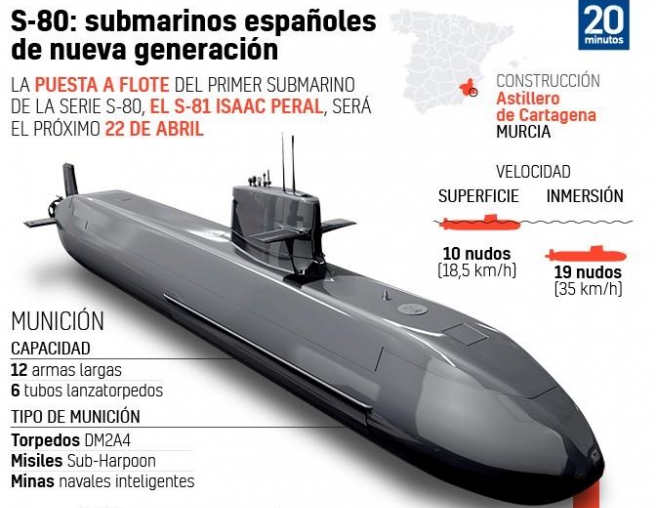
Infografía: S-80, submarinos españoles de nueva generación
Infografía: S-80, submarinos españoles de nueva generación
 vadebarcos.net
Yet in earlier small mock ups they look very different.
Here is a couple of Milden mock ups
Last edited:


It doesn't actually matter.80m/7 meter is not good,it makes more fragile for shock waves,it should be 80/10,in others words around 8 equvelant is the best.
Lengt to diameter ratio of a submarine is not quite an important indicator on structural integrity or any features related to that. The maximum diameter is usually dictated by either the collapse depth of the hull or construction tolerances where these are also relating to each other.We don’t really have all the details of the MILDEN in our hands.
If you look at the Spanish S-80+ submarine details, it is not far from ours on the surface of it.
7.3m diameter, 80.80m length.
Yet when you look at the exact dimensions there is more to it than being just a long tube.
Check out the front view and the dimensions.
View attachment 82668
Infografía: S-80, submarinos españoles de nueva generación
Infografía: S-80, submarinos españoles de nueva generación
View attachment 82669
Yet in earlier small mock ups they look very different.
View attachment 82670
Here is a couple of Milden mock ups
View attachment 82671
View attachment 82672
Bro, I concur with your statement regarding the MILDEN. Hull length to diameter ratio of 7:1 to 8:1 is there as a guideline. Most nuclear subs push past 10:1. It is a matter of design and construction capability.Lengt to diameter ratio of a submarine is not quite an important indicator on structural integrity or any features related to that. The maximum diameter is usually dictated by either the collapse depth of the hull or construction tolerances where these are also relating to each other.
There is however some merit in the apprehension of @zio ’s post. But not as drastic as he puts it.
Logically, it is a fact that short, wide cylinders resist hydrostatic pressure better than long, thin ones.
Shorter frame distributes overall load more efficiently, reducing required steel thickness. Also a minimal surface area relative to internal volume reduces the overall structural steel weight.
Hence shorter hulls experience less stress from uneven wave action when operating near the surface.
Long hulls can be highly prone to buckling under deep-sea diving pressures. Long cylinders, therefore may require massive, closely spaced internal transverse stiffeners to prevent collapse during wave action and tight manoeuvres that could cause longitudinal bending, therefore straining structural welds.
Thus in the end, hydrodynamic performance and structural integrity is a compromise of both. So when building submarines designers would take all the above in to consideration.
if you look at the Virginia class SSN ; 140metres long with a hull diameter of 10.3 metres may look like it is pushing past the limits. But the construction designers will have taken in to account all the above and more. That is why after 25 or more already built they are still building them.
Ohio Class SSBN are 170m long with a hull diameter of 13metres.
Aukus subs are 130m long with a hull diameter of 12.8 metres.
So your last sentence of ; The maximum diameter is usually dictated by either the collapse depth of the hull or construction tolerances where these are also relating to each other is very apt.
This is valid for uniformly stiffened or non-supported cylindirical shells of certain aspect ratio ranges, however typical submarine pressure hulls are supported by design elements; first the shell thickness itself (as the cylinder), then stiffeners, then primary transverse girders, longtidunal girders and lastly bulkheads-one or two at most, depending on length, application, compartments etc. Transverse elements usually spaced such narrow that the only part of shell between the supported elements behave like the cylindrical shell.Logically, it is a fact that short, wide cylinders resist hydrostatic pressure better than long, thin ones.
Shorter frame distributes overall load more efficiently, reducing required steel thickness. Also a minimal surface area relative to internal volume reduces the overall structural steel weight.
Hence shorter hulls experience less stress from uneven wave action when operating near the surface.
While this ratios are the driving parameters for strength (shock resistance or endurance) of surface ships, the diameter alone is the mere parameter for the strength since we only need to play with stiffener and girder spacing to adjust the rest.

Tests of the 40 mm THUNDERBOLT Naval Gun, developed by Ermaksan, have been completed at STEST's TS EN ISO/IEC 17025 accredited testing infrastructure.
STEST, which provides verification support to domestic and national projects, continues to bring critical testing capabilities to Turkey.

Although Development of naval autocannon is great but do we urge 40mm auto Canon at that moment? Also in near future are we going to have warships- that the 40mm Canon could be fit ? AFAIK there won't be any place for this weapon.
Tests of the 40 mm THUNDERBOLT Naval Gun, developed by Ermaksan, have been completed at STEST's TS EN ISO/IEC 17025 accredited testing infrastructure.
STEST, which provides verification support to domestic and national projects, continues to bring critical testing capabilities to Turkey.
Tuzla class boats were already loaded with 40mm.
They had better make 30x170 revolver canon and naval turret. Kinda Gökdeniz/ korkut light CIWS.
Gökdeniz and Thunderbolt are not in the same class. Thunderbolt fires 600 rounds per minute and has a range of 12.5 km. Gökdeniz, on the other hand, can fire 1100 rounds per minute and has a range of 4 km.Although Development of naval autocannon is great but do we urge 40mm auto Canon at that moment? Also in near future are we going to have warships- that the 40mm Canon could be fit ? AFAIK there won't be any place for this weapon.
Tuzla class boats were already loaded with 40mm.
They had better make 30x170 revolver canon and naval turret. Kinda Gökdeniz/ korkut light CIWS.
I think it might be too big/heavy to include on our ships as air defence, but, it might be great to build an USV around it as a dedicated SHORAD USV, possibly a catamaran or trimaran to give it enough stability and deck space. Put the Thunderbolt in the front and a Sungur pod or 3 on the back and it would be an amazing option to have.If Aselsan make 40/70mm atom ammunution,it would be great for our ships.
Last edited:
Very important point being touched there.Gökdeniz and Thunderbolt are not in the same class. Thunderbolt fires 600 rounds per minute and has a range of 12.5 km. Gökdeniz, on the other hand, can fire 1100 rounds per minute and has a range of 4 km.
Both guns are twin barrelled having 2800mm length.
Where as Gokdeniz has 35mm barrel diameter and uses Aselsan’s ATOM shells, Thunderbolt has 40mm barrel diameter and uses standard artillery shells.
Thunderbolt has a maximum ballistic range of 12500 metres. It is designed to hit landing beaches or other ships at that maximum distance. It’s 40mm shell is heavier and larger and can pack in more kinetic energy, hence more speed and range when fired. Thunderbolt would be the ideal companion of Denizhan to complement it on our ships.
Gokdeniz, if used in the same manner as Thunderbolt, may have had an effective range of approximately 8000m. But it is designed and optimised to hit with it’s smaller diameter barrel as a Close-In Weapon System, strictly where it can reliably track, lock onto, and destroy high-speed, sea-skimming anti-ship missiles and alike at an effective 4000 metre range. For that it has twice the firing rate of the Thunderbolt.
Last edited:


But both Gökdeniz and Thunderbolt requires a Vessel of a certain size to warrant an installation.Very important point being touched there.
Both guns are twin barrelled having 2800mm length.
Where as Gokdeniz has 35mm barrel diameter and uses Aselsan’s ATOM shells, Thunderbolt has 40mm barrel diameter and uses standard artillery shells.
Thunderbolt has a maximum ballistic range of 12500 metres. It is designed to hit landing beaches or other ships at that maximum distance. It’s 40mm shell is heavier and larger and can pack in more kinetic energy, hence more speed and range when fired. Thunderbolt would be the ideal companion of Denizhan to complement it on our ships.
Gokdeniz, if used in the same manner as Thunderbolt, may have had an effective range of approximately 8000m. But it is designed and optimised to hit with it’s smaller diameter barrel as a Close-In Weapon System, strictly where it can reliably track, lock onto, and destroy high-speed, sea-skimming anti-ship missiles and alike at an effective 4000 metre range. For that it has twice the firing rate of the Thunderbolt.
I imagine OPV could be a fitting platforms for thunderbolt if they are smaller than our Ada class vessels. As they'd be quicker to react than bigger vessels.
It's likely developed as result of what role USV has been playing in recent wars and scenarios where it's necessary to have the 360 rotation, but also the necessary kinicetic energy to deal with an on coming USV loaded with explosives.
Maybe someone will mount this on a truck or something for defense purpose near shipyards/coast or such.
Which warships are the candidates for thunderbolt? I havent seen any project with 40mm cannon.
New Tuzla class patrol boats will be produced?
OPV, FAC? AFAIK no!
Spreading ammunition blindly towards 12 km is outdated.
Dealing smugglers, fishers in such a way?
Is it proper air defense gun? NO!
Is it proper proper antiship gun? NO!
Is it proper land attack gun ? NO!
Not a fish! Not a meat! Outdated strategy.
I would prefer 57mm naval canon +SUNGUR combination or 35mm korkut + UMTAS combination rather than 40mm twin Bofors.
New Tuzla class patrol boats will be produced?
OPV, FAC? AFAIK no!
Spreading ammunition blindly towards 12 km is outdated.
Dealing smugglers, fishers in such a way?
Is it proper air defense gun? NO!
Is it proper proper antiship gun? NO!
Is it proper land attack gun ? NO!
Not a fish! Not a meat! Outdated strategy.
I would prefer 57mm naval canon +SUNGUR combination or 35mm korkut + UMTAS combination rather than 40mm twin Bofors.
Last edited:
We need multi mode smart munitions for 76mm and 40mm cannons, let it be a proximity fuze or programmable fuze like atom, it is a necessity nowadays.I think it might be too big/heavy to include on our ships as air defence, but, it might be great to build an USV around it as a dedicated SHORAD USV, possibly a catamaran or trimaran to give it enough stability and deck space. Put the Thunderbolt in the front and a Sungur pod or 3 on the back and it would be an amazing option to have.
40mm and 35mm only coexists at landing ships. 40mm serves as coastal defence, 35mm serves as CIWS and aerial defense.
The 40mm can also be used for air targets if deployed alone on a boat; i.e. Tuzla Class.
What we truly need is high rpm cannon for CIWS duties to save from weight, MKE showcased one but it doesn't seem like going anywhere.
Couldn't agree more mate, not much use for the main cannon otherwise, imo, range is the king and everyone and their mums are working on drones to keep theirs. At least fragmentation munitions would give our ships one more layer of air defence.We need multi mode smart munitions for 76mm and 40mm cannons, let it be a proximity fuze or programmable fuze like atom, it is a necessity nowadays.
That's why I said a SHORAD USV with 40 mm cannon could be interesting. Tagging along a fleet, moving ahead more likely, could be used as first line of defence. Of course that would require building it around the cannon to be effective.The 40mm can also be used for air targets if deployed alone on a boat; i.e. Tuzla Class.
The one that was supposed to be on their Tolga? I vaguely remember a mention of it being ready this year but don't quote me on that, MKE has been delivering that one for a long time from what I understand.What we truly need is high rpm cannon for CIWS duties to save from weight, MKE showcased one but it doesn't seem like going anywhere.
In this gun station you can not switch the different ammunitions ( from proximity airburst to HE) . There is Just single feeding mechanism. So you need to create Bofors 40mm multipurpose ammunition and Also you would need programming device. Too much complicated. If you need air defense, it is better to use dedicated CIWS. Rate of fire of thunderbolt gun turret is very low to serve as CIWS.
CIWS means close impact weapon for air defense , programmed smart ammunitions could be efficient at long range which 40mm ammunition gives? The longer the range, the harder to predict flight path of threats. For long range angagement you need guided ammunition.
CIWS means close impact weapon for air defense , programmed smart ammunitions could be efficient at long range which 40mm ammunition gives? The longer the range, the harder to predict flight path of threats. For long range angagement you need guided ammunition.
Last edited:

Depending on the ammunition family to be developed, this actually makes it an extremely versatile cannon. For coastal patrol boats, landing craft, and other small armed boats; close-range air threats, especially drones, USVs and other small fast boats, and of course coastal engagement, a single weapon system can provide this coverage. It constitutes a very important domestic supply item for amphibious assault, coastal and littoral zone vessels where every ton and every meter is extra valuable.Gökdeniz and Thunderbolt are not in the same class. Thunderbolt fires 600 rounds per minute and has a range of 12.5 km. Gökdeniz, on the other hand, can fire 1100 rounds per minute and has a range of 4 km.


