

You can start with giving time and positioning service to UAV customers. A service which can not be provided safely for many users otherwise.I mean there are already some GPS systems and I do not know how this will make money.

Latest Thread
- Russia ZAK-30 Tsitadel anti-aircraft artillery system: overview and operation
- Bangladesh Seoul welcomes Dhaka's interest in strengthening defence ties
- Bangladesh Modernise armed forces, replace outdated machinery: Parliamentary body
- Piercing the illusion of the 'Indian Century', the Indian economy shows a fragile background
- Kyrgyzstan rejects European proposal to accept migrants
You are using an out of date browser. It may not display this or other websites correctly.
You should upgrade or use an alternative browser.
You should upgrade or use an alternative browser.
- Thread starter Cabatli_TR
- Start date
Actually my main question is that why a private company investing for such a project. I can understand that states can invest for national independence but companies exist to make money and this project implies there must be some other ways to make money with this project such as cellular network.
This make senses. Especially for a company who provide services all over the world.
You can start with giving time and positioning service to UAV customers. A service which can not be provided safely for many users otherwise.
This make senses. Especially for a company who provide services all over the world.
You can start with giving time and positioning service to UAV customers. A service which can not be provided safely for many users otherwise.
This make senses. Especially for a company who provide services all over the world.


Also being at LEO, it can provide data with less latency and be more resilient to EW, as it is ~4 times closer to the end user than a GPS/GLONASS satellite, so the lost power is a lot less.
That's why Ukraine is using Starlink dishes on their Kamikaze USVs.
This will probably do what Starshield (military Starlink) but for a limited region, for example the the places where Turkish military is deployed. We can expect more global usage via increase of satellite count, probably around 2035-40 maybe? TSK is going to be the first user ofc.
120 satellites in 5 years, 2 satellites per month. They can easily increase the production rate if they get foreign interest in having non-US linked data and positioning supply services
That's why Ukraine is using Starlink dishes on their Kamikaze USVs.
This will probably do what Starshield (military Starlink) but for a limited region, for example the the places where Turkish military is deployed. We can expect more global usage via increase of satellite count, probably around 2035-40 maybe? TSK is going to be the first user ofc.
120 satellites in 5 years, 2 satellites per month. They can easily increase the production rate if they get foreign interest in having non-US linked data and positioning supply services
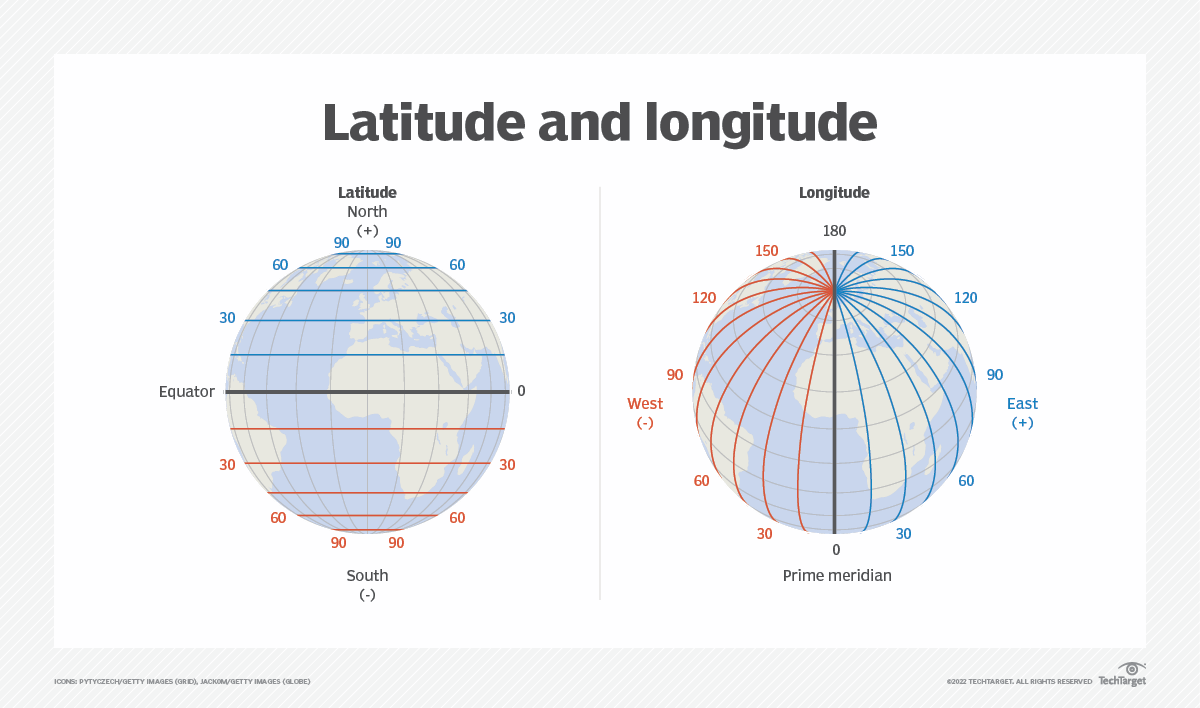
Low Earth Orbit satellites have to travel around Earth to stay in orbit therefore a constellation of them have to cover entire Earth circumference but not the entire Earth latitudes. This defines an area between two circles on different latitudes. Probably an area between 60° North and 10° South latitudes makes sense.

Last edited:


KhanOfEurasia
Contributor
- Messages
- 553
- Nation of residence
-

- Nation of origin
-
BKZSI wonder what the national global positioning service's name will be?
Regional Positioning and Timing System (Turkey) - Wikipedia
Lame name.
We need something marketable.


Selcuk Bayraktar talked about an important point reached in a project of strategic importance for Turkey:
"We will launch low-orbit satellites that will form the National Global Positioning System (GNSS). The system will consist of about 100 satellites and will be a new generation GNSS. In a sense, this system will ensure our independence in the skies. It will be very important and strategic in terms of our sovereignty.
These are being done with the revenues we receive from unmanned aerial vehicles. We have built 2 satellites, we were ready for launch, but the launch was postponed. We will launch our first satellite this year."
Selçuk Bayraktar also shared brief information about Fergani's other projects:
"Among our future goals is to build 50 tonne launch vehicles We are building an orbit transfer vehicle to move a satellite from one orbit to another in space."
A 50 ton launch vehicle would be able to deliver approx 1000 kg to LEO if comparing it with Firefly or Relativity Space. That would be a good start!
The launch capacity depends of the launch site. Firefly launches from Vandenberg in California which is at the same latitude as the south coasts of Cyprus. If a rocket is launched from an equatorial site it can probably carry 40% more payload. A 50 ton launcher is likely to be a 30m tall rocket. This size of a rocket makes a ship borne launch an attractive proposition. So a launch capacity of 1000-1500 kg is to be expected.
Longitude is vertical segmentation and is irrelevant in this case as distance from the Equator is what matters because the Earth rotates around the Equator. Latitude is horizontal segmentation and indicates the distance from the Equator.East, West is Longitude. No?
Last edited:

Even İran send her 10th leo sat with her own SLV in this year but we're still seeing CGI to dream about it.
Roketsan is being painfully slow. Hopefully Fergani Space can accelerate things.

somegoodusername
Committed member
Neither Selçuk Bayraktar is Elon Musk,nor Baykar is an advanced tech company like Roketsan or TÜBİTAK. While they excel at mass-producing lower-end technology, space tech is a serious field that requires extreme precision and high expertise. Although I appreciate the work they're doing, Bayraktars' recent public statements have been very unwise and in contrast with the statements from our meritocratic defense bureaucracy and experts. Unfortunately, their voices are amplified due to political reasons.Roketsan is being painfully slow. Hopefully Fergani Space can accelerate things.
Just compare wages in Baykar to our SANs and see who gets the better part of our educated workforce.
Fergani is working on second stage tugs and small sats, not rockets. I fail to see how they can accelerate rocket development.Roketsan is being painfully slow. Hopefully Fergani Space can accelerate things.
They are literally working unmanned fighters and satellite swarms as we speak.While they excel at mass-producing lower-end technology
Wages do not explain much. Baykar have lots of cash on hand and can experiment a lot. It sounds like Elon Musk style doesn't it, lots of cash and the will to make achievements.Neither Selçuk Bayraktar is Elon Musk,nor Baykar is an advanced tech company like Roketsan or TÜBİTAK. While they excel at mass-producing lower-end technology, space tech is a serious field that requires extreme precision and high expertise. Although I appreciate the work they're doing, Bayraktars' recent public statements have been very unwise and in contrast with the statements from our meritocratic defense bureaucracy and experts. Unfortunately, their voices are amplified due to political reasons.
Just compare wages in Baykar to our SANs and see who gets the better part of our educated workforce.

Fergani is not developing launch systems. They bought DeltaV(not exactly, I'm talking figuratively), and they will use the launch system and space tug DeltaV has been developing.

The formation of a self-financing ecosystem within the sector, without being directly dependent on state funding, is actually what needs to happen. There are currently defense and aerospace companies that have formed very valuable core staff and have incredibly high potential. DeltaV is probably one of the most prominent among them, perhaps the most prominent. If Baykar can fund this company effectively, it is possible that they will achieve a development that will resonate all over the world. Baykar in general is very effectively structured; never mind where they are now, these guys are laying the foundations for where they will be in 20 years.
*
The other issue is the ballistic missile test site to be established in Somalia, is now being brought to the forefront again by western media outlets. I think the issue should be seen not only in the context of space activities, but also in the context of the Turkish navy's major expansion plan from the Sea of Oman to the Mozambique Channel, the defense cooperation with Malaysia and perhaps Indonesia on the industrial side, which is aimed to reach a strategic scale, the Basrah Gulf and the basing in Somalia. You already know the situation with Pakistan, we have started to provide very critical technology transfers, especially recently, and probably these will not be one-way. This picture may be seen as worrying for some countries.
*
The other issue is the ballistic missile test site to be established in Somalia, is now being brought to the forefront again by western media outlets. I think the issue should be seen not only in the context of space activities, but also in the context of the Turkish navy's major expansion plan from the Sea of Oman to the Mozambique Channel, the defense cooperation with Malaysia and perhaps Indonesia on the industrial side, which is aimed to reach a strategic scale, the Basrah Gulf and the basing in Somalia. You already know the situation with Pakistan, we have started to provide very critical technology transfers, especially recently, and probably these will not be one-way. This picture may be seen as worrying for some countries.
Last edited:
somegoodusername
Committed member
The technologies we're discussing are already 10-15 years old and will be even more outdated, at 15-20 years old, by the time they’re fully implemented. Just because they’re the most advanced tech that the public can comprehend doesn’t mean they are the most cutting-edge technologies in existence. We may not even have 10 people in the country capable of working on the kinds of projects currently being developed in the US and China.They are literally working unmanned fighters and satellite swarms as we speak.
Turkish people often misinterpret Turkey’s current catch-up in military technology, which comes after Western countries began demilitarizing post-Cold War. The primary reason we are using American jets and tanks in out military is that our domestic defense industry couldn’t keep pace with the rapid advancements during the Cold War arms race. However, after the Cold War ended, and Europe entered a dolce vita period, Turkey, being in a constant threat environment, was able to close the technological gap, when other countries didn't push the gas pedal too much.
One of the lessons from the Russia-Ukraine war is that the myth of possibility of being a military giant while remaining an economic dwarf during the Cold War has been debunked.
Now, as the US-China arms race intensifies, we are having a significant delay in adapting 5th generation aircraft in our air force. If the Kaan Block 20 enters service in 2033, Turkey will be 15-20 years behind in upgrading its air force to current tech. And 6th gen fighters are on the way.


