• Forum restore complete (see latest announcement thread)

TR Space Space Programs

Agha Sher

Experienced member
DefenceHub Diplomat
Messages
2,909
Reactions
14 9,764
Nation of residence
Denmark
Nation of origin
Afghanistan
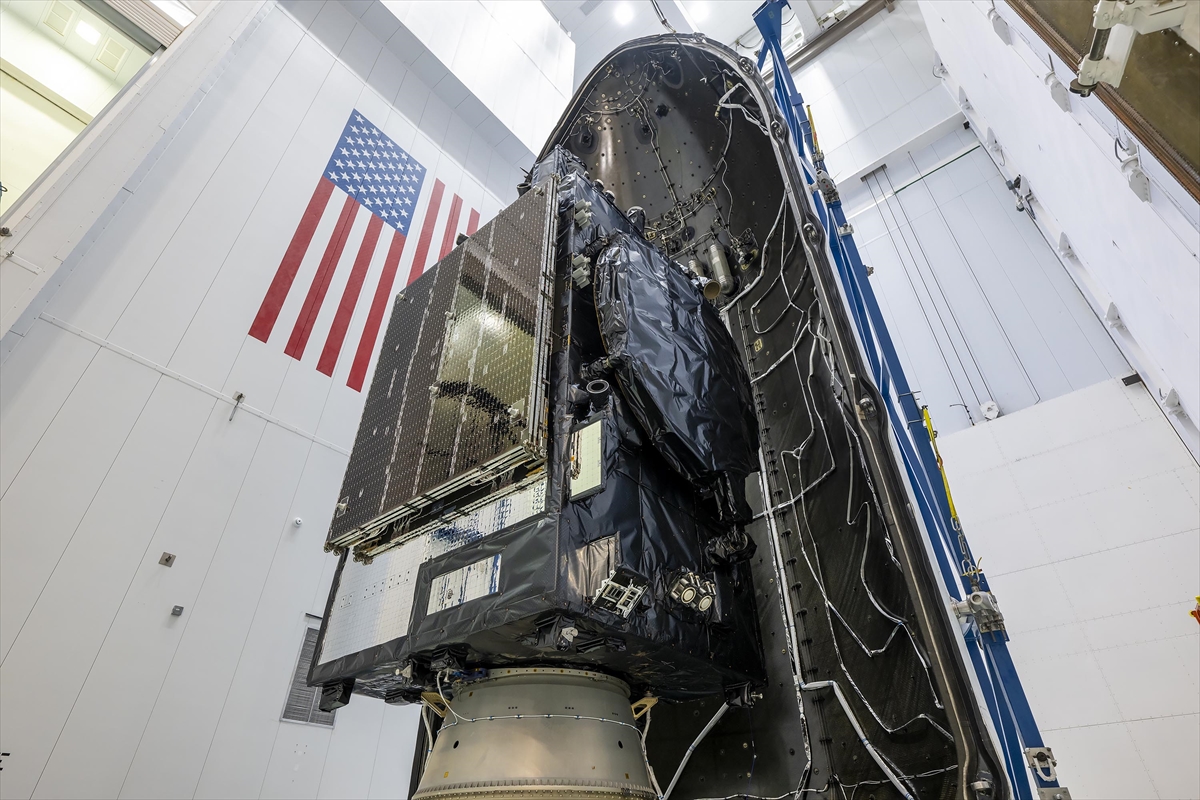
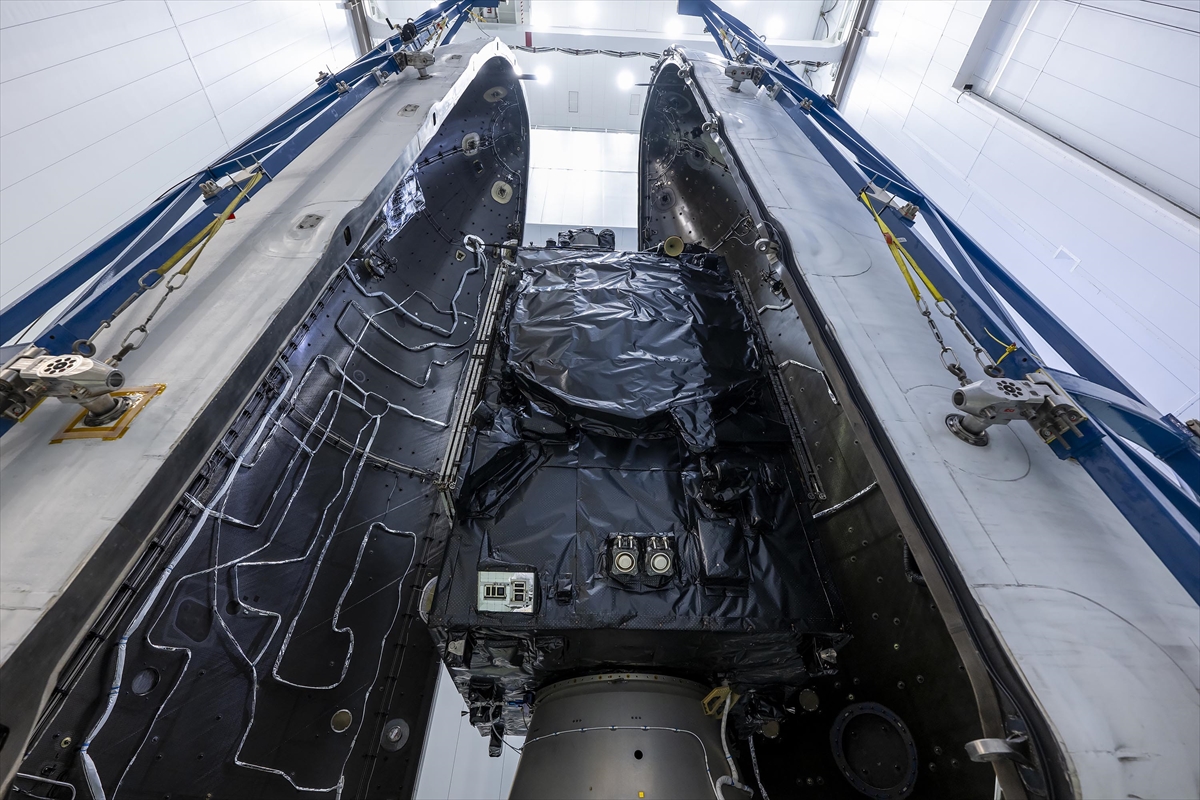
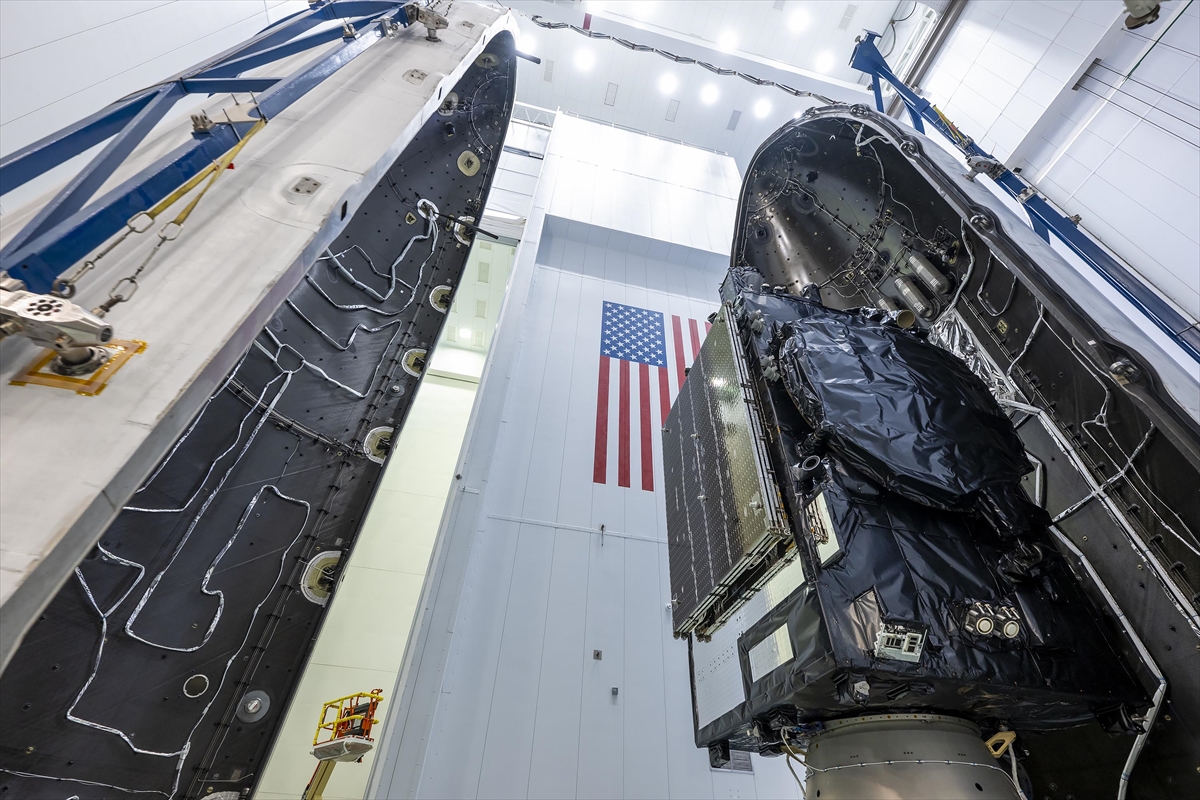
Fergani Space tested their space engine for their satellites for the first time.

I have a feeling that Fergani Space will make Turkiye a frontrunner in space, just like they made Turkiye a frontrunner in UAV/UCAVs.


1716583902823.png
 
Last edited:

Yasar_TR

Experienced member
Staff member
Administrator
Messages
4,277
Reactions
263 22,338
Nation of residence
United Kingdom
Nation of origin
Turkey
Satellite launching business is mega profit business. Where as half a ton being launched may be worth under 15 million dollars; A large load like 20 tons may be worth around 200 million dollars. In 2012 Boeing managed to generate 32billion dollars revenues for 17 launches. That is worth 44 billion in today‘s dollar.

Turkey has a good number of satellite launchings programmed for the near future. Many up and coming countries are keen to have their satellites up there as well. So Baykar surely wants a portion of this lucrative pie. When you think that in 2023 a company like Space X who is relatively a newcomer to this business, managed to generate 3 billion dollar operating profit out of a 9billion dollar in revenues, and they are targeting 60% operating profit, you can guess why they want to be in this game.

But it has to be remembered that the smaller the payload and the launch weight the more expensive it is cost wise for the company that is launching the satellite by as much as 4 times per kg. Also this is not a cheap endeavour that can be undertaken. You would need a lot of capital.
Whilst developing this business, it is important that Baykar’s UAV business is not negatively affected either. It would be interesting to see how TAI’s satellite business fares against Fergani’s, since there will be a similar rivalry that they already have in UAV side. Most likely there will be a a division and job sharing understanding as per the UAV business. Baykar’s non bureaucratic approach may keep TAI under check as we have seen in UAV side as well as cross fertilisation possibilities between the two companies.
 
Last edited:

what

Experienced member
Moderator
Messages
2,365
Reactions
17 6,976
Nation of residence
Germany
Nation of origin
Turkey
How does a private company earn money through a Global Positioning System. Honest question, so far only countries or supranational organizations have been deploying their own systems.
 

TheInsider

Experienced member
Professional
Messages
4,894
Solutions
1
Reactions
51 17,040
Nation of residence
Turkey
Nation of origin
Turkey
How does a private company earn money through a Global Positioning System. Honest question, so far only countries or supranational organizations have been deploying their own systems.
EZ Fergani can sell satellites to the state or provide global positioning services for a monthly/yearly fee.
 

dBSPL

Experienced member
Think Tank Analyst
DefenceHub Ambassador
Messages
2,871
Reactions
123 14,521
Nation of residence
Turkey
Nation of origin
Turkey
One of the new navigation signal type introduced with the Block III GPS are a protocol called M-Code, which is designed for direct military use and warzone conditions. It is designed to further enhance the high anti-jamming capability and secure access of military GPS signals. This signal is broadcast with a high-gain directional antenna, in addition to a wide angle antenna. The directional antenna's signal, termed a spot beam, is intended to be aimed at a specific region and increase the local signal strength.

M-code also includes: Satellites will transmit two distinct signals from two antennas. Binary offset carrier modulation. Occupies 24 MHz of bandwidth. It uses a new MNAV navigational message, which is packetized instead of framed, allowing for flexible data payloads. There are four effective data channels; different data can be sent on each frequency and on each antenna. It can include FEC and error detection. The spot beam is ~20 dB more powerful than the whole Earth coverage beam. M-code signal at Earth's surface: –158 dBW for whole Earth antenna, –138 dBW for spot beam antennas.

The features in these open sources are also summarized on the relevant wiki page. This new block system also envisages significant innovations in the GPS operational control segment (OCS), and those interested can take a look at this page: https://en.wikipedia.org/wiki/GPS_Block_III In short, significant advances are emerging not only in life safety and civilian use, but also and predomnantly in non-civilian use. This makes access to this technology to some extent essential for armed forces with very specific requirements, such as the TAF. Probably the global positioning constellation satellites project will also be a very large and comprehensive aerospace program that cannot be limited to a few individual aerospace companies. To the best of my limited knowledge, what appears for some just to be a passive signal broadcasting satellite will have to be backed up by a very powerful infrastructure.
 

Sanchez

Experienced member
Moderator
Think Tank Analyst
DefenceHub Diplomat
Messages
4,190
Reactions
127 19,047
Nation of residence
Turkey
Nation of origin
Turkey

Turkey Wants to Build a Spacecraft Launchpad in Somalia​

Turkey has held talks with Somalia about setting up a site to test-fire missiles and space rockets from the Horn of Africa country, according to people familiar with the matter.


what

Experienced member
Moderator
Messages
2,365
Reactions
17 6,976
Nation of residence
Germany
Nation of origin
Turkey
If you're stuck with the paywall:

(Bloomberg) -- Turkey has held talks with Somalia about setting up a site to test-fire missiles and space rockets from the Horn of Africa country, according to people familiar with the matter.

Ankara’s ballistic-missile program requires long-range testing and Somalia’s location on the eastern tip of mainland Africa is ideal for firing toward the Indian Ocean, said the people, who asked not to be identified discussing sensitive subjects. The country is close to the equator, making it a suitable site for a space port, they said. Testing near the equator can also help boost the range and efficiency of space rockets.

Turkey has long aspired to join a space race traditionally dominated by global powers, and plans to launch a rocket have been underway for some years. That could potentially be fired from Somalia, the people said. Turkish officials are confident Somalia will agree to its request, the people said. Turkey’s defense ministry declined to comment.

Hussein Sheikh-Ali, national security adviser to Somalia’s President Hassan Sheikh Mohamud, declined to comment when contacted by phone on Tuesday. The chairman of the parliamentary sub-committee on defense, Abdi Ahmed Koshin, said he was unaware of any such agreement with Turkey.

Turkey has been working on increasing the range of its domestically-built Tayfun missiles from about 560 kilometers (350 miles), President Recep Tayyip Erdogan said in 2022. A Somalia launch site would remove the risk of debris falling into residential areas and other countries, the people said.

Turkey is one of the few foreign powers strengthening ties with Somalia as it tries to rebuild after years of clan warfare. Over the past decade, Turkey has expanded its influence through defense cooperation and infrastructure projects, and has plans for hydrocarbon exploration. It’s involved in mediation between the government in Mogadishu, the capital, and leaders in Somaliland, a semi-autonomous region.

Along with the United Arab Emirates and Egypt, Turkey is among the middle-tier powers making inroads across Africa as Chinese investment slows and the US plays catch up.

While Russia has become a symbol of anti-Western sentiment in some places, its Wagner Group mercenaries aren’t as coveted as Turkey’s TB2 Baykar drones, which 11 African nations have purchased.

Increasing Foothold

Turkey has been increasing its foothold in the Horn of Africa nation since Erdogan visited the country in 2011. He agreed at the time to provide financial assistance to revive basic services such as education and health along with security.

A defense-industry cooperation agreement signed between Turkey and Somalia in 2015 allows for “joint research, development and production projects in the field of military equipment in the territories of the parties.” The two countries agreed in July to further boost their defense and economic cooperation over the next decade.

In 2017, Turkey opened its largest overseas military base in Mogadishu, and hundreds of the country’s troops are training Somalian soldiers. That’s part of Somalia’s plan to improve security after an insurgency by the Islamist group al-Shabaab.

Turkey, which wants to replicate its relationship with Mogadishu in other African countries, is expected to dispatch an exploration ship to search for oil and gas off Somalia’s coast, following an offer from the country’s government.

On the diplomatic front, Ankara has recently tried to mediate in a dispute between Somalia and neighboring Ethiopia over a deal Addis Ababa struck to build a port in Somaliland. Somalia considers the semi-autonomous region to be part of its territory.

--With assistance from Mohamed Sheikh Nor and Mohammed Omar Ahmed.


Zafer

Experienced member
Messages
5,654
Reactions
15 8,712
Nation of residence
Turkey
Nation of origin
Turkey
I had been looking for a location for a spaceport in Somalia on the maps for a long time taking into account a number of considerations.

  • Being closest to the equator gives the advantage of rotational assist from the ground to the tune of 60% less energy required for the same payload compared to Baykonur Space Center which translates to like 50% gains compared to İğneada launchpad.
  • Security situation in Somalia requires a safer location than just any location.
  • Regular transportation of materials from Türkiye to the spaceport must be convenient. Distance should be manageable for planes and an airport and a seaport must be available.
  • Must be safe from environmental hazards and must not be a hazard to major human settlements and major nature protection zones.
  • Large enough land must be able to be provided for permanent structures to be built. This is more relevant in the case of an island location.
  • Facilities for spaceport personnel must not be inconvenient; should be a manageable distance to a city rather than not.

There is a big distance from the south of Somalia to the north, so this comes as a major consideration for a start. What kind of a spaceport is being considered is also a major factor for location selection. Offshore, onshore and inland locations and fully built and semi-built infrastructure plays a big role. There are more things to consider to make the endeavor a successful one.
 

MhhJA

Active member
Messages
96
Reactions
10 485
Nation of residence
Switzerland
Nation of origin
Turkey
Selcuk Bayraktar talked about an important point reached in a project of strategic importance for Turkey:

"We will launch low-orbit satellites that will form the National Global Positioning System (GNSS). The system will consist of about 100 satellites and will be a new generation GNSS. In a sense, this system will ensure our independence in the skies. It will be very important and strategic in terms of our sovereignty.
These are being done with the revenues we receive from unmanned aerial vehicles. We have built 2 satellites, we were ready for launch, but the launch was postponed. We will launch our first satellite this year."

Selçuk Bayraktar also shared brief information about Fergani's other projects:
"Among our future goals is to build 50 tonne launch vehicles We are building an orbit transfer vehicle to move a satellite from one orbit to another in space."


Shtr

Committed member
Messages
167
Reactions
6 303
Nation of residence
Turkey
Nation of origin
Turkey
What does next generation global positioning system mean?
Can someone please explain how many satellites is required to create to cover Turkiye and its neighbors?
Is this profitable? I mean there are already some GPS systems and I do not know how this will make money.

I can understand this is required for national projects but I can not understand why a private company can make investment to such a big project.
 

Zafer

Experienced member
Messages
5,654
Reactions
15 8,712
Nation of residence
Turkey
Nation of origin
Turkey
What does next generation global positioning system mean?
Can someone please explain how many satellites is required to create to cover Turkiye and its neighbors?
Is this profitable? I mean there are already some GPS systems and I do not know how this will make money.
Older systems need like 30 geostationary satellites at 20.000 km altitude to cover the entire globe. But newer system may mean that they will do a similar performance at 550 km altitude. This means a larger number of satellites at lower orbit hence the 100 satellites. Lower orbit is cheaper to access. You can probably give cellular network service through the same satellite.
 

Sanchez

Experienced member
Moderator
Think Tank Analyst
DefenceHub Diplomat
Messages
4,190
Reactions
127 19,047
Nation of residence
Turkey
Nation of origin
Turkey
What does next generation global positioning system mean?
Can someone please explain how many satellites is required to create to cover Turkiye and its neighbors?
Is this profitable? I mean there are already some GPS systems and I do not know how this will make money.

I can understand this is required for national projects but I can not understand why a private company can make investment to such a big project.
GPS systems don't exist to make money. GPS itself is a military project first and foremost, with civilian uses becoming more seen over the decades. US Military funds the GPS system, sends its satellites to orbit and allow civilian agencies and private entities to use it at almost no cost to itself. Allowing American civilian entities to use it allow more funding for the military's GPS system compared to systems of other agencies, and 3rd party civilians is just an added bonus. By using GPS, you accept the US hegemony here, and everyone's happy. In the past, it was nigh impossible for any other country other than US to have such global coverage. With the advent of rideshares and even more launches, even mid size companies can now have satellite swarms that can do a similar job at local levels, and so can we.

A Turkish GNSS/GPS will be of military use first, with civilian applications possibly to follow.
 
Top Bottom