mehmed beg
Contributor


I don't see any European Kizilelma flying? Or how much is Eurodron and is it in use?

Latest Thread

The reason for that is the same as why you live in the UK and not Bosnia. Europeans don’t need it. No voters demand "Kızılema" If the threat environment changes to one where they do, they have the capability to develop something like "Kızılelma" within 10 years and produce a version twice as advanced of "Kızılelma 2", in the next decade after that.I don't see any European Kizilelma flying? Or how much is Eurodron and is it in use?
I live in UK for the reason other then being a guest worker. Other of your discourse didn't answer what I said. Does Germany possess ballistic missiles? Regardless of the sizes of given economies, Germany doesn't have ballistic missiles?The reason for that is the same as why you live in the UK and not Bosnia. Europeans don’t need it. No voters demand "Kızılema" If the threat environment changes to one where they do, they have the capability to develop something like "Kızılelma" within 10 years and produce a version twice as advanced of "Kızılelma 2", in the next decade after that.
Read about the history of World War II military technology. The defense industries of all Yugoslav, Romanian, Czech, Swedish, and many other middle and minor powers became obsolete within just two-three years of actual military demand.
After all, Turkey’s economy is only 24% the size of Germany’s, 33% of the UK’s, and 36% of France’s. Every year, thousands of Turkish engineers leave Turkey to work in these countries, but you don't see the reverse happening.
Sorry, this is just a hodgepodge of ideas thrown around.The technologies we're discussing are already 10-15 years old and will be even more outdated, at 15-20 years old, by the time they’re fully implemented. Just because they’re the most advanced tech that the public can comprehend doesn’t mean they are the most cutting-edge technologies in existence. We may not even have 10 people in the country capable of working on the kinds of projects currently being developed in the US and China.
Turkish people often misinterpret Turkey’s current catch-up in military technology, which comes after Western countries began demilitarizing post-Cold War. The primary reason we are using American jets and tanks in out military is that our domestic defense industry couldn’t keep pace with the rapid advancements during the Cold War arms race. However, after the Cold War ended, and Europe entered a dolce vita period, Turkey, being in a constant threat environment, was able to close the technological gap, when other countries didn't push the gas pedal too much.
One of the lessons from the Russia-Ukraine war is that the myth of possibility of being a military giant while remaining an economic dwarf during the Cold War has been debunked.
Now, as the US-China arms race intensifies, we are having a significant delay in adapting 5th generation aircraft in our air force. If the Kaan Block 20 enters service in 2033, Turkey will be 15-20 years behind in upgrading its air force to current tech. And 6th gen fighters are on the way.
Tech we are talking about isn't obsolete or outdated. If anything, satellite swarms and drone fighters are literally the future.The technologies we're discussing are already 10-15 years old
Turkey's catchup is found in late 80s economic boom and some small number of Turkish inventors seeing the future correctly.Turkey’s current catch-up in military technology, which comes after Western countries began demilitarizing post-Cold War.
No one's could, except US, USSR and France to a degree. Current arms race however is different. At the moment there are no real game changers and name of the game is to first catch old capabilities for most of the nations, not soaring into the future. Ukraine also showed us that present capabilities are not going anywhere. Capability to churn out 20000 155mm shells a week is more important than HGVs and F-35s for Ukraine.The primary reason we are using American jets and tanks in out military is that our domestic defense industry couldn’t keep pace with the rapid advancements during the Cold War arms race.
Turkey is not in arms business to fight it out with China and US. It's in arms business to handle its own needs, create allies and to make money. Fighter generations from this point forward are meaningless and are nothing more than a marketing gimmick. Kaan will be a better 5th gen fighter than F-22 in every metric available.Now, as the US-China arms race intensifies, we are having a significant delay in adapting 5th generation aircraft in our air force. If the Kaan Block 20 enters service in 2033, Turkey will be 15-20 years behind in upgrading its air force to current tech. And 6th gen fighters are on the way.


 Congrats to Ayse and Ömer
I don't want any research funded by my taxes to end up in a private firm period. TEI, Aselsan, DelttaV and Tübitak are not Baykar's free research facilities.Comparing a startup to Baykar is a bit stretch yeah?
Also that startup used smaller arrays dont they? And main problem was that ASELSAN couldn't supply to them given that ASELSAN needs the arrays themselves first
IP of the OTV belongs to Fergani= Fergani hi-jacked DeltaVs project. DeltaV can find electronics from anywhere but Fergani can't find hybrid engines. There are a shit ton of satellite producers in Turkiye.FERGANİ and Delta V are collaborating on a project for an orbital transfer vehicle. Delta V is developing the engine, while FERGANİ is working on the electronics.
Fergani Space and Delta V Space are merging their forces.
Where is your source?

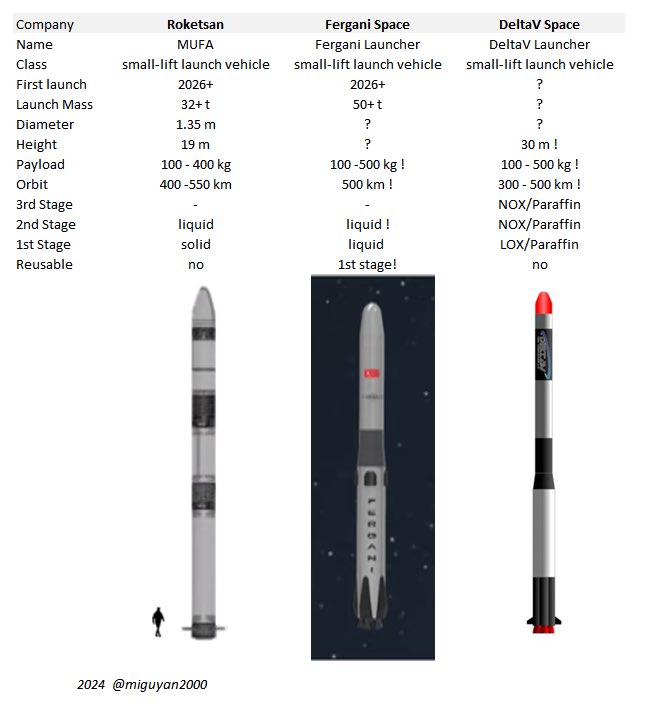
This is utter bullshit. 50 tons my ass. Why not develop a fully reusable starship on your first go then? Roketsan has been developing the tech for decades and will put 100kg into orbit in a year or so and then will go on to develop 1.5tons LEO vehicle to launch in 2028. And here's BAYKAR talks of 50 tons launch vehicles(essentially 2x Falcon 9) to be launched in 2026.- Fergani is working on a 50-ton launch system to independently go into space.
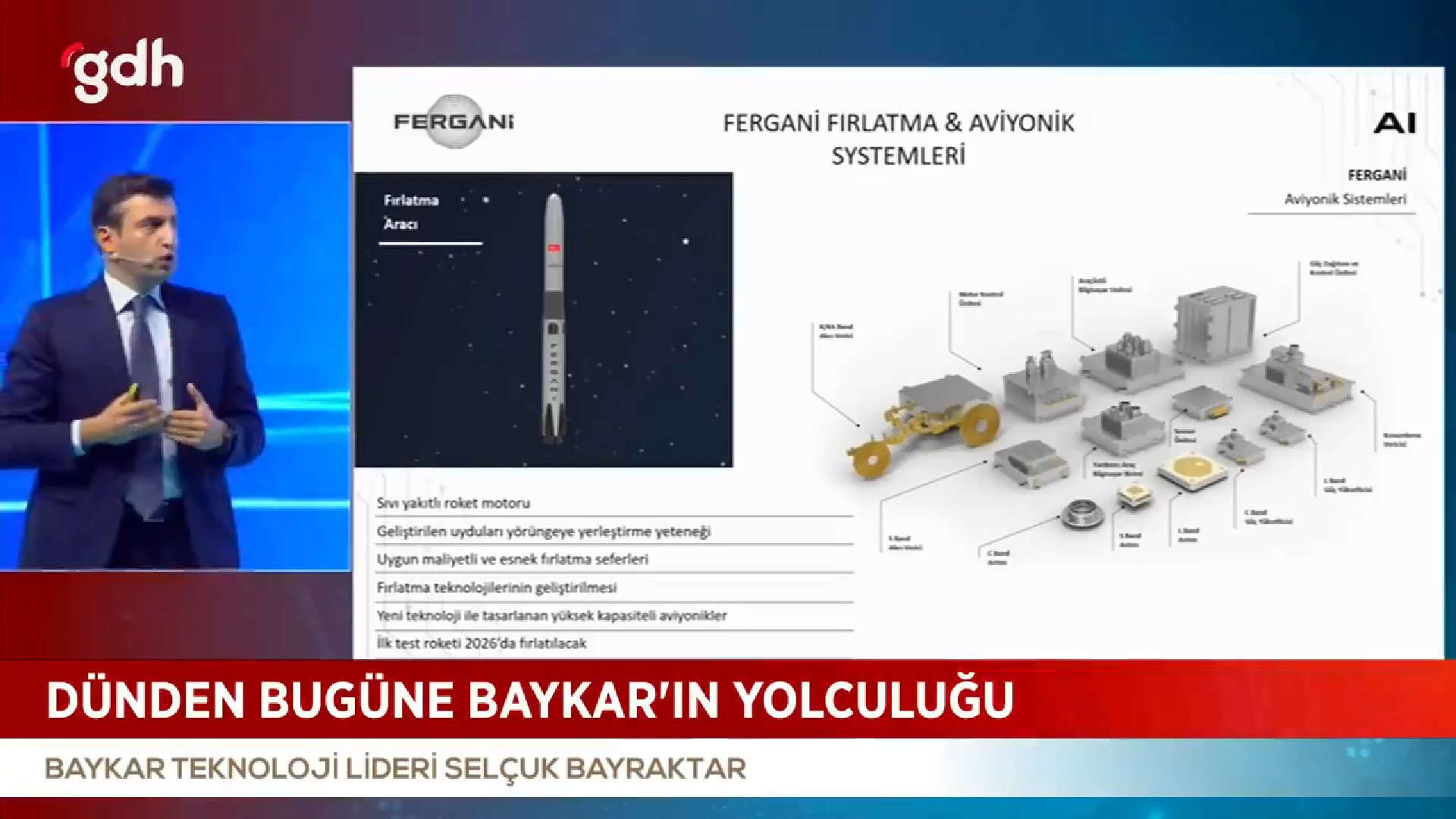
- The launch vehicle will have a liquid-fueled rocket engine and the capacity to put satellites into orbit.
- The first test rocket launch is planned for 2026.
View attachment 71495
then it's my bad. payload to mass ratio could differ between 1% to 5% depending on the isp of the engines. So a 50 tons rocket can yeet from 500kg to 2.5tons payload to LEO. They will probably do a suborbital launch with a scaled version of it in 2026.Fergani Space Launch Vehicle...
- 50 tons
- Liquid fuel rocket engine
- first test rocket to be launched in 2026
- first stage vertical landing system
I think 50 tons is the mass of the Space Launch Vehicle, not payload.
"Fergani’s 100 kg class micro satellite platforms will operate at an altitude range of 500-600 km. These satellites will provide communication and positioning services and will be operating in the Ku, Ka, S and L bands for global coverage."

I think this is just the beginning, so they are ok with taking a hit on payload to orbit in order to learn re-entry and landing. I think the following rocket will be much bigger and probably in the medium lift category given the company’s ambitionsthen it's my bad. payload to mass ratio could differ between 1% to 5% depending on the isp of the engines. So a 50 tons rocket can yeet from 500kg to 2.5tons payload to LEO. They will probably do a suborbital launch with a scaled version of it in 2026.
i really doubt the vertical landing claim. the necessary hardware and the additional propellant needed for the reentry and the landing burn would make it impossible for the rocket to lift any payload(or even reach the orbit). You need bigger rockets with more uplift capacity to enable those features.
edit: this could be our icbm if we had nonconvetional warheads.
their launch business aspirations are tightly correlated with their satellite business. what services will those satellites provide? how will they compete? what is the business model? these hard questions need to be answered before committing to launch vehicle development. otherwise, it'll be a stillborn project.I think this is just the beginning, so they are ok with taking a hit on payload to orbit in order to learn re-entry and landing. I think the following rocket will be much bigger and probably in the medium lift category given the company’s ambitions
 after that point which means daha da karada ölüm yok.
Those are questions that we don't have an answer for, as forum memberstheir launch business aspirations are tightly correlated with their satellite business. what services will those satellites provide? how will they compete? what is the business model? these hard questions need to be answered before committing to launch vehicle development. otherwise, it'll be a stillborn project.
I guess the lack of an answer is an evidence itself. The constellation is probably tailored for military use. There's no reason to be tight lipped about it if it was developed for civilians.Those are questions that we don't have an answer for, as forum members
Are you crazy? What evidence are you talking about?I guess the lack of an answer is an evidence itself. The constellation is probably tailored for military use. There's no reason to be tight lipped about it if it was developed for civilians.
i don't think you understood my post.Are you crazy? What evidence are you talking about?
baykar has their own plans and roadmap, no outsider has detailed insights into these. Looking at their track record, they know what they are doing - so let them do their work. After all, they are not begging for government funds, they will do this using their own money.
they revolutionised the drone industry. If you still doubt them, then you’re just a hater.
100kg-500kg payload is too little for a 50ton vehicle. Electron of Rocket Lab is a 12.5 tons rocket and can put 320kg to LEO. If Baykar's rocket had a similar ratio, it would put 1.3 tons to orbit.