• Forum restore complete (see latest announcement thread)

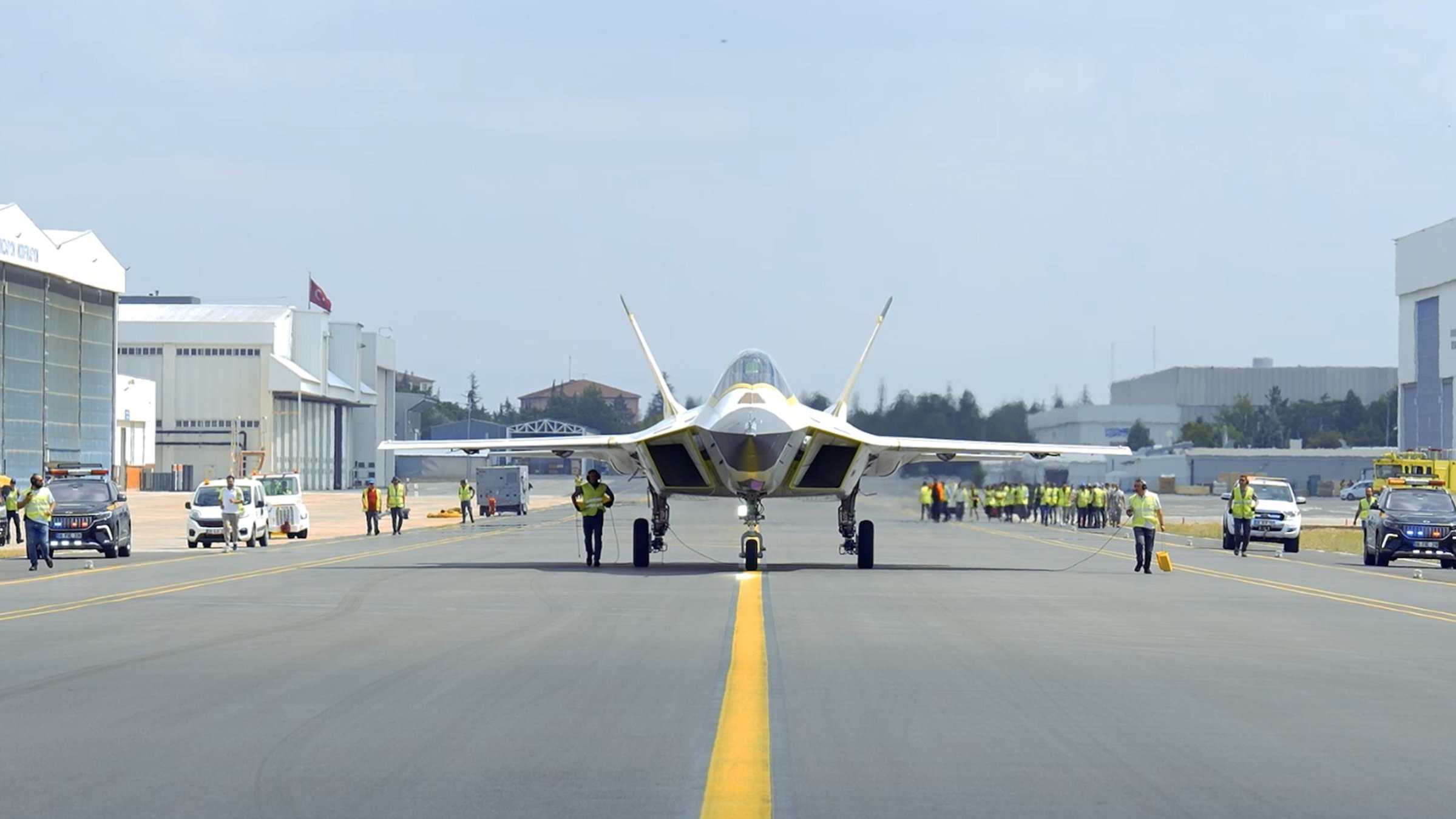
TR Air-Force TF-X KAAN Fighter Jet

Sanchez

Experienced member
Moderator
Think Tank Analyst
DefenceHub Diplomat
Messages
4,106
Reactions
121 18,722
Nation of residence
Turkey
Nation of origin
Turkey
Is it possible that there were two different aircraft in the video. If you look at the connection between the vertical control surfaces and the plane they are different and in some cutouts the back sensor (thing) between the engines is there and sometimes not
Either more than one test or more than one aircraft. Most possibly multiple tests.

See the vertical stab bases, more than one test, or more than one prototype.

View attachment 81777
 

dBSPL

Experienced member
Think Tank Analyst
DefenceHub Ambassador
Messages
2,842
Reactions
122 14,407
Nation of residence
Turkey
Nation of origin
Turkey
View attachment 81810

Major modifications highlighted
The fact that the aircraft's external dimensions (length, wingspan, height) have been reduced by millimeters while its MTOW jumps to 34,750 kg is, in my opinion, one of the biggest pieces of evidence of the internal volume optimization.

Many things weren't functional on the PO (proof of concept) aircraft; the first functional prototype, P1, likely underwent significant optimizations, primarily in the internal weapons bay and fuel tanks. Presumably, to handle this enormous tonnage and make room for the internal weapons bays, the landing gear and its mounts were also completely re-optimized to occupy minimum space within the fuselage.

What caught my attention most in the geometry is the significantly sharper Chine Line in the front section. Also, the more rounded and plump nose structure of the P0 has been evolved in the P1 by a much flatter, pelican-beak-like shape with sharper edges. The geometric design of this line is one of the most challenging design parameters for the aircraft, especially in terms of scattering/non-direct reflecting radar signals. These sharp front lines are not only for stealth DNA; they also create controlled vortices around the nose of the aircraft at high angles of attack (AoA), allowing the aircraft to remain much more stable and agile in the air.

This also may have played a role in the reshaping of the aircraft's air intakes and the fuselage spine behind the canopy through a chain reaction. With the P1, the air intakes seem to have acquired a more integrated and aerodynamic angle to the fuselage, turning the vortices emanating from the sharper nose line to their advantage. Fifth-generation electro-optical sensor mounts such as IRST and EOTS, and internal weapon station hatches, which were structurally absent or non-functional in the P0, appear to be seamlessly embedded in this new optimized stealth body of the P1. In short; millimeter-scale reduction in the aircraft's external dimensions probably underpinned by a significant engineering re-optimization that maximizes the aircraft's internal volume and fuel capacity with more sharp stealth geometry.

 
Last edited:

Zafer

Experienced member
Messages
5,564
Reactions
15 8,622
Nation of residence
Turkey
Nation of origin
Turkey
The fact that the aircraft's external dimensions (length, wingspan, height) have been reduced by millimeters while its MTOW jumps to 34,750 kg is, in my opinion, one of the biggest pieces of evidence of the internal volume optimization.

Many things weren't functional on the PO (proof of concept) aircraft; the first functional prototype, P1, likely underwent significant optimizations, primarily in the internal weapons bay and fuel tanks. Presumably, to handle this enormous tonnage and make room for the internal weapons bays, the landing gear and its mounts were also completely re-optimized to occupy minimum space within the fuselage.

What caught my attention most in the geometry is the significantly sharper Chine Line in the front section. Also, the more rounded and plump nose structure of the P0 has been evolved in the P1 by a much flatter, pelican-beak-like shape with sharper edges. The geometric design of this line is one of the most challenging design parameters for the aircraft, especially in terms of scattering/non-direct reflecting radar signals. These sharp front lines are not only for stealth DNA; they also create controlled vortices around the nose of the aircraft at high angles of attack (AoA), allowing the aircraft to remain much more stable and agile in the air.

This also may have played a role in the reshaping of the aircraft's air intakes and the fuselage spine behind the canopy through a chain reaction. With the P1, the air intakes seem to have acquired a more integrated and aerodynamic angle to the fuselage, turning the vortices emanating from the sharper nose line to their advantage. Fifth-generation electro-optical sensor mounts such as IRST and EOTS, and internal weapon station hatches, which were structurally absent or non-functional in the P0, appear to be seamlessly embedded in this new optimized stealth body of the P1. In short; millimeter-scale reduction in the aircraft's external dimensions probably underpinned by a significant engineering re-optimization that maximizes the aircraft's internal volume and fuel capacity with more sharp stealth geometry.
I don't know how they can discern minute aerodynamic effects caused by minor geometry changes, maybe some guesswork is involved; educated guesses can come out right some of the time.
 

Zafer

Experienced member
Messages
5,564
Reactions
15 8,622
Nation of residence
Turkey
Nation of origin
Turkey

Follow us on social media

Latest posts

Top Bottom