Selçuk Bayraktar - NSosyal

sosyal.teknofest.app
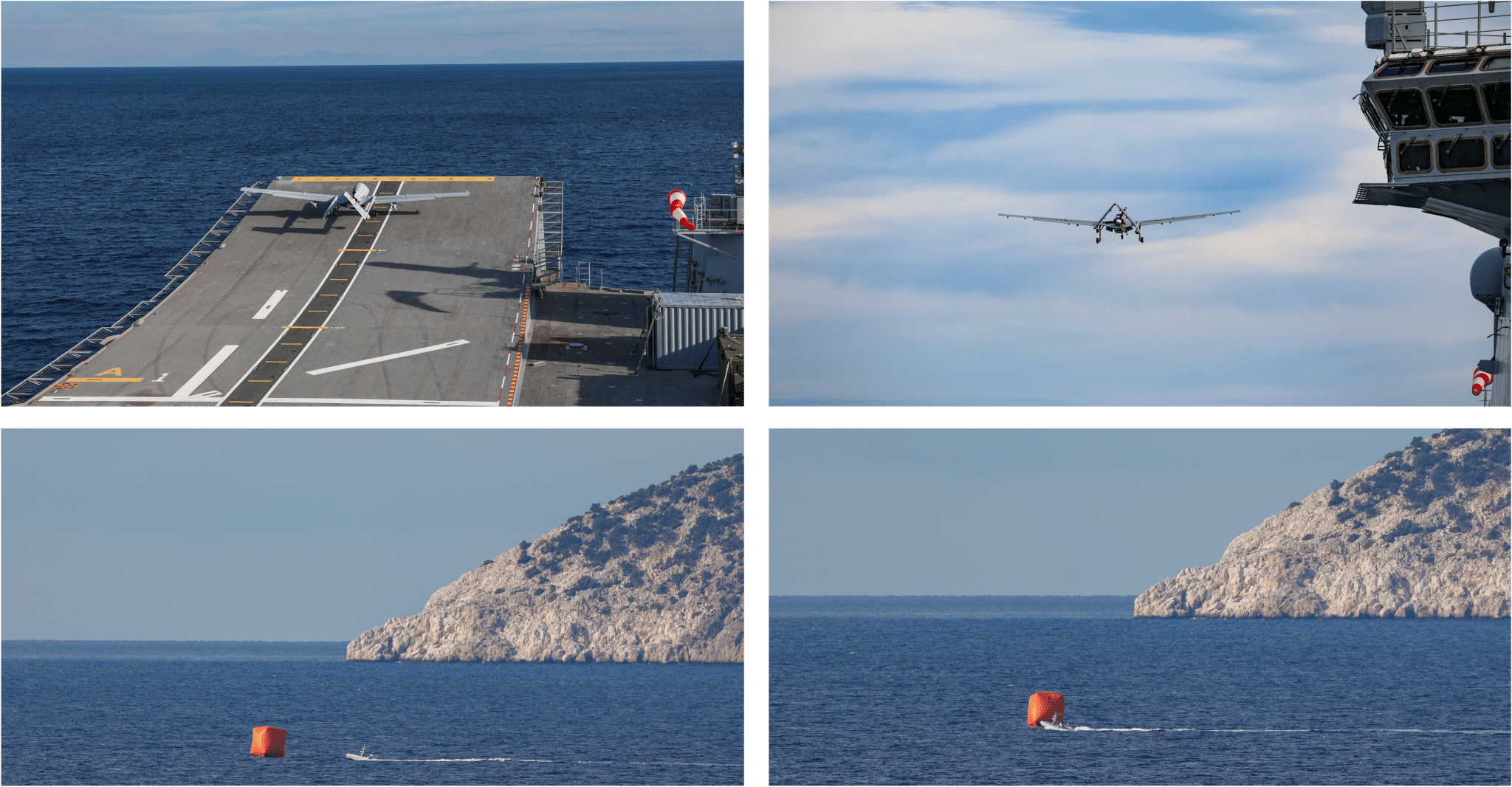
More TB3 action from TCG Anadolu. Take-off with heavier and heavier payloads!
Turkish Navy Performs Coordinated UxV Attack during one-of-a-kind Exercise
The Turkish Navy just performed a rare coordinated UxV attack involving an aerial drone and a surface drone: On 4 December 2025, an ASELSAN Albatros-S Unmanned Surface Vehicle (USV) successfully neutralized a sea target while being remotely controlled through the data link of a Bayraktar TB3 UCAV operating from TCG Anadolu in the Eastern Mediterranean.
Baykar press release
The test activities, planned in line with the operational needs of the Turkish Naval Forces and conducted from the TCG Anadolu, marked significant progress in the integration of unmanned systems. In the test carried out in the Mediterranean, Bayraktar TB3 UCAVs taking off from the deck of TCG Anadolu demonstrated both their firepower and their “joint operation” capability by commanding unmanned systems at sea. The demonstration, which featured notable moments, was also observed by military delegations from Italy, the United Kingdom, Spain, Japan, and Brazil.
The test successfully validated the hybrid operation concept in the field. Through the data link systems onboard the Bayraktar TB3 UCAV taking off from TCG Anadolu, remote control was established over the ASELSAN-produced Albatros-S Kamikaze Unmanned Surface Vehicle (USV). The USV, directed to its target via commands transmitted from the Bayraktar TB3, successfully engaged and neutralized the maritime threat.
As part of the activity carried out off the coast of Antalya, two Bayraktar TB3 UCAVs launched in salvo from the TCG Anadolu for strike missions and reached the designated area. One of the Bayraktar TB3s conducted munitions release on ground targets on the target island using the nationally developed MAM-T and MAM-L smart munitions produced by ROKETSAN, which it carried under its wings. The other Bayraktar TB3 delivered fire on the target with KEMANKEŞ-1 AI-Based Mini Cruise Missiles, developed indigenously by Baykar.
The designated targets were successfully hit during the strikes.
Following this significant test in the Blue Homeland, the Bayraktar TB3 UCAVs completed their return maneuvers. One of the Bayraktar TB3s executing the mission successfully landed back on TCG Anadolu, and subsequently took off again to transit to Keşan. The other Bayraktar TB3 participating in the test also returned to Keşan in line with mission planning.
Entering the top 10 exporters across all sectors in Türkiye in 2023 and 2024 and winning the Export Champions Award,
Baykar was also the export leader of the defense and aerospace sector in 2021, 2022, 2023, and 2024, according to data from the Defense Industry Agency (SSB) and the Turkish Exporters Assembly (TIM). In 2023, Baykar alone accounted for one-third of the sector’s exports. In 2024, it single-handedly realized one-quarter of the defense and aerospace sector’s total exports, positioning Türkiye as the global leader in the UAV export market. Baykar, the world’s largest unmanned aerial vehicle company, has signed export agreements with 36 countries for the Bayraktar TB2 UCAV and with 16 countries for the Bayraktar AKINCI UCAV, totaling 37 countries to date.
– End –
Naval News comments
The demonstrated integration of UxV (unmanned air and surface platforms) marks a meaningful step in a technological field that, despite still being in its early stages, is already reshaping long-standing paradigms in naval warfare. While UAVs have played decisive roles in conflicts for more than a decade, the emergence of unmanned surface vehicles as disruptive combat tools truly gained global attention during the Russia–Ukraine war, where low-cost kamikaze USVs proved capable of disabling or destroying high-value warships. This shift has compelled navies to reassess their force-planning assumptions and has pushed industry to accelerate investments in autonomous maritime technologies. As these systems proliferate, efforts now focus not only on expanding the capabilities of unmanned platforms but also on meaningfully integrating them into manned fleet architectures.
In this context, the coordinated engagement executed by the shipborne Bayraktar TB3 and the ASELSAN Albatros-S USV represents an important leap. This form of air–sea unmanned cooperation has the potential to reduce the operational burden on manned assets, enhance mission flexibility, and significantly mitigate risk to personnel by pushing the engagement envelope farther from crewed platforms. The ability of a UAV to remotely command a kamikaze USV is particularly noteworthy, as it extends both the effective range and tactical utility of the surface drone.
More importantly, it serves as a technological demonstrator for future concepts of operation—such as UAV-directed ASW missions conducted by USVs equipped with sonar and lightweight torpedoes, airborne terminal guidance for USV-launched missiles like ÇAKIR, or coordinated electronic-attack packages executed by multiple unmanned systems.
It would be unrealistic to suggest that unmanned systems will replace manned fleets in the foreseeable future. However, considering that most navies envision hybrid fleet structures over the next two to three decades, it is clear that countries advancing rapidly in unmanned domain integration will gain a measurable advantage. Their fleets will be more flexible, more survivable, and significantly more capable of conducting distributed, risk-averse operations—ultimately redefining effectiveness in 21st-century maritime warfare.
https://www.navalnews.com/naval-new...ted-uxv-attack-during-one-of-a-kind-exercise/
Prof. Dr. Haluk Görgün:
In the Blue Homeland today, not just a test was conducted, but one of the first field examples of the future's joint operations architecture was successfully executed. The high-precision strikes carried out by our Bayraktar TB3 platforms, which took off successively from TCG ANADOLU, using MAM-T, MAM-L, and KEMANKEŞ-1 munitions, and the complete destruction of the target by the ASELSAN Albatros-S UCAV commanded via TB3, is a powerful manifestation of the maturity achieved by our defense industry. The remote command and control provided to the UCAV via Bayraktar TB3 has demonstrated the validation in the field of our hybrid operations concept and capabilities; it has announced to the world that air and sea elements can operate in an integrated manner within a single mission cycle. The successful engagement of all targets in the missions executed with MAM-T, MAM-L, and KEMANKEŞ-1 munitions has confirmed the effectiveness in the field and high accuracy capability of our national munitions ecosystem. The TB3s completing their missions after a salvo takeoff and one of them returning to Dalaman to successfully land on TCG ANADOLU is the clearest indicator of operational agility. Behind these successes lies a deep technological accumulation ranging from artificial intelligence-supported flight control algorithms to sensor fusion, autonomous maritime vehicles, and air-to-control chains. Türkiye is now resolutely advancing to a position not just as a follower in unmanned and autonomous systems, but as a country that produces doctrines and sets standards.