
Latest Thread
- Russia ZAK-30 Tsitadel anti-aircraft artillery system: overview and operation
- Bangladesh Seoul welcomes Dhaka's interest in strengthening defence ties
- Bangladesh Modernise armed forces, replace outdated machinery: Parliamentary body
- Piercing the illusion of the 'Indian Century', the Indian economy shows a fragile background
- Kyrgyzstan rejects European proposal to accept migrants
You are using an out of date browser. It may not display this or other websites correctly.
You should upgrade or use an alternative browser.
You should upgrade or use an alternative browser.
- Thread starter Combat-Master
- Start date


It has a lot of wetted surface that creates drag, unlikely to have any amount of speed. It is bound to fail if not has failed yet.


Those IDAs should start using hydrofoils for smooth sailing on waves
In addition to the cost factor, the main purpose of a USV is to be stealthy. Their size and low above-water-line silhouette plays a great role for them in satisfactorily performing their job. A hydrofoil would have a much bigger radar signature.
Semi submersible or just below waterline USVs (like the drug smugglers use) would be more efficient. With electric engines and correct propellers they can be built to be very quiet and fast.
Ukraine already has one in the pipeline called toloka and being updated in to a family of drones.
France, UK, Russia and many more are working on the idea of uncrewed submersible sea vehicles.
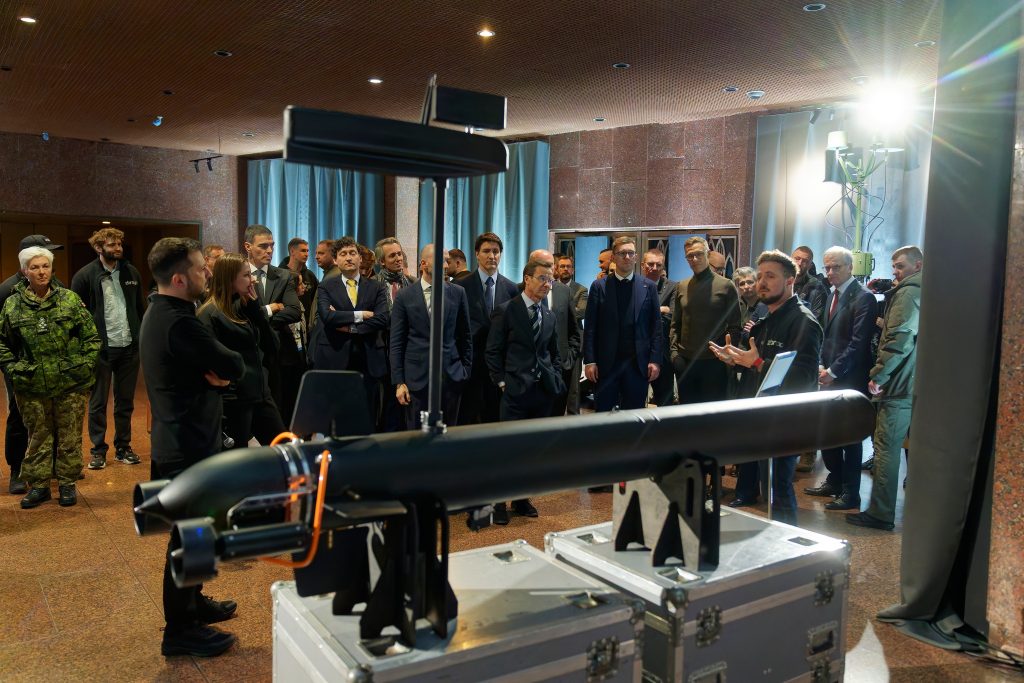
Ukrainian underwater drone Toloka is being updated: what's new in the TLK-150 model
During a Ukrainian defense industry presentation, the developers of the Toloka underwater drone demonstrated its updated smallest model.militarnyi.com
So, where are they ?
Funfact, submersibles (not actual submarines which typically visit +200 meters depth) are easier to build and operate in comparison to hydrofoil planning hulls.
MSB AR-GE presented a semi-submersible concept at IDEF 2025
No doubt TSK wants some, will likely see a few companies pump out armed models at the next IDEF or SAHA

MSB Ar&Ge (MinDef R&D) is the biggest scam of last 5 years, they also presented a 'torpedo'. And this USV had nothing concrete planned.MSB AR-GE presented a semi-submersible concept at IDEF 2025
No doubt TSK wants some, will likely see a few companies pump out armed models at the next IDEF or SAHA
von Karman is turning around in his grave. Drag coefficient listed below also is valid for certain speed ranges, and this UUV has a purpose of having 'wings' using lift to drag transition to sink - advance just by using buoyancy different in glider mode.It has a lot of wetted surface that creates drag, unlikely to have any amount of speed. It is bound to fail if not has failed yet.
Insha'Allah... It is bound to fail if not has failed yet.

Does it even work, there s no telling. I don't know how it genaretes propulsion.von Karman is turning around in his grave. Drag coefficient listed below also is valid for certain speed ranges, and this UUV has a purpose of having 'wings' using lift to drag transition to sink - advance just by using buoyancy different in glider mode.
View attachment 78524
Darpa does lots of failed proects.

Digging in your heels, I see. It has been going through sea trials and it generates propulsion through 2 propellers on both sides, how else? And yanks are not the only ones doing a manta ray style underwater drone, China also has one in the works.Does it even work, there s no telling. I don't know how it genaretes propulsion.
Darpa does lots of failed proects.

Is that why submerged submarines can go faster and longer?It has a lot of wetted surface that creates drag, unlikely to have any amount of speed. It is bound to fail if not has failed yet.
You need to study aqua/hydrodynamics for submerged vehicles and their drag coefficients and cavitation effects.
If you are designing under water vehicles, you design them with a shape that will make their movement to be most efficient when submerged.
Underwater gliders work for decades, just because you haven't heard of, it also doesn't mean if it works or not.Does it even work, there s no telling. I don't know how it genaretes propulsion.
Darpa does lots of failed proects.
It differs by design principle, a submarine's shape is a must, to offer a habitable space and volume for equipment - structural integrity at greater depths. Remove the human the shape begins to vary depending on the strategy, depth. Manta-Ray is essentially a glider and needs a decent lift-to-drag to propel by buoyancy difference.Is that why submerged submarines can go faster and longer?
You need to study aqua/hydrodynamics for submerged vehicles and their drag coefficients and cavitation effects.
If you are designing under water vehicles, you design them with a shape that will make their movement to be most efficient when submerged.
Cavitation is rather a funny phenomena, most torpedoes have inverted hydrofoil sections on rudders to avoid cavitation and maintain lift.
So it needs a decent amount of studying and experience to see this 'weird' approaches that engineers had to go for.
Working does not mean wotking well. I already had read about this when it first came out but I never thought it would be useful. Supercavitation requires speeds of in excess of 90 kmh which takes lots of energy to achieve. I have been looking at airfoils and Cl/Cd charts in the last few days coincidentally, albeit for airvehicles so, not out of my grasp.
And goalposts moved again, it shouldn't be this hard to admit you might be wrong.Working does not mean wotking well. I already had read about this when it first came out but I never thought it would be useful. Supercavitation requires speeds of in excess of 90 kmh which takes lots of energy to achieve. I have been looking at airfoils and Cl/Cd charts in the last few days coincidentally, albeit for airvehicles so, not out of my grasp.
Hydrofoil boat concept is around since 1900s, as old as the modern screws.Working does not mean wotking well. I already had read about this when it first came out but I never thought it would be useful. Supercavitation requires speeds of in excess of 90 kmh which takes lots of energy to achieve. I have been looking at airfoils and Cl/Cd charts in the last few days coincidentally, albeit for airvehicles so, not out of my grasp.
Buoyancy driven high endurance propulsion is an invention of 21st century, it is not fancy but simple.
Prior one has been numerously experimented by Navies, possibly a thousand and more experts were straight dumbs that they haven't adhered by the design and scrapped it, and pretty much no military use. A few Ferry examples, possibly run by a crazy-tech savy operator.
Latter one has been adopted by navies since it was introduced and everyone is loving it; cheap, simple, nearly zero noise perfect intelligence gathering equipment, indispensable. And Darpa is 'experimenting' energy harnassing tools with Manta-Ray to extend endurance for UUV operations.
Hydrofoils require precise production, high strength materials (up to titanium depending on aspect ratios) high quality welding, and despite going fast, they need big engines to accelerate first, to catch up 'planning' speed. And they are not magically 'stabilized' as displacement or planning hulls, they need precise controllers for dynamic stabilization both to sustain trim and list angles, for water being 1000x as dense as air this requires hydraulic controllers. Even first moment which the craft transitions from displacement to hydrofoil mode is so critical that this vulnerability was the reason why this solution wasn't widely adopted.
And logic dictates - if you need to go fast, just take off and travel in the air, why need hydrofoils? Make a turbojet assisted UAV that can take off and detach the wet-parts, this makes a lot more sense or make a USV that fires turbojet missiles (oh yes, they did). Complexity of hydrofoils make them hard to operate, and illogical for kamikaze USV roles for the complexity and costs they include - just as supercavitation torpedoes you have just mentioned the idea is simple - go fast, water will evaporate, will create a bubble to glide in, wow instantly near zero drags, super fast speeds, it is no brainer right? But snap back to reality; it involves high end materials, valves, gas generators to sustain bubble, titanium rudders, 300 bar pressurized tanks, rocket motor to sustain, metal oxidizer high risk propellant and precise engineering for reducing the pressure and 'controlling' it just as enough to stabilize bubble without collapsing it. Yes it works, but few navies tried and said 'nah', like they did with hydrofoils.
Neither that i claim that i am an expert of the matter, but despite the decent experience i have, i can't speak as sharp and clear as you do, and can't counter your arguments this blatantly. So feel free to make claims, but i won't be bothering to counter them.


Hydrofoil boat concept is around since 1900s, as old as the modern screws.
Buoyancy driven high endurance propulsion is an invention of 21st century, it is not fancy but simple.
Prior one has been numerously experimented by Navies, possibly a thousand and more experts were straight dumbs that they haven't adhered by the design and scrapped it, and pretty much no military use. A few Ferry examples, possibly run by a crazy-tech savy operator.
Latter one has been adopted by navies since it was introduced and everyone is loving it; cheap, simple, nearly zero noise perfect intelligence gathering equipment, indispensable. And Darpa is 'experimenting' energy harnassing tools with Manta-Ray to extend endurance for UUV operations.
Hydrofoils require precise production, high strength materials (up to titanium depending on aspect ratios) high quality welding, and despite going fast, they need big engines to accelerate first, to catch up 'planning' speed. And they are not magically 'stabilized' as displacement or planning hulls, they need precise controllers for dynamic stabilization both to sustain trim and list angles, for water being 1000x as dense as air this requires hydraulic controllers. Even first moment which the craft transitions from displacement to hydrofoil mode is so critical that this vulnerability was the reason why this solution wasn't widely adopted.
And logic dictates - if you need to go fast, just take off and travel in the air, why need hydrofoils? Make a turbojet assisted UAV that can take off and detach the wet-parts, this makes a lot more sense or make a USV that fires turbojet missiles (oh yes, they did). Complexity of hydrofoils make them hard to operate, and illogical for kamikaze USV roles for the complexity and costs they include - just as supercavitation torpedoes you have just mentioned the idea is simple - go fast, water will evaporate, will create a bubble to glide in, wow instantly near zero drags, super fast speeds, it is no brainer right? But snap back to reality; it involves high end materials, valves, gas generators to sustain bubble, titanium rudders, 300 bar pressurized tanks, rocket motor to sustain, metal oxidizer high risk propellant and precise engineering for reducing the pressure and 'controlling' it just as enough to stabilize bubble without collapsing it. Yes it works, but few navies tried and said 'nah', like they did with hydrofoils.
You are the perfect example of dunning-kruger effect, and i am sorry, but i can't spent 30 minutes replying your messages written in 10 seconds without even thinking twice after doing 'few readings'. Neither that i claim that i am an expert of the matter, but despite the decent experience i have, i can't speak as sharp and clear as you do, and can't counter your arguments this blatantly. So feel free to make claims, but i won't be bothering to counter them.
Growing up in HK, I took jetfoil (Boeing iirc) to macau a few times....yeah its very niche.
USN had lot off issues with hydrofoil design that was supposed to give cheaper patrolling/interdiction for vietnam war and then coastguard. It was in one of my first tech encyclopedias I had as kid, with great illustrations.
That was long convo I had long ago with some nav-geeks, but there's reason it hasn't seen mainstream adoption in the end.
A close buddy of mine was obsessed with hydrofoils (also ekranoplans, i guess the hype comes bundled), he conceptualized few designs, mass shift and gyro stabilizers, retractable - extendable struts, ducted propellers with electric motors (even sold a design a foreign company if i recall correctly). He attempted to fine tune a hull form to adjust hydro-planning mode to rise and activate hydrofoil mode; so i presume i have seen challenging aspects of the design even before it's operated in full scale. Everything worked perfect when the model was towed - but once he made it a self-propelling RC, it failed. It was never operated unless it was pulled with a rope, like a kite and accelerated to a speed which the motor can sustain hydrofoil speeds - even then the model often crashed into displacement mode. All in all, he, now works in an institue where he has all the technical oppurtunity to conceptualize hydrofoil boats but he is not even getting close.Growing up in HK, I took jetfoil (Boeing iirc) to macau a few times....yeah its very niche.
USN had lot off issues with hydrofoil design that was supposed to give cheaper patrolling/interdiction for vietnam war and then coastguard. It was in one of my first tech encyclopedias I had as kid, with great illustrations.
That was long convo I had long ago with some nav-geeks, but there's reason it hasn't seen mainstream adoption in the end.
With VTOL UAV launch and recovery pad - that might have been missed.
Yesterday, the Ukrainians used a self-propelled submarine to attack a Russian submarine based at the Novorossiysk naval base.
We've already discussed this issue here.
Someone objected, claiming that unmanned submarines are more complex and expensive to build than unmanned surface vehicles. This is probably true. But I proposed building a surface vehicle that would dive to a shallow depth for only a short time and distance, immediately before attacking a target (A surface vessel, of course, has its advantages.) Submersion, as the Ukrainians demonstrated, may also be necessary to overcome obstacles.
Yes, such a vehicle would be more expensive, but much cheaper than a submarine, which costs several hundred million dollars.
It appears that the Ukrainians have opened up new horizons in naval warfare with their unique operation.
We've already discussed this issue here.
Someone objected, claiming that unmanned submarines are more complex and expensive to build than unmanned surface vehicles. This is probably true. But I proposed building a surface vehicle that would dive to a shallow depth for only a short time and distance, immediately before attacking a target (A surface vessel, of course, has its advantages.) Submersion, as the Ukrainians demonstrated, may also be necessary to overcome obstacles.
Yes, such a vehicle would be more expensive, but much cheaper than a submarine, which costs several hundred million dollars.
It appears that the Ukrainians have opened up new horizons in naval warfare with their unique operation.
Last edited:


Italian Financial Police have arrived in Türkiye to examine autonomous unmanned marine vehicles developed in collaboration with HAVELSAN and VN Maritime.
Türkiye’s first unmanned surface vehicle finds new partner in Saudi Arabia
Turkish ULAQ Global, Saudi SAMI Autonomous Company ink partnership deal
Goksel Yildirim | 12.02.2026 - Update : 12.02.2026

RIYADH
Turkish firm ULAQ Global Autonomous Systems, maker of the country’s first unmanned surface vehicle (USV), inked a deal with SAMI Autonomous Company, a subsidiary of Saudi Arabia’s Public Investment Fund (PIF), to strengthen the cooperation in unmanned naval systems.
The deal, signed at the World Defense Show (WDS) 2026 held in Riyadh, aims to establish a comprehensive cooperation framework involving design, development, production, system integration, and maintenance of unmanned maritime systems in Saudi Arabia.
The deal is the first to be signed in this field in Saudi Arabia and will make a massive contribution to its maritime and defense capabilities, in line with the country’s Vision 2030 goals.
Kerem Kalafatoglu, a member of the board of directors at ULAQ Global, told Anadolu that the deal between the two firms is aimed at prioritizing joint development, technology transfer, and the domestic production of USVs.
“Our business activities are ongoing, not only with Saudi Arabia but worldwide,” he said. “This initiative will offer us the opportunity to generate sustainable profits, and we aim to export the ULAQ USV not only to Saudi Arabia but also to the rest of the world.”
Turkish firm ULAQ Global will contribute to the domestic USV production in Saudi Arabia by transferring the know-how accumulated over the years with the Saudi partner.
“Our work continues here and in Europe and the US,” he noted. “We aim to grow ULAQ Global at a global scale, so I hope there will be more comprehensive news soon.”
* Writing by Emir Yildirim in Istanbul

Türkiye’s first unmanned surface vehicle finds new partner in Saudi Arabia
Turkish ULAQ Global, Saudi SAMI Autonomous Company ink partnership deal - Anadolu Ajansı
 www.aa.com.tr


