These theoretical RCS discussions may be valid over the ocean and long distances. I would like to remind you that Turkish and Greek air forces have been dogfighting over 6 miles for more than 40 years. There is not only CAP or patrol flights have radars; As soon as the planes enter international airspace (even in their own airspace), they enter a system that has a common combat tactical network, from radars in mountains, valleys, coastal surveillance positions to airborne early warning systems, which all are operate on the air tactical picture, scanning the airspace from dozens of different angles.
The F-35's ability to strike undetected over the Aegean is engagement without leaving Greek airspace. In this type of encounter, the country with greater geographical depth is still in the dominant position. The only thing Greece can do against Turkiye is to launch a surprise attack and hold out for the first 24/48 hours until the US intervenes. In this case, the issue moves from comparing two aircraft in a laboratory environment to the entire combat command and control network again. The problem is that if the Greeks launch such an attack, their planes may not find a base to land. Maybe that's why they give a lot of special privileged bases to the US in GR lands.
I agree with Türkiye having the advantage with greater geographical depth. But in most of these discussions, we almost presupposes only Türkiye is truly capable of networking centric warfare. Greek military, not so much. However, they are also in NATO and benefits immensely from multinational integration of sensors, shooters and decision makers during joint exercises. which requires highly network centric C4 approach to begin with.
And they do have 6x patriot batteries, judging from their performance in Ukraine against various types of BM & CM, they are likely to withstand the initial waves of missile strikes. Hence, those F-35s may have few bases to return to. Besides, they are increasingly experimenting the concept of keeping F-35's operational from airstrip and highways. Thus, I think these scenarios may require more complex solutions than a large wave of missile & loitering ammunition strikes. (I.e. SEAD/DEAD for example)


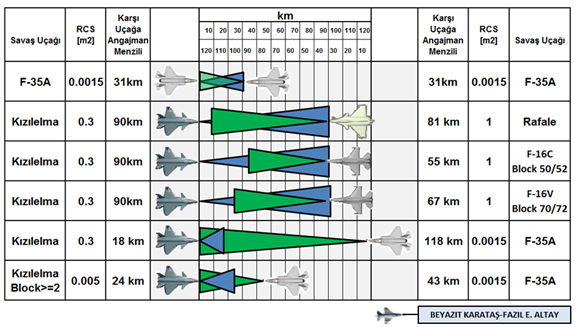

 you can see with your own eyes from hundreds of kilometers. They are giant balls of fire not IR stealth, no afterburner Kizilelma