Unclassified
UNITED STATES HOUSE
ARMED SERVICES COMMITTEE
STATEMENT OF
GENERAL CHRISTOPHER G.CAVOLI,
UNITED STATES ARMY
UNITEDSTATESEUROPEANCOMMAND
10APRIL2024
During this conflict Russia’s strategic forces, long range aviation, cyber
capabilities, space capabilities, and capabilities in the electromagnetic spectrum have lost no capacity at all.
The air force has lost some aircraft, but only about 10% of their fleet.
The navy has suffered significantly in the Black Sea – but nowhere else and Russian naval activity worldwide is at a significant peak.
Russian long range precision fires have increased in production, and Russia has also begun to buy ballistic missiles, cruise missiles, and long-range drones from third countries who were previously outside this fight.
In fact, it is mainly only in the land forces that Russia has suffered, losing over 2,000 tanks and 315,000 soldiers wounded or dead.
However, Russia is reconstituting that force far faster than our initial estimates suggested.
The army is actually now larger – by 15 percent – than it was when it invaded Ukraine. Over the past year, Russia increased its front line troop strength from 360,000 to 470,000.
Russia’s army increased the upper age limit for conscription from 27 to 30, which increases the pool of available military conscripts by 2 million for years to come.
Russia has announced plans to pursue an ambitious ground forces restructure, increasing to 1.5 million
personnel with an expanded footprint.
This restructure includes plans to transform seven motorized rifle brigades into divisions and a new army corps.
Russia plans to base some of these new formations in Russian-occupied areas of Ukraine, as well as Karelia in the High North, opposite Finland. Perhaps most concerning, the Russian military in the past year has shown an accelerating ability to learn and adapt to battlefield challenges both tactically and technologically, and has become a learning organization that little resembles the chaotic force that invaded Ukraine two years ago.



 so smart
 have announced that on top of the additional $400 million Euros worth of financial aid that they are giving Ukraine in 2024, that they are upping the military aid that they will send Ukraine as well. Instead of the 2 Billion Euros worth of military aid that the Dutch had promised previously in 2024, they are now upping their contribution to 3 Billion Euros. They will also match that 3 Billion Euro contribution in 2025 according to Prime Minister Rutte.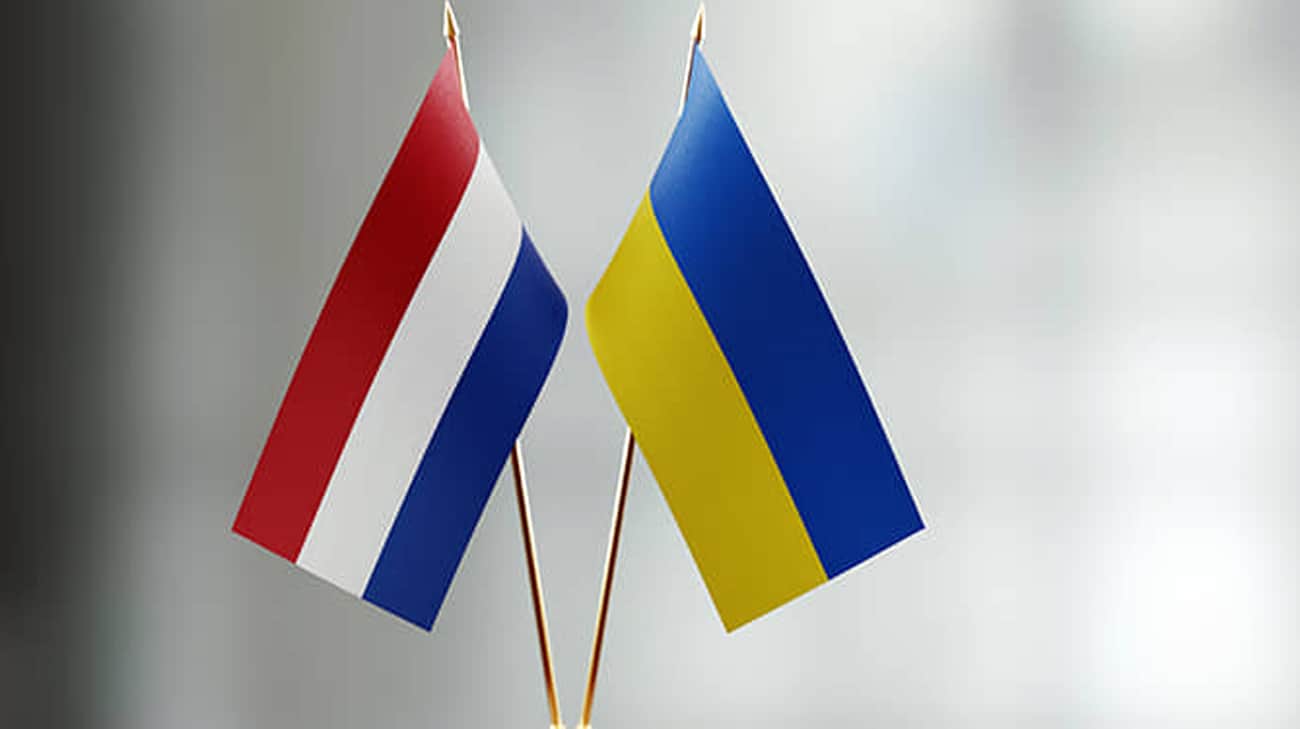


 has agreed to immediately send another Patriot Missile Battery to Ukraine. It will be the 4th such battery to be delivered to Ukraine, the 3rd by Germany. This is unlikely to be a battery from Germany's own inventory, rather, a system that a 3rd party country is quietly transferring through Germany, to be reimbursed.
 will have 5 batteries of tier 1 air defense, including 4 Patriot batteries and a SAMP/T battery. In total Germany is trying to find 3 additional Patriot Batteries and 1 additional SAMP/T battery. Ukraine has reached out to Germany
  , Romania
  , Spain
  and USA
  in an attempt to get additional Patriots delivered.


