• Forum restore complete (see latest announcement thread)

TR HÜRJET-Advanced Jet Trainer/ Light attack aircraft

dBSPL

Experienced member
Think Tank Analyst
DefenceHub Ambassador
Messages
2,871
Reactions
123 14,521
Nation of residence
Turkey
Nation of origin
Turkey
The only thing we need for the Hurjet is an engine with a physical diameter under 90cm and a dry weight under 1200kg, that can generate around 100kN of emergency power with afterburner. To give an exact equivalent example, the F414-GE-39E developed by GE for Gripen. Everything else is ready or at the test level.

If the light attack platform being developed within the scope of the Hürjet project can be shaped around this class of engine, we will have a platform that can continue its development in the direction of whatever is needed, lets say electronic attack, node for drone wings, reco, light/naval attack jet etc., and whose operating costs and logistics system will be extremely advantageous.

Even with a limited payload, short-range and single-engine platform like Gripen; can respond to many needs. Arming the Hürjet with a one level more powerful engine will enable the emergence of a system that is a direct equivalent of the Gripen NG, which can be a very valuable solution in terms of the economy of an air force that also combats both asymmetric threats and facing very near distance threats but needs around / over 300 front line jets in terms of total fleet size.
 

Huelague

Experienced member
Messages
5,381
Reactions
19 5,413
Nation of residence
Germany
Nation of origin
Turkey

Yasar_TR

Experienced member
Staff member
Administrator
Messages
4,277
Reactions
263 22,342
Nation of residence
United Kingdom
Nation of origin
Turkey
The only thing we need for the Hurjet is an engine with a physical diameter under 90cm and a dry weight under 1200kg, that can generate around 100kN of emergency power with afterburner. To give an exact equivalent example, the F414-GE-39E developed by GE for Gripen. Everything else is ready or at the test level.

If the light attack platform being developed within the scope of the Hürjet project can be shaped around this class of engine, we will have a platform that can continue its development in the direction of whatever is needed, lets say electronic attack, node for drone wings, reco, light/naval attack jet etc., and whose operating costs and logistics system will be extremely advantageous.

Even with a limited payload, short-range and single-engine platform like Gripen; can respond to many needs. Arming the Hürjet with a one level more powerful engine will enable the emergence of a system that is a direct equivalent of the Gripen NG, which can be a very valuable solution in terms of the economy of an air force that also combats both asymmetric threats and facing very near distance threats but needs around / over 300 front line jets in terms of total fleet size.
I like your enthusiasm. I wish if it were that simple though. What you are suggesting entails substantial changes.
Hürjet was designed and built primarily as a trainer. As a secondary option it may be configured as a light attack aircraft. Due to these constraints, it’s maximum speed, g-force limits and to some extent, it’s payload capacity are lower than the Gripen, especially when compared to the E and F version.

The airframe of new Gripen is quite advanced. Even when it was powered by the F-404 engine it could achieve +9g turns, have 2 Mach top speed and have a higher MTOW. All thanks to the Delta wing construction. It is a true fighter jet that is very manoeuvrable with the canards. In E and F version, the Gripen is a very potent plane.

Hurjet can never be a Gripen, unless we make significant changes to it’s airframe. No engine can turn it in to a Gripen.
Yes, an engine like F414 will make substantial improvements to its MTOW, speed and overall performance. But it is, at the end of the day, still a Hurjet.
As they say in Turkish: “Even with a golden saddle a donkey is a donkey”.

But, still, your post has merits to think about. We can change the nose and fuselage to be stealthy, alter the shape of air inlets, introduce a delta wing and make the airframe more suitable for air combat and higher speed. Then that plane is not really Hurjet though.
In fact, then, the F414 will be the handicap for that plane. We will need 2 x TF12000 engines (8000lbf dry and 12000lbf wet thrust version of TF10000engine) to give us our stealth twin engined “lightish” fighter jet. When navalised, it would be the right plane for operation from our future carrier.
 

boredaf

Experienced member
Messages
2,271
Solutions
1
Reactions
42 6,661
Nation of residence
United Kingdom
Nation of origin
Turkey
But, still, your post has merits to think about. We can change the nose and fuselage to be stealthy, alter the shape of air inlets, introduce a delta wing and make the airframe more suitable for air combat and higher speed. Then that plane is not really Hurjet though.
In fact, then, the F414 will be the handicap for that plane. We will need 2 x TF12000 engines (8000lbf dry and 12000lbf wet thrust version of TF10000engine) to give us our stealth twin engined “lightish” fighter jet. When navalised, it would be the right plane for operation from our future carrier.
But if we're going to go through all that trouble of virtually designing a whole new plane from scratch, wouldn't we be better off with 1 TF35K power lighter version of Kaan? That would be worth the trouble much more than a modified Hürjet as it would be a proper light 5th gen fighter and would be much, much better for a carrier.

If we are going to cheap out on the planes for the carrier, we shouldn't even entertain the idea of a proper aircraft carrier; just build Trakya and make it more of a drone carrier and use KE and Anka-3 on it. Hürjet, as heavily modified as it might get, is still not the future and certainly shouldn't be considered for an aircraft carrier we might get in 2040s.
 

dBSPL

Experienced member
Think Tank Analyst
DefenceHub Ambassador
Messages
2,871
Reactions
123 14,521
Nation of residence
Turkey
Nation of origin
Turkey
Wait a minute, before this discussion takes a more interesting turn, let's make one thing clear: The armed Hürjet, or even the navalized development of this variant, is not the fantasy of a handful of defence enthusiasts, and please stop trying to treat it as such.

Was it not declared by the former TAI GM, the current TAI president, even the TAI aircraft division managers, and directly by the project engineers of the Hürjet, that the roadmap for the Hürjet includes the development of an armed attack jet? For one reason or another, there may be those who say that it would be unnecessary to continue to develop Hurjet any further, okay. I have no objection. For a 1-year-old jet that is designed as a digital system from the design stage and will perhaps share some interfaces with KAAN, there may be those who say that no more money should be spent on this aircraft, it is a waste of time and money, fine. I didn't object to that either. It can even be said that, never mind the explanations, it won't happen if so many senior executives are in agreement, that's fine too...However, what we are trying to do on the other side of the coin is to envision the Armed Hürjet with reference to the statements in open sources that leave no room for doubt. To make assumptions about how it can be more beneficial to our military capacity. As we did with the national aircraft carrier project, for example. Or as we did with the purchase of Eurofighter systems.

Among the main characteristics, the one that stands out is the payload lifting capacity of around 6500lb. This reference is based on statements made 5-6 years ago. With current data, we understand that this characteristic has been formed with the current engine configuration. Therefore, the first and foremost consideration should be engines that can produce higher power in the same diameter and dry weight class without changing main airframe design of the aircraft.

I am not an aeronautical engineer, but one thing is that the relationship between power increase and lift capacity increase is not linear. For example, a 25% increase in power can provide a lifting capacity that is more than that. The other issue is that the jet can increase its lift capacity with avionics improvements and structural advances. At this point, the Korean T/FA-50 project is a very successful example. With the F-404-102, they reached a lift capacity of around 12,000lb. The increase in power will not only increase the lifting capacity, but will also enable the use of more powerful electronic systems. On the avionics side, once there is a suitable jet, it is now within the capabilities of the Turkish industry to equip it with electronics at the level of the F-16 B70 or equivalent.

TL,DR; whether the engine is changed or not, many improvements will be made to this aircraft to turn it into an attack jet. So, I believe that this development should be in the direction of a real light attack jet that can also take part in solving some of the cost-effective needs of the TAF.
 
Last edited:

uçuyorum

Contributor
Messages
1,225
Reactions
15 1,988
Nation of residence
Turkey
Nation of origin
Turkey
Tai can make a different fighter with experience from hürjet but many of the discussions here are based on conjecture. Hürjet light attack version can certainly be useful but not the same as a full fledged fighter. Those many modifications you mention may just not he possible or financially feasable for Hürjet, not to mention shortage of qualified workers.
 
Last edited by a moderator:

Anmdt

Experienced member
Naval Specialist
Professional
Messages
5,804
Solutions
2
Reactions
148 26,908
Nation of residence
Turkey
Nation of origin
Turkey
Nice article


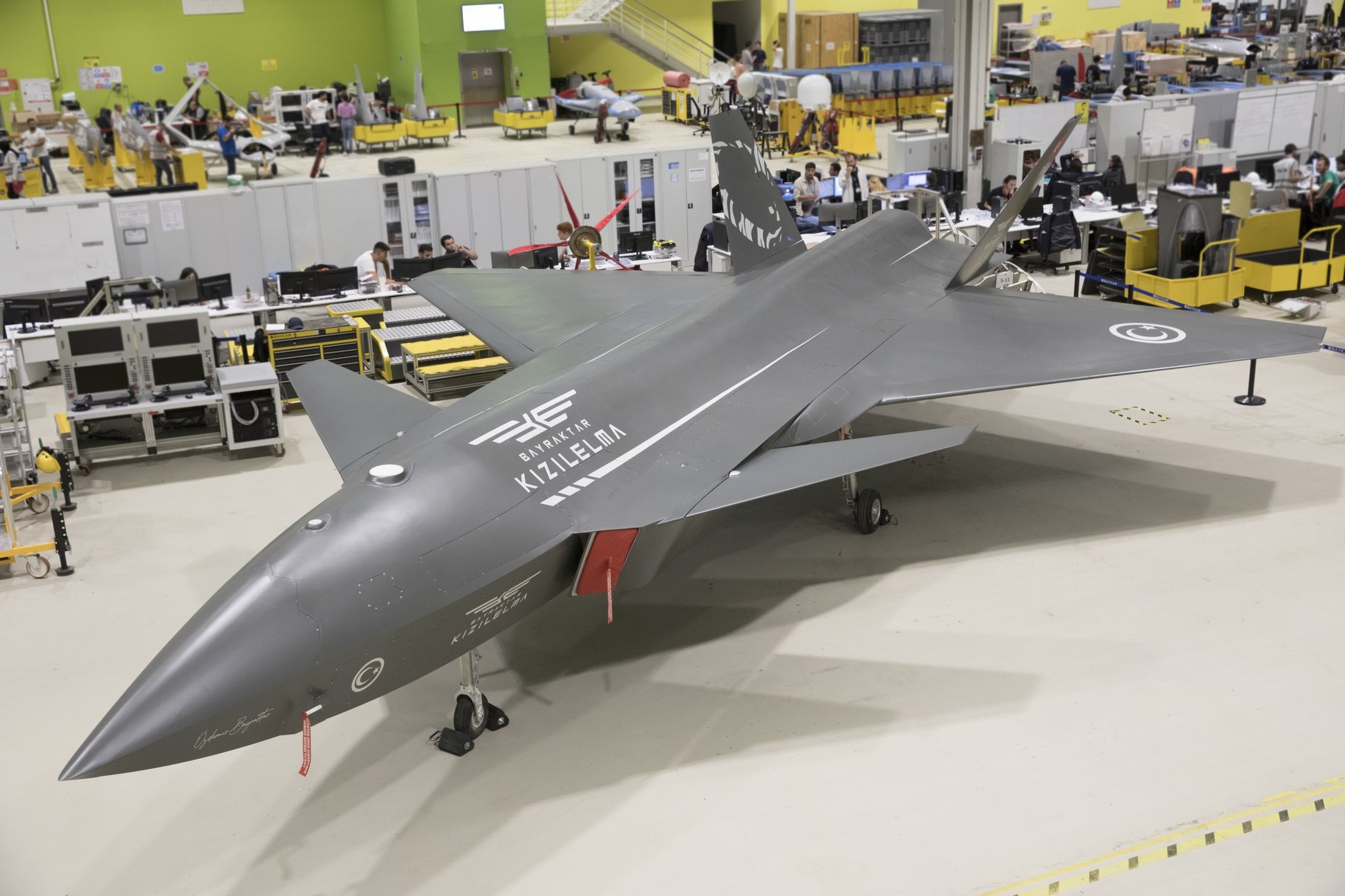
Or Kızılelma should be transformed into manned:)


View attachment 70213
View attachment 70212
So.. I-22 Sikatan was not a dumb idea at all. :)
 

IC3M@N FX

Contributor
Messages
701
Reactions
3 30 1,432
Nation of residence
Germany
Nation of origin
Turkey
I read somewhere that the first prototype flew with F110-129 Engine instead of F404 Engine.
Can anyone confirm or deny this?
 

TheInsider

Experienced member
Professional
Messages
4,894
Solutions
1
Reactions
51 17,040
Nation of residence
Turkey
Nation of origin
Turkey
Nice idea, a 5. Gen F-16 like.
5th gen F-16 is called F-35 and it is not a light fighter.

Investing in stealth manned light fighter is stupid and no neither F-35 nor J-31 nor SU-75 checkmate is a light fighter. They are single-engine fighters.

F-50 is a light fighter. If we go back in time F-5 is a light fighter even though it has 2 engines.
 
Last edited:

Sanchez

Experienced member
Moderator
Think Tank Analyst
DefenceHub Diplomat
Messages
4,192
Reactions
127 19,052
Nation of residence
Turkey
Nation of origin
Turkey
I have a feeling that TurAF has no great interest in a CAS Hürjet and that configuration is more aimed for export.
Instead imho TurAF has more interest in Air/Air Hürjet to control UCAVs, and the Air/Air configuration will be purely for self defence measures.
TurAF should first increase the ordered number of aircrafts to replace the T-38 before anything else, current order is to replace the NF-5s of Turkish Stars after all. Navy Design Office's carrier design clearly have Hürjets on it, so we know that the navy is interested in a combat variant even if air force isn't. We expect Spain to buy the thing, when our own air force hasn't fully subscribed to the project yet.
-
I read somewhere that the first prototype flew with F110-129 Engine instead of F404 Engine.
Can anyone confirm or deny this?
We saw the thing from all possible angles and in flight, it has an F404.
 

Yasar_TR

Experienced member
Staff member
Administrator
Messages
4,277
Reactions
263 22,342
Nation of residence
United Kingdom
Nation of origin
Turkey
Among the main characteristics, the one that stands out is the payload lifting capacity of around 6500lb. This reference is based on statements made 5-6 years ago. With current data, we understand that this characteristic has been formed with the current engine configuration. Therefore, the first and foremost consideration should be engines that can produce higher power in the same diameter and dry weight class without changing main airframe design of the aircraft.

I am not an aeronautical engineer, but one thing is that the relationship between power increase and lift capacity increase is not linear. For example, a 25% increase in power can provide a lifting capacity that is more than that. The other issue is that the jet can increase its lift capacity with avionics improvements and structural advances.
Without going in to aerodynamics 101 too much, let us just look at the forces that play a part in flight.
There are 4 basic forces that act upon a plane. Weight, Thrust, Drag and Lift.
They are all interdependent on each other during the flight. Thrust and speed induced drag, is the force that gives you lift. But it all depends how well designed your airframe and wings are. Too much weight or not enough thrust can degrade performance.
Thrust is forward force.
Drag is rearward force.
Weight is downward force.
Lift is upward force.
Exemplary avionics that control flight characteristics and structural improvements will help increase the performance of any plane as you have rightfully mentioned.
Thrust on its own is not enough to give you good lift. Your plane’s airframe and your wings will have to be designed correctly to accommodate the high thrust your engine provides and translate it in to induced drag to create effective and efficient lift.
With a small increment of thrust it is possible to induce an ample amount of drag to give efficient lift when you hava a large area of wing to play with. So yes! Thrust to lift is not linear. But depends on all the 4 forces in play and the design of your wings and plane.

We don’t know how our Hurjet was designed. What we know is that it is going to be good for training 5th generation plane pilots and is agile enough to perform acrobatics as well.

We seem to be doing this frequently:
We produce an amphibious assault ship and try to turn it in to an aircraft carrier.
We start designing an air superiority fighter with a modest size. Then increase size to include in it’s end use, ground assault and multi role.
Now produce a trainer aircraft with a possible light attack capability. Then change it to include naval carrier operations too.

Anything is possible as long as there is a will and money to do it! But we mustn’t forget the limitations we have and the current situation we are in.
 

dBSPL

Experienced member
Think Tank Analyst
DefenceHub Ambassador
Messages
2,871
Reactions
123 14,521
Nation of residence
Turkey
Nation of origin
Turkey
For comparison, the basic characteristics of the aircrafts known in the world in the light attack role and in service, or soon to enter the active inventory (India's MK2). It can be listed in much more detail with a little time, this is just a few datas from the wiki and referenced from verifiable sources. Still, it will give an idea.


FA-50 Block 10 (S.Korea/USA) Specifications
Wingspan: 9.45 m (31 ft 0 in)
Empty weight: 6,454 kg (14,229 lb)
Payload: Total of 7 with 4 underwing 2 wingtip and one under fuselage; holding up to 5,400 kg (12,000 lb) of payload
Ferry range: 2,592 km (1,611 mi, 1,400 nmi) External fuel 3x 150 US gal (120 imp gal; 570 L)
Service ceiling: 16,764 m (55,000 ft)
Rate of climb: 198 m/s (39,000 ft/min)
Thrust/weight: 0.96
Powerplant: 1 × General Electric F404-GE-102 afterburning turbofan engine (built under license by Samsung Techwin[14]), 53.07 kN (11,930 lbf) thrust dry, 78.7 kN (17,700 lbf) with afterburner

JF-17 Block 3 (Pakistan/China) Specifications
Wingspan: 9.44 m (31 ft 0 in)
Empty weight: 7,965 kg (17,560 lb)
Payload: 4,000 kg (8,800 lb) – 4,325 kg (9,535 lb) external stores (2 × wingtip, 4 × under-wing, 1 × under-fuselage, 1 × chin)
Ferry range: 3,482 km (2,163 mi, 1,880 nmi) with drop tanks
Service ceiling: 16,916 m (55,500 ft)
Rate of climb: 300 m/s (59,000 ft/min)
Thrust/weight: 1.07 with RD-93
Powerplant: 1 × Klimov RD-93 DEEC, 49.4 kN (11,100 lbf) thrust [286] dry, 84.4 kN (19,000 lbf) with afterburner

HAL TEJAS MK2 (India) Specifications (Projected)
Wingspan: 8.50 m
Empty weight: 7,850 kg (17,306 lb) (expected)
Payload: 6,500 kg (14,300 lb) external stores
Ferry range: 3,500 km (2,200 mi, 1,900 nmi) with 3 external fuel tanks
Service ceiling: 17,300 m (56,758 ft)
Powerplant: 1 × General Electric F414-INS6 afterburning turbofan with FADEC, 57.8 kN (13,000 lbf) thrust dry, 97.9 kN (22,000 lbf) with afterburner (Indigenous 110kn engine to be used in future)

JAS 39E/F Gripen Specifications
Wingspan: 8.6 m (28 ft 3 in) JAS39 C/D - 8.4 m (27 ft 7 in)
Empty weight: 8,000 kg (17,637 lb) JAS39 C/D - Empty weight: 6,800 kg (14,991 lb)
Payload: 7,200 kg (15,900 lb) JAS39 C/D - Payload: 5,300 kg (11,700 lb)
Ferry range: 4,000 km (2,500 mi, 2,200 nmi) JAS39 C/D - 3,200 km (2,000 mi, 1,700 nmi)
Service ceiling: 16,000 m (52,000 ft) JAS39 C/D - Service ceiling: 15,240 m (50,000 ft)
Rate of climb: 50,000ft/min
Thrust/weight: 1.04 JAS39 C/D - Thrust/weight: 0.97
Powerplant: General Electric F414-GE-39E (RM16), 61.83kN (13,900 lbf) thrust dry, 98 kN (22,000 lbf) with afterburner
JAS39 C/D - Volvo RM12, 54 kN (12,000 lbf) thrust dry, 80.5 kN (18,100 lbf) with afterburner

HURJET Trainer ***[Light Combat Aircraft version to be developed later]
Wingspan: 9.5m (31 ft)
Payload Capacity: 2721 kg (6000 lbs)
Range (without drop tanks): 2222 km (1200 nm)
Service Ceiling: 13,716 m (45,000 ft)
Climb Rate: 39.000 fpm
Powerplant: 1 × F404-GE-102, 78 kN (17,600 lbf) thrust with afterburner
 

UkroTurk

Experienced member
Land Warfare Specialist
Professional
Messages
2,968
Reactions
61 5,303
Nation of residence
Turkey
Nation of origin
Turkey
So.. I-22 Sikatan was not a dumb idea at all. :)
I didn't know about Sikatan, i thought you were swearing to me😅 Sikatan appears to be a real:)
i-22-Sikatan-rancangan-PT-Infoglobal-1-e1667047182241.jpg


Minijet fighter Sikatan is exactly what we need💪🏻
 

dBSPL

Experienced member
Think Tank Analyst
DefenceHub Ambassador
Messages
2,871
Reactions
123 14,521
Nation of residence
Turkey
Nation of origin
Turkey
For comparison, the basic characteristics of the aircrafts known in the world in the light attack role and in service, or soon to enter the active inventory (India's MK2). It can be listed in much more detail with a little time, this is just a few datas from the wiki and referenced from verifiable sources. Still, it will give an idea.


FA-50 Block 10 (S.Korea/USA) Specifications
Wingspan: 9.45 m (31 ft 0 in)
Empty weight: 6,454 kg (14,229 lb)
Payload: Total of 7 with 4 underwing 2 wingtip and one under fuselage; holding up to 5,400 kg (12,000 lb) of payload
Ferry range: 2,592 km (1,611 mi, 1,400 nmi) External fuel 3x 150 US gal (120 imp gal; 570 L)
Service ceiling: 16,764 m (55,000 ft)
Rate of climb: 198 m/s (39,000 ft/min)
Thrust/weight: 0.96
Powerplant: 1 × General Electric F404-GE-102 afterburning turbofan engine (built under license by Samsung Techwin[14]), 53.07 kN (11,930 lbf) thrust dry, 78.7 kN (17,700 lbf) with afterburner

JF-17 Block 3 (Pakistan/China) Specifications
Wingspan: 9.44 m (31 ft 0 in)
Empty weight: 7,965 kg (17,560 lb)
Payload: 4,000 kg (8,800 lb) – 4,325 kg (9,535 lb) external stores (2 × wingtip, 4 × under-wing, 1 × under-fuselage, 1 × chin)
Ferry range: 3,482 km (2,163 mi, 1,880 nmi) with drop tanks
Service ceiling: 16,916 m (55,500 ft)
Rate of climb: 300 m/s (59,000 ft/min)
Thrust/weight: 1.07 with RD-93
Powerplant: 1 × Klimov RD-93 DEEC, 49.4 kN (11,100 lbf) thrust [286] dry, 84.4 kN (19,000 lbf) with afterburner

HAL TEJAS MK2 (India) Specifications (Projected)
Wingspan: 8.50 m
Empty weight: 7,850 kg (17,306 lb) (expected)
Payload: 6,500 kg (14,300 lb) external stores
Ferry range: 3,500 km (2,200 mi, 1,900 nmi) with 3 external fuel tanks
Service ceiling: 17,300 m (56,758 ft)
Powerplant: 1 × General Electric F414-INS6 afterburning turbofan with FADEC, 57.8 kN (13,000 lbf) thrust dry, 97.9 kN (22,000 lbf) with afterburner (Indigenous 110kn engine to be used in future)

JAS 39E/F Gripen Specifications
Wingspan: 8.6 m (28 ft 3 in) JAS39 C/D - 8.4 m (27 ft 7 in)
Empty weight: 8,000 kg (17,637 lb) JAS39 C/D - Empty weight: 6,800 kg (14,991 lb)
Payload: 7,200 kg (15,900 lb) JAS39 C/D - Payload: 5,300 kg (11,700 lb)
Ferry range: 4,000 km (2,500 mi, 2,200 nmi) JAS39 C/D - 3,200 km (2,000 mi, 1,700 nmi)
Service ceiling: 16,000 m (52,000 ft) JAS39 C/D - Service ceiling: 15,240 m (50,000 ft)
Rate of climb: 50,000ft/min
Thrust/weight: 1.04 JAS39 C/D - Thrust/weight: 0.97
Powerplant: General Electric F414-GE-39E (RM16), 61.83kN (13,900 lbf) thrust dry, 98 kN (22,000 lbf) with afterburner
JAS39 C/D - Volvo RM12, 54 kN (12,000 lbf) thrust dry, 80.5 kN (18,100 lbf) with afterburner

HURJET Trainer ***[Light Combat Aircraft version to be developed later]
Wingspan: 9.5m (31 ft)
Payload Capacity: 2721 kg (6000 lbs)
Range (without drop tanks): 2222 km (1200 nm)
Service Ceiling: 13,716 m (45,000 ft)
Climb Rate: 39.000 fpm
Powerplant: 1 × F404-GE-102, 78 kN (17,600 lbf) thrust with afterburner
Yesterday, the Hürjet was once again announced from the highest authority that a combat version will be developed and that this development will be a naval variant suitable for an aircraft carrier. In the light of this announcement, if we look again at the planes that were crudely compared above: The T/FA-50 system, which carries the same engine as the Hürjet and has a design philosophy very close to the Hürjet, lags behind the GE-F414 and Klimov RD-93's aircrafts in terms of climb capability and power-to-weight ratio due to engine limitations. As far as I know, Gripen E/F is the only one of these aircraft that can technically be operated as a STOBAR on the aircraft carrier, although it has not been proven yet. If I am not mistaken, the new Tejas will also have this capability in the future.

I assume that the landing gear of the Hürjet will probably be revised and the weight increase will be offset by structural lightening. It is not possible to know whether a single-seat variant of the aircraft is being considered by shrinking the canopy without changing the main fuselage, but in any case, the focus should be on increasing the total power output rather than lightening the aircraft.
 

Sanchez

Experienced member
Moderator
Think Tank Analyst
DefenceHub Diplomat
Messages
4,192
Reactions
127 19,052
Nation of residence
Turkey
Nation of origin
Turkey
Yesterday, the Hürjet was once again announced from the highest authority that a combat version will be developed and that this development will be a naval variant suitable for an aircraft carrier. In the light of this announcement, if we look again at the planes that were crudely compared above: The T/FA-50 system, which carries the same engine as the Hürjet and has a design philosophy very close to the Hürjet, lags behind the GE-F414 and Klimov RD-93's aircrafts in terms of climb capability and power-to-weight ratio due to engine limitations. As far as I know, Gripen E/F is the only one of these aircraft that can technically be operated as a STOBAR on the aircraft carrier, although it has not been proven yet. If I am not mistaken, the new Tejas will also have this capability in the future.

I assume that the landing gear of the Hürjet will probably be revised and the weight increase will be offset by structural lightening. It is not possible to know whether a single-seat variant of the aircraft is being considered by shrinking the canopy without changing the main fuselage, but in any case, the focus should be on increasing the total power output rather than lightening the aircraft.
If the navy is interested in using the Hürjet as part of an OKU/MUM-T, keeping the second seat could be preferable.
 

dBSPL

Experienced member
Think Tank Analyst
DefenceHub Ambassador
Messages
2,871
Reactions
123 14,521
Nation of residence
Turkey
Nation of origin
Turkey
IMHO that is the only reason that Hürjet will be navalized, and to train naval pilots of course.
Or else what can a Hürjet with its current performance can give the navy, what a KE or ANKA 3 cannot give?
And if you want to change its engine, you already have to redesign some parts. So why don't put a single KAAN engine in it?
I also dwelled on this possibility for a long time, but when we scan back through the statements, from the presidency to the project engineers, the emphasis is constantly on light combatant platform. This means that will be conceptualized within the OKU/MUM-T at least, which we can think of as a node for drone jet wings, as Sanchez üstad said.
 

Yasar_TR

Experienced member
Staff member
Administrator
Messages
4,277
Reactions
263 22,342
Nation of residence
United Kingdom
Nation of origin
Turkey
Yesterday, the Hürjet was once again announced from the highest authority that a combat version will be developed and that this development will be a naval variant suitable for an aircraft carrier. In the light of this announcement, if we look again at the planes that were crudely compared above: The T/FA-50 system, which carries the same engine as the Hürjet and has a design philosophy very close to the Hürjet, lags behind the GE-F414 and Klimov RD-93's aircrafts in terms of climb capability and power-to-weight ratio due to engine limitations. As far as I know, Gripen E/F is the only one of these aircraft that can technically be operated as a STOBAR on the aircraft carrier, although it has not been proven yet. If I am not mistaken, the new Tejas will also have this capability in the future.

I assume that the landing gear of the Hürjet will probably be revised and the weight increase will be offset by structural lightening. It is not possible to know whether a single-seat variant of the aircraft is being considered by shrinking the canopy without changing the main fuselage, but in any case, the focus should be on increasing the total power output rather than lightening the aircraft.
Tusas has been working on the design of a navalised Hurjet for quite sometime.
If we are to navalise and structurally improve the Hurjet to withstand the harsh environment in which it will be used, then it makes economical sense to use these planes as light attack aircrafts too. Otherwise, spending a lot of money to navalise and redesign for the sake of a couple of dozen planes is not feasible.
But as a light attack and a low observable aircraft, the only one that fits the bill in your above list is Gripen E/F as you yourself has also pointed out. Due to it’s delta wing form, Gripen has inherent low observability. The E/F version uses a very powerful F414 engine and has an Akaer designed airframe who were instrumental in Hürjet’s airframe design too.
If we are to go in to the expense of redesigning and navalisng this jet, we might as well make it so that it has a LO form too by introducing a delta wing.

If you check Hal Tejas, it too has a delta wing. And it can stop with arresting wires within 87 metres and take off from INS Vikramaditya with the help of ski lift. To improve take off weight they are now using f414 and are working on a new design Tejas with twin F414s.
 

boredaf

Experienced member
Messages
2,271
Solutions
1
Reactions
42 6,661
Nation of residence
United Kingdom
Nation of origin
Turkey
If the plan is to use Hürjet on it we should scrap the whole aircraft carrier altogether because that is nothing but half assing what would be one of our biggest strategic assets. Hürjet has neither the sortie capabilities, nor the stealth of where other countries are going. In light attack configuration it only makes sense to use as a cheap alternative to F-16s and that's it.

Utter foolishness to trust a jet that would barely count as a fighter or bomber to carry the (figurative) weight of being a naval bomber. It can barely carry two Atmacas or Soms, or MK-84s (with guidance/glide kits) what good it is going to in terms of number of sorties?

Hürjet should have no purpose other than a trainer for navy's pilots, anything else is just embarrassing.
 
Last edited:

Sanchez

Experienced member
Moderator
Think Tank Analyst
DefenceHub Diplomat
Messages
4,192
Reactions
127 19,052
Nation of residence
Turkey
Nation of origin
Turkey
IMHO that is the only reason that Hürjet will be navalized, and to train naval pilots of course.
Training part is interesting, as the possible Hürjet-N will probably be the most powerful naval aircraft they will use anyway. Which brings a operational question. To train naval attack pilots, you also need a Hürjet-N trainer that is different than the LCA squadron. That's at least 20-25 aircraft there.
 
Top Bottom