It is essential to highlight an operational reality: Although the transition to 5th-generation aircraft has begun, the world's leading naval powers will rely on 4.5-generation platforms for at least another two decades.
The US Navy, far from retiring its F/A-18E/F Super Hornets, is extending their lifespan by upgrading them to "Block III" level. On December 16, 2025, the US Navy signed a new $931 million contract with Boeing, increasing the airframe lifespan of the aircraft from 6,000 to 10,000 flight hours. Until so-called 6th generation (F/A-XX) aircraft arrive in the mid-2030s (let's be realistic and say the 2040s), Super Hornets will continue to serve as the main striking force of aircraft carrier wings until the late 2030s and even into the 2040s. Numerous sources on this topic are available online.
Similarly, France faces a long wait for carrier-based stealth. The NGF (FCAS/SCAF) project is not expected to be operational before 2040-2045. Consequently, France's next-generation nuclear carrier (PA-NG), debuting in 2038, will initially be equipped with Rafale M jets. This effectively locks the 4th-generation Rafale into service until the mid-2040s.
While China is developing the 5th generation J-35 stealth aircraft, it continues to expand its heavyweight J-15 fleet. Serial production of the catapult-compatible (CATOBAR) J-15T and the electronic warfare version J-15D models for the new Fujian aircraft carrier has been underway since 2021; and these aircrafts are curently one of the most up-to-date naval jets by end of 2020s. Equipped with modern avionics and AESA radars, these "young" airframes will form mixed fleets with J-35s by 2040 as part of China's hi-lo (high-low) capacity strategy.
The situation is more complex on the Russian front. The modernization of the only aircraft carrier, Admiral Kuznetsov, has been ongoing for years. However, a sea-based 5th generation aircraft (like the Su-57 variant) to replace the existing MiG-29K and Su-33 aircraft is not yet in production, and it is even unclear whether it is in the development phase.
In short, when MÜGEM is launched, 4++ generation carrier-based jets will still be the operational standard worldwide for another 15 years at least. This window provides us with the necessary time to evolve our naval aviation, moving from smaller projects to the ultimate goal: KAAN-D.
***
Let me add this as a side note: If support is provided from a country for MÜGEM's installed power and propulsion system, it may be possible for the ship to start sea tests around 2030. Because, as far as I can see, this project is wanted to be turned into a prestige project by the political will, and this creates the impression that all means will be mobilized. Whether this decision is right or wrong is a separate matter of debate. My point of view is that there is a ship being built and which aircraft we can put on this ship in, lets say in 2032. I cannot see any other solution than the Hürjet-D+Kızılelma-X/Anka-X MumT concept in 5-7 years projection. We cannot catch up with countries and industries that have had fixed wing shipborne naval aviation capabilities for over 50 years in a single step, but the gap that will persist in these countries throughout the 2030s, hi-lo scaling approaches, and changing combat paradigms may provide us with a window of opportunity to narrow the gap.



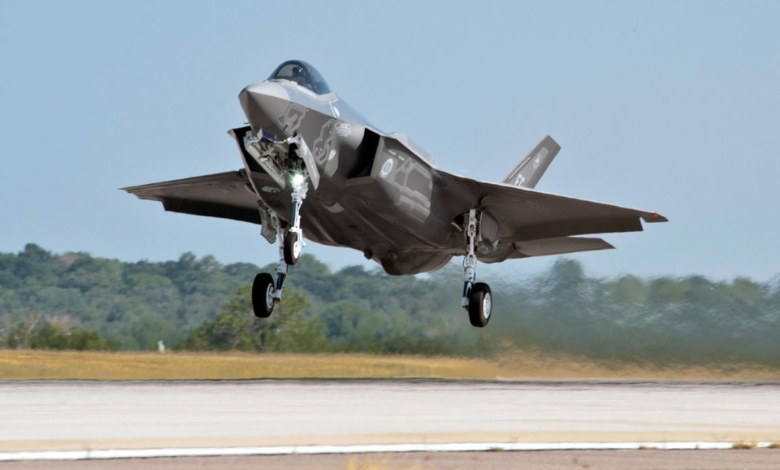


 Take-off and landing from an aircraft carrier


