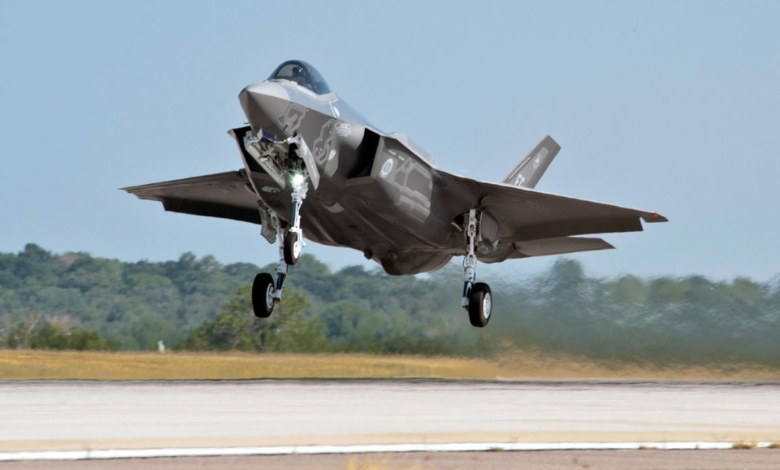
TR HÜRJET-Advanced Jet Trainer/ Light attack aircraft

Yasar_TR

Experienced member
Staff member
Administrator
Messages
4,091
Reactions
248 21,386
Nation of residence
United Kingdom
Nation of origin
Turkey
No, they are retiring their old F-18C/D Hornets to replace them with F-35s; they never operated the F-18E/F. This was always their plan since 2000s.
The US is Becoming Dependent on a Single Platform

On the other hand, it is assessed that the Pentagon is also taking a significant structural risk with this transformation.

The operational load, which was previously distributed among Harrier, Hornet, and other platforms, will become largely dependent on the F-35 ecosystem in the future. While this provides advantages in terms of logistics and training, it increases the risk of global technical or supply-related problems affecting the entire fleet.

Despite this, the Washington administration is accelerating the F-35-centric structure, considering that low visibility, sensor fusion, and distributed operational capabilities surpass those of classic fourth-generation platforms in the future war environment.


You are half right about Hornets. They were originally used on carriers too. Then replaced with SuperHornets. But SuperHornets are being phased out too. No more being manufactured and after 2030, every time a carrier is in docks for maintenance they will be replaced by F35Cs. By 2040 there will be none in service. A new 6th gen NGAD is supposed to replace it in the future.

So the gist of the main argument is still the same :

We need a stealthy plane on that MUGEM.
 
Last edited:

Strong AI

Experienced member
Messages
2,720
Reactions
61 9,821
Nation of residence
Germany
Nation of origin
Turkey
View attachment 80477
For a carrier based Hurjet it seems that they are looking at a plane with much bigger wing area.
But this plane is not stealthy.
US marines are giving up on the Super Hornet usage from their carriers. Going forward it will be just F35Cs and F35Bs as of post 2030.
In the West, UK and Italy will be employing stealth jets-F35Bs as well.


Chinese are employing stealth jets from their carriers too.

So far, France is the only major power that has not taken the stealth route.

Since we have a stealthy engine coming up soon in the form of TF10000, it would be stupid to go forward with a non stealthy Hurjet.
Just downsize KAAN to a Hurjet size twin engined single and twin seater plane with TF10000s. It would be easier and cheaper to make it sturdier and with it’s smaller size stealthier.

I hope decision makers are forward thinking people.
IMO a downsized KAAN would get the same sensors as twin-engine KE/ANKA, and would have less payload capacity. We could pack Naval Hürjet full with EW and make fly those stealthy UCAVs right at the edge of that protection bubble created by EW Hürjet. We need a carrier capable unmanned AEW.
 

Saithan

Experienced member
Denmark Correspondent
DefenceHub Diplomat
Messages
9,602
Reactions
62 21,610
Nation of residence
Denmark
Nation of origin
Turkey
I honestly don't think we are there yet. Nor in 5 years time.

I'd like to remind you of what we're lacking. Just for TurAF alone....

Naval jet would be a whole new thing for TN....

We need to at least cover some of our bases Land forces, TurAF before spreading out, and ending up with what ?

IMO too much is going on atm, and I can't see where we'll be. With something in our hand or nothing in our hand.

If our success depends on external factors, then we're doomed to fail.
 

Pokemonte13

Contributor
Messages
774
Reactions
11 1,436
Nation of residence
Germany
Nation of origin
Turkey
IMO a downsized KAAN would get the same sensors as twin-engine KE/ANKA, and would have less payload capacity. We could pack Naval Hürjet full with EW and make fly those stealthy UCAVs right at the edge of that protection bubble created by EW Hürjet. We need a carrier capable unmanned AEW.
I think the biggest obstacle our carrier has is that it lacks a catapult.
If we had one it would dramatically improve our Aircraft and i think a single engine Kaan would be equivalent to 20000lbf Kizilelma
 

Strong AI

Experienced member
Messages
2,720
Reactions
61 9,821
Nation of residence
Germany
Nation of origin
Turkey
IMO a downsized KAAN would get the same sensors as twin-engine KE/ANKA, and would have less payload capacity. We could pack Naval Hürjet full with EW and make fly those stealthy UCAVs right at the edge of that protection bubble created by EW Hürjet. We need a carrier capable unmanned AEW.
In 2009 an EA-18G Growler got a simulated BVR kill against a F-22 during an exercise. EW warfare is very powerful.
 

boredaf

Experienced member
Messages
2,158
Solutions
1
Reactions
42 6,379
Nation of residence
United Kingdom
Nation of origin
Turkey
You think a navalised Hurjet will not be a nightmare?
Which is better; nightmarish but stealthy jet fighter or simple to manage but easily shot jet?
Don't forget that we also don't have an engine for it either, not even an engine program. Getting engines for a trainer and getting engines for a naval fighter are two completely different beasts.
 

dBSPL

Experienced member
Think Tank Analyst
DefenceHub Ambassador
Messages
2,776
Reactions
114 14,165
Nation of residence
Turkey
Nation of origin
Turkey

Something else indeed came interesting, the first preliminary presentation of Naval HÜRJET from the same panel
If the basic specifications in the infographic are the result of consistent studies, Hürjet Naval may be the most advanced training jet currently under development. Actually, it is more than just a training jet, it is one step short of a ideal combatant jet, standing right in the middle. Although it is essentially a 4th generation airframe, its integrated training capabilities will prepare pilots for the 5th generation. In fact, it is currently the newest jet project in this generation.

I don't know if there has been a similar project in the world before. Conventional advanced training on the same airframe, a common training platform that will allow take-off and landing with ski jump, catapult support and even unprepared and short runways( e.g Sweden airforce doctrine), and as a bonus; infrastructure fully compatible with the MUM-T concept in case of any urgent combatant procurement need.

In my opinion, If the Hürjet-D can be successfully implemented, all technical barriers for the Kaan-D (Naval) will have been overcome in advance.


Let's look back at the past decade; at many technical junctures, the Hürjet project has served as a spearhead, paving the way for the Kaan program from the very beginning. My amateur observation is that the Armed Forces are also considering creating naval aviation using exactly this formula. A long-term supply planning in which 14-16 Hürjet-D will be followed by +40 KAAN-D will take the Naval air force to a very respectable point in terms of both training level, scaling and deterrence in two decades. But more importantly, the aviation industry will also reach the capacity to offer naval combat solutions of all scales and tailored to specific needs within the same timeframe, a capacity possessed by very few countries in the world.
 
Last edited:

Yasar_TR

Experienced member
Staff member
Administrator
Messages
4,091
Reactions
248 21,386
Nation of residence
United Kingdom
Nation of origin
Turkey
Don't forget that we also don't have an engine for it either, not even an engine program. Getting engines for a trainer and getting engines for a naval fighter are two completely different beasts.
Exactly. When the push comes to shove they are going to drag their feet and won’t deliver the engines for a Light Combat Hurjet.
Besides F404 is never going to be enough for a STOBAR operation. Either a F414 or a reconfigured EJ200 is probably the minimum requirement.
Apart from that by the time our carrier is ready to be operational, the carriers of the world won’t have any 4th gen fighters on board.

There is no point in talking about a single TF35000. That will need a completely new aircraft design.
They are looking at enlarging wing area of Hurjet.
We have a KAAN that we know can fly. Down size it.
We have an engine that is Stealthy in the form of TF10000. Use two of them.

If we are building a carrier, then we have to start putting together now a suitable aircraft with engines and equipment we know we have so that we can start learning to use the two together.
 

Fuzuli NL

Experienced member
Germany Correspondent
Messages
3,525
Reactions
59 9,954
Nation of residence
Germany
Nation of origin
Turkey

HIDyA1NXQAAmuVD


I love this one, but more realistically, it should be a single engine with a scaled-down KAAN cockpit.
 

Zafer

Experienced member
Messages
5,426
Reactions
15 8,437
Nation of residence
Turkey
Nation of origin
Turkey
What if a Baykar made fighter engine enters the scene. As it will primarily be used with unmanned aircraft they can progress rather speedily. They can establish the target power level first and then focus on reliability which means it can start roaring pretty quickly. And if it does so really quickly it gets considered for the next fighter project. Considering it is meant to be a 20k lbf engine too it can be the key element of the show.
 

dBSPL

Experienced member
Think Tank Analyst
DefenceHub Ambassador
Messages
2,776
Reactions
114 14,165
Nation of residence
Turkey
Nation of origin
Turkey
It is essential to highlight an operational reality: Although the transition to 5th-generation aircraft has begun, the world's leading naval powers will rely on 4.5-generation platforms for at least another two decades.

The US Navy, far from retiring its F/A-18E/F Super Hornets, is extending their lifespan by upgrading them to "Block III" level. On December 16, 2025, the US Navy signed a new $931 million contract with Boeing, increasing the airframe lifespan of the aircraft from 6,000 to 10,000 flight hours. Until so-called 6th generation (F/A-XX) aircraft arrive in the mid-2030s (let's be realistic and say the 2040s), Super Hornets will continue to serve as the main striking force of aircraft carrier wings until the late 2030s and even into the 2040s. Numerous sources on this topic are available online.

Also France, will have to wait a long time before using stealth aircraft on its aircraft carrier. The first flights and operational launch of the NGF project (FCAS/SCAF) will not happen until 2040-2045. France's new generation nuclear aircraft carrier (PA-NG), which it plans to commission in 2038, will necessarily be equipped with Rafale M aircraft in its initial years. This eventually extends the service life of the fourth-generation Rafales to mid-2040s.

While China is developing the 5th generation J-35 stealth aircraft, it continues to expand its heavyweight J-15 fleet. Serial production of the catapult-compatible (CATOBAR) J-15T and the electronic warfare version J-15D models for the new Fujian aircraft carrier has been underway since 2021; and these aircrafts are curently one of the most up-to-date naval jets by end of 2020s. Equipped with modern avionics and AESA radars, these "young" airframes will form mixed fleets with J-35s by 2040 as part of China's hi-lo (high-low) capacity strategy.

The situation is more complex on the Russian front. The modernization of the only aircraft carrier, Admiral Kuznetsov, has been ongoing for years. However, a sea-based 5th generation aircraft (like the Su-57 variant) to replace the existing MiG-29K and Su-33 aircraft is not yet in production, and it is even unclear whether it is in the development phase.

In short, when the Mügem is launched, the world's 4++ aircraft carrier-based jets will likely still be operational and even still developing platforms in these countries for at least another 10-15 years. This gap will give us time to develop the Kaan-D by experting smaller project first.
 
Last edited:
Top Bottom