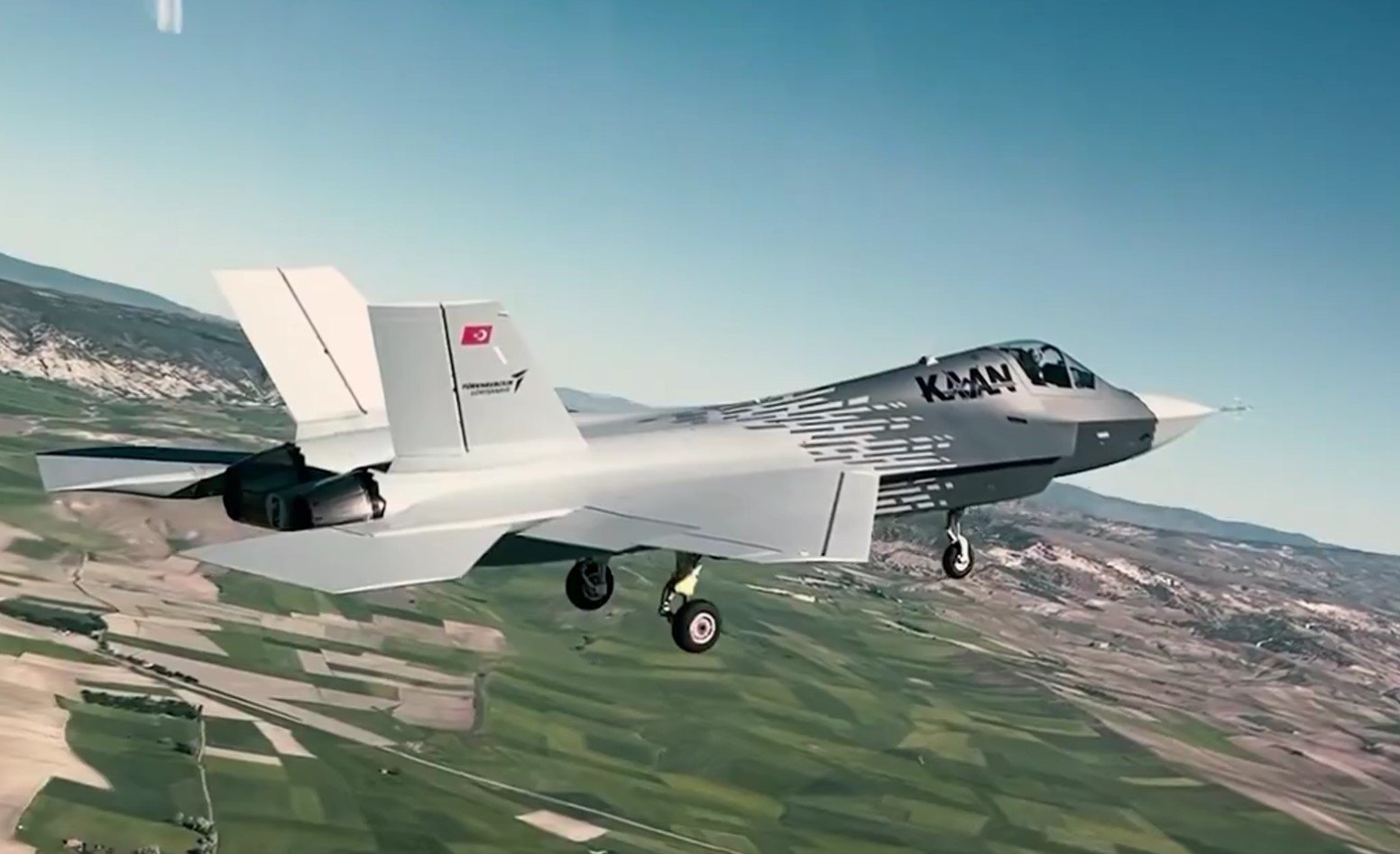
TR Air-Force TF-X KAAN Fighter Jet

IC3M@N FX

Contributor
Messages
517
Reactions
3 23 1,044
Nation of residence
Germany
Nation of origin
Turkey
It's not that simple: if both sides have stealth capabilities, stealth loses its original role as a "long-range advantage" and instead becomes a prerequisite for even surviving in modern air combat. This shifts the actual BVR window to a realistic engagement range of 30 to 60 km, because only in this range can sufficient track quality be established against VLO targets.

At this distance, the nominal range of a missile is hardly relevant. The only decisive factor is endgame energy. This requires BVRAAMs with a basic range of 100+ km, but optimised for high agility in the medium-range band: weapons with dual impulse or ramjet engines that reach Mach 4.5–4.8 or more and continue to provide active thrust in the terminal stage. Only such missiles create a sufficiently large no-escape zone to reliably achieve their effect in a stealth-versus-stealth scenario.

Long ranges of 150–200 km remain relevant against genuine stealth platforms only under extremely specific conditions – for example, with multi-static sensor technology, triangulation, network hand-off between multiple radar sources, or if a target accidentally flies in a very unfavourable aspect. Without this highly networked sensor technology, such a shot loses almost all practical relevance because the target is detected too late or too inaccurately. This means that classic "150+ km" BVR missiles, which were primarily designed to counter Gen-4/4+ jets, are virtually ineffective in the new scenario.

This means that a genuine post-stealth phase is now – or will very soon – emerge. Pure signature reduction is no longer sufficient. The following factors will be decisive:

sensory superiority (AESA, IRST, ESM, LPI data links)

kinetics and endgame energy of the aircraft and the missiles used, and agile platforms with strong energy management.

In this environment, the F-35, for example, will age faster because it is not designed to compete with an equal opponent that has more power, as other stealth platforms are already designed for greater agility and superior energy management. Rather, the F-35 is a BVR shooter mainly against Gen 4+ aircraft.

Stealth remains essential – but only in combination with agility, sensor fusion and high-energy weapons will true superiority emerge in the post-stealth era.
 

Spitfire9

Contributor
Think Tank Analyst
Messages
914
Reactions
14 1,188
Nation of residence
United Kingdom
Nation of origin
United Kingdom
I read somewhere that the airforce plans are for 150 aircraft total and that the 24 planes pers year are for the beginning stages and are supposed to increase but that depends on international customers.
150 Turkey
(48) Indonesia
With Typhoons in the TuAF, some of the 24 annual production of KAAN could be diverted to exports when the indigenous engine is installed. France even diverted all Rafale production to export for a time. I think Sweden is going to do the same to supply Colombia with Gripen E.
 

Huelague

Experienced member
Messages
4,750
Reactions
19 4,874
Nation of residence
Germany
Nation of origin
Turkey
I want to add this specifications .


1."Stealth" is now called "Low Observable"

What used to be known as "stealth", experts have long called "low observable" (LO) - low detectible. It is not only about camouflage cap technology against radar, but about a comprehensive reduction of all signatures: radar, infrared, acoustics and even visible light.

What is striking is that many new designs do not have classic, striking control surfaces. Vertical chinds become smaller – or disappear altogether. Duck wings like the Eurofighter, Rafale or Gripen also seem to have served their time. Some concepts even dispense with moveable front edges on the wings.

The outer skin of the jets becomes smoother, more seamless - a flowing design without unnecessary edges. These include: complex cooling systems that dissipate frictional heat, especially at the hot-stressed front edge of the wing. Because LO no longer refers only to radar waves: Modern infrared sensors - especially since the 5th Generation – recognise heat signatures at long distances. The reduction of both the radar and the heat signature is therefore equally decisive today.

2.Engines: More thrust, more control

If aerodynamic control surfaces are reduced or completely omitted, the control over flight position and course must come from another source - the keyword is thrust vector control. Instead of rudders, the jet is steered by targeted deflection of the engine thrust - fast, precise and with little signature.

But this has its price: At the start, the engine has to perform more if adjustable surfaces are missing to generate the necessary buoyancy.

Modern air-to-air rockets such as Meteor, AIM-174B or the new AIM-260 have ever-increasing ranges. This forces so-called "force multipliers" such as AWACS aircraft or tankers to stay away from the combat area - the risk of becoming a target yourself is too great.

For combat aircraft of the 6th Generation means: more self-sufficiency. You have to carry larger fuel supplies, fly more sparingly - and all this without external additional tanks, because they are not compatible with stealth. A key technology for this is "Supercruise" - the supersonic flight without a post-burner. But the faster you fly, the hotter the outer skin gets. Where exactly the thermal limit lies remains a well-kept secret.

A central problem is the heat inside. The F-35 is already struggling with heat accumulation - ventilation slots for cooling to the outside would be effective, but would compromise the camouflage cap. The cooling must therefore take place from the inside. Next-generation engines must not only provide more thrust, but also provide significantly more thermal and electrical energy – for avionics, sensors, weapons systems and also cooling.

The key to this is the "Variable Cycle Engine" concept (VCE). It allows the engine to switch flexibly between efficiency and performance depending on the flight profile - a quantum leap compared to today's drives.

3.Network-centred warfare: Everything is networked – and multifunctional

Gone are the days when a radar was only a radar, a jammer only a jammer and a radio was only responsible for speech.

Today, transceiver antennas based on Gallium Nitride (GaN) semiconductor modules in conjunction with software-defined transmitting and receiving units enable a completely new level of versatility.

The same system can - as required - act simultaneously as a radar, electronic jammer and as a beam-guided data radio. This reduces weight, saves space and makes the aircraft a highly networked node in the digital battlefield.

4.Communication without traces

Radio silence is ideal - because any active emission can be located by the opponent. Nevertheless, a combat aircraft of the 6. Generation is constantly receiving and sharing information. In order to remain undetected, only minimal energy is transmitted - purposefully and precisely. Since the position and direction of allied units are known, the radio beam can be aligned exactly with this - with the lowest possible transmission power and a narrow beam angle.

This also applies to communication with satellites. Because here, too, the following applies: Anyone who radios widely and strongly risks being discovered by opposing spy satellites. Those who send in a targeted and precise manner, on the other hand, remain hidden.

And there will be a lot to send: As a supersonic, all-round networked multispectral sensor platform, a 6th-class jet is used. Generation to the flying reconnaissance node. It delivers real-time data far beyond the capabilities of classic airspace surveillance – not only for their own combat aircraft, but also for ground troops, ships and even units in near-Earth orbit.

More than an F-35, the 6. Generation to the control centre in a battlefield that is networked across all domains.

5.Sensory: Seeing without being seen

The growing effort to avoid own signatures and to suppress any unnecessary emission is offset by highly developed sensors that can detect even the smallest traces - in all relevant frequency ranges.

Whether optical or radar-based detection, heat signatures or electromagnetic emissions: Every trace, no make weak, is detected, analysed, compared with extensive databases and precisely identified.

The system recognises what is flying, driving or swimming - and classifies it in fractions of a second. The goal is not only early threat detection, but a complete, networked situation picture in real time - without being discovered by yourself.

6.Signature hunting – also in peace

Signatures are always collected – not only in an emergency, but also in times of peace. From the laser beam of a rangefinder to the radar signature of a guided weapon search head: Each signal reveals something about its origin.

In the network network, such emissions can often be passively located and analysed - without sending them themselves. Ideally, this even allows precise location, identification and ultimately a fire line - unnoticed, at a great distance and without activating your own active sensors.

7.Drone control: The faithful wingman

More and more often, manned fighter jets operate in conjunction with unmanned aircraft. These so-called Collaborative Combat Aircraft – also known as “Loyal Wingman” – fly with, but often also ahead.

Equipped with sensors, electronic warfare and precise armament, they take over reconnaissance, deception, target marking or the first strike - often where the risk for manned systems would be too great. The 6th Generation doesn't just think about the swarm fight – it's built for it.

8.Human-machine ratio: The mixture does it

The ratio in which manned and unmanned systems will be procured is still open. Simulations on high-performance computers as well as findings from realistic manoeuvres are intended to provide information on this. But it is already clear now: losses are being calculated - especially on the part of the unmanned wingman. Their comparatively favourable production allows them to be used in high-risk scenarios where the protection of human pilots is a priority.

9.Artificial Intelligence: Data becomes a decision

The highly sensitive sensors - distributed over manned jets and unmanned companion drones - create a huge flood of data. This must be analysed in real time, evaluated and converted into useable information: for target identification, for passing on to the network or for the direct use of weapons.

Artificial intelligence pre-filters these amounts of data - decides what is only transmitted to the combat network and what must be displayed in the pilot's cockpit. It creates a prioritisation of threats, supports tactical decisions and ensures that people keep an overview.

But one thing remains unchanged: The final decision - whether to shoot or not - is always made by a human being.

10.Distance weapons against ground targets: attack from a distance

Modern, multi-layered anti-aircraft systems make it increasingly difficult for even stealth fighter aircraft to penetrate the close range of their targets. The answer is precise distance weapons that can be used far from the actual combat zone.

An example is the new stand-in attack weapon (SiAW) of the US Air Force. It is intended to enable aircraft to attack enemy radar positions and air Defence systems from distances of more than 200 kilometres - without falling within their range themselves. SiAW belongs to the class of Air-Launched Ballistic Missiles (ALBM), i.e. aerial-based ballistic missiles. Prominent representatives of this type are the Russian Kinschal or the Israeli Air Lore - potentially hypersonic fast and therefore extremely difficult to fend off.

At the same time, a new generation of cruise missiles is emerging: smaller, lighter, cheaper, more versatile and faster to produce. Systems with names such as Barracuda or Comet should be available in large numbers - designed to overwhelm enemy air Defence through sheer mass and effectively eliminate even well-protected targets.

11.Smaller, faster, further: next-generation air-to-air missiles

A new European development program is currently dedicated to a future short-range air-to-air missile: the Future Short-Range Air-to-Air Missile (FSRM). It is specifically designed to meet the requirements of the 5th and 6th grade. Generation to be customised. The operational requirements have not yet been conclusively defined - but a conceivable ability could be the targeted use against opposing guided weapons.

Developments are also underway on the US side: With the Peregrine of Raytheon and the Cuda of Lockheed Martin, medium-range missiles are being created, which, with a comparable range, only take up half as much space as an AMRAAM - and are supposed to fly faster.

For the next generation of long-range missiles, such as the Long-Range Engagement Weapon (LREW), a two-stage design is emerging. In terms of range, speed and flight altitude, many things remain secret - or simply spectacularly speculative. One thing is certain: the future of these weapons will be multi-stage, faster and more intelligent - and operate well beyond today's standards.

12.Laser: light as a weapon

Bundled light is at the top of the technological agenda - the use of lasers in air combat is no longer considered science fiction, but a foregone conclusion.

Compact laser systems for self-Defence already exist: they are strong enough to blind or even damage the infrared search heads of flying rockets. However, for high-energy lasers in the range of 100 kW, with the potential to launch rockets or drones, there is still considerable technical progress. Currently, such systems require space and weight in the order of magnitude of a truck - so not (yet) an option for combat aircraft.

But the development is progressing rapidly. Miniaturisation, new energy sources and thermal management could soon produce ready-to-use systems.

 
Last edited:

Zafer

Experienced member
Messages
5,120
Reactions
13 7,926
Nation of residence
Turkey
Nation of origin
Turkey
I want to add this specifications .


1."Stealth" is now called "Low Observable"

What used to be known as "stealth", experts have long called "low observable" (LO) - low detectible. It is not only about camouflage cap technology against radar, but about a comprehensive reduction of all signatures: radar, infrared, acoustics and even visible light.

What is striking is that many new designs do not have classic, striking control surfaces. Vertical chinds become smaller – or disappear altogether. Duck wings like the Eurofighter, Rafale or Gripen also seem to have served their time. Some concepts even dispense with moveable front edges on the wings.

The outer skin of the jets becomes smoother, more seamless - a flowing design without unnecessary edges. These include: complex cooling systems that dissipate frictional heat, especially at the hot-stressed front edge of the wing. Because LO no longer refers only to radar waves: Modern infrared sensors - especially since the 5th Generation – recognise heat signatures at long distances. The reduction of both the radar and the heat signature is therefore equally decisive today.

2.Engines: More thrust, more control

If aerodynamic control surfaces are reduced or completely omitted, the control over flight position and course must come from another source - the keyword is thrust vector control. Instead of rudders, the jet is steered by targeted deflection of the engine thrust - fast, precise and with little signature.

But this has its price: At the start, the engine has to perform more if adjustable surfaces are missing to generate the necessary buoyancy.

Modern air-to-air rockets such as Meteor, AIM-174B or the new AIM-260 have ever-increasing ranges. This forces so-called "force multipliers" such as AWACS aircraft or tankers to stay away from the combat area - the risk of becoming a target yourself is too great.

For combat aircraft of the 6th Generation means: more self-sufficiency. You have to carry larger fuel supplies, fly more sparingly - and all this without external additional tanks, because they are not compatible with stealth. A key technology for this is "Supercruise" - the supersonic flight without a post-burner. But the faster you fly, the hotter the outer skin gets. Where exactly the thermal limit lies remains a well-kept secret.

A central problem is the heat inside. The F-35 is already struggling with heat accumulation - ventilation slots for cooling to the outside would be effective, but would compromise the camouflage cap. The cooling must therefore take place from the inside. Next-generation engines must not only provide more thrust, but also provide significantly more thermal and electrical energy – for avionics, sensors, weapons systems and also cooling.

The key to this is the "Variable Cycle Engine" concept (VCE). It allows the engine to switch flexibly between efficiency and performance depending on the flight profile - a quantum leap compared to today's drives.

3.Network-centred warfare: Everything is networked – and multifunctional

Gone are the days when a radar was only a radar, a jammer only a jammer and a radio was only responsible for speech.

Today, transceiver antennas based on Gallium Nitride (GaN) semiconductor modules in conjunction with software-defined transmitting and receiving units enable a completely new level of versatility.

The same system can - as required - act simultaneously as a radar, electronic jammer and as a beam-guided data radio. This reduces weight, saves space and makes the aircraft a highly networked node in the digital battlefield.

4.Communication without traces

Radio silence is ideal - because any active emission can be located by the opponent. Nevertheless, a combat aircraft of the 6. Generation is constantly receiving and sharing information. In order to remain undetected, only minimal energy is transmitted - purposefully and precisely. Since the position and direction of allied units are known, the radio beam can be aligned exactly with this - with the lowest possible transmission power and a narrow beam angle.

This also applies to communication with satellites. Because here, too, the following applies: Anyone who radios widely and strongly risks being discovered by opposing spy satellites. Those who send in a targeted and precise manner, on the other hand, remain hidden.

And there will be a lot to send: As a supersonic, all-round networked multispectral sensor platform, a 6th-class jet is used. Generation to the flying reconnaissance node. It delivers real-time data far beyond the capabilities of classic airspace surveillance – not only for their own combat aircraft, but also for ground troops, ships and even units in near-Earth orbit.

More than an F-35, the 6. Generation to the control centre in a battlefield that is networked across all domains.

5.Sensory: Seeing without being seen

The growing effort to avoid own signatures and to suppress any unnecessary emission is offset by highly developed sensors that can detect even the smallest traces - in all relevant frequency ranges.

Whether optical or radar-based detection, heat signatures or electromagnetic emissions: Every trace, no make weak, is detected, analysed, compared with extensive databases and precisely identified.

The system recognises what is flying, driving or swimming - and classifies it in fractions of a second. The goal is not only early threat detection, but a complete, networked situation picture in real time - without being discovered by yourself.

6.Signature hunting – also in peace

Signatures are always collected – not only in an emergency, but also in times of peace. From the laser beam of a rangefinder to the radar signature of a guided weapon search head: Each signal reveals something about its origin.

In the network network, such emissions can often be passively located and analysed - without sending them themselves. Ideally, this even allows precise location, identification and ultimately a fire line - unnoticed, at a great distance and without activating your own active sensors.

7.Drone control: The faithful wingman

More and more often, manned fighter jets operate in conjunction with unmanned aircraft. These so-called Collaborative Combat Aircraft – also known as “Loyal Wingman” – fly with, but often also ahead.

Equipped with sensors, electronic warfare and precise armament, they take over reconnaissance, deception, target marking or the first strike - often where the risk for manned systems would be too great. The 6th Generation doesn't just think about the swarm fight – it's built for it.

8.Human-machine ratio: The mixture does it

The ratio in which manned and unmanned systems will be procured is still open. Simulations on high-performance computers as well as findings from realistic manoeuvres are intended to provide information on this. But it is already clear now: losses are being calculated - especially on the part of the unmanned wingman. Their comparatively favourable production allows them to be used in high-risk scenarios where the protection of human pilots is a priority.

9.Artificial Intelligence: Data becomes a decision

The highly sensitive sensors - distributed over manned jets and unmanned companion drones - create a huge flood of data. This must be analysed in real time, evaluated and converted into useable information: for target identification, for passing on to the network or for the direct use of weapons.

Artificial intelligence pre-filters these amounts of data - decides what is only transmitted to the combat network and what must be displayed in the pilot's cockpit. It creates a prioritisation of threats, supports tactical decisions and ensures that people keep an overview.

But one thing remains unchanged: The final decision - whether to shoot or not - is always made by a human being.

10.Distance weapons against ground targets: attack from a distance

Modern, multi-layered anti-aircraft systems make it increasingly difficult for even stealth fighter aircraft to penetrate the close range of their targets. The answer is precise distance weapons that can be used far from the actual combat zone.

An example is the new stand-in attack weapon (SiAW) of the US Air Force. It is intended to enable aircraft to attack enemy radar positions and air Defence systems from distances of more than 200 kilometres - without falling within their range themselves. SiAW belongs to the class of Air-Launched Ballistic Missiles (ALBM), i.e. aerial-based ballistic missiles. Prominent representatives of this type are the Russian Kinschal or the Israeli Air Lore - potentially hypersonic fast and therefore extremely difficult to fend off.

At the same time, a new generation of cruise missiles is emerging: smaller, lighter, cheaper, more versatile and faster to produce. Systems with names such as Barracuda or Comet should be available in large numbers - designed to overwhelm enemy air Defence through sheer mass and effectively eliminate even well-protected targets.

11.Smaller, faster, further: next-generation air-to-air missiles

A new European development program is currently dedicated to a future short-range air-to-air missile: the Future Short-Range Air-to-Air Missile (FSRM). It is specifically designed to meet the requirements of the 5th and 6th grade. Generation to be customised. The operational requirements have not yet been conclusively defined - but a conceivable ability could be the targeted use against opposing guided weapons.

Developments are also underway on the US side: With the Peregrine of Raytheon and the Cuda of Lockheed Martin, medium-range missiles are being created, which, with a comparable range, only take up half as much space as an AMRAAM - and are supposed to fly faster.

For the next generation of long-range missiles, such as the Long-Range Engagement Weapon (LREW), a two-stage design is emerging. In terms of range, speed and flight altitude, many things remain secret - or simply spectacularly speculative. One thing is certain: the future of these weapons will be multi-stage, faster and more intelligent - and operate well beyond today's standards.

12.Laser: light as a weapon

Bundled light is at the top of the technological agenda - the use of lasers in air combat is no longer considered science fiction, but a foregone conclusion.

Compact laser systems for self-Defence already exist: they are strong enough to blind or even damage the infrared search heads of flying rockets. However, for high-energy lasers in the range of 100 kW, with the potential to launch rockets or drones, there is still considerable technical progress. Currently, such systems require space and weight in the order of magnitude of a truck - so not (yet) an option for combat aircraft.

But the development is progressing rapidly. Miniaturisation, new energy sources and thermal management could soon produce ready-to-use systems.

Too many words, please be concise.
 

Yasar_TR

Experienced member
Staff member
Administrator
Messages
3,806
Reactions
222 19,677
Nation of residence
United Kingdom
Nation of origin
Turkey

This is an interesting article on the latest situation regarding KAAN engine.

The last sentence is of significant importance when you think of previous posts here about the KAAN engine consortium and Starmer’s latest Tusas/Kaan visit. Plus our top brass being bullish about the tf35000 timeline.

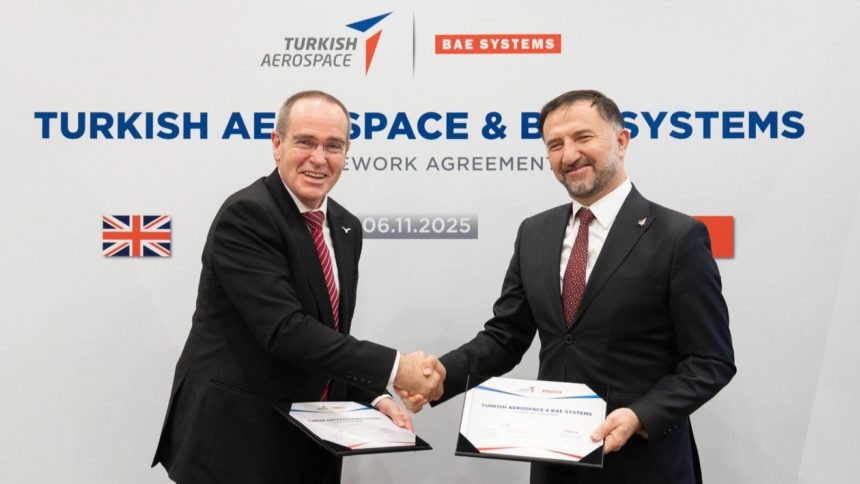
“The $1.18 billion project includes collaboration with BAE Systems and Rolls-Royce for engine development, according to the SSB.”

At the same time, FM Fidan’s latest statements regarding the CAATSA being lifted soon is significant and meaningful, as it will pave the way for f110 engines‘ arrival for serial production.
 

Zafer

Experienced member
Messages
5,120
Reactions
13 7,926
Nation of residence
Turkey
Nation of origin
Turkey
Canada needs a fighter jet, Türkiye almost has Kaan.
This video dude looks at Korea's Boramea as an option.

 
Last edited:

Spitfire9

Contributor
Think Tank Analyst
Messages
914
Reactions
14 1,188
Nation of residence
United Kingdom
Nation of origin
United Kingdom
Canada needs a fighter jet, Türkiye almost has Kaan.
This video dude looks at Korea's Boramea as an option.
In retrospect KF-21 might have been a better option than F-35 for Canada. In view of what has happened, it might have been a better option than F-35 for Turkiye, too.
 
Last edited:

Yasar_TR

Experienced member
Staff member
Administrator
Messages
3,806
Reactions
222 19,677
Nation of residence
United Kingdom
Nation of origin
Turkey
Eurofighter is better than current KF-21. Why even compare KF-21 with F-35?
As you say better than “current” KF-21.
In fact KF-21 is what f35 should have been. A twin engined fighter. For future it needs IWBs and two stealthy indigenous engines and a more powerful domestic Aesa radar with may be a bit more power than the one being produced by Hanwha using ~1000 GaN TR modules. (It needs more than 1500 TR modules, unless KF-21’s radome is the limiting factor for a bigger radar)

In time KF-21 may become what F35 couldn’t. So it is correct to compare it to F35.

The only big advantage of Typhoon is the fact that it is in full production swing and it has established itself. Also the incoming new tranche 4 and 5 versions will have very powerful Aesa radars with extensive EW capabilities. Currently their RCS values are very close to each other. But that will change for the benefit of the Korean Jet as it is evolving. KF-21 has all the necessary geometry in place for a stealth 5th generation fighter jet. It can only get better. Typhoon can’t get any better. It is at the limit of it’s design.

Koreans are going through the strides like we are with KAAN. Except we are a little behind. Also they are putting their bets on the current KF-21 more than we are on Kaan block 10. Our aim is block 20 and more with indigenous engines. We are a bit luckier as the design of KAAN allows IWBs and has a bigger radome.
 

Zafer

Experienced member
Messages
5,120
Reactions
13 7,926
Nation of residence
Turkey
Nation of origin
Turkey
Waiting for Kaan to come online KE and Anka3 should be paired with Hürjet and F16 bringing a degree of stealthiness to the TurAF assets and can even be offered to other users. This can be achieved 2-3 years before Kaan joins the ranks.
 

mehmed beg

Contributor
Messages
458
Reactions
1 528
Nation of residence
United Kingdom
Nation of origin
Bosnia & Herzegovina
Canada needs a fighter jet, Türkiye almost has Kaan.
This video dude looks at Korea's Boramea as an option.

In reality, it could be very wise for some Western countries to join some sort of development of KAAN. That would be the quickest and cheapest way to somewhat close the gap to USA and China and even Russia. But I am not holding my breath.
Someone can't expect from these kinds of the politicians to make rational decision.
Even this maniacal procurement of the weapons, show that they have no pragmatic decisions making abilities. Just panic buying
 

Yasar_TR

Experienced member
Staff member
Administrator
Messages
3,806
Reactions
222 19,677
Nation of residence
United Kingdom
Nation of origin
Turkey
In reality, it could be very wise for some Western countries to join some sort of development of KAAN. That would be the quickest and cheapest way to somewhat close the gap to USA and China and even Russia. But I am not holding my breath.
Someone can't expect from these kinds of the politicians to make rational decision.
Even this maniacal procurement of the weapons, show that they have no pragmatic decisions making abilities. Just panic buying
Bro, that is a a far fetched wish if you ask me. Not all Western countries are humble enough and have the humility to work with a “Muslim” and supposedly “inferior in technology” country like Turkey. Not every western country is a Spain!
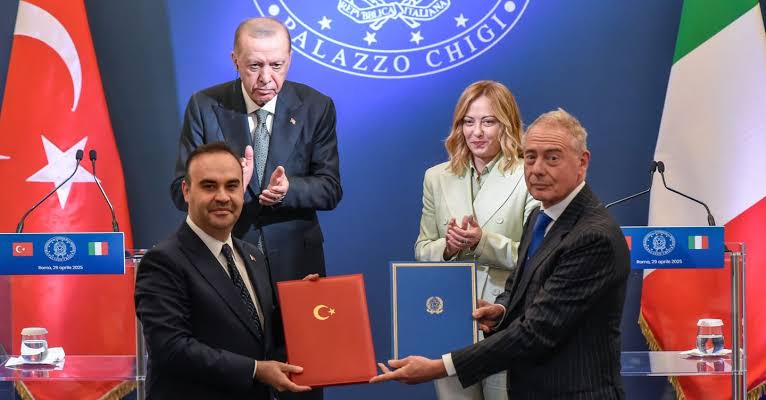
Italy has only started to work with Baykar after a de facto situation that pushed Leonardo in to partnership after Baykar’s purchase of Piaggio.

Just go online and ask Google in any which way for “best supersonic trainer jets” . You will not find Hurjet amongst them. Even Google is biased.

There are still many western technocrats that don’t believe Turkey is capable of serially building a jet fighter. Never mind a stealth jet fighter. You can not overcome this kind of bigotry over night. It will take time. Many people still don’t believe TEI can build a turbofan engine that can propel Kaan jet fighter.
When our Kaan start flying next year multiple times and finally with TF35000, then we may see more of those sceptics coming round and knocking on our doors.
 

IC3M@N FX

Contributor
Messages
517
Reactions
3 23 1,044
Nation of residence
Germany
Nation of origin
Turkey
The knocking is already starting, but people don't say it out loud because they're ashamed... and a bit annoyed that they have to knock because they have to swallow their pride. Mostly Germany has a very big inhibition to take this step.

Turkey <-> UK

Turkey <-> Italy

Turkey <-> Spain

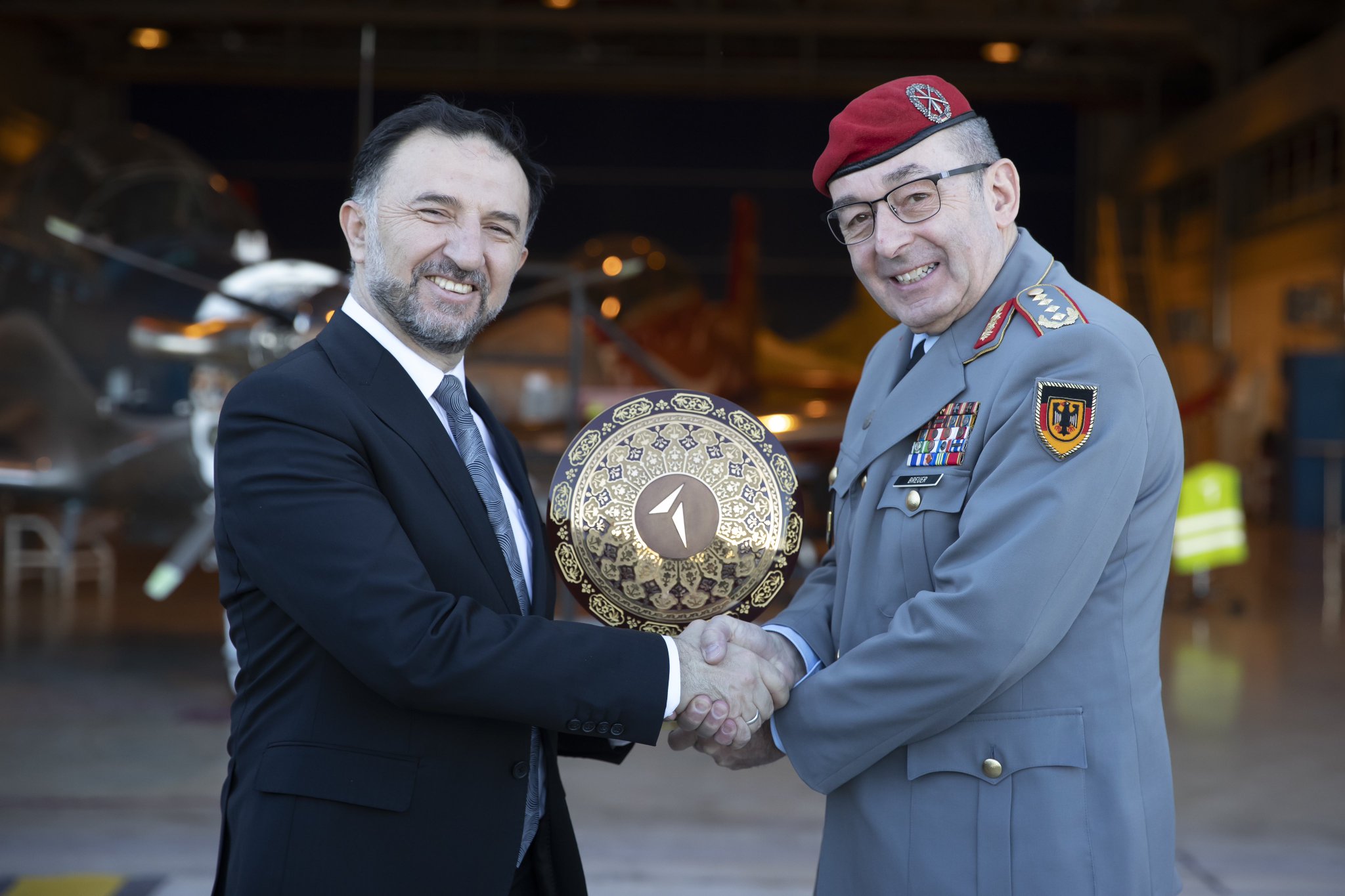
Turkey <-> Germany it's only a matter of time, but they'll get less than everyone else; they haven't behaved like partners.

Turkey <-> France

Even for those who enjoy frog legs, the ice is getting thinner and thinner. Sooner or later, they too will come and abandon the Greeks... Power attracts them.
The French will also play their part, otherwise a European security architecture will be created without them.
 
Last edited:

Huelague

Experienced member
Messages
4,750
Reactions
19 4,874
Nation of residence
Germany
Nation of origin
Turkey
The France/Germany/Spain FCAS programme is reported to be suffering from problems regarding French/German co-operation. If it does not go ahead, might Spain be able to contribute usefully to KAAN (I don't just mean funding) and vice versa? Could there be some kind of synergy? I recall that Spain worked on developing a vectored thrust system for the EJ200 engine for Eurofighter.
Good point. Interestingly the only option to rescue their project is to invite Türkiye in to the project.
 

Huelague

Experienced member
Messages
4,750
Reactions
19 4,874
Nation of residence
Germany
Nation of origin
Turkey
Bro, that is a a far fetched wish if you ask me. Not all Western countries are humble enough and have the humility to work with a “Muslim” and supposedly “inferior in technology” country like Turkey. Not every western country is a Spain!
Italy has only started to work with Baykar after a de facto situation that pushed Leonardo in to partnership after Baykar’s purchase of Piaggio.

Just go online and ask Google in any which way for “best supersonic trainer jets” . You will not find Hurjet amongst them. Even Google is biased.

There are still many western technocrats that don’t believe Turkey is capable of serially building a jet fighter. Never mind a stealth jet fighter. You can not overcome this kind of bigotry over night. It will take time. Many people still don’t believe TEI can build a turbofan engine that can propel Kaan jet fighter.
When our Kaan start flying next year multiple times and finally with TF35000, then we may see more of those sceptics coming round and knocking on our doors.
Every EU country is looking for a strategic partner to counter Russia, as far as they are not in the same boat with Russian. US seems not to be the reliable partner as they were in the past. I can only see one real reliable and strong partner who is not afraid of Russia, with a strong defense industry and geopolitical position and influence.

Sone EU member, especially Germany and other arrogant and Islamophobe countries, who don’t want to see facts, are now not more able to missed hard fact and reality (Realpolitik). Apart from UK, France and Germany(?) who are also able to develop a 6. Gen fighter jet? Maybe a country who develop a 5. Gen fighter jet right now?

Few days ago, I watched a video about German and Türkiye co-operation, on a Bus system. They talked about “Alman bilgi, and Türk zekasi.” This synergy can be very fruitful if they prejudiced wipe aside. Only Political will matters here.
 

Spitfire9

Contributor
Think Tank Analyst
Messages
914
Reactions
14 1,188
Nation of residence
United Kingdom
Nation of origin
United Kingdom
Good point. Interestingly the only option to rescue their project is to invite Türkiye in to the project.
Developing a 5G aircraft must be challenging. Sounds like you suggest adding a 6G, too, at the same time! Sounds like overstretch to me.
 

Follow us on social media

Top Bottom