• Forum restore complete (see latest announcement thread)

TR Air Defence Programs

Pokemonte13

Contributor
Messages
1,163
Reactions
11 2,107
Nation of residence
Germany
Nation of origin
Turkey
there are currently 3 Different patriot missiles in production/service
1. Pac 2 GEM-T: Based on the Pac 2 but has better hit probability against target especially ballistic missiles and use a fragmentation warhead.
2. Pac 3 CRI: (Cost reduction initiativ) Has a reduced range compared to Pac 2 but higher kill probability and is hit to kill and uses a single stage engine and the biggest difference are the attitude control thrusters.
3. Pac 3 MSE: (Missile segment enhancement) Greater Range compared to Pac 3 CRI and better maneuverability and overall systems upgrade plus a dual pulse rocket engine. Very expensive compared to the others and used for high value target (ballistic missiles).
Siper 1 would be closer to aster 30 than patriot.
Siper 2 is closest to Pac 2 GEM-T maybe with a better range and sensors with limited anti ballistic defences against TBM and maybe some SRBM.
Siper 3 is still unclear some say it will be like sm3 others say like Pac 3 MSE. Most likely it will be similar to MSE because, every block enhances to the next level and because its cheaper.
 

mehmed beg

Contributor
Messages
716
Reactions
3 831
Nation of residence
United Kingdom
Nation of origin
Bosnia & Herzegovina
Probably R-77,R-37 or maybe even KS-172.
As I could indeed the article, it was ground based air defence. The whole article was about Russian Air Defences . In reality, the Ukrainians themselves are saying that the main weakness of the Russian PVO is logistics. The system by themselves ain't so bad as it is described nor as good as Russians wants us to believe.
It was S400 or S 300 , it wasn't air to air kill. I am sorry I can't find the article nor I remember the site
 

Yasar_TR

Experienced member
Staff member
Administrator
Messages
4,270
Reactions
258 22,300
Nation of residence
United Kingdom
Nation of origin
Turkey
I don’t see the point or need to find similarities between Russian or US AD systems and ours

S400 is classed as the best long range AD system by certain circles. Yet Ukranian planes are still operating within its effective operating radius. Plus many of them have been taken out. They have only recently started employing Aesa Radar technology on them with their Yenisey Radars.
S400, with the exception of few specific interceptor usage, did not use Aesa; But Pesa Radar technology.

Aster 30 system uses Pif-Paf technology [Pilotage en Force (Thrust Control) and PAF stands for Pilotage Aerodynamique Fort (Strong Aerodynamic Control].
So does the PAC-3MSE. We don’t have any missiles with such control yet.
Since Pac3-MSE is designed to intercept ballistic missiles during their terminal stage, which is comparatively short, it has to have very potent manoeuvring capabilities. Hence the Pif-Paf.

The best complete AD system in the world is claimed to be the Israeli one with it’s related missiles and radars. Yet they don’t have Pif-Paf capable missiles.
They use Barak-8 missiles against 300km range SRBMs.
But they have a very good sensor fusion and network centric system which meet their defence needs. For long range interception they use SM2 and SM3 (arrow) missiles.

We will have to wait until Siper Blocks 2 and 3 come out and show us what they are capable of. We know that Siper 2 has an effective range in excess of 150km at 30km altitude. It has already been tested twice.
Siper 3 will be able to intercept tactical ballistic missiles and SRBMs.
Then an exo atmospheric interceptor needs to be produced.
So until they come out, no point in conjecture.

We are building our Air Defence system gradually and confidently with knowledge gathered and obtained from current live conflicts. So it will be the most valid and relevant system.


MonteCarlo

Committed member
Messages
236
Reactions
5 791
Nation of residence
Turkey
Nation of origin
Turkey
I don’t see the point or need to find similarities between Russian or US AD systems and ours

S400 is classed as the best long range AD system by certain circles. Yet Ukranian planes are still operating within its effective operating radius. Plus many of them have been taken out. They have only recently started employing Aesa Radar technology on them with their Yenisey Radars.
S400, with the exception of few specific interceptor usage, did not use Aesa; But Pesa Radar technology.

Aster 30 system uses Pif-Paf technology [Pilotage en Force (Thrust Control) and PAF stands for Pilotage Aerodynamique Fort (Strong Aerodynamic Control].
So does the PAC-3MSE. We don’t have any missiles with such control yet.
Since Pac3-MSE is designed to intercept ballistic missiles during their terminal stage, which is comparatively short, it has to have very potent manoeuvring capabilities. Hence the Pif-Paf.

The best complete AD system in the world is claimed to be the Israeli one with it’s related missiles and radars. Yet they don’t have Pif-Paf capable missiles.
They use Barak-8 missiles against 300km range SRBMs.
But they have a very good sensor fusion and network centric system which meet their defence needs. For long range interception they use SM2 and SM3 (arrow) missiles.

We will have to wait until Siper Blocks 2 and 3 come out and show us what they are capable of. We know that Siper 2 has an effective range in excess of 150km at 30km altitude. It has already been tested twice.
Siper 3 will be able to intercept tactical ballistic missiles and SRBMs.
Then an exo atmospheric interceptor needs to be produced.
So until they come out, no point in conjecture.

We are building our Air Defence system gradually and confidently with knowledge gathered and obtained from current live conflicts. So it will be the most valid and relevant system.

Is the Thrust control you mention different technology than thrust control vectoring? because afaik all of the hisar missile family has thrust vector control
 

Yasar_TR

Experienced member
Staff member
Administrator
Messages
4,270
Reactions
258 22,300
Nation of residence
United Kingdom
Nation of origin
Turkey
Is the Thrust control you mention different technology than thrust control vectoring? because afaik all of the hisar missile family has thrust vector control
No!
This “PIF” thrust control is done directly by exhaust gasses or something similar to that effect, that are expelled from the body of the missile.
TVC is the system that mechanically diverts nozzle of the rocket motor.
With “PIF”, on the body of the missile there are points from which exhaust gasses are expelled to change direction of the missile. The system blows air or exhaust gases perpendicular to the flight path (PIF) while using traditional fins (PAF) for steering.

PIF and TVC are necessary where air is rare and surface fins are of no use. Like space. TVC alone may not be enough though. Therefore PIF is used to fine tune good “hit-to-kill”.

Aster PIF for lateral thrust. This system utilises some of the exhaust gasses that the rocket motor generates.

1767569892355.jpeg


Pac3-MSE (PIF system in action)
Pac3 system has explosive lateral thrusters that activate at launch or terminal stage to correct direction of flight. Below it is firing to bring missile to a more vertical position.
1767569416599.jpeg

 
Last edited:

Yasar_TR

Experienced member
Staff member
Administrator
Messages
4,270
Reactions
258 22,300
Nation of residence
United Kingdom
Nation of origin
Turkey
And we're still waiting for that, unfortunately...
Although PIF-PAF is a great system that gives advanced agility to interceptor missiles, it is not a must.
Especially within atmosphere applications, TVC and traditional fin systems are more than adequate for fine manoeuvring. Our dual pulse interceptors all use TVC and fins to manoeuvre.

Things get a bit complicated when you start intercepting in rarified atmosphere and in space.

If you check SM-3 Arrow system; you have “Divert and Attitude Control Systems” in play there (DACS). There are at least 10 nozzles as pictured below that are activated in space, as and when needed, to give fine manoeuvring capability to this hit to kill missile.
Each of the 10 or so nozzles have individual throttle capability to adjust the amount of thrust applied in any one direction. This gives very precise manoeuvring.

1767630075131.jpeg


If you investigate the video of the PIF-PAF system operation in PAC-3 missile in my above post, you will find that they utilise multiple explosive solid propellant rocket motors that activate as and when needed.

We have in the past tested our own PIF-PAF like systems under laboratory conditions. But we don’t know the type of exo atmospheric interceptor we will use.

We have seen SM-3 system intercepting Iranian missiles. We may use a similar system.

At the end of the day it will have to be the most economically and technically viable system to suit our needs and respond to the threat level we have around us. I would say wait until Siper Block 3 comes out. The finalised configuration of this block will be for high-altitude ballistic missile interception with the longest range in the family. (Presumably in excess of 200km)
 

Pilatino

Well-known member
Messages
396
Reactions
7 862
Nation of residence
Turkey
Nation of origin
Turkey
Although PIF-PAF is a great system that gives advanced agility to interceptor missiles, it is not a must.
Especially within atmosphere applications, TVC and traditional fin systems are more than adequate for fine manoeuvring. Our dual pulse interceptors all use TVC and fins to manoeuvre.

Things get a bit complicated when you start intercepting in rarified atmosphere and in space.

If you check SM-3 Arrow system; you have “Divert and Attitude Control Systems” in play there (DACS). There are at least 10 nozzles as pictured below that are activated in space, as and when needed, to give fine manoeuvring capability to this hit to kill missile.
Each of the 10 or so nozzles have individual throttle capability to adjust the amount of thrust applied in any one direction. This gives very precise manoeuvring.

View attachment 78919

If you investigate the video of the PIF-PAF system operation in PAC-3 missile in my above post, you will find that they utilise multiple explosive solid propellant rocket motors that activate as and when needed.

We have in the past tested our own PIF-PAF like systems under laboratory conditions. But we don’t know the type of exo atmospheric interceptor we will use.

We have seen SM-3 system intercepting Iranian missiles. We may use a similar system.

At the end of the day it will have to be the most economically and technically viable system to suit our needs and respond to the threat level we have around us. I would say wait until Siper Block 3 comes out. The finalised configuration of this block will be for high-altitude ballistic missile interception with the longest range in the family. (Presumably in excess of 200km)

I'm pretty sure we'll see it on more platforms soon if we really want to pull off multiple reuses like SpaceX, you need super precise control during re-entry and landing.

Roketsan's sounding rocket tests back in 2018-2021 shown the booster separates and then the upper stage does these crazy quick maneuvers using small side thrusters it's basically the same PIF-PAF system from the Aster missiles that lets it pull 60G turns.

Now Roketsan is pushing MUFS toward real orbital launches, the Somalia spaceport is coming along fast, and Baykar's Fergani etc.

I can feel that that's just around the corner especially if Siper Block 3 will have a big booster at its back similar to aster then we haven't got much choice due to the design (tvc vs booster at the back dilemma) so I can count this as another proof.
 

Sanchez

Experienced member
Moderator
Think Tank Analyst
DefenceHub Diplomat
Messages
4,181
Reactions
125 19,013
Nation of residence
Turkey
Nation of origin
Turkey
KORKUT 140/35 Very Short Range Air Defense System

There's talk of a continued order for VSHORAD systems. I think we can say that new Korkut like systems will be on the Arma 8x8, or an equivalent 8x8. Otokar and Aselsan have a great working relationship but number of Otokar vehicles to enter KKK inventory in the last 5 years I believe is less than 20, including the single Yener, few Urals for the Hisar-O batteries.

Both Altuğ and Alpha should be able to integrate the Korkut turret without any problems whatsoever anyhow. If KKK wants these new wheeled SPAAGs for defense of mechanized units, it's just better to integrate them on Altuğ or Alpha, for easier maintenance.
 

boredaf

Experienced member
Messages
2,265
Solutions
1
Reactions
42 6,641
Nation of residence
United Kingdom
Nation of origin
Turkey
There's talk of a continued order for VSHORAD systems. I think we can say that new Korkut like systems will be on the Arma 8x8, or an equivalent 8x8. Otokar and Aselsan have a great working relationship but number of Otokar vehicles to enter KKK inventory in the last 5 years I believe is less than 20, including the single Yener, few Urals for the Hisar-O batteries.

Both Altuğ and Alpha should be able to integrate the Korkut turret without any problems whatsoever anyhow. If KKK wants these new wheeled SPAAGs for defense of mechanized units, it's just better to integrate them on Altuğ or Alpha, for easier maintenance.
Alpha has Korkut turret included in their variants, so, that would make sense.
 

Attachments

  • 1706698086_kare-pars-alpha-8x8-korkut-kule.jpg
    1706698086_kare-pars-alpha-8x8-korkut-kule.jpg
    45.6 KB · Views: 100

Pokemonte13

Contributor
Messages
1,163
Reactions
11 2,107
Nation of residence
Germany
Nation of origin
Turkey
Gürz with extra jammers and Gökberk laser
1767895213338.png

Standard Gürz with different radar placement and sungur
1767895304201.png

Standard Gürz
1767895400328.png

Gürz with different radar placement as well as eo gimbal and new (FCR)?
1767895680514.png
 

Huelague

Experienced member
Messages
5,379
Reactions
19 5,410
Nation of residence
Germany
Nation of origin
Turkey
I like the „new“ vehicle more. By the way, Korkut turret should be more improved, a smaller and flatter one, less bulky.
 

Sanchez

Experienced member
Moderator
Think Tank Analyst
DefenceHub Diplomat
Messages
4,181
Reactions
125 19,013
Nation of residence
Turkey
Nation of origin
Turkey
One thing about air defence is that as we've recently seen, is that you'll never have too many.

Old trusty Bofors still has a place in this day and age, but sadly it's still very much one of the most numerous systems we have available for the VSHORAD role. We need 30x the amount of 35mm systems we now have.


boredaf

Experienced member
Messages
2,265
Solutions
1
Reactions
42 6,641
Nation of residence
United Kingdom
Nation of origin
Turkey
One thing about air defence is that as we've recently seen, is that you'll never have too many.

Old trusty Bofors still has a place in this day and age, but sadly it's still very much one of the most numerous systems we have available for the VSHORAD role. We need 30x the amount of 35mm systems we now have.

I agree, you can never have enough air defence and AA cannons proved that they are far more effective and efficient against drones and low flying targets. However, at least we learned something from Syria as we started modernising our aa cannons far earlier than other countries. They only realised that after war in Ukraine turned into a drone slinging match, news about France modernising theirs only came up last summer for example.

But yeah, we definitely need more. And we really need powerful laser systems to protect critical infrastructure in cities where it is far too dangerous for aa guns.
 

UkroTurk

Experienced member
Land Warfare Specialist
Professional
Messages
2,960
Reactions
61 5,292
Nation of residence
Turkey
Nation of origin
Turkey
I like the „new“ vehicle more. By the way, Korkut turret should be more improved, a smaller and flatter one, less bulky.
Is it compact enough?

İf Americans have prefered 30mm cal, so it means the cal is okay against today's threats.
1768156104965.jpeg


1768156535596.jpeg

Or this turret with missiles.
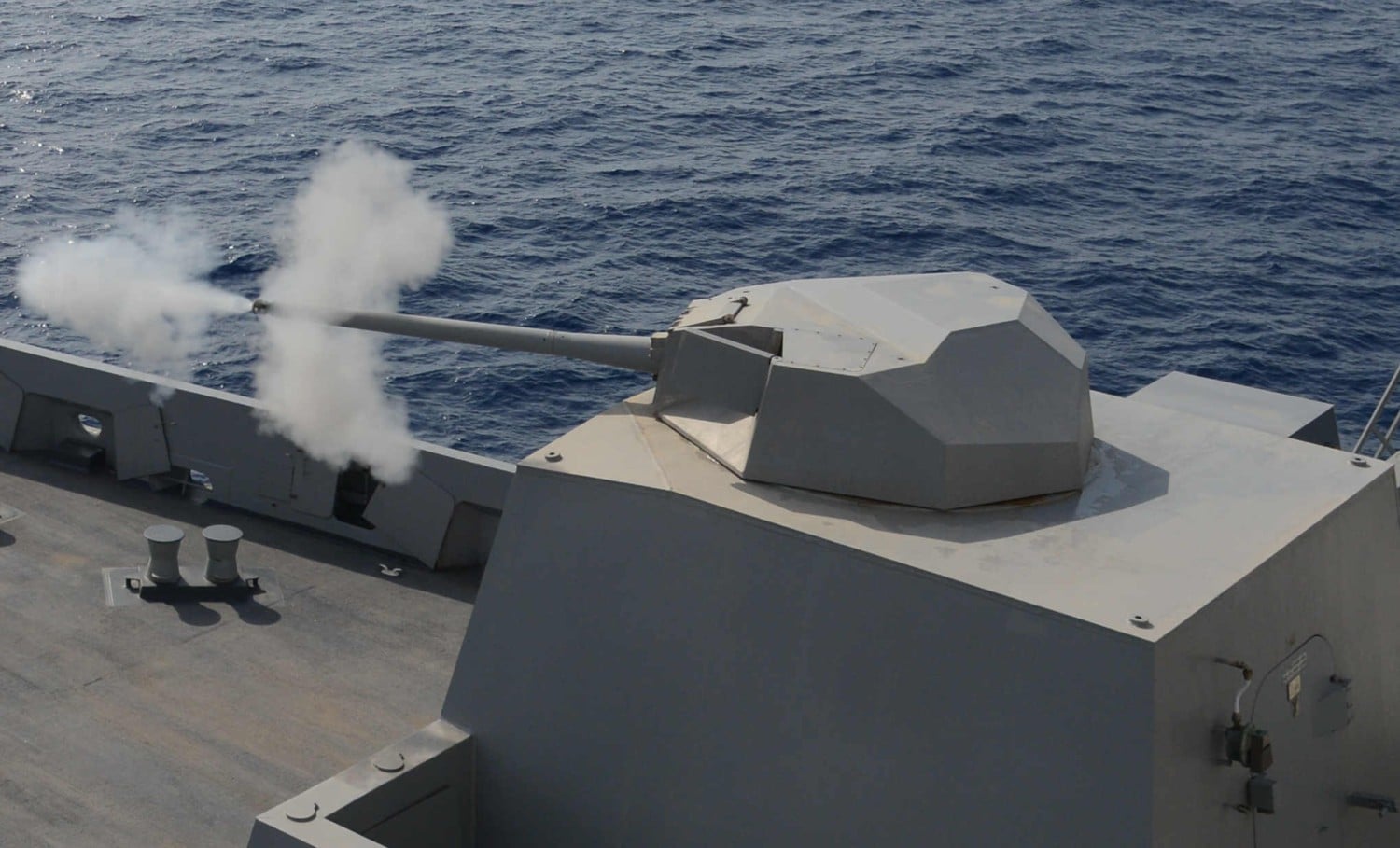
I would love to see 3x such turret on every warship.
 
Last edited:

Follow us on social media

Top Bottom