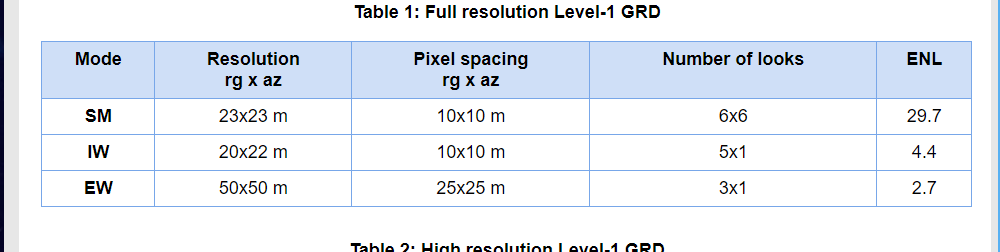
your answer reads like chatgpt. please use it as much as you desire(hell, i must be reading over 50 prompts daily) but don't paste it directly here. it is so obvious for the initiated. i already blocked a few people here for their incessant abuse(despite several warnings). i've never seen you doing it before. so please don't go that way.The point about cloud cover is valid but this is a sensor fusion game where you combine optic sensors and SAR, the latter of which is not affected by clouds. For example, you can even now use ESA's Sentinel-1 to get free SAR data if the optical Sentinel-2 suffers from cloud cover. You definitely don't need humongous antennae either. Modern SAR satellites like ICEYE and Capella have 3-5 meter deployable reflectors and still get 0.25–1 m resolution through clouds.
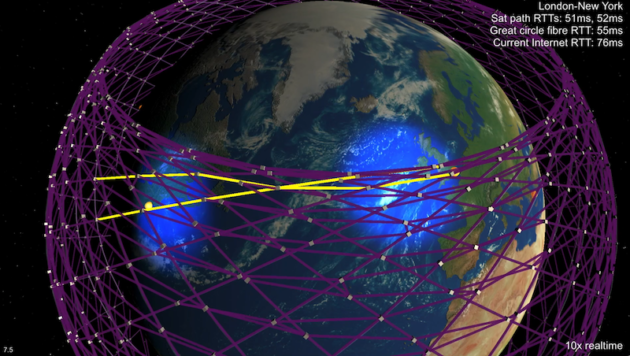
With regards to orbits, you would actually want to stay in low earth orbit and have a constellation for this type of task so that you shorten revisit times to minutes. Starlink has proven this type of density is feasible technically. If you were to go to geosynchronous orbit, you sacrifice a lot of geospatial resolution simply because you are that high up. This is why most observation satellites (except for meteorology) are at low earth orbit.
So, in theory, with a large enough LEO constellation combining SAR and optical (including NIR and other relevant infrared bands) and some efficient computer vision algorithms, you can detect stealth jets. It comes down to cost and engineering effort, but I bet somebody will do it in the end. In Turkey's case the areas you want to monitor are not that large (seas around us and Syria), so it should be quite doable at some time in the future if there is a will.
to counter your last point, it does not matter if Turkey is big or as small as Vatican. that's not how LEO works. if you want constant coverage you need a constellation. and a LEO constellation cannot be regional, it has to be global. you can limit the constellation to lower latitudes and save some satellites from venturing the poles but, again, the satellites won't be stationary and will circle the earth.