From Shahed to LUCAS: How Iran’s drone doctrine is reshaping American warfare — Phar Kim Beng
(New users only) Unlock 5.5%* + 10%* p.a. promo rate for 3 months
via Versa and enjoy FREE RM10 & when you sign up using code VERSAMM10 with min. cash of RM100 today! T&Cs apply.
Thursday, 26 Mar 2026 3:25 PM MYT
MARCH 26 — The evolution of modern warfare is often driven not by imitation of strength, but by adaptation to vulnerability.
In the unfolding contest between Iran and the United States, this dynamic is now unmistakably clear.
According to multiple reports, including those highlighted by CNN, the American LUCAS drone is, in part, a response modelled on the operational logic of Iran’s Shahed-136 loitering munition.
This is not mere technological borrowing. It is strategic acknowledgment.
For decades, the United States has dominated warfare through precision, sophistication, and overwhelming technological superiority.
Yet the rise of the Shahed-136 has exposed a critical weakness in this model: cost asymmetry. A drone that costs tens of thousands of dollars can compel the use of interceptor systems worth millions.
In doing so, it flips the traditional calculus of power on its head.
The Shahed-136 is deceptively simple.
With its delta-wing design, modest speed, and GPS-based navigation, it lacks the elegance of high-end Western systems. But its strength lies in its ability to be produced cheaply and deployed in large numbers.
Launched in swarms, these drones overwhelm air defences not through precision, but through persistence and volume.
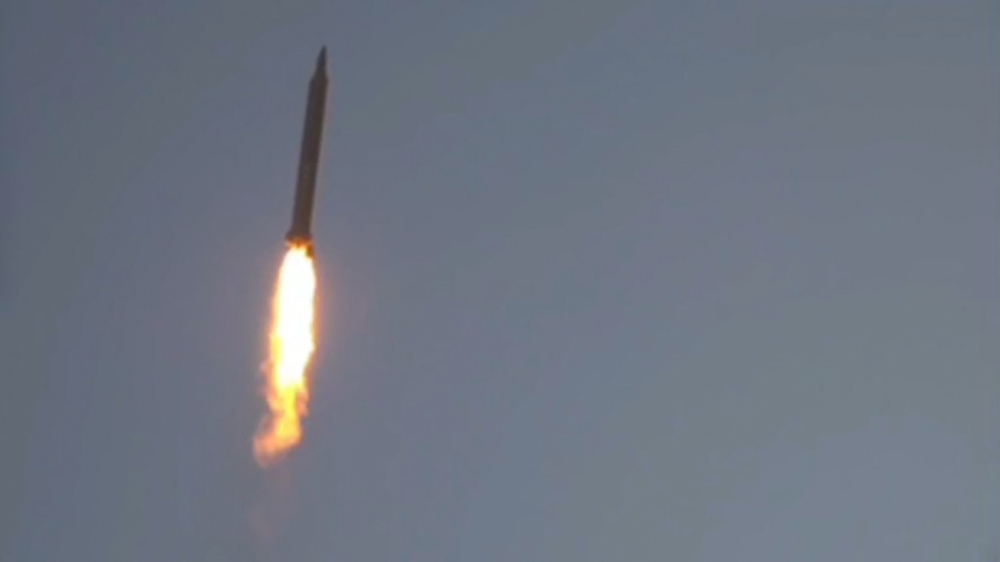
This video grab taken from handout footage released by the Iranian Revolutionary Guard Corps (IRGC) on March 21, 2026, appears to show what it describes as the launch of “the 72nd wave” of missiles carried out against Israeli targets. — AFP pic
This is warfare by attrition — industrial, relentless, and psychologically unsettling.
The distinctive buzzing sound of the Shahed has become synonymous with anticipation and dread, a reminder that even low-tech systems can exert high-impact effects.
It is precisely this logic that the United States has now begun to internalise.
The LUCAS drone represents a significant doctrinal shift.
Rather than relying exclusively on expensive missile defence systems, Washington is embracing the principle that to defeat cheap drones, one must deploy equally cheap — or cheaper — countermeasures. In essence, LUCAS reflects a move toward cost parity and scalable defence.
If the Shahed-136 embodies a strategy of saturation, LUCAS is designed to enable counter-saturation.
Unlike traditional interceptors, LUCAS is not meant to operate in isolation. It is part of a broader ecosystem of low-cost, autonomous systems capable of working in coordination.
These drones can loiter in contested airspace, detect incoming threats, and neutralise them through kinetic interception, proximity detonation, or electronic disruption.
The key advantage lies in numbers.
By deploying multiple LUCAS units, the United States can create a layered defence that mirrors the swarm tactics employed by Iran. In doing so, it restores a degree of economic balance to the battlefield.
Yet the implications of this shift go far beyond the technical.
What is emerging is a new paradigm of warfare in which the decisive factor is no longer the sophistication of individual platforms, but the ability to produce and sustain large quantities of functional systems.
In this environment, innovation is measured not only by technological advancement, but by affordability and scalability.
The United States, in modelling aspects of LUCAS on the Shahed concept, is effectively acknowledging that the future of warfare will be defined by this balance.
It is a rare instance where a superpower adapts to the methods of a regional actor—not out of weakness, but out of necessity.
Still, caution is warranted. The existence of LUCAS does not eliminate the threat posed by the Shahed-136. No defensive system can guarantee complete interception, particularly against large-scale swarm attacks.
The very nature of saturation ensures that some drones will penetrate defences, potentially causing significant damage.
Moreover, Iran’s decentralised command structures and distributed launch capabilities complicate efforts to neutralise these systems at their source.
Even in the face of sustained countermeasures, the capacity to produce and deploy Shahed drones remains a formidable challenge.
For South-east Asia, the lessons are immediate and sobering.
As a region heavily dependent on maritime trade and critical infrastructure, Asean cannot afford to ignore the rise of low-cost drone warfare.
The vulnerability of energy facilities, ports, and shipping lanes to such threats is no longer theoretical. The Strait of Malacca, in particular, represents a potential flashpoint where similar tactics could be employed to disrupt global commerce.
Malaysia, as a trading state with significant exposure to global supply chains, must therefore think beyond traditional defence paradigms. Investments in high-end platforms, while still necessary, must be complemented by the development of cost-effective counter-drone capabilities.
This includes not only technological solutions, but also regional cooperation in surveillance, intelligence sharing, and rapid response.
The broader strategic lesson is clear. Power in the twenty-first century is increasingly defined by adaptability.
The ability to learn from adversaries, to absorb their methods, and to innovate in response is becoming as important as technological superiority itself.
In this sense, the Shahed-136 has achieved something remarkable.
It has compelled the United States to rethink its approach to warfare—not by defeating it directly, but by exposing the limitations of its existing model.
The emergence of LUCAS is thus more than a technical development.
It is a symbol of a changing era — one in which the lines between imitation and innovation blur, and where even the most advanced militaries must adapt to the logic of the battlefield.
In the end, the hum of the Shahed has not only echoed across conflict zones.
It has reverberated through the halls of American defence planning, prompting a transformation that may well define the future of war.
And in that transformation, the lesson is unmistakable: sometimes, to win, one must first learn from the enemy.
* Phar Kim Beng, PhD is the Professor of Asean Studies at International Islamic University of Malaysia and Director of Institute of International and Asean Studies (IINTAS).
MARCH 26 — The evolution of modern warfare is often driven not by imitation of strength, but by adaptation to vulnerability.In the unfolding contest between Iran and the United...

www.malaymail.com