• Forum restore complete (see latest announcement thread)

TR Turkiye's F-35 Project and Discussions

Strong AI

Experienced member
Messages
2,825
Reactions
62 10,233
Nation of residence
Germany
Nation of origin
Turkey
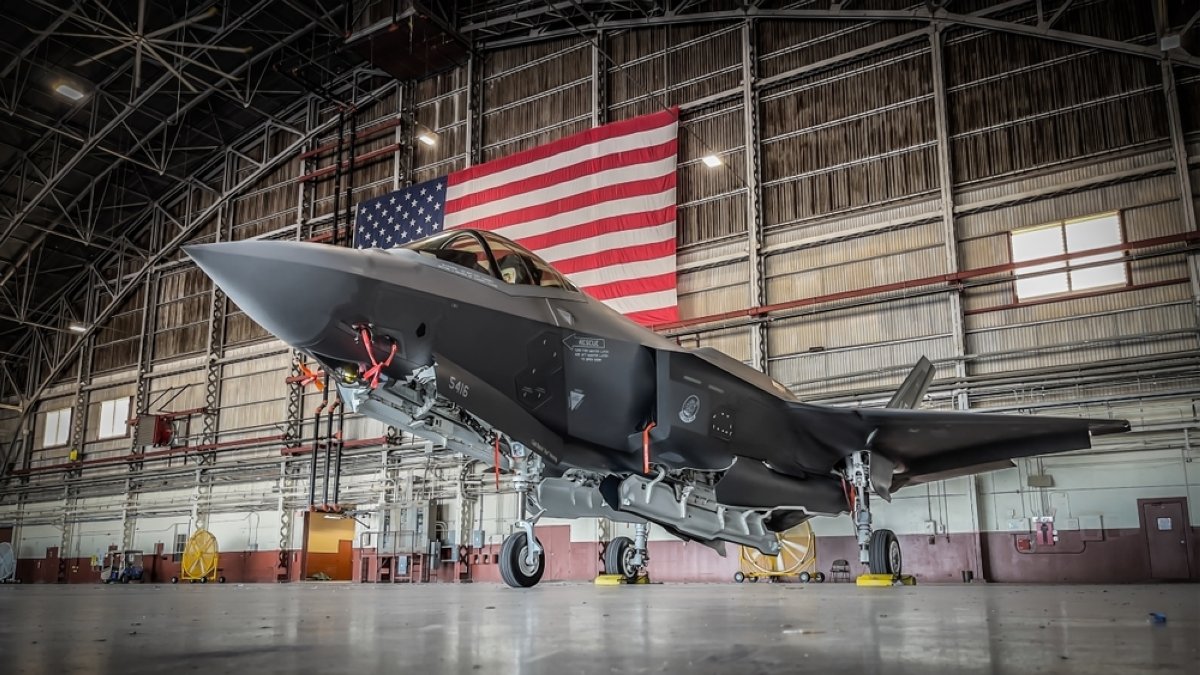
Hulusi Akar's Message on the S-400 and F-35 in Washington: "Turkey Will Return to the Production Program"

Hulusi Akar, Chairman of the National Defense Commission of the Grand National Assembly of Turkey, made noteworthy statements regarding Turkey's discussions with the United States on the S-400 air defense system and the F-35 program.

Speaking in Washington, Akar answered questions from M5 Washington Correspondent Anıl Sural.

Responding to questions about the F-35 program and the S-400 systems, Akar also stated that a positive atmosphere had emerged in Turkey-U.S. relations following the NATO Summit.

Akar said that the members of Congress he met with in Washington also expressed positive views about the outcomes of the summit. He added that the technical and operational work regarding the S-400 issue would be carried out by the relevant ministries.

Commenting on the process, Akar said:

"The parties are working to achieve concrete progress, and hopefully we will reach a good point. These are, of course, technical studies, operational work, and efforts carried out by the ministries. Congress is not involved in this process. We left the meetings with the impression that there are no remaining obstacles on this issue."

"Turkey Will Return to the Production Program"

Hulusi Akar also made important remarks regarding Turkey's participation in the F-35 program.

When asked by Sural about the status of the F-35 fighter jets that had been produced for Turkey but not delivered, and how the process would move forward following statements by U.S. President Donald Trump, Akar emphasized that Turkey is not merely a buyer but also one of the program's production partners.

Highlighting Turkey's role in the F-35 program, Akar stated that the process would continue within the framework of the program, saying:

"We are returning to the program. We are not simply an F-35 purchaser. We have responsibilities in the program, including manufacturing components, and we will fulfill those responsibilities. Therefore, this is a program, and we will continue our work."

Akar also commented on the overall atmosphere of his meetings in Washington, stating that the NATO Summit had been highly successful for relations among NATO, the United States, and Turkey.

He added that a new period had begun within NATO, with new approaches and initiatives coming onto the agenda, and emphasized that contacts between Turkey and the United States on defense and security issues are continuing.


Turkic

Well-known member
Messages
316
Reactions
5 615
Nation of residence
Turkey
Nation of origin
Turkey
Hulusi Akar's Message on the S-400 and F-35 in Washington: "Turkey Will Return to the Production Program"

Hulusi Akar, Chairman of the National Defense Commission of the Grand National Assembly of Turkey, made noteworthy statements regarding Turkey's discussions with the United States on the S-400 air defense system and the F-35 program.

Speaking in Washington, Akar answered questions from M5 Washington Correspondent Anıl Sural.

Responding to questions about the F-35 program and the S-400 systems, Akar also stated that a positive atmosphere had emerged in Turkey-U.S. relations following the NATO Summit.

Akar said that the members of Congress he met with in Washington also expressed positive views about the outcomes of the summit. He added that the technical and operational work regarding the S-400 issue would be carried out by the relevant ministries.

Commenting on the process, Akar said:

"The parties are working to achieve concrete progress, and hopefully we will reach a good point. These are, of course, technical studies, operational work, and efforts carried out by the ministries. Congress is not involved in this process. We left the meetings with the impression that there are no remaining obstacles on this issue."

"Turkey Will Return to the Production Program"

Hulusi Akar also made important remarks regarding Turkey's participation in the F-35 program.

When asked by Sural about the status of the F-35 fighter jets that had been produced for Turkey but not delivered, and how the process would move forward following statements by U.S. President Donald Trump, Akar emphasized that Turkey is not merely a buyer but also one of the program's production partners.

Highlighting Turkey's role in the F-35 program, Akar stated that the process would continue within the framework of the program, saying:

"We are returning to the program. We are not simply an F-35 purchaser. We have responsibilities in the program, including manufacturing components, and we will fulfill those responsibilities. Therefore, this is a program, and we will continue our work."

Akar also commented on the overall atmosphere of his meetings in Washington, stating that the NATO Summit had been highly successful for relations among NATO, the United States, and Turkey.

He added that a new period had begun within NATO, with new approaches and initiatives coming onto the agenda, and emphasized that contacts between Turkey and the United States on defense and security issues are continuing.


If no obstacles were to put ahead, how fast could return to the program be?
 

YeşilVatan

Contributor
Messages
799
Reactions
16 1,996
Nation of residence
Turkey
Nation of origin
Turkey
If no obstacles were to put ahead, how fast could return to the program be?
Kubilay Yıldırım says production facilities and personnel that would be directed towards F-35 are now doing other stuff, civilian or indigenous military projects. Those are finite resources so this means some of it must be redirected.

If KAAN gets sidelined even %1 I'm going to be royally pissed.
 

Zafer

Experienced member
Messages
5,617
Reactions
15 8,671
Nation of residence
Turkey
Nation of origin
Turkey
Kubilay Yıldırım says production facilities and personnel that would be directed towards F-35 are now doing other stuff, civilian or indigenous military projects. Those are finite resources so this means some of it must be redirected.

If KAAN gets sidelined even %1 I'm going to be royally pissed.
Look how we went up to making 50 military ships simultaneously. So we can expand in the aviation field too. However we should limit the puchase of F35 fighters to a small number like 35 or so. We want to have and sell Kaan as our primary goal.
 

Pokemonte13

Contributor
Messages
1,082
Reactions
11 1,992
Nation of residence
Germany
Nation of origin
Turkey
Look how we went up to making 50 military ships simultaneously. So we can expand in the aviation field too. However we should limit the puchase of F35 fighters to a small number like 35 or so. We want to have and sell Kaan as our primary goal.
not a fair comparison. We already had civil naval capacity we didn't expand but made use of it. Our aviation field is currently full and would require heavy investment to expand and it is unlikely we will return as a producer at most we will integrate some of our weapons and maybe that original engine maintenance center
 

Zafer

Experienced member
Messages
5,617
Reactions
15 8,671
Nation of residence
Turkey
Nation of origin
Turkey
not a fair comparison. We already had civil naval capacity we didn't expand but made use of it. Our aviation field is currently full and would require heavy investment to expand and it is unlikely we will return as a producer at most we will integrate some of our weapons and maybe that original engine maintenance center
We are already investing in aviation, we can aswell invest more. There will be other benefits of investing more. We can possibly enter civil aviation and create lots of high paying jobs. Also all the supporting technologies become more affordable as you scale up. And this is only the industrial/economical aspects.
 
Last edited:

dBSPL

Experienced member
Think Tank Analyst
DefenceHub Ambassador
Messages
2,866
Reactions
123 14,491
Nation of residence
Turkey
Nation of origin
Turkey
Kubilay Yıldırım says production facilities and personnel that would be directed towards F-35 are now doing other stuff, civilian or indigenous military projects. Those are finite resources so this means some of it must be redirected.

If KAAN gets sidelined even %1 I'm going to be royally pissed.
Hulusi Akar's latest statement in Washington has shifted this debate from "will it happen" to "how and how fast." Akar said Türkiye is returning to the program, that it is not merely a buyer but a production partner and will fulfil its manufacturing responsibilities, and that the process is now being handled as technical work at the ministry level rather than through Congress. No formal agreement has been signed and the delivery timeline is still unclear, so I am not claiming full certainty here, but the scenario has moved from "if we return" to "what happens when we return."

The capacity strain does not have to fall on TUSAŞ or ASELSAN specifically. TUSAŞ's composite and assembly facilities are likely already occupied by indigenous manned jets and unmanned systems like ANKA-3; investment in new production lines is already underway. Alp Havacılık, on the other hand, runs the 5-axis titanium CNC centres and specialised furnaces currently working for civil aviation majors and indigenous engine projects; since Türkiye is set to move into serial production on several turbofan engine programs over the next 10-15 years, these facilities already have to sustain a capacity expansion curve regardless of F-35 demand, so that investment trend continues either way. Labour-intensive sub-suppliers such as Fokker Elmo could adapt relatively fast given the flexibility of their wiring (EWIS) infrastructure, simply by adding personnel.

I think the real bottleneck could land on ASELSAN and HAAVELSAN. Based on official statements, the S-400 issue now appears to be heading toward resolution through bilateral technical cooperation, so I am assuming the main obstacle to ODIN integration will be resource allocation rather than security clearance. Both institutions' engineering capacity is currently focused on KAAN's fully indigenous avionics and cyber architecture; re-integrating into the US-controlled ODIN software ecosystem for F-35 would mean diverting part of that capacity. Since MİKES was folded into ASELSAN and its separate legal entity dissolved, that accumulated expertise has likely shifted toward the Steel Dome air defense project and KAAN/UCAV radar and jammer systems. But, If Türkiye's F-35 Integrated Training Center were re-established domestically, HAVELSAN's adaptation there would probably be fast enough, since the company is now a global-scale player in this field.

Worth flagging separately is the potential tension with KAAN's export narrative. KAAN has so far been positioned both as an alternative free of F-35's political constraints (end-user restrictions, third-party transfer vetoes) and, in official statements, explicitly as a platform meant to outperform the F-35. If Türkiye returns as a full F-35 user, reconciling those two messages, building an independent and superior platform while simultaneously rejoining a competitor's program, becomes a communications question in its own right. This has no direct bearing on technical capacity, but it is not a point should leave out.

The other side of the coin is the crisis on the US end. The program is going through one of the largest sustainment crises in its history, with sub-suppliers unable to keep up with parts demand and mission-capable rates falling; the Fort Worth assembly line has a backlog of aircraft missing components. According to reports from the US Government Accountability Office (GAO), a core driver of this is that spare parts producers cannot keep pace with depot-level maintenance demand. So the JSF program is currently in an unnamed logistics crisis of its own; Türkiye's return should be discussed from a point of mutual need rather than a one-sided "they need us" framing.

The assessment below of which new players could help resolve this crisis is entirely my own projection, not based on any official talks or leaks. Coşkunöz's publicly known work producing mid-fuselage assembly groups for South Korea's KF-21 program and for civil aviation suggests, in my view, that it could take on production of fuselage support panels in TUSAŞ's place. REPKON's flowforming and shearforming technology could offer a meaningful time advantage over conventional machining for engine rotor shafts and precision fuselage parts, though I cannot back a specific percentage with a source. SDT's data-link and telemetry infrastructure, built for KAAN and indigenous munitions, looks like a capability that could translate to F-35 cockpit data storage units and ACMI pods. Kale Arge's development of turbojet engines like the KTJ-3200 suggests it could take on a role in small heat-resistant F135 engine components. PAVOTEK's power distribution systems and avionics enclosures could similarly provide hardware support to Fokker Elmo's wiring processes. None of this reflects a confirmed supply agreement; these are reasonable pairings I am inferring from existing capabilities. As we move down the pyramid, more examples can be given.

The real constraint is neither money nor machinery, but qualified engineering hours. Türkiye's pool of certified engineers and technicians able to produce to AS9100 standards is limited, and training and certifying new personnel typically takes more than a year. If TUSAŞ and ASELSAN take on a significant share of F-35 work, they may have to pull senior staff off KAAN and HÜRJET to hold the delivery schedule, the classic Brooks's Law problem, where adding workload to an already-running project slows it down further. In the short term that is an operational shock risk. If that shock is managed well, the gains are lasting: the additional CNC machines and composite autoclaves bought for F-35 stay in the factory afterward. It would be wrong to frame zero-defect discipline as something F-35 brings to TUSAŞ, since TUSAŞ already ran one of the most flawless F-16 production lines in the world before this, and KAAN is the product of that decades-long track record; the real gain is not the discipline itself but the added global supply-chain experience and the expansion in logistics scale.

Furthermore, we are not entirely inexperienced in such processes; on the contrary, we probably represent the most successful and unique example in the world. The section below on how TUSAŞ and Kale Havacılık adapted F-35 infrastructure for KAAN is also largely my own inference; public sources do not go into this level of internal engineering detail, so it should be read as "this is probably how it played out" rather than confirmed fact. My assumption is that the autoclave lines and automated fiber placement robots set up for F-35 were reprogrammed for KAAN's fuselage production, but that because KAAN is larger and twin-engine unlike the F-35, the robots' software and fixtures had to be re-engineered from scratch. Kale Havacılık's shift from applying F-35's landing gear blueprints to drawing KAAN's own schematics may be a similar case of this transformation. If that inference holds, KAAN's move to the prototype stage would probably have taken longer had Türkiye not been part of the F-35 program, but I am presenting that as a cautious assessment rather than a firm counterfactual claim.

In the end, the deciding variable is volume and timing. If the return proceeds on a phased, controlled schedule, the financial leverage and infrastructure gains will dominate and strengthen national projects over the long run. If the US loads Turkish industry with a sudden, high-volume order to solve its own parts crisis, the short-term operational shock and the drain of senior personnel could delay KAAN's own schedule. Akar's statement indicates the process has now become ministry-level technical work, which points toward a phased approach being on the table, but how that translates into a concrete timeline will depend on the technical delegation talks in the coming months.
 
Last edited:

Turkic

Well-known member
Messages
316
Reactions
5 615
Nation of residence
Turkey
Nation of origin
Turkey
Work force in defence industry is up by ~20 thousand in 5 years between 2020 (75k+) and 2025 (100k).

As per companies, Aselsan went from ~8k to ~16k (2020-2026)
Tusaş from ~9k to ~16k (2020-2026)

Is the number of engineers and technicians really a bottleneck for major ex-JSF production partners? The only bottleneck I see is TEI but they were not alone with Kale being an important partner in F-135. Also there's one more thing: Return to the production would need technicians more than engineers. Or am I wrong?
 

Zafer

Experienced member
Messages
5,617
Reactions
15 8,671
Nation of residence
Turkey
Nation of origin
Turkey
Backing up the US with F35 production is a major deal that will only help the US. I would expect some side benefits to us to compensate our contribution. A microelectronics endeavor cooperation would be fitting.
 

Samba

Committed member
Messages
247
Reactions
3 410
Nation of residence
Turkey
Nation of origin
Turkey
Backing up the US with F35 production is a major deal that will only help the US. I would expect some side benefits to us to compensate our contribution. A microelectronics endeavor cooperation would be fitting.
What i think about the change of US stance in the matter has two aspects:

1. Slow down Rurkish development of KAAN and T35K engine.

2. Help US arms procurement amd sales fasten.

None helps us much...
 

Zafer

Experienced member
Messages
5,617
Reactions
15 8,671
Nation of residence
Turkey
Nation of origin
Turkey
Rurkish > you just coined a new word for Russo-Turk.

I don't think this move will slow down our Kaan efforts. We will only grow bigger with this. We will make Kaan in record time and we will also have our hand in F35 supply. We can gauge what we give and what we take.
 

boredaf

Experienced member
Messages
2,237
Solutions
1
Reactions
42 6,588
Nation of residence
United Kingdom
Nation of origin
Turkey
According to Arda Mevlütoğlu this is related to CAATSA/F-35

A related development. If Turkey is preparing to give Ukraine an offensive weapon system, especially a tactical ballistic missile like ATACMS, it means "things" have changed quite a bit.

We have given them offensive weapons well before yanks did, and I'm not just talking about small stuff. We gave Ukraine cluster bombs before they did, as well as given them TR(L)G-230 before Himars, we just never announced them like the others did. Most of what we have given only came to light after either Ukrainian soldiers photographed or videoed them while using, or, when Russians captured them.

Pursuant to section 3(d) of the Arms Export Control Act, please find enclosed a certification of a proposed transfer of major defense equipment with an original acquisition value of approximately $ 255,900,000. The transaction described in the attached certification involves the permanent transfer of (12) M270 Multiple Launch Rocket System (MLRS) launchers, (2,524) M26 unguided Dual-Purpose Improved Conventional Munitions (DPICM) rockets, and (47,000) M509AI 203mm DPICM howitzer rounds to the Government of Ukraine via Turkish private entities MKE AS¸ , ASFAT AS¸ , and ARCA Savunma San. Tic. AS¸ ; Bulgarian private entity VTIC International Ltd.; and U.S. private entities Pansophico and Patriot Defense Group. This transfer is consistent with U.S. security assistance objectives. The United States government is prepared to authorize this transfer, having taken into account political, military, economic, human rights, and arms control considerations. Detailed information is contained in the attached certification.

(4) The Reasons for the Proposed Transfer: Turkiye seeks to reduce its inventory of older defense articles to focus its financial resources on modernization and sustainment of existing systems. Ukraine seeks to acquire these systems to bolster its offensive and defense fire support capabilities as it resists the Russian invasion. Ukraine already possesses munitions of the same or essentially similar type. (5) Date Transfer is Proposed to be Made: Immediately after the congressional notification period is complete. (6) Date Notification was Delivered to Congress: August 3, 2026.

We are selling fuck ton of munitions alongside as well.
 

Huelague

Experienced member
Messages
5,343
Reactions
19 5,388
Nation of residence
Germany
Nation of origin
Turkey
We have given them offensive weapons well before yanks did, and I'm not just talking about small stuff. We gave Ukraine cluster bombs before they did, as well as given them TR(L)G-230 before Himars, we just never announced them like the others did. Most of what we have given only came to light after either Ukrainian soldiers photographed or videoed them while using, or, when Russians captured them.


We are selling fuck ton of munitions alongside as well.
'Clash-Report' has published a very detailed paper, what exactly we gave to Ukraine. It was a lot.
 

Fatman17

Experienced member
Moderator
Defence News Editor
Pakistan Moderator
Messages
1,787
Reactions
13 1,639
Nation of residence
Pakistan
Nation of origin
Pakistan
Seven Turkish American organizations urged the lawmakers in the U.S. Congress in a letter to support the sale of F-35 fighter jets to Türkiye and lift Countering American Adversaries Through Sanctions Act (CAATSA) sanctions imposed on the country.

"As a NATO ally of nearly seventy-five years and a frontline security and diplomatic partner, the Republic of Türkiye's continued access to U.S. defense systems serves core American strategic interests, and we respectfully ask you to support pending sales of U.S. F-35 fighter jets and remove unnecessary sanctions and obstacles to this cooperation," the letter said.

 
Last edited by a moderator:

nick.f76

Active member
Messages
37
Reactions
1 2 71
Nation of residence
Greece
Nation of origin
Greece

Will Greece be able to control the F-35 software?
One of the biggest questions surrounding Greece's acquisition of the F-35 isn't about stealth, radar, or the missiles they'll be able to carry. It's about something much harder to see with the naked eye: who really controls the software that makes the aircraft what it is.
Because the F-35 is not just a fighter jet with a powerful engine and an advanced radar. It is essentially a flying computer, in which software determines a huge part of its capabilities. Sensor processing, data fusion, electronic warfare, threat recognition, weapons management and a large part of the pilot's operational picture depend on it.
And here lies the big question for Greece: when we receive our own F-35As, will we really be able to decide for ourselves what they will do, modify their software, and install whatever we want? Or will we still be dependent on the United States for critical upgrades and data?
The answer is much more complex than a simple "yes" or "no."
It's Not Just a Simple Aircraft
To first understand the problem, we need to separate two things that are often confused: the software of the aircraft itself and the mission data it uses.
The F-35 has an extremely complex sensor system. The AESA radar, Distributed Aperture System, electro-optical system and electronic warfare systems collect vast amounts of information. The aircraft must then process it, correlate it and present it to the pilot as a clear picture of the battlefield as possible.
This is the famous sensor fusion.

But for the F-35 to recognize that a particular signal may come from an enemy radar or air defense system, it needs data. And that's where Mission Data Files come in.
Mission Data Files, or MDFs, contain information about the electromagnetic environment, threats, and other data that helps the aircraft understand what it sees and hears. The US side itself has explained that this data allows the F-35 to detect, recognize, correlate, and engage threats across the entire electromagnetic spectrum.
So, having the plane doesn't automatically mean you have absolute control over everything it knows and can do.

And this is extremely important for Greece.
Greece signed the Letter of Offer and Acceptance in 2024 for the supply of 20 F-35A, with the right for another 20 aircraft, while the first delivery is expected by the Greek Ministry of National Defense from 2028.
The US approval of the potential sale includes, among other things, software, technical data, training, electronic warfare systems, support and other services required to operate the system. However, the same document classifies some of the data as classified and explains that certain technological information cannot be made public because it could allow an adversary to develop countermeasures.
And here we must be very careful.

There is no publicly documented statement from the United States that simply says that “allies do not know all the capabilities of the F-35.” What there is, however, is something much more interesting: the program involves classified capabilities and different levels of access to software, data, and technical information.
In other words, the fact that a country is an F-35 operator does not automatically mean that it gains access to the source code or every technical detail of the system.

This has been evident for years. The American program has maintained control of the F-35’s core software, while the countries that operate the aircraft have developed different types of capabilities around the system.
The typical example is the United Kingdom, which as a key partner in the program has secured a particularly high level of participation and operational dominance. But even the closest partners do not operate as if they have bought the source code of a commercial computer and can freely change it.

This is also the most important point for Greece.
Greece will be able to operate its F-35s, integrate them into its own chain of command, plan missions and use their available capabilities. However, this does not mean that it will be able to unilaterally open the code and change the way the aircraft's basic systems operate.
The F-35 may have extremely advanced sensors, but its effectiveness also depends on how well it knows the environment in which it is going to operate.

That is why Mission Data Files are created.
Australia and the United Kingdom have jointly established a Reprogramming Laboratory at Eglin Air Force Base in Florida. This laboratory develops, tests and validates Mission Data Files for the F-35s of these countries. In 2024, Australia, Canada and the United Kingdom strengthened their cooperation in this area, creating 80 Squadron for this specific mission.

This shows us something very important.
F-35 countries can gain a real and meaningful ability to adapt their mission data to their own operational needs, without this meaning that they write the basic software of the aircraft from scratch.

Australia, for example, has invested in advanced sovereign mission data reprogramming capabilities and in its own support systems, precisely to increase its national autonomy.
And this is the model that is of real interest to Greece.

The ideal scenario is not necessarily for Athens to have the full source code of the F-35. That would be extremely difficult and is not the operating model of the program.
The real challenge is for Greece to be able to create, control and manage as much of the national mission data as possible, to have trained personnel, infrastructure and a secure process so that the Greek F-35s can be adapted to Greek operational needs.

For a country like Greece, which is located in a particularly demanding environment in the Aegean and Eastern Mediterranean, this may be almost as important as the aircraft market itself.
But there is a second level of dependency: major upgrades.

The F-35 continues to evolve. Block 4 is a massive modernization effort with new capabilities in weapons, electronic warfare, target recognition, and other systems. Technology Refresh 3, or TR-3, is a key technological foundation for many of these future capabilities.

And here we see in practice that software is now as critical as metal.

The US Government Accountability Office has recorded significant delays in the TR-3 and Block 4. According to the 2025 report, the reduced Block 4 program is expected to be completed in 2031 at the earliest, about five years later than originally planned, while several capabilities are being pushed even further into the future.

So when Greece receives its first F-35s, it will not be buying a “final” aircraft that will remain the same for 30 years.
It will buy a platform that will continue to evolve through software, hardware and new capabilities.

And that means that Greece’s operational autonomy will not only depend on what the contract says about the 20 or 40 aircraft. It will depend on how much access the Greek side will have to the data, the infrastructure, the technical support, the training and, most importantly, the ability to adapt the system to its own needs.
There is also an important myth that needs to be dispelled.

There is no publicly documented “switch” that Washington can simply flip and stop the Greek F-35s from flying. The real dependency is more complex and far more serious: spare parts, maintenance, technical support, certified upgrades, software, Mission Data Files, and the entire global support infrastructure.
This has been recognized for years by other countries. Australian parliamentary committees have expressed concerns that reliance on the global support system, ALIS and mission data could affect Australia’s sovereign ability to decide when, where and how to use its F-35 capability.
So, what is the answer to the title question?

Greece is not going to have complete, absolute ownership over every line of code in the F-35. It will not be able to open the core software and freely modify the way the radar, electronic warfare systems, or sensor fusion work.
However, it can gain a significant degree of operational autonomy, provided it invests in the right infrastructure and gains greater capabilities to manage its own Mission Data Files, mission, training and support.

And this is perhaps the most accurate picture of the Greek F-35.
They will neither be “American aircraft that Greece is simply borrowing,” nor fully independent Greek systems.

They will be Greek F-35s within an American-controlled global ecosystem.

And the real strategic value for Greece will be determined by how much of this ecosystem it will be able to control on its own.

Because ultimately, in the F-35, the most important thing you buy is not just the aircraft.

You are buying access to a vast network of sensors, software, data, weapons, support, and information.

And in a future war, the one who controls the data and can update it faster than the opponent may have an advantage that is not visible in the fighter’s external appearance or its price.

 

boredaf

Experienced member
Messages
2,237
Solutions
1
Reactions
42 6,588
Nation of residence
United Kingdom
Nation of origin
Turkey

Will Greece be able to control the F-35 software?
One of the biggest questions surrounding Greece's acquisition of the F-35 isn't about stealth, radar, or the missiles they'll be able to carry. It's about something much harder to see with the naked eye: who really controls the software that makes the aircraft what it is.
Because the F-35 is not just a fighter jet with a powerful engine and an advanced radar. It is essentially a flying computer, in which software determines a huge part of its capabilities. Sensor processing, data fusion, electronic warfare, threat recognition, weapons management and a large part of the pilot's operational picture depend on it.
And here lies the big question for Greece: when we receive our own F-35As, will we really be able to decide for ourselves what they will do, modify their software, and install whatever we want? Or will we still be dependent on the United States for critical upgrades and data?
The answer is much more complex than a simple "yes" or "no."
It's Not Just a Simple Aircraft
To first understand the problem, we need to separate two things that are often confused: the software of the aircraft itself and the mission data it uses.
The F-35 has an extremely complex sensor system. The AESA radar, Distributed Aperture System, electro-optical system and electronic warfare systems collect vast amounts of information. The aircraft must then process it, correlate it and present it to the pilot as a clear picture of the battlefield as possible.
This is the famous sensor fusion.

But for the F-35 to recognize that a particular signal may come from an enemy radar or air defense system, it needs data. And that's where Mission Data Files come in.
Mission Data Files, or MDFs, contain information about the electromagnetic environment, threats, and other data that helps the aircraft understand what it sees and hears. The US side itself has explained that this data allows the F-35 to detect, recognize, correlate, and engage threats across the entire electromagnetic spectrum.
So, having the plane doesn't automatically mean you have absolute control over everything it knows and can do.

And this is extremely important for Greece.
Greece signed the Letter of Offer and Acceptance in 2024 for the supply of 20 F-35A, with the right for another 20 aircraft, while the first delivery is expected by the Greek Ministry of National Defense from 2028.
The US approval of the potential sale includes, among other things, software, technical data, training, electronic warfare systems, support and other services required to operate the system. However, the same document classifies some of the data as classified and explains that certain technological information cannot be made public because it could allow an adversary to develop countermeasures.
And here we must be very careful.

There is no publicly documented statement from the United States that simply says that “allies do not know all the capabilities of the F-35.” What there is, however, is something much more interesting: the program involves classified capabilities and different levels of access to software, data, and technical information.
In other words, the fact that a country is an F-35 operator does not automatically mean that it gains access to the source code or every technical detail of the system.

This has been evident for years. The American program has maintained control of the F-35’s core software, while the countries that operate the aircraft have developed different types of capabilities around the system.
The typical example is the United Kingdom, which as a key partner in the program has secured a particularly high level of participation and operational dominance. But even the closest partners do not operate as if they have bought the source code of a commercial computer and can freely change it.

This is also the most important point for Greece.
Greece will be able to operate its F-35s, integrate them into its own chain of command, plan missions and use their available capabilities. However, this does not mean that it will be able to unilaterally open the code and change the way the aircraft's basic systems operate.
The F-35 may have extremely advanced sensors, but its effectiveness also depends on how well it knows the environment in which it is going to operate.

That is why Mission Data Files are created.
Australia and the United Kingdom have jointly established a Reprogramming Laboratory at Eglin Air Force Base in Florida. This laboratory develops, tests and validates Mission Data Files for the F-35s of these countries. In 2024, Australia, Canada and the United Kingdom strengthened their cooperation in this area, creating 80 Squadron for this specific mission.

This shows us something very important.
F-35 countries can gain a real and meaningful ability to adapt their mission data to their own operational needs, without this meaning that they write the basic software of the aircraft from scratch.

Australia, for example, has invested in advanced sovereign mission data reprogramming capabilities and in its own support systems, precisely to increase its national autonomy.
And this is the model that is of real interest to Greece.

The ideal scenario is not necessarily for Athens to have the full source code of the F-35. That would be extremely difficult and is not the operating model of the program.
The real challenge is for Greece to be able to create, control and manage as much of the national mission data as possible, to have trained personnel, infrastructure and a secure process so that the Greek F-35s can be adapted to Greek operational needs.

For a country like Greece, which is located in a particularly demanding environment in the Aegean and Eastern Mediterranean, this may be almost as important as the aircraft market itself.
But there is a second level of dependency: major upgrades.

The F-35 continues to evolve. Block 4 is a massive modernization effort with new capabilities in weapons, electronic warfare, target recognition, and other systems. Technology Refresh 3, or TR-3, is a key technological foundation for many of these future capabilities.

And here we see in practice that software is now as critical as metal.

The US Government Accountability Office has recorded significant delays in the TR-3 and Block 4. According to the 2025 report, the reduced Block 4 program is expected to be completed in 2031 at the earliest, about five years later than originally planned, while several capabilities are being pushed even further into the future.

So when Greece receives its first F-35s, it will not be buying a “final” aircraft that will remain the same for 30 years.
It will buy a platform that will continue to evolve through software, hardware and new capabilities.

And that means that Greece’s operational autonomy will not only depend on what the contract says about the 20 or 40 aircraft. It will depend on how much access the Greek side will have to the data, the infrastructure, the technical support, the training and, most importantly, the ability to adapt the system to its own needs.
There is also an important myth that needs to be dispelled.

There is no publicly documented “switch” that Washington can simply flip and stop the Greek F-35s from flying. The real dependency is more complex and far more serious: spare parts, maintenance, technical support, certified upgrades, software, Mission Data Files, and the entire global support infrastructure.
This has been recognized for years by other countries. Australian parliamentary committees have expressed concerns that reliance on the global support system, ALIS and mission data could affect Australia’s sovereign ability to decide when, where and how to use its F-35 capability.
So, what is the answer to the title question?

Greece is not going to have complete, absolute ownership over every line of code in the F-35. It will not be able to open the core software and freely modify the way the radar, electronic warfare systems, or sensor fusion work.
However, it can gain a significant degree of operational autonomy, provided it invests in the right infrastructure and gains greater capabilities to manage its own Mission Data Files, mission, training and support.

And this is perhaps the most accurate picture of the Greek F-35.
They will neither be “American aircraft that Greece is simply borrowing,” nor fully independent Greek systems.

They will be Greek F-35s within an American-controlled global ecosystem.

And the real strategic value for Greece will be determined by how much of this ecosystem it will be able to control on its own.

Because ultimately, in the F-35, the most important thing you buy is not just the aircraft.

You are buying access to a vast network of sensors, software, data, weapons, support, and information.

And in a future war, the one who controls the data and can update it faster than the opponent may have an advantage that is not visible in the fighter’s external appearance or its price.
Are you lost? This has nothing to do with us.
 
Top Bottom