• Forum restore complete (see latest announcement thread)

TR UAV/UCAV Programs | Anka - series | Kızılelma | TB - series

Rodeo

Contributor
DefenceHub Diplomat
Messages
1,330
Reactions
31 5,069
Nation of residence
Turkey
Nation of origin
Turkey
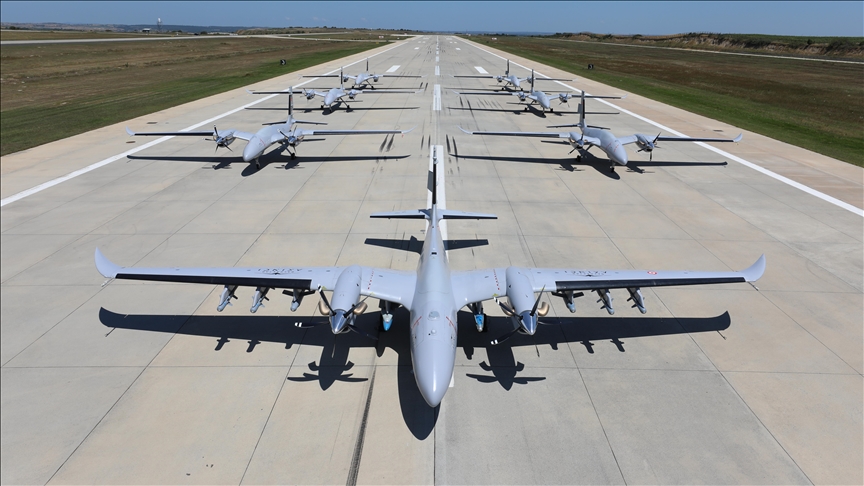
This is AKINCI
thumbs_b_c_64f77d2806e6a5d332a1b3bce7c48701.jpg


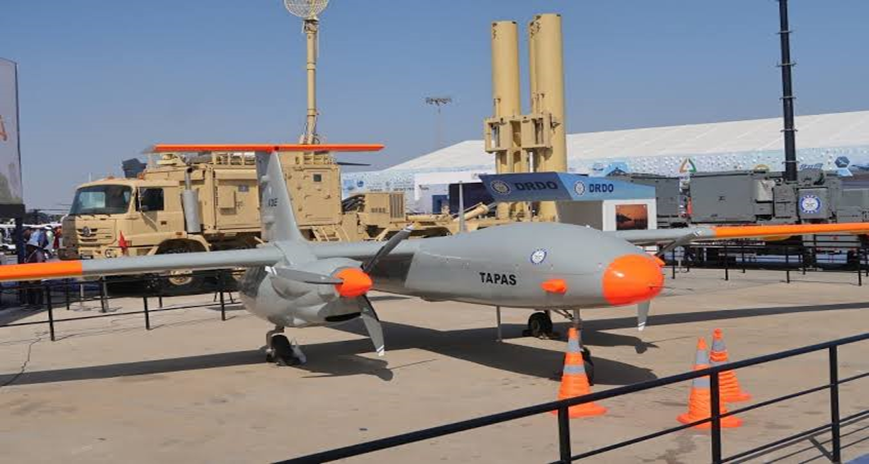
This is TAPAS, which is targeting approximately the same spec range of ANKA-I, let alone AKINCI.
image-2.png


And this is the last situation it was seen

Design efforts, and test have been ongoing for years, and it is uncertain how long they will continue, while AKINCI gained combat proven status years ago.
It's not excessive. ANKA, too, crashed two times during its development.
 

Sanchez

Experienced member
Moderator
Think Tank Analyst
DefenceHub Diplomat
Messages
4,195
Reactions
127 19,057
Nation of residence
Turkey
Nation of origin
Turkey
This is AKINCI


This is TAPAS, which is targeting approximately the same spec range of ANKA-I, let alone AKINCI.


And this is the last situation it was seen


Design efforts, and test have been ongoing for years, and it is uncertain how long they will continue, while AKINCI gained combat proven status years ago.
Unlike Akıncı, Tapas is twin Rotax powered, similar to Aksungur. Though it does indeed look similar to Anka per payload capacity.

It's pretty much wrong this was its 2nd test flight though. In june, they announced its 200th test flight.
 

dBSPL

Experienced member
Think Tank Analyst
DefenceHub Ambassador
Messages
2,871
Reactions
123 14,521
Nation of residence
Turkey
Nation of origin
Turkey
It's not excessive. ANKA, too, crashed two times during its development.
Well, That was not the nuance here. This aircraft program has a spec range at the MALE level that positions it as an alternative to US manufacturers, and mostly as an alternative system to Turkish products. The main user will be the armed forces of the producer country, but it is being actively marketed to foreign markets. Armenia is one of these countries.

The system made its maiden flight in 2016. In 2016, the TB-2 was demonstrating its operational capability, and some MALE class advanced models such as the ANKA-S and ANKA-intelligence had become operational. In the intervening seven years, Baykar has added the KE to AKINCI, while TAI has completed the ANKA-2 and is counting the days for the ANKA-3. All these are state-of-the-art productions with less manpower and despite much less outsourcing probably on avionics side.

The system made its maiden flight in 2016. After seven years, uncertainties still remain in front of the project. This latest test accident is just the latest link in this chain. I think no one is sure whether this aircraft will still be operational. DRDO, and I don't know the legal basis of the project, but maybe the defense ministry can solve this problem by adding more resources. India has high military ambitions and living the dream of the next superpower, which is the vision of many Indian defense enthusiasts. But this vision is only valid if you can overcome resource planning problems in all areas of defense and aerospace and not have to sacrifice some specific areas. Otherwise, the scale in real is just comparable with some regional defense industry buildup like TR, or Korea. You can have ICBMs, but in return, if your competition in conventional systems is as far away as possible from the superpowers, at that point, the North Korean leadership has also the capability of intercontinental reach.

The million-dollar question here is whether it is easier for successful defense and aerospace ecosystems in conventional systems to access capabilities for strategic assets in the face of security paranoia, or whether it is more challenging for a country that is already on the other wing to put its conventional capabilities into a certain workable structure in a situation where it will be isolated from external support.

For TR, the political cost of a declaratory entry into ICBM and related warheads could be very high and disruptive atm. Instead, however, TR can continue its development by using paradigm shifts in conventional warfare systems, aiming for leadership in some specific areas. In the near future, when TR will overcome of any critical aspect of foreign dependence, the same industrial infrastructure's transition to strategic systems will be suddenly.

What I want to show is that Turkiye is not far from India in terms of military instruments and related industrial infrastructure, and with far fewer resources and manpower, it would not be difficult to compete with it in almost everything.
 

B_A

Contributor
Messages
1,134
Reactions
4 1,282
Nation of residence
Turkey
Nation of origin
Turkey
Well, That was not the nuance here. This aircraft program has a spec range at the MALE level that positions it as an alternative to US manufacturers, and mostly as an alternative system to Turkish products. The main user will be the armed forces of the producer country, but it is being actively marketed to foreign markets. Armenia is one of these countries.

The system made its maiden flight in 2016. In 2016, the TB-2 was demonstrating its operational capability, and some MALE class advanced models such as the ANKA-S and ANKA-intelligence had become operational. In the intervening seven years, Baykar has added the KE to AKINCI, while TAI has completed the ANKA-2 and is counting the days for the ANKA-3. All these are state-of-the-art productions with less manpower and despite much less outsourcing probably on avionics side.

The system made its maiden flight in 2016. After seven years, uncertainties still remain in front of the project. This latest test accident is just the latest link in this chain. I think no one is sure whether this aircraft will still be operational. DRDO, and I don't know the legal basis of the project, but maybe the defense ministry can solve this problem by adding more resources. India has high military ambitions and living the dream of the next superpower, which is the vision of many Indian defense enthusiasts. But this vision is only valid if you can overcome resource planning problems in all areas of defense and aerospace and not have to sacrifice some specific areas. Otherwise, the scale in real is just comparable with some regional defense industry buildup like TR, or Korea. You can have ICBMs, but in return, if your competition in conventional systems is as far away as possible from the superpowers, at that point, the North Korean leadership has also the capability of intercontinental reach.

The million-dollar question here is whether it is easier for successful defense and aerospace ecosystems in conventional systems to access capabilities for strategic assets in the face of security paranoia, or whether it is more challenging for a country that is already on the other wing to put its conventional capabilities into a certain workable structure in a situation where it will be isolated from external support.

For TR, the political cost of a declaratory entry into ICBM and related warheads could be very high and disruptive atm. Instead, however, TR can continue its development by using paradigm shifts in conventional warfare systems, aiming for leadership in some specific areas. In the near future, when TR will overcome of any critical aspect of foreign dependence, the same industrial infrastructure's transition to strategic systems will be suddenly.

What I want to show is that Turkiye is not far from India in terms of military instruments and related industrial infrastructure, and with far fewer resources and manpower, it would not be difficult to compete with it in almost everything.
Actually UCAV is a very difficult area,Japanese,British,French spent many year without result.
 

Afif

Experienced member
Moderator
Bangladesh Correspondent
DefenceHub Diplomat
Bangladesh Moderator
Messages
5,139
Reactions
104 10,047
Nation of residence
Bangladesh
Nation of origin
Bangladesh
Any serious discussion about Long term Turkish defence ambitions cannot be done without mentioning the Nukes and ICBMs, and the conventional assumption always seems to be, you need nukes to deter nukes.
However, the self evident hurdle of tremendous political and economic cost that would come with any meaningful attempt to developing global strategic strike capability, is what prevent us.

Globalisation and the unprecedented connectivity and interdependence made the use of nuclear weapon very unlikely. Until 1999 the public and expert consensus seems was, nuclear armed nations cannot fight any war short of nuclear escalation, However, Kargil conflict showed us Nuclear power can fight conventional war without climbing up the escalation ladder. And today, PRC and USA with its allies decisively preparing for a large scale conventional war in Indo-pacific if Cold War 2.0 ever turns into hot war. However, for the above mentioned reasons the threat of nuclear escalation is considerably laser than what it used to be in second half of the 20th century.

But nevertheless, an effective deterrence capability against nuclear armed adversaries is still the holy grail of any Nation state. And it will continue to remain so. While the cost in pursuit of such ambition is tremendous, Türkiye or any Nation that value its existential security cannot avoid this in the long run.

While acquiring credible nuclear deterrence of our own could be the ultimate goal, but considering the cost, in short and medium term it is not practical.

Perhaps crossing beyond the realm of conventional thinking 'you need nukes to deter nukes' we can take a new approach.

Well, not entirely new but the public discourse largely forgot about the other dimensions of WMD. In particular, biological weapon of mass destruction.

It doesn’t require billion dollar multiple enrichment plants, decade long expensive delivery systems development process. (ICBM, SLBM and SSBN)

And more important of all, with adequate measures, the main hurdle of tremendous economic and political cost that comes with nuclear weapon development can be avoided.

Because it can be done by handful of genius scientists in a relatively small lab. Thus, it is practically possible to keep the program completely secret.


And for minimum deterrence, It is not necessary to publicly issue the threat of Biological WMD. It is enough to let know the political and military leadership of nuclear armed adversaries of the biological WMD that you posses. But if any tense strategic stand off require, public disclosure of your capability is within option.

Even though strategic Nuclear global reach is still the most prized possession, the irony here is that United States can actually shoot down handful of ICBM launched by a small of medium power, thus, putting the credibility of small/medium power's retaliatory capability at risk, but there is no stopping the Biological weapon of mass destruction. It does not require missiles or the conventional means for its delivery. Nor can it be neutralised by a massive 'First Strike'.

“A biological attack could conceivably result in large numbers of civilian casualties and cause severe disruption to economic and societal infrastructure.

A nation or group that can pose a credible threat of mass casualty has the ability to alter the terms under which other nations or groups interact with it. When indexed to weapon mass and cost of development and storage, biological weapons possess destructive potential and loss of life far in excess of nuclear, chemical or conventional weapons. Accordingly, biological agents are potentially useful as strategic deterrents, in addition to their utility as offensive weapons on the battlefield.”


I wonder why nobody thinks along these lines these days. I would really like hear our esteemed member’s opinion on this. @dBSPL @Sanchez et al.


Edit- I just realised this discussion is not suitable for this thread. Maybe any of the mods could move in some place more suitable.

 
Last edited:

Sanchez

Experienced member
Moderator
Think Tank Analyst
DefenceHub Diplomat
Messages
4,195
Reactions
127 19,057
Nation of residence
Turkey
Nation of origin
Turkey
Turkey won't get nukes until the day a nuclear power threatens Turkish sovereignty. US is not that because they don't go flailing around screaming nukes a la 50s. Russia is not that because NATO. Israel also isn't because their posture is wholly defensive or actively defensive, and even at his most MB heavy days, Erdogan never went ahead threatening Israeli existence. Iran could be in the future. I believe Turkey will get nukes within 5 years of Iran getting theirs at the latest, whenever that happens.

For chemical and biological weapons, we don't do the dirty stuff. We never did, not even in WW1. I doubt we will do so in the future. Size of our economy and geopolitical position allow us to be too big to kill. It would change the balance of everything in Eurasia. For anything smaller, we got a bigass army and a pretty long reach when we need it.
 

Heartbang

Experienced member
Messages
2,588
Reactions
9 4,035
Nation of residence
Turkey
Nation of origin
Turkey
I believe Turkey will get nukes within 5 years of Iran getting theirs at the latest
Too long of a timeframe, we should be working on it NOW.
For chemical and biological weapons, we don't do the dirty stuff.
Perhaps we should, since deterrence in the space of chemical and biological weapons doesn't work like nuclear deterrence.
Nuclear explosions are infinitely more flashy(ha!) events, with everyone knowing who packs what, its more likely a party that uses nukes won't be able to dodge the consequences.
But a competent biological attack is near-untraceable. Thus exponentially increasing the chances of an attack.

In short: M.A.D doctrine is incompatible with chemical and biological weapons. You either have them or you WILL get rekt by them.
 

AWP

Contributor
Messages
795
Reactions
6 1,617
Nation of residence
Canada
Nation of origin
Palestine
You could extend the question by asking, why doesn't MQ9 have the cover?

Seriously why ? and why the Predator-C have it while others don't ?

the reason of me asking about Akinci because a variant of Akinci will be an air superiority drone, so the RCS will matter in this case.
 

Sanchez

Experienced member
Moderator
Think Tank Analyst
DefenceHub Diplomat
Messages
4,195
Reactions
127 19,057
Nation of residence
Turkey
Nation of origin
Turkey
Big mistake thinking like that. Tell that all the big empires that died. Nukes are a must. There is no "to big to fail/die" never was and never will.

Too long of a timeframe, we should be working on it NOW.

Perhaps we should, since deterrence in the space of chemical and biological weapons doesn't work like nuclear deterrence.
Nuclear explosions are infinitely more flashy(ha!) events, with everyone knowing who packs what, its more likely a party that uses nukes won't be able to dodge the consequences.
But a competent biological attack is near-untraceable. Thus exponentially increasing the chances of an attack.

In short: M.A.D doctrine is incompatible with chemical and biological weapons. You either have them or you WILL get rekt by them.
I'm not saying what should happen. I'm saying what will happen. Turkey won't go for nukes before Iran reaches missile quality nukes. I don't have any idea on a possible Turkish program. Also don't know if there are guarantees by others or anything. Just that if need be they will spend %10 of GDP in a year to get them, any way possible. We don't do preventative maintenance lol.

Turkey also won't go for biological or chemical weapons. I also don't agree on the deterrence provided by such weapons being important. All users of it either also have nukes or are failed states, for a reason.
 

Sanchez

Experienced member
Moderator
Think Tank Analyst
DefenceHub Diplomat
Messages
4,195
Reactions
127 19,057
Nation of residence
Turkey
Nation of origin
Turkey
And I'm saying, in my opinion, its wrong. :/
My brother in Allah, we can't even clear Tal Rıfat from terrorists. Our economy is not closed off and is fully dependent on imports and exports. Turkey literally going rogue with a nuclear program is one way to lose at least 50% of your economy in a year. We can't afford to go nuclear before a clear present danger is in front of us that we can show others that we need it as well to exist as a state. Think of it like a casus belli.

And we muddied up this thread long enough.
 

LIbyan Soldier

Active member
Libya Correspondent
Messages
97
Reactions
5 289
Nation of residence
Libya
Nation of origin
Libya
Unlike Akıncı, Tapas is twin Rotax powered, similar to Aksungur. Though it does indeed look similar to Anka per payload capacity.

It's pretty much wrong this was its 2nd test flight though. In june, they announced its 200th test flight.
Why is Anka not famous as tb2 ? Although it is better in terms of payload and range
 

Agha Sher

Experienced member
DefenceHub Diplomat
Messages
2,909
Reactions
14 9,764
Nation of residence
Denmark
Nation of origin
Afghanistan
Why is Anka not famous as tb2 ? Although it is better in terms of payload and range
It is a lot more expensive and not a dispensable asset. Anka played a crucial role in the Syria campaign enabling TB2 to operate.

Also, I think ownership plays a role. TAI being a state-owned company was not ready to capitalize on the success of the Syria campaign commercially. On top, TAI has a lot more important projects to focus on than marketing and selling Anka. Baykar on the other hand must sell TB2 and now Akinci to survive as a company, hence they are a lot more aggressive commercially and more agile to exploit opportunities.
 

Zafer

Experienced member
Messages
5,659
Reactions
15 8,712
Nation of residence
Turkey
Nation of origin
Turkey
Why is Anka not famous as tb2 ? Although it is better in terms of payload and range
TB2 is compact and easier for ground handling while Anka is large and cumbersome for handling which matters for quick turnaround. Also Anka needs a ground radar for landing while TB2 doesn't afaik.
 

Bürküt

Contributor
Defence News Editor
Messages
1,174
Reactions
61 2,182
Nation of residence
Turkey
Nation of origin
Turkey

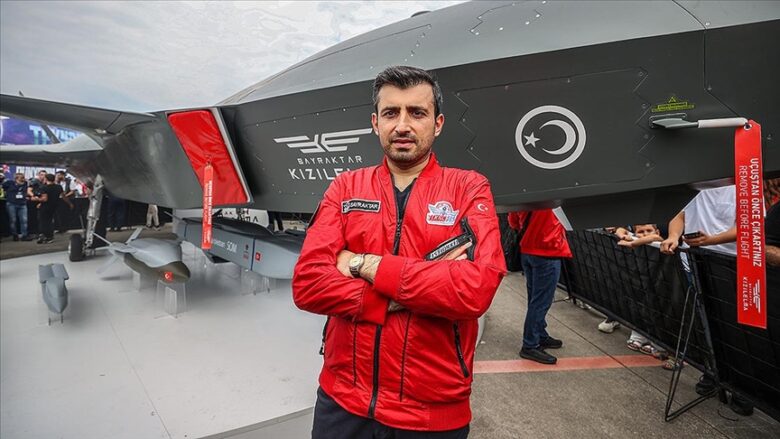
Baykar Chairman of the Board Selçuk Bayraktar announced that the mass production work for the KIZILELMA-A Unmanned Fighter Aircraft has begun.

regarding the supersonic version of Turkey's first unmanned fighter aircraft Bayraktar KIZILELMA Selçuk Bayraktar:

“We are also designing that variant in the coming years. Development activities continue, but we are currently preparing the first variant, the non-supersonic variant, which we call KIZILELMA-A, for mass production.”
 
Top Bottom