TR Aircraft Carrier & Amphibious Ship Programs

Yasar_TR

Experienced member
Staff member
Administrator
Messages
4,044
Reactions
247 21,081
Nation of residence
United Kingdom
Nation of origin
Turkey
1776856956057.jpeg

1776856983254.jpeg

According to this information the MUGEM will be protected by 2/3 Destroyers, 3/2 frigates and couple of MILDEN subs. Also in terms of self protection it will have a 32 cell VLS, 4 x Gokdeniz CWIS and 7 x RCWS guns. (Hopefully - although not mentioned but shown - a couple of GOKSUR point defence systems as well)

In terms of aircraft it seems like there will be Hurjets, KE and Anka-3 drones. But this carrier will need Seahawk Class helicopters for assault and ASW for protection too. Plus heavy lift multi purpose helicopters that are sea worthy.
Hurjet with twin seats and KEs and Anka-3s will be good to work together. As Hurjets will not be stealthy, what they lack in this area can be compensated to a degree by the two stealthy drones.

But a lot of systems and equipment mentioned here is either not ready or non existent yet. Some of them can be summarised as :

1. MUGEM really needs a commensurate aircraft that will do it justice. Currently there is nothing.
2. All aircraft engines and aircrafts themselves will have to be navalised.
3. MUGEM needs a tried and tested Arrester Wire system for the aircrafts it will operate. This means that the system will have to be suitable for a 5-6 ton drone and a 10-12 ton fighter jet. (Whereas EMALS can vary weights it can handle, hydraulic systems are usually not very forgiving with wide weight tolerances)
4. Many of the self protection systems and naval ships are not ready yet. Some of them are still on paper. By the time MUGEM is ready, there will be more supersonic and hypersonic AShMs and ballistic AShMs around. Self protection will have to cover these too.
5. If Hurjet is to be used as manned aircraft, then it needs a bigger wing area with a more powerful engine like f414 or EJ200 to give it better lift and higher load capability (F35C has 45% more wing area than F35A - 62.1m2 vs 42.7m2). But these engines will have to be navalised too. (Preferably an indigenous engine will be the right way to go. But that also needs money and time)

TCG Anadolu is almost a third of this ship. It’s first steel cutting was in April 2016. It joined the Navy in April 2023 with many equipment still missing. This was in-spite of the technical help we received from Navantia. MUGEM is a different and more complex ship. Being operational can take as long as 2040 or more.
 

Fuzuli NL

Experienced member
Germany Correspondent
Messages
3,505
Reactions
59 9,890
Nation of residence
Germany
Nation of origin
Turkey
But this carrier will need Seahawk Class helicopters for assault and ASW for protection too. Plus heavy lift multi purpose helicopters that are sea worthy.
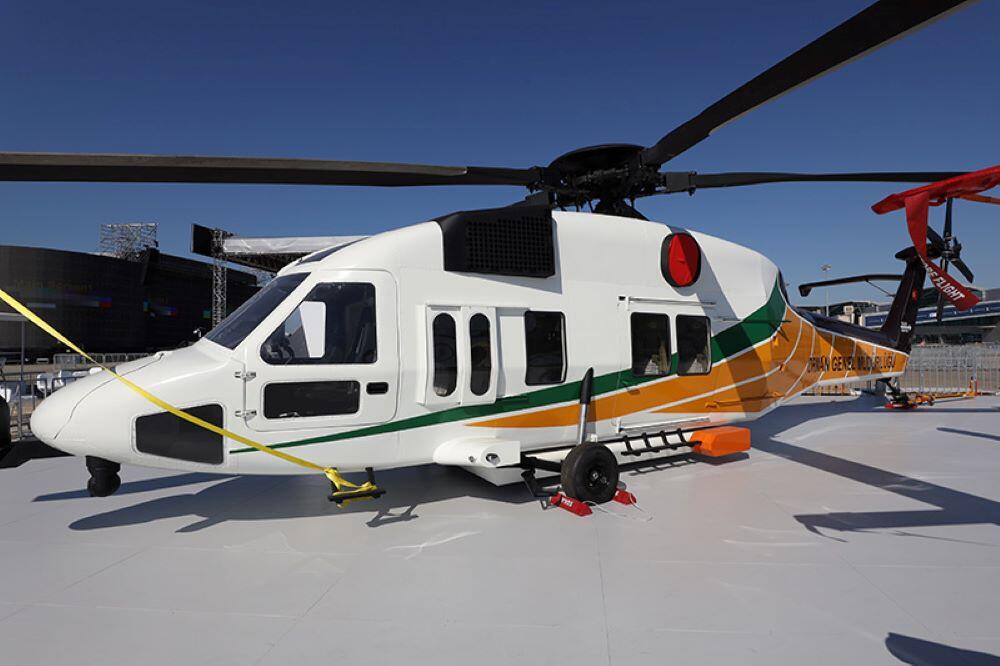
What are the chances in getting cooperation from Leonardo (Agusta/Westland) to convert some T925s to an ASW/ASuW chopper from their experience with Lynx/Wildcat?
Since we're in very good terms with Italy regarding defence industry matters.

t925_mockup.jpg


We're capable of manufacturing the radar, avionics, E/O, mission computer, weapon systems and ordnance etc.
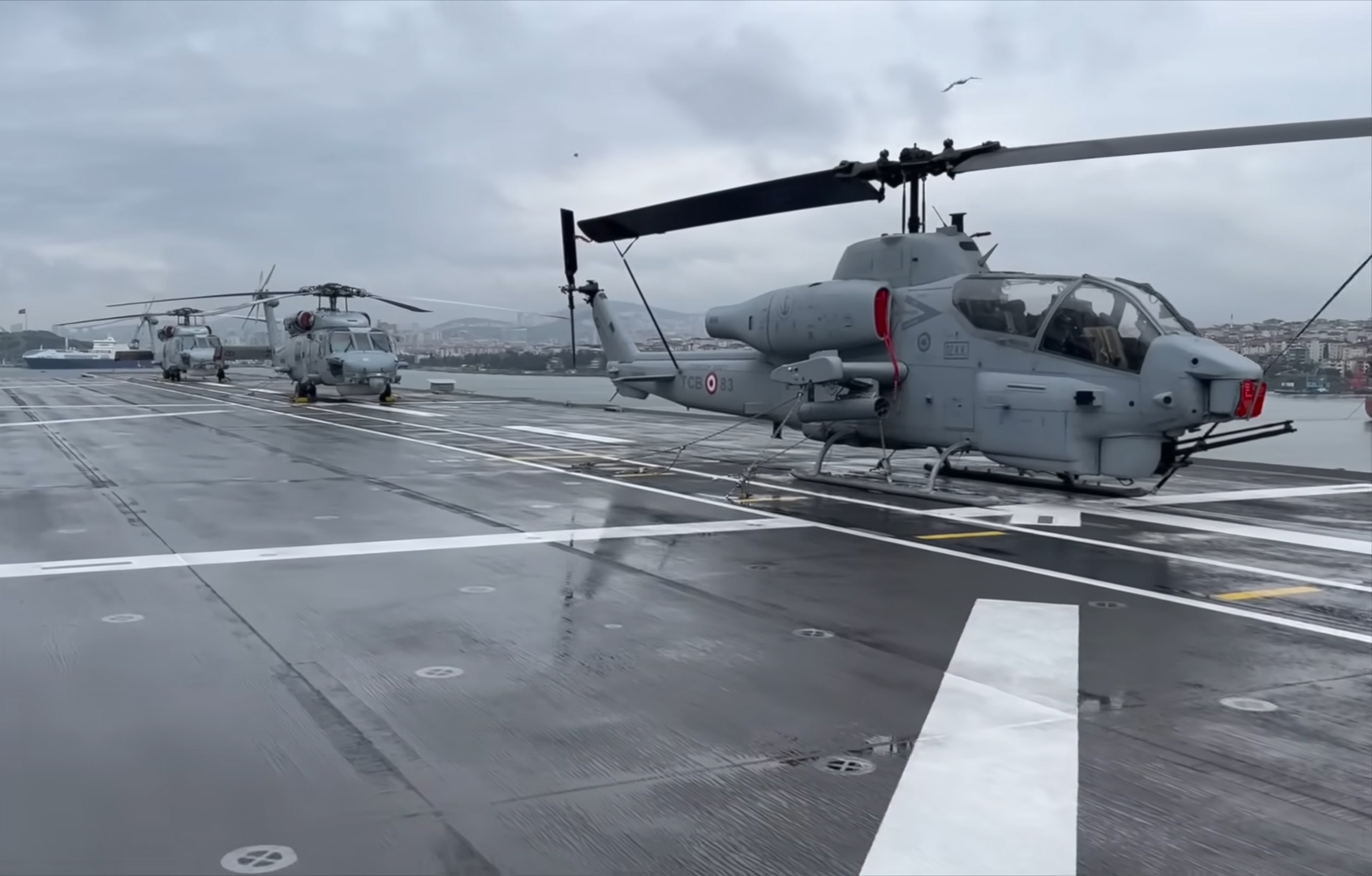
We're not there yet with making them seaworthy albeit some AH-1s were modified to an extent.

TCB-83_Bell_AH-1_SuperCobra_(cropped).jpg
 
Last edited:

Sanchez

Experienced member
Moderator
Think Tank Analyst
DefenceHub Diplomat
Messages
3,885
Reactions
119 17,726
Nation of residence
Turkey
Nation of origin
Turkey
What are the chances in getting cooperation from Leonardo (Agusta/Westland) to convert some T925s to an ASW/ASuW chopper from their experience with Lynx/Wildcat?
Since we're in very good terms with Italy regarding defence industry matters.

t925_mockup.jpg


We're capable of manufacturing the radar, avionics, E/O, mission computer, weapon systems and ordnance etc.
We're not there yet with making them seaworthy albeit some AH-1s were modified to an extent.

TCB-83_Bell_AH-1_SuperCobra_(cropped).jpg
AH-1s are navalized by their nature.

TAI of 2010 is very different from TAI of 2026. This is nothing they can't handle themselves with support from Havelsan
 

Yasar_TR

Experienced member
Staff member
Administrator
Messages
4,044
Reactions
247 21,081
Nation of residence
United Kingdom
Nation of origin
Turkey
What are the chances in getting cooperation from Leonardo (Agusta/Westland) to convert some T925s to an ASW/ASuW chopper from their experience with Lynx/Wildcat?
Since we're in very good terms with Italy regarding defence industry matters.

t925_mockup.jpg

We're capable of manufacturing the radar, avionics, E/O, mission computer, weapon systems and ordnance etc.
We're not there yet with making them seaworthy albeit some AH-1s were modified to an extent.

thumbs_b2_3535d68534649e2d4b379e087a869359.jpg
Bro, Our problem is the engine for the ASW helicopter and the T925.
With the Ukranian engine the helicopter is not really what the Navy wants. If we had the engine, we would have the rest anyway.
Italians and the British use SNECMA engines. We wouldn’t want French engines.
Navy has given an order for 56 Gokbey helicopters. They could be used for ASW if navalised. But they are no replacement for a Seahawk.

By the way, if I remember correctly we bought those Süper Cobra helicopters from US Marines. So they came in already navalised.
 

dBSPL

Experienced member
Think Tank Analyst
DefenceHub Ambassador
Messages
2,758
Reactions
110 14,065
Nation of residence
Turkey
Nation of origin
Turkey
What are the chances in getting cooperation from Leonardo (Agusta/Westland) to convert some T925s to an ASW/ASuW chopper from their experience with Lynx/Wildcat?
Since we're in very good terms with Italy regarding defence industry matters.
T-925 is the only domestically produced alternative for needs such as amphibious landing and personnel transport, logistics, and VERTREP, as well as heavier class ASW/ASuW, also wide area surveillance - early warning helicopters needs. But as example like Lynx Wildcat (AW159), T-625 Gökbey is already in production and sufficiently mature so can be configure for more tactical missions and general surface and underwater combatant, and even as a fire support operations, could actually form a navalized helicopter configuration much earlier.

If the Gökbey were to be used as the basis for a navalized project, its weight of approximately 6 tons would allow it to be deployed on almost all naval platforms. In its standard configuration, it could achieve an endurance of up to 4 hours, which could be extended to 5 hours with external tanks. With its low maintenance and initial acquisition costs, it could be ordered in much larger numbers. Its lower noise and vibration profile, along with its dimensions providing a rapid reaction and mobility advantage, can be a highly valuable ASW helicopter. In short, it's versatile, economical, can land on any ship, and can meet very specific needs such as ASW/ASuW, SAR, VERTREP (albeit limited), AMCM (Airborne Mine Countermeasures), MEDEVAC (Medical Evacuation), MIO (Maritime Surveillance Operation), and even OTHT. And this helicopter could be ready for production at least a few years before the T925.

On the naval side, our biggest advantage is that almost all weapon systems and avionics to be integrated into this type of helicopter are ready or already in the naval forces' inventory. The real work is navalization of platform and system integration.
 

Fuzuli NL

Experienced member
Germany Correspondent
Messages
3,505
Reactions
59 9,890
Nation of residence
Germany
Nation of origin
Turkey
T-925 is the only domestically produced alternative for needs such as amphibious landing and personnel transport, logistics, and VERTREP, as well as heavier class ASW/ASuW, also wide area surveillance - early warning helicopters needs. But as example like Lynx Wildcat (AW159), T-625 Gökbey is already in production and sufficiently mature so can be configure for more tactical missions and general surface and underwater combatant, and even as a fire support operations, could actually form a navalized helicopter configuration much earlier.

If the Gökbey were to be used as the basis for a navalized project, its weight of approximately 6 tons would allow it to be deployed on almost all naval platforms. In its standard configuration, it could achieve an endurance of up to 4 hours, which could be extended to 5 hours with external tanks. With its low maintenance and initial acquisition costs, it could be ordered in much larger numbers. Its lower noise and vibration profile, along with its dimensions providing a rapid reaction and mobility advantage, can be a highly valuable ASW helicopter. In short, it's versatile, economical, can land on any ship, and can meet very specific needs such as ASW/ASuW, SAR, VERTREP (albeit limited), AMCM (Airborne Mine Countermeasures), MEDEVAC (Medical Evacuation), MIO (Maritime Surveillance Operation), and even OTHT. And this helicopter could be ready for production at least a few years before the T925.

On the naval side, our biggest advantage is that almost all weapon systems and avionics to be integrated into this type of helicopter are ready or already in the naval forces' inventory. The real work is navalization of platform and system integration.
Thanks, mate! Very helpful insight.

PS:
OTHT = Over-the-horizon targeting
VERTREP = Vertical Replenishment
 

Yasar_TR

Experienced member
Staff member
Administrator
Messages
4,044
Reactions
247 21,081
Nation of residence
United Kingdom
Nation of origin
Turkey
T-925 is the only domestically produced alternative for needs such as amphibious landing and personnel transport, logistics, and VERTREP, as well as heavier class ASW/ASuW, also wide area surveillance - early warning helicopters needs. But as example like Lynx Wildcat (AW159), T-625 Gökbey is already in production and sufficiently mature so can be configure for more tactical missions and general surface and underwater combatant, and even as a fire support operations, could actually form a navalized helicopter configuration much earlier.

If the Gökbey were to be used as the basis for a navalized project, its weight of approximately 6 tons would allow it to be deployed on almost all naval platforms. In its standard configuration, it could achieve an endurance of up to 4 hours, which could be extended to 5 hours with external tanks. With its low maintenance and initial acquisition costs, it could be ordered in much larger numbers. Its lower noise and vibration profile, along with its dimensions providing a rapid reaction and mobility advantage, can be a highly valuable ASW helicopter. In short, it's versatile, economical, can land on any ship, and can meet very specific needs such as ASW/ASuW, SAR, VERTREP (albeit limited), AMCM (Airborne Mine Countermeasures), MEDEVAC (Medical Evacuation), MIO (Maritime Surveillance Operation), and even OTHT. And this helicopter could be ready for production at least a few years before the T925.

On the naval side, our biggest advantage is that almost all weapon systems and avionics to be integrated into this type of helicopter are ready or already in the naval forces' inventory. The real work is navalization of platform and system integration.
Good insight. But to add, it has to be remembered that a navalised Gokbey can not carry 3 lightweight torpedoes like a Seahawk SH60/MH60. Also can not carry depth charges, sonobuoys and torpedoes all at the same time like a Seahawk.
For Gokbey to be used for ASW and ASUW, it needs extensive redesigning with addition of special wings to carry external weapons.
 
Last edited:

Ripley

Contributor
Think Tank Analyst
DefenceHub Diplomat
Messages
1,254
Reactions
42 4,086
Nation of residence
United States of America
Nation of origin
Turkey
The problem is, T925 doesn't exist.
2023 mockup had given me hibbie jibbies when I haven’t seen rear ramp but was hoping that it could be altered. And as it was scaled down to Black Hawk’ish’ segment, my heart sank. Apparently not a priority. Haven’t been hearing much about it other than PR statements.
Havanda su dövüyorlar! (Beating around the bush).
 

dBSPL

Experienced member
Think Tank Analyst
DefenceHub Ambassador
Messages
2,758
Reactions
110 14,065
Nation of residence
Turkey
Nation of origin
Turkey
We need to prioritize the existing platforms we have, ensuring they produce optimum benefit, even if they aren't ideal solutions. In fact, some needs, especially in terms of sea-air platforms, have become so urgent that this is probably the best approach. This way, we can reduce the urgent need to a more manageable level and then, in the second phase, move on to the actual 'ideal solutions'. Aside from the accumulated needs on the rotary-wing side, as far as we understand, another bottleneck will be on the fixed-wing side due to the MUGEM rush. There, we might wait an average of 15 years for an aircraft to be developed from the KAAN platform, or a solution could be developed from the Hürjet platform to prevent MUGEM from being without an aircraft from the moment it first lands at sea. This process, even with a new engine configuration, would probably take half as long.

Just like the T625 Gökbey can be created a 'backbone' effect in our helicopter ecosystem, Hürjet could be the most cost-effective and fastest 'Naval Aviation' solution, specially for MUGEM.

Let's consider a hypothetical scenario: If we upgrade the Hürjet from the 17.7k lbf F404 to the Eurojet EJ200 (20.2k lbf), the aircraft not only gains a 15% thrust increase but also may achieves a weight-to-thrust ratio of 1.10+, enabling almost full-load (3.4t+ payload) STOBAR takeoff capability. This would place the aircraft a notch above competitors like the Tejas Navy or FA-50. If the structural weight increase can be kept to a minimum by using advanced composite technologies (such as thermoplastic composites) in the fuselage, this could be enough to make it a ramp-assisted takeoff aircraft with a very good payload ratio.

Beyond the engine upgrade, this "Hürjet-D (EJ200)" configuration may redefine the LCA (Light Combat Aircraft) class with several high-end performance metrics: With a climb rate potentially exceeding 50,000+ fpm (at sea level, clean configuration) and a +8g maneuver limit (after the aircraft has dropped its ammunition or in air-to-air configuration), Hürjet-D would not just be a trainer but a lethal dogfighter. In a naval environment, this means a much faster response time for Interception and Combat Air Patrol (CAP) missions compared to its peers with superior energy management.

MUM-T Role: The tandem-seat configuration is a strategic asset. While the front pilot handles the flight, the rear cockpit officer acts as a Tactical Drone Controller. Managing 2 or 3 Kızılelma-II or Anka-3 "Loyal Wingmen" transforms a single Hürjet into a strike package with massive stand-off firepower. Electronic Warfare & Relay Node: With a 3,000 kg+ payload, Hürjet-D can carry advanced EW pods and data-link relays. It can stay outside the enemy's AD bubble while directing its stealth UCAVs into the heat of battle, effectively serving as a mini-AWACS and a command-and-control hub for the carrier group with external fuel tanks support.

A hypothetical MUGEM air group:
12-14x Hürjet Naval (EJ200 + AESA Murad)
14-20x Kızılelma / Anka-3 variants
10-12x TB-3 & T625-Naval helis
This mix creates a "Robotic-Heavy Air Wing" that offers a sortie rate and attrition tolerance that traditional carrier wings (like the UK’s or France’s) might struggle to match in high-intensity, asymmetric scenarios.

Actually transitioning to the Hürjet platform for MUGEM is not a "downgrade" or a compromise; it is a fast-track to a new doctrine. By utilizing more powerfull but similar form factor and dimension engine like EJ200 and the platform's innate agility, Turkiye can field a naval power that is ready years before a KAAN-Naval variant, while creating a formidable export product for other "Light Carrier" operators like Spain.

Just like as we previously suggested that Gökbey can became the backbone of our rotary-wing fleet, a Navalized Hürjet could be the silent hero that makes MUGEM a reality from day one.
 

TR_123456

Experienced member
Staff member
Administrator
Messages
6,354
Reactions
16,224
Nation of residence
Nethelands
Nation of origin
Turkey
We need to prioritize the existing platforms we have, ensuring they produce optimum benefit, even if they aren't ideal solutions. In fact, some needs, especially in terms of sea-air platforms, have become so urgent that this is probably the best approach. This way, we can reduce the urgent need to a more manageable level and then, in the second phase, move on to the actual 'ideal solutions'. Aside from the accumulated needs on the rotary-wing side, as far as we understand, another bottleneck will be on the fixed-wing side due to the MUGEM rush. There, we might wait an average of 15 years for an aircraft to be developed from the KAAN platform, or a solution could be developed from the Hürjet platform to prevent MUGEM from being without an aircraft from the moment it first lands at sea. This process, even with a new engine configuration, would probably take half as long.

Just like the T625 Gökbey can be created a 'backbone' effect in our helicopter ecosystem, Hürjet could be the most cost-effective and fastest 'Naval Aviation' solution, specially for MUGEM.

Let's consider a hypothetical scenario: If we upgrade the Hürjet from the 17.7k lbf F404 to the Eurojet EJ200 (20.2k lbf), the aircraft not only gains a 15% thrust increase but also may achieves a weight-to-thrust ratio of 1.10+, enabling almost full-load (3.4t+ payload) STOBAR takeoff capability. This would place the aircraft a notch above competitors like the Tejas Navy or FA-50. If the structural weight increase can be kept to a minimum by using advanced composite technologies (such as thermoplastic composites) in the fuselage, this could be enough to make it a ramp-assisted takeoff aircraft with a very good payload ratio.

Beyond the engine upgrade, this "Hürjet-D (EJ200)" configuration may redefine the LCA (Light Combat Aircraft) class with several high-end performance metrics: With a climb rate potentially exceeding 50,000+ fpm (at sea level, clean configuration) and a +8g maneuver limit (after the aircraft has dropped its ammunition or in air-to-air configuration), Hürjet-D would not just be a trainer but a lethal dogfighter. In a naval environment, this means a much faster response time for Interception and Combat Air Patrol (CAP) missions compared to its peers with superior energy management.

MUM-T Role: The tandem-seat configuration is a strategic asset. While the front pilot handles the flight, the rear cockpit officer acts as a Tactical Drone Controller. Managing 2 or 3 Kızılelma-II or Anka-3 "Loyal Wingmen" transforms a single Hürjet into a strike package with massive stand-off firepower. Electronic Warfare & Relay Node: With a 3,000 kg+ payload, Hürjet-D can carry advanced EW pods and data-link relays. It can stay outside the enemy's AD bubble while directing its stealth UCAVs into the heat of battle, effectively serving as a mini-AWACS and a command-and-control hub for the carrier group with external fuel tanks support.

A hypothetical MUGEM air group:
12-14x Hürjet Naval (EJ200 + AESA Murad)
14-20x Kızılelma / Anka-3 variants
10-12x TB-3 & T625-Naval helis
This mix creates a "Robotic-Heavy Air Wing" that offers a sortie rate and attrition tolerance that traditional carrier wings (like the UK’s or France’s) might struggle to match in high-intensity, asymmetric scenarios.

Actually transitioning to the Hürjet platform for MUGEM is not a "downgrade" or a compromise; it is a fast-track to a new doctrine. By utilizing more powerfull but similar form factor and dimension engine like EJ200 and the platform's innate agility, Turkiye can field a naval power that is ready years before a KAAN-Naval variant, while creating a formidable export product for other "Light Carrier" operators like Spain.

Just like as we previously suggested that Gökbey can became the backbone of our rotary-wing fleet, a Navalized Hürjet could be the silent hero that makes MUGEM a reality from day one.
Why no ANKA 3?
 

Zafer

Experienced member
Messages
5,348
Reactions
15 8,276
Nation of residence
Turkey
Nation of origin
Turkey
It would be great if they go into EMALS system deployment from the getgo and they can make a smaller version for planes upto 15 tons which will cover up to a naval Hürjet. Once time bocomes right to upgrade a 35 ton model can be made to possibly fly a naval Kaan or a possible other large plane.
 

Fuzuli NL

Experienced member
Germany Correspondent
Messages
3,505
Reactions
59 9,890
Nation of residence
Germany
Nation of origin
Turkey
We need to prioritize the existing platforms we have, ensuring they produce optimum benefit, even if they aren't ideal solutions. In fact, some needs, especially in terms of sea-air platforms, have become so urgent that this is probably the best approach. This way, we can reduce the urgent need to a more manageable level and then, in the second phase, move on to the actual 'ideal solutions'. Aside from the accumulated needs on the rotary-wing side, as far as we understand, another bottleneck will be on the fixed-wing side due to the MUGEM rush. There, we might wait an average of 15 years for an aircraft to be developed from the KAAN platform, or a solution could be developed from the Hürjet platform to prevent MUGEM from being without an aircraft from the moment it first lands at sea. This process, even with a new engine configuration, would probably take half as long.

Just like the T625 Gökbey can be created a 'backbone' effect in our helicopter ecosystem, Hürjet could be the most cost-effective and fastest 'Naval Aviation' solution, specially for MUGEM.

Let's consider a hypothetical scenario: If we upgrade the Hürjet from the 17.7k lbf F404 to the Eurojet EJ200 (20.2k lbf), the aircraft not only gains a 15% thrust increase but also may achieves a weight-to-thrust ratio of 1.10+, enabling almost full-load (3.4t+ payload) STOBAR takeoff capability. This would place the aircraft a notch above competitors like the Tejas Navy or FA-50. If the structural weight increase can be kept to a minimum by using advanced composite technologies (such as thermoplastic composites) in the fuselage, this could be enough to make it a ramp-assisted takeoff aircraft with a very good payload ratio.

Beyond the engine upgrade, this "Hürjet-D (EJ200)" configuration may redefine the LCA (Light Combat Aircraft) class with several high-end performance metrics: With a climb rate potentially exceeding 50,000+ fpm (at sea level, clean configuration) and a +8g maneuver limit (after the aircraft has dropped its ammunition or in air-to-air configuration), Hürjet-D would not just be a trainer but a lethal dogfighter. In a naval environment, this means a much faster response time for Interception and Combat Air Patrol (CAP) missions compared to its peers with superior energy management.

MUM-T Role: The tandem-seat configuration is a strategic asset. While the front pilot handles the flight, the rear cockpit officer acts as a Tactical Drone Controller. Managing 2 or 3 Kızılelma-II or Anka-3 "Loyal Wingmen" transforms a single Hürjet into a strike package with massive stand-off firepower. Electronic Warfare & Relay Node: With a 3,000 kg+ payload, Hürjet-D can carry advanced EW pods and data-link relays. It can stay outside the enemy's AD bubble while directing its stealth UCAVs into the heat of battle, effectively serving as a mini-AWACS and a command-and-control hub for the carrier group with external fuel tanks support.

A hypothetical MUGEM air group:
12-14x Hürjet Naval (EJ200 + AESA Murad)
14-20x Kızılelma / Anka-3 variants
10-12x TB-3 & T625-Naval helis
This mix creates a "Robotic-Heavy Air Wing" that offers a sortie rate and attrition tolerance that traditional carrier wings (like the UK’s or France’s) might struggle to match in high-intensity, asymmetric scenarios.

Actually transitioning to the Hürjet platform for MUGEM is not a "downgrade" or a compromise; it is a fast-track to a new doctrine. By utilizing more powerfull but similar form factor and dimension engine like EJ200 and the platform's innate agility, Turkiye can field a naval power that is ready years before a KAAN-Naval variant, while creating a formidable export product for other "Light Carrier" operators like Spain.

Just like as we previously suggested that Gökbey can became the backbone of our rotary-wing fleet, a Navalized Hürjet could be the silent hero that makes MUGEM a reality from day one.
To achieve any of this, we'd need to start now to plan immediately for the naval requirement for the Hürjet and Gökbey. I'd love to think that they're doing it quitely but TAI is juggling a lot of projects simultaneously at the moment, and although they do this brilliantly, I think other priorities means that such modifications would have to wait. At least until the MUGEM is commissioned.
 

boredaf

Experienced member
Messages
2,088
Solutions
1
Reactions
42 6,199
Nation of residence
United Kingdom
Nation of origin
Turkey
Let's consider a hypothetical scenario: If we upgrade the Hürjet from the 17.7k lbf F404 to the Eurojet EJ200 (20.2k lbf), the aircraft not only gains a 15% thrust increase but also may achieves a weight-to-thrust ratio of 1.10+, enabling almost full-load (3.4t+ payload) STOBAR takeoff capability. This would place the aircraft a notch above competitors like the Tejas Navy or FA-50. If the structural weight increase can be kept to a minimum by using advanced composite technologies (such as thermoplastic composites) in the fuselage, this could be enough to make it a ramp-assisted takeoff aircraft with a very good payload ratio.
This is nothing but "if I had wheels I'd be a wagon" situation. And how on earth do you even get "ramp-assisted" take off for Hürjet, just because you changed the engine? Navalising it isn't just slapping a more powerful engine and a coat of paint, there are 2.5 tons of empty weight difference between F-35 and F-35C, how on earth are you turning Hürjet without increasing its weight???

Hürjet-D would not just be a trainer but a lethal dogfighter.
In late 2030s and 2040s, when everyone and their mums are moving to 5th gen fighters and drones (at least), better a2a missiles, radars and anti-air systems, you believe a trainer turned light attack plane can be a lethal dogfighter?

MUM-T Role: The tandem-seat configuration is a strategic asset. While the front pilot handles the flight, the rear cockpit officer acts as a Tactical Drone Controller. Managing 2 or 3 Kızılelma-II or Anka-3 "Loyal Wingmen" transforms a single Hürjet into a strike package with massive stand-off firepower.
If they can be commanded by anyone instead of just controlled all the way through, Hürjet is irrelevant, their orders can be given through SATCOM, instead of from a pilot that is looking at a small screen while also flying. Also, what happens if Hürjet is taken out?

Electronic Warfare & Relay Node: With a 3,000 kg+ payload, Hürjet-D can carry advanced EW pods and data-link relays. It can stay outside the enemy's AD bubble while directing its stealth UCAVs into the heat of battle, effectively serving as a mini-AWACS and a command-and-control hub for the carrier group with external fuel tanks support.
That's great, having a jet that is already not stealthy scream "I'm here" in every spectrum imaginable would most certainly help. It might stay out of the presumed "AD Bubble" but there is no guarantee it can stay outside of enemy a2a missiles, whether from planes or drones, then you are back to controlling the drones from SATCOM and leaving AWACS work to AWACS, because there is no way it can use anything demanding too much power for its radars (because just MURAD wouldn't be enough you would need something like FULMAR so that it could actually scan the surface of the water properly as well).

Actually transitioning to the Hürjet platform for MUGEM is not a "downgrade" or a compromise
🤣 trying to justify the use of a trainer on an aircraft carrier that is not necessary by making it magically more useful is truly hilarious.

Just like as we previously suggested that Gökbey can became the backbone of our rotary-wing fleet, a Navalized Hürjet could be the silent hero that makes MUGEM a reality from day one.
That's great, a light helicopter trying to take place of proper naval helis and a 4th gen trainer pretending to be a naval fighter to support the navy and make sure a vanity project succeeds. Proper Turkish thinking that.
 

dBSPL

Experienced member
Think Tank Analyst
DefenceHub Ambassador
Messages
2,758
Reactions
110 14,065
Nation of residence
Turkey
Nation of origin
Turkey
This is nothing but "if I had wheels I'd be a wagon" situation. And how on earth do you even get "ramp-assisted" take off for Hürjet, just because you changed the engine? Navalising it isn't just slapping a more powerful engine and a coat of paint, there are 2.5 tons of empty weight difference between F-35 and F-35C, how on earth are you turning Hürjet without increasing its weight???


In late 2030s and 2040s, when everyone and their mums are moving to 5th gen fighters and drones (at least), better a2a missiles, radars and anti-air systems, you believe a trainer turned light attack plane can be a lethal dogfighter?


If they can be commanded by anyone instead of just controlled all the way through, Hürjet is irrelevant, their orders can be given through SATCOM, instead of from a pilot that is looking at a small screen while also flying. Also, what happens if Hürjet is taken out?


That's great, having a jet that is already not stealthy scream "I'm here" in every spectrum imaginable would most certainly help. It might stay out of the presumed "AD Bubble" but there is no guarantee it can stay outside of enemy a2a missiles, whether from planes or drones, then you are back to controlling the drones from SATCOM and leaving AWACS work to AWACS, because there is no way it can use anything demanding too much power for its radars (because just MURAD wouldn't be enough you would need something like FULMAR so that it could actually scan the surface of the water properly as well).


🤣 trying to justify the use of a trainer on an aircraft carrier that is not necessary by making it magically more useful is truly hilarious.


That's great, a light helicopter trying to take place of proper naval helis and a 4th gen trainer pretending to be a naval fighter to support the navy and make sure a vanity project succeeds. Proper Turkish thinking that.

Well... Before responding to the points raised, I want to refine two things from my earlier post, not because they were wrong in substance, but because they were imprecise in a way that invites misreading.

On the TWR and payload figures: The "1.10+ weight-to-thrust ratio" and "full-load 3.4t payload STOBAR" figures should not be read as a single simultaneous configuration, and I should have been clearer about that. These describe two distinct operational profiles:

- Interception / CAP configuration (clean or light load, ~60% internal fuel): this is where the EJ200-powered Hürjet-D achieves a TWR in the 1.05–1.15 range, giving it the rapid climb rate and energy management advantage described. At approximately 8,200–8,600 kg gross weight, the math is straightforward.
- Strike / STOBAR full-load configuration (~3,000–3,400 kg external payload, full internal fuel): here the gross weight rises significantly and TWR drops to the 0.72–0.78 range, which is still within STOBAR ramp departure parameters, but the performance envelope is obviously different. The Tejas Naval, for reference, operates STOBAR in a similar TWR band under full load.

Conflating these into a single sentence was imprecise. The aircraft's value proposition isn't that it simultaneously carries maximum payload and pulls maximum G. It's that it can do both, in the appropriate mission profile, from a ski-jump deck.

On the EJ200 specifically: The EJ200 was used as a reference point because its thrust and form-factor are well-documented and the comparison is clean. The realistic engine candidate for this program wouldn't necessarily be the EJ200. It could equally be the GE F414 (used on the F/A-18E/F and Tejas Mk2, with established export precedent), or a future development derivative of the TEI TF6000 program if the timeline permits. The propulsion argument doesn't depend on which specific engine is selected. It depends on the availability of a 90–100 kN class turbofan that fits the Hürjet's airframe envelope, and that field has multiple viable candidates.

On the navalisation weight penalty, and a comparison that needs correcting: The F-35A vs F-35C figure has appeared more than once here as though it were a general law of navalisation. It isn't, and repetition doesn't make it more applicable. The ~2,500 kg empty weight premium of the F-35C over the F-35A is almost entirely a product of CATOBAR-specific structural engineering: catapult attachment hardpoints, a heavily reinforced forward fuselage to absorb 4–5g horizontal launch loads over a 2–3 second stroke, and a substantially enlarged wing planform to achieve safe approach speeds for arrested recovery at carrier weights. None of this applies to a STOBAR platform.

- The structurally correct reference is the MiG-29 to MiG-29K transition, a STOBAR navalisation of a comparable fourth-generation airframe, and the most directly relevant historical data point for this discussion. The empty weight delta is approximately 100–300 kg. Now, one could argue the MiG-29K also received folding wings, new avionics, and a revised radar suite etc. true, and worth acknowledging. But even accounting for those additions, the structurally driven STOBAR navalisation penalty remains a fraction of the CATOBAR figure being cited. The STOBAR delta is composed of reinforced main gear for arrested landing loads, nose gear strengthening for ski-jump rotation dynamics, corrosion protection packages, and an arresting hook assembly. On a platform in Hürjet's weight class, a realistic navalisation penalty sits in the 400–750 kg range. Combined with the additional thrust margin of a 90–100 kN engine over the current F404, the performance envelope described holds. Applying the F-35A/C figure to a STOBAR discussion isn't a counter-argument. It's a CATOBAR number being used in the wrong structural context.

- Before continuing, a necessary clarification on what is actually being discussed: MUGEM is not a forum thought experiment. The program has received its initial funding allocation at SSB level, is formally underway, and the first block is expected to be laid down within the next 12–18 months. TCG Anadolu is already operational and is already at sea without a fixed-wing manned aircraft, that gap exists today, not in some hypothetical future. The F-35B path closed when it closed. A KAAN-derived naval variant, on even an optimistic development timeline, is realistically 12–15 years from carrier qualification. Türkiye is building its second, larger flat-deck platform and still doesn't have a fixed-wing manned jet. Nor does it have anywhere to import one.

The question on the table is therefore not whether Turkiye should build a carrier. That decision has been made, funded, and initiated. The question is what flies off it, and when. If someone's objection is rooted in a fundamental disagreement with the existence of the program, that's a legitimate policy opinion, but it belongs in a different conversation, addressed through the appropriate channels. What we are discussing here is the operational and doctrinal framework for a program that is actively happening, and "just wait for the ideal platform" isn't a doctrine. It's a minumum 15-year capability gap with no answer. Okay, let's all criticize together, but this isn't a response to reality; it's more like a few defense-enthusiasts echoing their own thoughts.

On the dogfighting point, and the "everyone will be 5th gen" assumption: The argument that a light combat aircraft is irrelevant because "everyone will be 5th gen" by the 2040s rests on a production reality that doesn't support it. Rafale Marine deliveries to France continue under Tranche 4 contracts well into this decade. The FA-50 has active export orders from Poland, Malaysia, and the Philippines. None of whom are receiving 5th gen replacements alongside them. The F/A-18E/F Super Hornet remains in production for international customers. India's Tejas Naval program targets IOC in the early 2030s. The J-15 family continues in serial production. The realistic threat environment in which MUGEM's air wing operates during the 2035–2045 window is a heavily mixed one "not a purely 5th-gen world" and it is exactly this kind of environment where a high-sortie-rate light platform with strong MUM-T integration has genuine operational relevance.

More importantly, the Hürjet-D was never framed as an air superiority platform to duel 5th-gen fighters. That characterization is not in the original post. The manned asset's role in this construct is forward combat management, loyal wingman control, and rapid CAP/interception within a layered system. Arguing against a version of the proposal that wasn't made is a pattern that has appeared a few times in this response, and it's worth naming directly.


On MUM-T and the SATCOM argument: GEO satellite round-trip latency; 480–600ms. LEO constellations under ideal conditions (Starlink class); 20–40ms. Line-of-sight tactical datalinks in the Link 16 family: sub-5ms, with substantially higher jam-resistance in contested RF environments. In terminal maneuvering phases where a Kızılelma-II is making real-time course corrections rather than following pre-loaded waypoints that latency differential is not a footnote. It is the difference between a responsive combat wingman and an autonomous agent operating on a pre-mission script.

Beyond latency, SATCOM links are the primary electronic warfare target in any peer or near-peer conflict. A forward-deployed human controller on a low-probability-of-intercept line-of-sight datalink is a genuine doctrinal advantage, not a redundancy. The USAF's Collaborative Combat Aircraft program, the RAF's Mosquito project, and the RAAF's MQ-28 Ghost Bat integration are all architecturally built around exactly this forward controller model not SATCOM-dependent autonomous operation. This is the direction every serious air force with a MUM-T program is moving. The question of what happens if the Hürjet is attrited applies equally to any forward command node, manned or otherwise, and the answer, in every doctrine, is layered redundancy and fallback SATCOM, not the elimination of the forward node.

On the EW emissions point: This is the one objection I'll partially grant. Emissions discipline is a genuine design constraint and not a trivial problem. But the framing assumes the Hürjet-D operates as a solo, unescorted asset deep in contested airspace, which is not the doctrinal construct being proposed. The E-2D Hawkeye is not low-observable. The P-8 Poseidon is not low-observable. Both operate effectively in contested environments because their doctrine accounts for standoff geometry, escort packages, and the layered air defense umbrella of the carrier group. The sensor architecture question, MURAD versus a more capable dedicated surface-search solution is worth a separate and detailed discussion, and it points toward a modular pod architecture consistent with where ASELSAN's sensor programs are developing. It does not constitute an argument against the platform concept itself.

To avoid any misunderstanding, and fearing that a lengthy explanation might bore readers, I want to quickly summarize the topic: Describing a structured doctrinal proposal as "truly hilarious" and ending with "Proper Turkish thinking" isn't a technical counter-argument. It's what tends to appear when the technical objections have run thin. I'll leave that observation here. This discussion generally deserves a higher standard than that, and I'd rather keep it there.

The position stands: MUGEM's first block will be laid. TCG Anadolu is already at sea. A KAAN-derived naval variant is a decade and a half away at minimum. A navalized Hürjet with a 90–100 kN engine, AESA integration, and a MUM-T architecture isn't a fallback, it's a deliberate doctrinal choice about what Turkiye wants to be operationally capable of in the 2030s rather than waiting for the 2040s.

The UK didn't consider the Harrier a vanity solution while waiting for the F-35B. France didn't suspend carrier aviation while Rafale Marine was in development, the Etendard and Super Etendard flew for decades, built institutional knowledge, and handed off to the next generation when it was ready. That approach isn't called a compromise. It's called operational continuity, and it's precisely what a navalized Hürjet offers MUGEM from day one.

Why no ANKA 3?
In my previous post, Anka-3 (perhaps its actual naval version will be coded as 4, who knows?) was listed alongside Kızılelma-II as part of a loyal wingman package. But honestly, it definitely deserves a much deeper discussion about its potential in the air wing composition breakdown.

 
Last edited:
Top Bottom