


We need to scale up prototype/frontier projects such as Titra Alpin, Bvlos Jackal, etc. several times larger and get muscle up unmanned rotary wing attack platforms suitable for military offensive purposes. These helicopters should be capable of carrying multiple numbers of mini loitering, swarm capable missiles/drones. I'm talking about higher lift capacity, more advanced systems, basically, many times more expensive aircrafts.
But, Electric propulsion is not essential. We already have a rotary wing engine, TS1400. It should be a platform that can accompany the T-129 with its light armor and operational range with the 3-4 ton mtow. The attack helicopter's gunner assistant pilot should have direct control access to these rotary wing unmanned attack aircraft. Today's autonomy capabilities make it possible to carry out already a large part of the mission autonomously, so pilot is just needed for final decision making, which again, AI system could give accurate decision support to operator.
In short, we need to synthesize the progress we have made in unmanned systems with conventional close air support systems.
My firend, with all due respect, unmanned attack helicopter is a concept that likely to create more trouble for the crews in real world operational environment than benefits.
No matter how much AI you put into it, today an uncrewed rotary craft is not able to succesfully apply effective and timely combat maneuver on its own. We are far away from it.
Succesfully maneuvering a rotary craft along tree lines and terrain masking during combat scenarios is already incredibly hard. It requires 360 degrees first person eye view.
Even with 360 degree camera coverage on unmanned rotary platform, you can't deliver the responsive first person situational awareness in small cockpit screens for the second crew sitting in manned helicopter.
However, thanks to advance in technology today, he can put on a smart helmet with firs person view (FPV) goggles, but then again, such attempt would defeat the very purpose of having two crew In a manned helicopter. The very reason manned rotary wing combat platforms has two crew compared to fixed wing combat platforms (fighter jets) is that, it is not practical for one person to pilot the helicopter and apply combat maneuver while simultaneously controlling the weapon systems and engagement for a sufficient period of time.
Hence, comes the need for second crew/gunner.
Now, if we put the responsibility of controlling another rotary craft and its weapon system on the second crew/gunner along with the weapon system of his own aircraft that he is sitting in, it is simply not gonna work.
AH-64E crews are already complaining about the workload of controlling simple and small loitering ammunition/ISR UAS that does not even require combat maneuvers.
"The AH-64E also allows its crew to take control of UAVs in its vicinity, and to view ISR (intelligence, surveillance and reconnaissance) information and full motion video feeds directly in its cockpits from both those UAVs and troops on the ground. This further enhances tactical flexibility in high-threat environments by reducing the need for the Apache crew to place themselves at risk in order to locate and engage hostile threats, as well as making targeting faster and more precise in lower-threat environments. However, in personal interviews with the author, US Army crews have complained that the addition of UAV-controlling and -monitoring responsibilities can detrimentally affect crew performance and even flight safety in high-stress situations, especially when flying at low altitude, in bad weather or under fire."
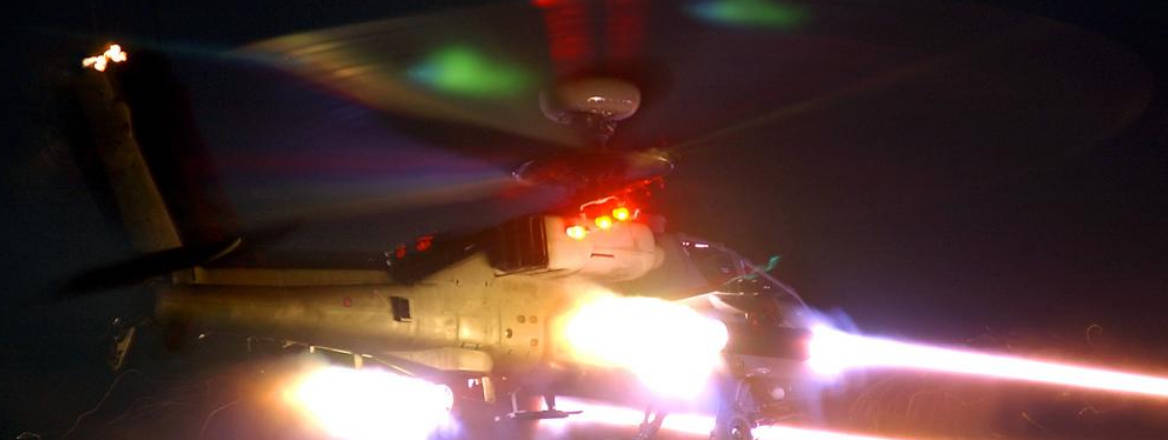
A Rebirth for the British Army’s Apache Fleet
The decision to acquire new AH-64E Apache Guardians will enhance the UK military’s capability in the coming decades. The incorporation of new technology in the airframe will aid crews in accomplishing their missions and allow greater interoperability with allied assets.
 www.rusi.org
Not to mention, Most of the manned helicopter's systems and capabilities are duplicated via the multifunction displays so that either the pilot or gunner can assume each other's role at almost any time. Hence, second crew/gunner already also has the responsibility of taking over the control of his own aircraft if required.
Considering these aspects, I would argue that unmanned rotary wing combat platforms should be controlled from the ground, if such concept ever become operational.
Last edited:


