India Civil Nuclear Program

Nilgiri

Experienced member
Staff member
Administrator
Aviation Specialist
Messages
10,869
Reactions
152 22,160
Nation of residence
Canada
Nation of origin
India
Did a quick research on PHWR as its stands today in the world.

Only India is actively building (5 x 630MW) and planning more (8 x 630 MW) reactors of this design type (PHWR).... with the current series known as IPHWR-700.

Romania has 2 planned, but these are restarting unfinished projects ordered from Canada (CANDU-6) in thee 1980s, they operate 2.

============================================================================================================


Operational MW (reactor number)
Building MW (number)
Planned MW (number)
Shutdown MW (number)

Roughly:


Argentina:

O: 1600 MW (3)


Canada:

O: 15000 MW (19)
S: 1850 MW (6)


China:

O: 1350 MW (2)


Germany:
S: 50 MW (1)


India:

O: 5700 MW (19)
B: 3150 MW (5)
P: 5000 MW (8)


Pakistan

S: 90 MW (1)


Romania:

O: 1300 MW (2)
P: 1300 MW (2)


South Korea:

O: 2000 MW (3)
S: 657 MW (1)


Sweden:
S: 10 MW (1)


USA:

S: 17 MW (1)
 

Nilgiri

Experienced member
Staff member
Administrator
Aviation Specialist
Messages
10,869
Reactions
152 22,160
Nation of residence
Canada
Nation of origin
India

Nilgiri

Experienced member
Staff member
Administrator
Aviation Specialist
Messages
10,869
Reactions
152 22,160
Nation of residence
Canada
Nation of origin
India

Nilgiri

Experienced member
Staff member
Administrator
Aviation Specialist
Messages
10,869
Reactions
152 22,160
Nation of residence
Canada
Nation of origin
India

Nilgiri

Experienced member
Staff member
Administrator
Aviation Specialist
Messages
10,869
Reactions
152 22,160
Nation of residence
Canada
Nation of origin
India
It looks like they will first operate and verify everything with U-238 --> Pu-239 breeding before moving onto Th-232 ----> U-233 (the long term objective as set out by Homi Bhaba back in the 1950s.)

============


"The 500 Mwe-Prototype Fast Breeder Reactor (PFBR) in Tamil Nadu’s Kalpakkam is expected to achieve first criticality within six months, marking a key step towards India’s energy independence.

With fuel-loading nearly complete, India is on track to become the second country after Russia to operate a fast breeder reactor.


The PFBR in Kalpakkam began receiving fuel on 18 October after the Atomic Energy Regulatory Board (AERB) granted permission this month."


Nilgiri

Experienced member
Staff member
Administrator
Aviation Specialist
Messages
10,869
Reactions
152 22,160
Nation of residence
Canada
Nation of origin
India

TR_123456

Experienced member
Staff member
Administrator
Messages
6,396
Reactions
16,376
Nation of residence
Nethelands
Nation of origin
Turkey

No news on the Thorium reactor?
 

Nilgiri

Experienced member
Staff member
Administrator
Aviation Specialist
Messages
10,869
Reactions
152 22,160
Nation of residence
Canada
Nation of origin
India
No news on the Thorium reactor?

The 1st large one is the PFBR - prototype fast breeder reactor ( incorporating what is learned from the smaller two test reactors: KAMINI and FBTR).

Earlier last year they said it will achieve criticality around this month (March 2026) and start operations later in september this year


Maybe it is delayed somewhat further, we have to see.

This is the 2nd stage of 3 stage program, i.e producing comprehensive steady amount of U-233 from Th-232.

The 3rd stage will be the AHWR (advanced heavy water) reactor, that will be constructed later pending what is learned from producing U-233 in the PFBR. That's the one that will actually use the surplus U-233 produced by the PFBR.
 

Gessler

Contributor
Moderator
India Moderator
Messages
1,087
Reactions
66 2,537
Nation of residence
India
Nation of origin
India
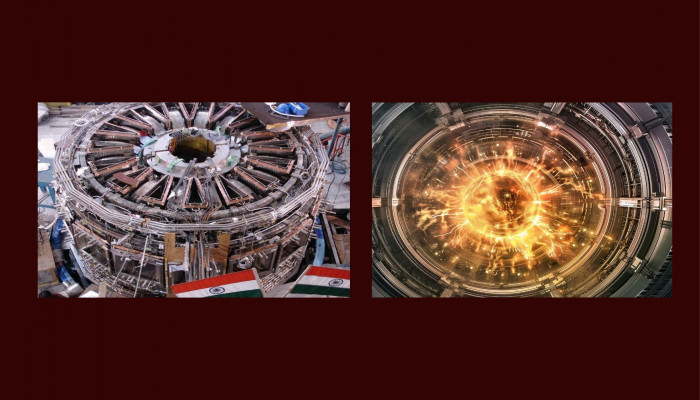
With this, there are now 3 tokamaks active in India:


1000083337.png


Refer to this post going over the other 2 already operational ones, namely Aditya-U (originally from 80s but later upgraded) and the larger SST-1:


Gessler

Contributor
Moderator
India Moderator
Messages
1,087
Reactions
66 2,537
Nation of residence
India
Nation of origin
India
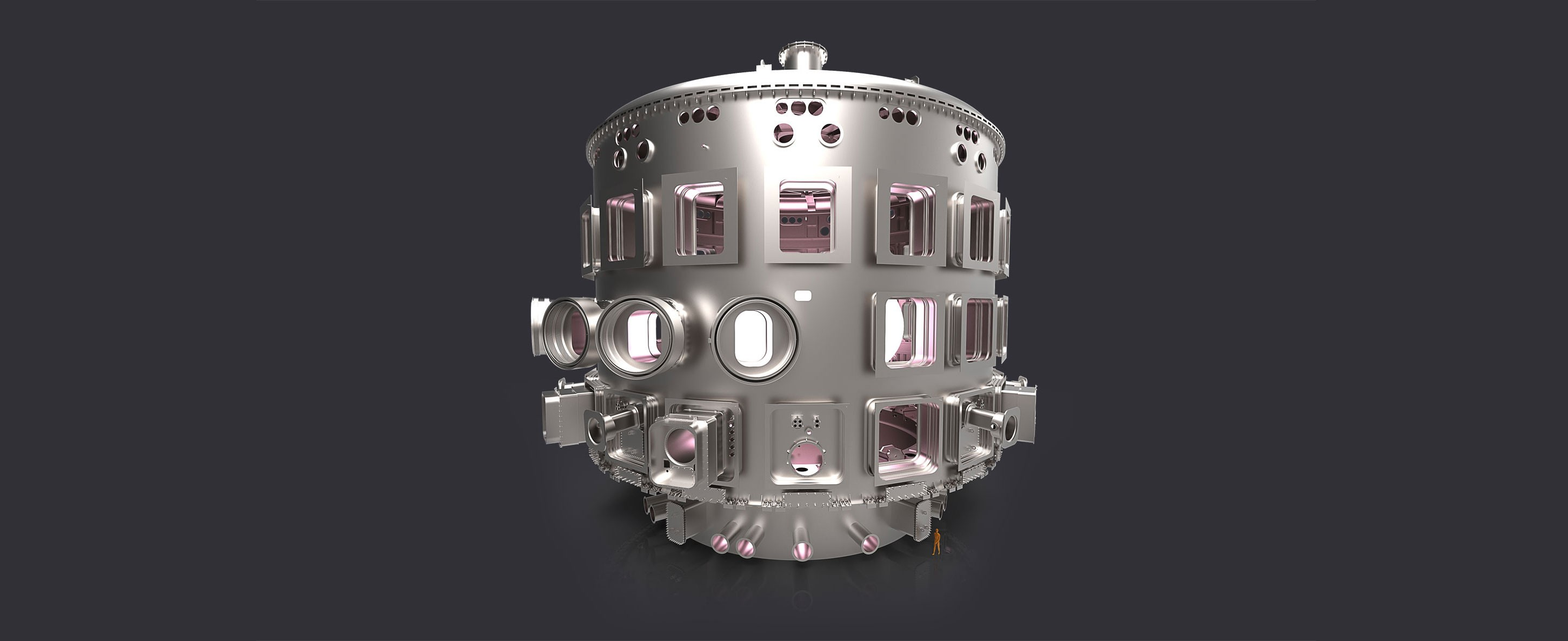
Bangalore-based start up Pranos Fusion has received ~$7 Mn in PE capital, they expect that their PRAGYA (medium-scale testing tokamak) prototype is now funded. Once it's commissioned, it would only be the 4th tokamak in the country, and the first privately-built one!


Pranos Fusion PRAGYA tokamak.jpg
 

Nilgiri

Experienced member
Staff member
Administrator
Aviation Specialist
Messages
10,869
Reactions
152 22,160
Nation of residence
Canada
Nation of origin
India
The 1st large one is the PFBR - prototype fast breeder reactor ( incorporating what is learned from the smaller two test reactors: KAMINI and FBTR).

Earlier last year they said it will achieve criticality around this month (March 2026) and start operations later in september this year


Maybe it is delayed somewhat further, we have to see.

This is the 2nd stage of 3 stage program, i.e producing comprehensive steady amount of U-233 from Th-232.

The 3rd stage will be the AHWR (advanced heavy water) reactor, that will be constructed later pending what is learned from producing U-233 in the PFBR. That's the one that will actually use the surplus U-233 produced by the PFBR.


Gessler

Contributor
Moderator
India Moderator
Messages
1,087
Reactions
66 2,537
Nation of residence
India
Nation of origin
India


HFPKyoIbkAAQ-2x.jpg


PFBR infographic.png


By the way, the fact that PFBR remains entirely outside IAEA safeguards represents a theoretical increase in our production of weapons-grade plutonium from the current ~25 kg/year (Dhruva only, now that CIRUS is shut down...not counting any theoretical civilian reactors' contribution) to about ~170 kg/year.
 

Gessler

Contributor
Moderator
India Moderator
Messages
1,087
Reactions
66 2,537
Nation of residence
India
Nation of origin
India
A short summary of some of the technical challenges that went into PFBR's development, part of a larger article by Nuclear Engineering International (NEI):


"...Developing the PFBR was not an easy task. Construction of the PFBR began in 2004 and was originally scheduled to be completed in 2010. The project was delayed by approximately 16 years due to a combination of technical, financial, and external challenges. The 2004 Indian Ocean tsunami that struck the Kalpakkam site shortly after construction began required a re-evaluation of safety features and protective structures. Repeated delays caused the project cost to more than double, rising from an original estimate of about INR 35bn ($375m) to approximately INR77bn.

India’s PFBR is a pool-type reactor. In this design, the entire primary circuit (the core, pumps, and intermediate heat exchangers) is housed inside a single massive stainless steel main vessel filled with liquid sodium. Fabricating a vessel of that size (nearly 13 metres wide) to hold 1,150 tonnes of sodium at high temperatures while ensuring it could withstand seismic activity was a massive hurdle for Indian industry.

Because of India’s historical position outside the Nuclear Non-Proliferation Treaty (NPT), there was very little sharing of technical “know-how” from Russia or the West for the PFBR. India’s exclusion from the NPT also led to international trade bans, making it difficult to procure high-end nuclear components and technology.

India had to develop its own materials, such as specific grades of stainless steel (316LN) that could survive 40 years of sodium exposure without corroding or becoming brittle. Every component – from the sodium pumps to the steam generators – had to be designed and manufactured by Indian companies (such as L&T and BHEL) for the first time. India also had to integrated post-Fukushima safety requirements into a breeder design.

Handling liquid sodium is extremely complex as it reacts violently with air and water. Significant setbacks occurred during the commissioning of sodium pumps and secondary cooling systems. There were also persistent difficulties in producing the mixed oxide (mox) fuel elements required for the core.


Despite these difficulties, India’s nuclear programme is progressing. Currently India has a fleet of 18-20 pressurised heavy water reactors (PHWRs) that use natural uranium as fuel and produce plutonium-239 (Pu-239) as a by-product in used fuel – the first stage of the programme. With criticality of the PFBR it is now embarking on stage two."

++++

As a side-note: L&T, the Indian company responsible for manufacturing the PFBR's critical pressure vessel (and also the PVs for India's IPHWRs) is the same company that's responsible for making the nearly 4,000-ton cryostat pressure vessel that contains the ITER experimental fusion reactor, which is also the largest high-vacuum pressure chamber ever built, anywhere in the world.


Screenshot 2026-04-21 152520.png


From being internationally sanctioned & isolated to developing the expertise that leads to being entrusted with making one of the most important components for a massive international fusion reactor that could unlock the future of nuclear energy for the whole world - that's some journey!

(another major side note: L&T is also the chief contractor for India's nuclear submarine program).
 

Gessler

Contributor
Moderator
India Moderator
Messages
1,087
Reactions
66 2,537
Nation of residence
India
Nation of origin
India

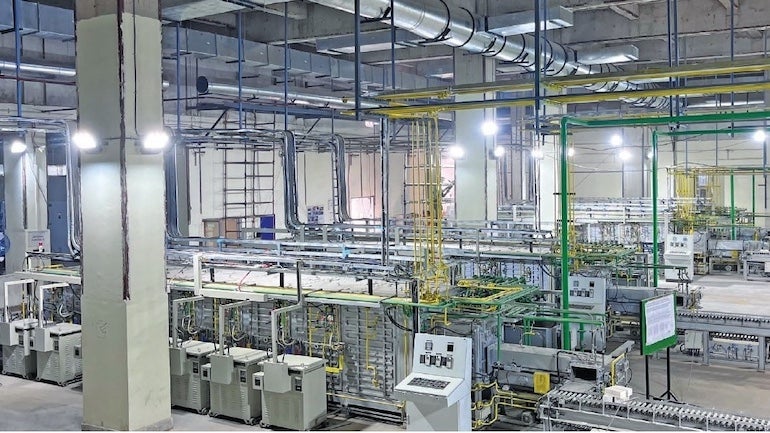
India licences NFC-Kota fuel plant

The Rajasthan facility will produce 500 tonnes a year of natural uranium dioxide fuel assemblies, with approval valid until 30 April 2031.

HHFBAxHaMAACnm3.jpg

May 6, 2026

India’s Atomic Energy Regulatory Board (AERB) has granted an operating licence to the Nuclear Fuel Complex-Kota (NFC-Kota), which will provide fuel for 700 MWe pressurised heavy water reactors (PHWRs). The facility in Rajasthan’s Rawatbhata has a licensed annual capacity of 500 tonnes of natural uranium dioxide (UO2) fuel assemblies.

The licence was granted after AERB conducted a detailed safety assessment under its regulatory framework. “The activities at NFC-Kota are of low hazard category. The systems required for radioactive waste management and prevention of spread of contamination during operation are available,” AERB noted. “The application, the subsequent submissions and the review carried out have shown that the associated safety aspects have been adequately addressed.”

The licence is non-transferable and subject to modification, suspension, or revocation, as considered necessary by the AERB. It includes conditions such as adherence to reporting of safety-significant events and submission of periodic health physics reports.

The Nuclear Fuel Complex (NFC) headquarters in Hyderabad submitted its application for an operating licence for the Kota facility in March 2026. The authorisation also covers the safe handling, disposal, and transfer of radioactive waste, and is valid until 30 April 2031. The approval follows the Consent for Hot Commissioning issued in November 2025 after NFC-Kota’s satisfactory demonstration of fuel bundle assembly production in April 2023.

HHFA-zXbUAI5bHP.jpg

The Department of Atomic Energy (DAE) said operational clearance for NFC-Kota “marks a decisive step in strengthening the nation’s nuclear fuel cycle”, meaning NFC is now “fully geared” to supply nuclear fuel for Nuclear Power Corporation of India Ltd’s 700 MWe indigenous PHWRs.

India is constructing 10 indigenous 700 MWe PHWRs in “fleet mode” to boost nuclear capacity. These include: the Kaiga Atomic Power Project (KAPP-5&6) in Karnataka; Gorakhpur Haryana Anu Vidyut Pariyojana (GHAVP-3&4) in Haryana; Chutka Madhya Pradesh Atomic Power Project (CMPAPP-1&2) in Madhya Pradesh; and Mahi Banswara Rajasthan Atomic Power Project (MBRAPP-1-4) in Rajasthan. The 700 MWe PHWRs already in operation include units 3&4 at the Kakrapar Atomic Power Station (KAPS-3&4) and unit 7 at the Rajasthan Atomic Power Station (RAPS-7) where RAPS-8 is undergoing commissioning.

NFC was established in late 1960s as a pivotal industrial arm of the Department of Atomic Energy with the mandate to fuel India’s nuclear power programme. It is the only facility worldwide to have a comprehensive manufacturing cycle from ore to core, involving processing of both uranium and zirconium streams under the same roof. NFC manufactures assemblies for existing PHWRs (mostly 200 MWe), boiling water reactors (BWRs) and fast breeder reactors as well as many reactor core components, various tubes, and high purity special materials.

It has developed state-of-art facilities and process technologies with several innovations in the field of nuclear fuel production and fabrication. The complex also symbolises the strong emphasis on self-reliance in the Indian nuclear power programme.


TR_123456

Experienced member
Staff member
Administrator
Messages
6,396
Reactions
16,376
Nation of residence
Nethelands
Nation of origin
Turkey


India licences NFC-Kota fuel plant

The Rajasthan facility will produce 500 tonnes a year of natural uranium dioxide fuel assemblies, with approval valid until 30 April 2031.

View attachment 80488

May 6, 2026

India’s Atomic Energy Regulatory Board (AERB) has granted an operating licence to the Nuclear Fuel Complex-Kota (NFC-Kota), which will provide fuel for 700 MWe pressurised heavy water reactors (PHWRs). The facility in Rajasthan’s Rawatbhata has a licensed annual capacity of 500 tonnes of natural uranium dioxide (UO2) fuel assemblies.

The licence was granted after AERB conducted a detailed safety assessment under its regulatory framework. “The activities at NFC-Kota are of low hazard category. The systems required for radioactive waste management and prevention of spread of contamination during operation are available,” AERB noted. “The application, the subsequent submissions and the review carried out have shown that the associated safety aspects have been adequately addressed.”

The licence is non-transferable and subject to modification, suspension, or revocation, as considered necessary by the AERB. It includes conditions such as adherence to reporting of safety-significant events and submission of periodic health physics reports.

The Nuclear Fuel Complex (NFC) headquarters in Hyderabad submitted its application for an operating licence for the Kota facility in March 2026. The authorisation also covers the safe handling, disposal, and transfer of radioactive waste, and is valid until 30 April 2031. The approval follows the Consent for Hot Commissioning issued in November 2025 after NFC-Kota’s satisfactory demonstration of fuel bundle assembly production in April 2023.


The Department of Atomic Energy (DAE) said operational clearance for NFC-Kota “marks a decisive step in strengthening the nation’s nuclear fuel cycle”, meaning NFC is now “fully geared” to supply nuclear fuel for Nuclear Power Corporation of India Ltd’s 700 MWe indigenous PHWRs.

India is constructing 10 indigenous 700 MWe PHWRs in “fleet mode” to boost nuclear capacity. These include: the Kaiga Atomic Power Project (KAPP-5&6) in Karnataka; Gorakhpur Haryana Anu Vidyut Pariyojana (GHAVP-3&4) in Haryana; Chutka Madhya Pradesh Atomic Power Project (CMPAPP-1&2) in Madhya Pradesh; and Mahi Banswara Rajasthan Atomic Power Project (MBRAPP-1-4) in Rajasthan. The 700 MWe PHWRs already in operation include units 3&4 at the Kakrapar Atomic Power Station (KAPS-3&4) and unit 7 at the Rajasthan Atomic Power Station (RAPS-7) where RAPS-8 is undergoing commissioning.

NFC was established in late 1960s as a pivotal industrial arm of the Department of Atomic Energy with the mandate to fuel India’s nuclear power programme. It is the only facility worldwide to have a comprehensive manufacturing cycle from ore to core, involving processing of both uranium and zirconium streams under the same roof. NFC manufactures assemblies for existing PHWRs (mostly 200 MWe), boiling water reactors (BWRs) and fast breeder reactors as well as many reactor core components, various tubes, and high purity special materials.

It has developed state-of-art facilities and process technologies with several innovations in the field of nuclear fuel production and fabrication. The complex also symbolises the strong emphasis on self-reliance in the Indian nuclear power programme.

Where do you store your nuclear waist,do you have underground store sites or do you send it away?
 
Top Bottom