• Forum restore complete (see latest announcement thread)

TR Foreign Policy & Geopolitics

Strong AI

Experienced member
Messages
2,824
Reactions
62 10,231
Nation of residence
Germany
Nation of origin
Turkey
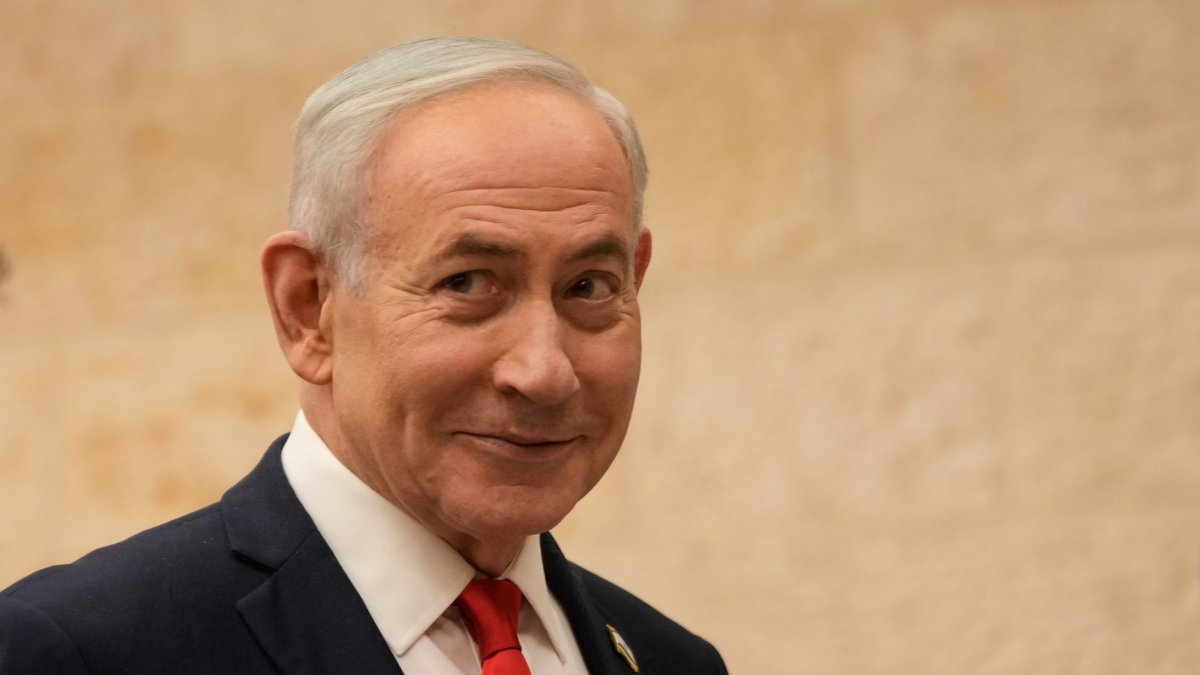
The judicial process concerning the attack carried out in international waters against activists of the Global Sumud Flotilla, who set out to deliver humanitarian aid to Gaza, continues resolutely. In case file No. 2026/108 of the Istanbul 11th High Criminal Court, proceedings are being conducted against 35 defendants, including Benjamin Netanyahu and Afek Moskovitch.

Within the scope of the case, pursuant to the arrest warrants issued against Benjamin Netanyahu and Afek Moskovitch on July 14, 2026, for the crime of “Genocide,” our Ministry of Justice requested that our Ministry of Interior issue Red Notices for their international wanted status, and the relevant documents were forwarded to our Ministry of Foreign Affairs.

Benjamin Netanyahu and Afek Moskovitch are being prosecuted in connection with the armed intervention in international waters against civilians delivering humanitarian aid to Gaza and the detention of activists for the crimes of “Crimes Against Humanity,” “Genocide,” “Aggravated Deprivation of Liberty,” “Intentional Injury,” “Torture,” “Damage to Property,” “Aggravated Robbery,” and “Hijacking of Means of Transportation.”


AlperTunga

Committed member
Messages
242
Reactions
5 322
Nation of residence
Switzerland
Nation of origin
Turkey
We don't expect anything from NATO. And I didn't say anything like that anywhere in the post. Neither in 1963-74 nor in 2013-2025 did the Turkish state achieve results with NATO; it achieved results despite NATO.

What I tried to frame in the post is that the vital support that allows Israel to survive militarily, economically, and politically is part of the NATO alliance. The critical point here is that if Israel were to attack a NATO country, thereby creating conditions that would, to a certain extent, comply with Article 51 of the UN Charter, the risk of the NATO countries that sustain Israel being paralyzed for a certain period is tantamount to a doomsday scenario.

NATO Article 8 clearly states: "Member states undertake not to enter into any other international agreements or commitments inconsistent with the NATO Treaty and to abstain from existing conflicting obligations."

This fundamental framework implies that if Israeli aggression crosses red lines, certain mechanisms that could prevent it might be paralyzed for a period of time in response to a 'deemable' Turkish response, creating a phase where Israel will face the cost of its own policies without an international shield of protection and support. This cost would be too heavy for Israel to bear because, as we know from past examples, the Turkish state has never forgotten anything done during the period of patience and preparation.

We are not the aggressor, and we hope that conditions for legitimate intervention will not arise. But if someone imposes war, we will set the terms and timing. That's the situation.
Sorry bro, your previous post is well-written like a mini thesis but it is not realistic. Neither US nor Europe will care about any of those points you wrote if there is a war between Israel and Türkiye. The law and contractual agreements exist for them only if they are beneficial for them. I would rather read here analyses on how we can attack Israel from land, air, and sea. For instance how should we build a mobile attack force. Say 100 units of 500 commandos each unit protected by a Gürz and EW systems and then larger units by a combinarion of Hisar A and O. These units can also be protected from the air. We should of course first carry out a multiple stage attack with ballistic and cruise missiles as well as drones. I wish someone knowledgesble spends his time writing about such a scenario in detail. Or is it so hopeless that we need to resort to an analytical scrutiny of Nato articles?
 

I_Love_F16

Contributor
France Correspondent
Messages
929
Reactions
18 1,997
Nation of residence
France
Nation of origin
France
I don’t think Israel is going to attack us directly in our territory. If they want to strike us, it will be in a foreign land (Syria…). They’re going to send a few F-35, do their thing and get back to base. Now what will be our options if that happens ?
 

Şok Tedavisi

Active member
Messages
110
Reactions
184
Nation of residence
Turkey
Nation of origin
Turkey
The judicial process concerning the attack carried out in international waters against activists of the Global Sumud Flotilla, who set out to deliver humanitarian aid to Gaza, continues resolutely. In case file No. 2026/108 of the Istanbul 11th High Criminal Court, proceedings are being conducted against 35 defendants, including Benjamin Netanyahu and Afek Moskovitch.

Within the scope of the case, pursuant to the arrest warrants issued against Benjamin Netanyahu and Afek Moskovitch on July 14, 2026, for the crime of “Genocide,” our Ministry of Justice requested that our Ministry of Interior issue Red Notices for their international wanted status, and the relevant documents were forwarded to our Ministry of Foreign Affairs.

Benjamin Netanyahu and Afek Moskovitch are being prosecuted in connection with the armed intervention in international waters against civilians delivering humanitarian aid to Gaza and the detention of activists for the crimes of “Crimes Against Humanity,” “Genocide,” “Aggravated Deprivation of Liberty,” “Intentional Injury,” “Torture,” “Damage to Property,” “Aggravated Robbery,” and “Hijacking of Means of Transportation.”


They hit our base and plan attacking N. Cyprus and this is the only retalliation we can do? Sending a midget to write a tweet about "Interpol".
 

Fatman17

Experienced member
Moderator
Defence News Editor
Pakistan Moderator
Messages
1,733
Reactions
13 1,610
Nation of residence
Pakistan
Nation of origin
Pakistan
sraeli Prime Minister Benjamin Netanyahu is seeking to portray Türkiye as a new threat as part of "cheap politics" aimed at gaining an electoral advantage, Türkiye's Communications Directorate said Friday, warning that Israel's increasingly aggressive threat rhetoric poses serious risks to regional and global stability.
 

dBSPL

Experienced member
Think Tank Analyst
DefenceHub Ambassador
Messages
2,858
Reactions
123 14,472
Nation of residence
Turkey
Nation of origin
Turkey
Despite intense propaganda and the activities of perception agents on social media, it seems that the approach of the crumbling Israeli government to escalate tensions and provoke Türkiye has failed, and Israel lacks the courage to go any further, as politicians likely received a briefing on this at the recent security summit in Israel.

Likud's domestic political failures should not be the main focus of their election campaign, and Likud should continue to use its belligerent rhetoric and security paranoia until the elections. Israel must either shift up gears or hope that this will suffice until the elections. But, as Israel heads towards elections, Likud faces the risk of its propaganda backfiring, or worse, paving the way for Türkiye to further consolidate its presence in Syria through its own aggression.

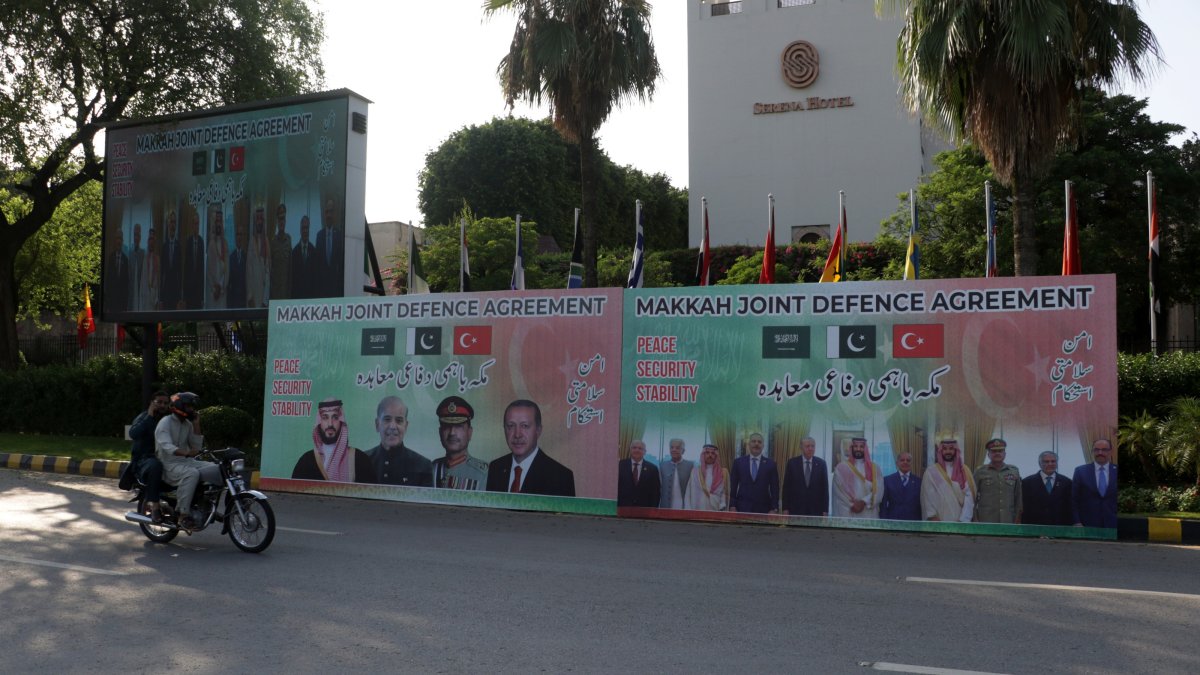
If this defeat in domestic politics becomes inevitable, then there is a possibility, it risks war and directly attacks a Turkish presence; it will create conditions for Türkiye to give a retaliation on a scale no other country has ever shown before, as Israel would be the aggressor. According to the Shusha protocol It would face an energy embargo(Azeri oil), and the Turkish army would also be forced to respond on the same basis. The Mecca Protocol will be tested, the issue will be on the agenda of the Organization of Islamic Cooperation and the UN, and Türkiye will have the opportunity to create a window of opportunity by pressuring NATO with Article 8 and Article 4.

My humble opinion, In this grueling psychological battle, we must remain calm and respond within a framework where Israel, if it makes a mistake, will unconditionally be the aggressor. The response should not be given on the terms dictated by a completely deranged genocidal psychopat on the eve of an election, but on terms and conditions that we will determine, at the right time and under the right circumstances.
 
Last edited:

IC3M@N FX

Contributor
Messages
698
Reactions
3 30 1,428
Nation of residence
Germany
Nation of origin
Turkey
Israel is powerless to act – in all three theatres, people are simply waiting for a flashpoint and a fatal mistake on Israel’s part, in the form of a military strike against Turkey. Should this happen, the following would occur: the US would have to deploy massive numbers of troops and equipment to the Middle East to contain the conflict, i.e. to force both parties to the negotiating table. However, this situation must first be brought about, meaning weeks or months would pass in a conflict before it comes to that.
At the same time, a global ‘window of opportunity’ would arise – that is to say, Iran would simultaneously attack Israel with ballistic missiles and offer symbolic support to Turkey. This is not about friendship; rather, from Iran’s perspective, an escalation between Turkey and Israel is very welcome as a means of exerting pressure on the US and Israel.
Russia will ramp up the pressure on Ukraine massively – and I mean really massively; it is well known that the US will then be tied down in the Middle East for several months, which in turn means that it will be unable to supply either Ukraine or Europe.
China is then the final piece of the jigsaw: it would immediately impose a naval blockade or quarantine on Taiwan, possibly combined with a maritime invasion. For the US, this scenario is the ultimate nightmare – which is why they were so enthusiastic about the Mecca Pact: they want the others to sort out the Iran problem, and they’ve had enough of Israel too; they do help them and are legally obliged to do so, but just because Israel takes their fancy, they’re not going to support it in every misdeed – those days, I think, are finally over following the Iran disaster.
 

Fatman17

Experienced member
Moderator
Defence News Editor
Pakistan Moderator
Messages
1,733
Reactions
13 1,610
Nation of residence
Pakistan
Nation of origin
Pakistan

The new great game in the Caucasus​

Five emerging trends are likely to determine its future


Dr Muhammad Ali EhsanAugust 23, 20264 min read


the writer is a non resident research fellow in the research and analysis department of ipri and an assistant professor at dha suffa university karachi

The writer is a non-resident research fellow in the research and analysis department of IPRI and an Assistant Professor at DHA Suffa University Karachi


For centuries, the Caucasus was one of the great frontiers of imperial rivalry, separating and connecting the competing spheres of the Ottoman, Russian and Persian empires. In the twentieth century, the region came under Soviet rule; after the Soviet Union's collapse, the emergence of independent republics dislodged Russia's influence across much of the post-Soviet space.
For generations, the central geopolitical question in the Caucasus was: who rules the Caucasus? Today, a more consequential question is emerging: who connects through the Caucasus? In an increasingly multipolar world, the region is acquiring three competing identities - a frontier, a corridor and a crossroads. Today, not only great powers but also middle and smaller states have substantial geopolitical and geoeconomic stakes in the Caucasus. The region bears striking structural similarities to the Middle East, a region whose politics have long been complicated by overlapping spheres of influence, unresolved territorial disputes, competing corridors, external interventions, historical and identity-based grievances and shifting alliances. Therefore, the question the region faces today is whether the Caucasus can transform these competing interests into commercial success or, like the Middle East, become another arena where geopolitical competition and conflict overwhelm the promise of connectivity.
Five emerging trends are likely to determine its future. They are: the rise of a multipolar world; the contest for connectivity; the geopolitics of energy; Russia's adaptation to a changing regional order; and the Middle Eastern spillover.

In a multipolar world, the Caucasus is likely to emerge as a strategic crossroads where the interests of Russia, China, the US, the EU, Turkey, and Iran intersect. States that shape the trade routes, energy pipelines and railway networks connecting Asia with Europe will gain significant geopolitical and geoeconomic influence. In this sense, the Caucasus could begin to resemble the historical 'Great Game', with major powers competing not only through diplomacy and military means, but also through economic leverage, infrastructure and proxy influence. The Caucasus therefore appears destined to become a principal strategic arena in the emerging multipolar Eurasian order.
The contest for connectivity in the Caucasus will be driven primarily by competition over transport corridors. Three corridors stand out. The first is the Middle Corridor, also known as the Trans-Caspian International Transport Route, which connects China and Central Asia to Europe through Kazakhstan, the Caspian Sea, Azerbaijan, Georgia and Turkey. It offers an alternative to routes passing through Russia and has gained growing strategic importance as a link between Asia and European markets. The second is the Trump Route for International Peace and Prosperity, a US-backed connectivity initiative through southern Armenia designed to link Azerbaijan with its Nakhchivan exclave and provide onward connections towards Turkey and Europe. The third is the Persian GulfBlack Sea transport corridor, an Iranian initiative envisaged as a multimodal route linking the Persian Gulf to Europe through Armenia and Georgia and onward through the Black Sea. Together, these competing corridors could reshape the region's geopolitical and geoeconomic landscape. The contest for connectivity may become one of the defining geopolitical struggles in the emerging Caucasian order.
The geopolitics of energy transportation has brought the US to the region. The US views the region as a means of not only limiting Russian influence but also reducing the Iranian strategic depth. The US diplomatic engagement in Armenian-Azerbaijan peace efforts reflects this broader strategy. Turkey has emerged as the most influential regional power through its recent close ties with Azerbaijan. Iran, on the other hand, views with concern any attempt to isolate it from its neighbor Armenia. Tehran closely watches any transport corridors that might diminish its regional influence and trade interests. China's interest in the region is primarily economic, projected through its BRI connectivity, rail and road infrastructure, and Eurasian trade. Unresolved issues in Abkhazia and South Ossetia in Georgia prevent Russia's natural and existing corridor access to Armenia. The railway connection through Abkhazia has been closed since the early 1990s, and the unresolved Georgian-Abkhaz conflict is indeed a major political obstacle to restoring the RussiaAbkhaziaGeorgiaArmenia rail link. From a geopolitical perspective, the Caucasus has already evolved from its historical role of acting as a buffer zone to becoming a competitive and contested energy and transport corridor.
The future role of Russia will remain one of the most significant aspects. Russia's current strategy in the Caucasus is to deepen its relations with Turkey and Azerbaijan, preserve its ties with Armenia, and maintain its strategic position in the North Caucasus. Its ability to act as the region's sole security guarantor is reduced, particularly after the Armenia-Azerbaijan conflict but largely due to its continued engagement in the Ukraine War. The challenge ahead for Russia is less about exercising exclusive control over the Caucasus but more about preventing its strategic exclusion from an increasingly multipolar order in the region.
The growing spillover of Middle Eastern rivalries into the Caucasus is likely to accelerate the transformation of the region from a post-Soviet security space into an interconnected geopolitical theatre. The standoff between US-Israel and Iran, Turkey's regional ambitions, Gulf states' engagement in the region, and the broader competition between the US, Russia and Iran are likely to be the future stories that may shape the future Caucasian politics. Iran is particularly concerned about expanding Israeli security cooperation with Azerbaijan and deeper Turkish and Western involvement along its northern frontier. Gulf states are showing greater interest in Caucasian energy, investment and connectivity, while Western powers view the region as a means of reducing dependence on Russian and Iranian routes.
All put together, the Middle Eastern conflicts and emerging alliances and partnerships are likely to affect the security calculations for the transport corridors and energy networks in the region. The Caucasus is therefore approaching a strategic choice. It can remain a frontier where competing powers confront one another, become a corridor through which competing powers merely seek passage, or evolve into a crossroads where competing interests are converted into trade, investment and interdependence.

www.dawn.com

 
Top Bottom