


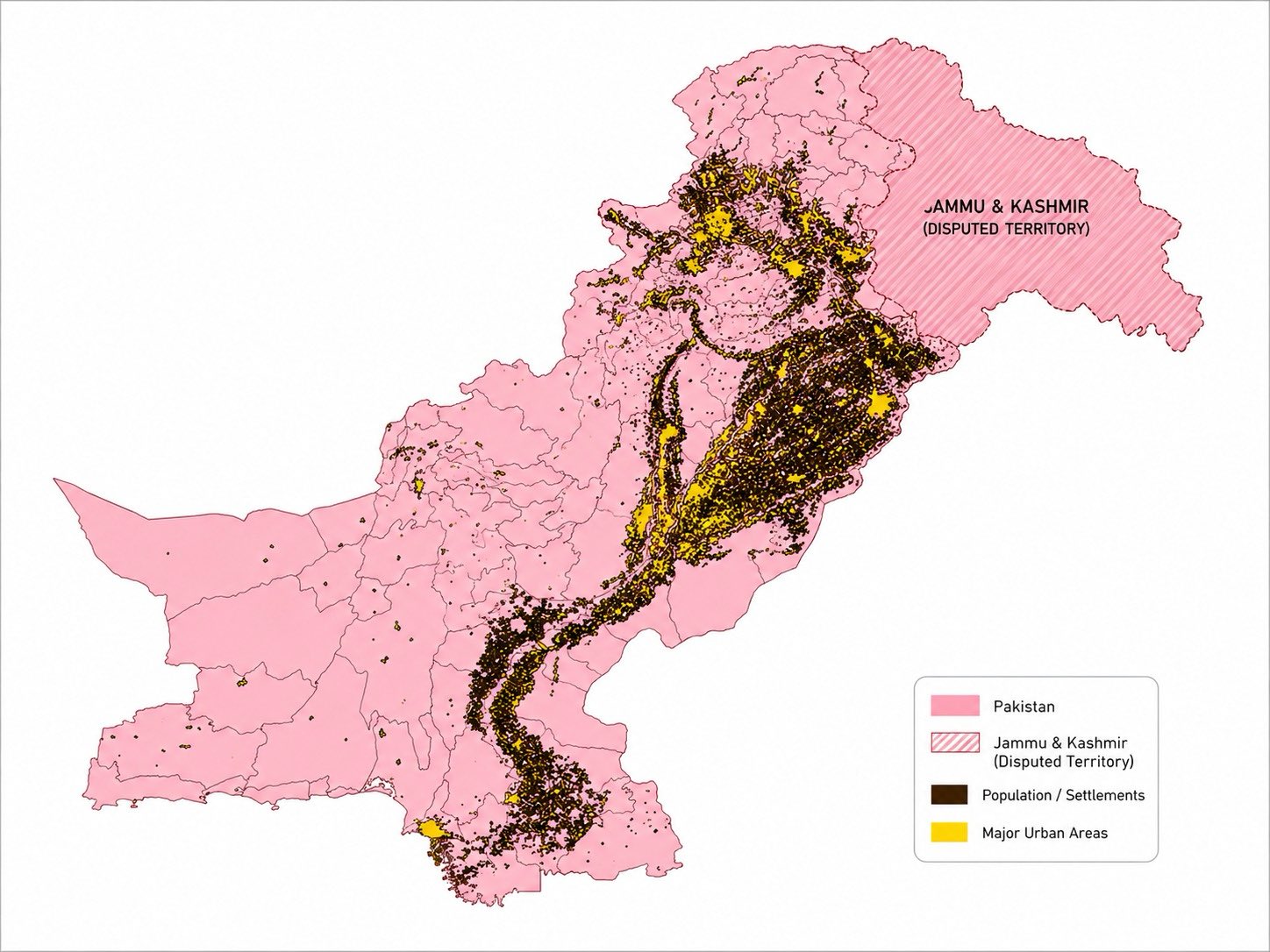
Indus and Pakistan are inseparable. The Indus River System sustains almost all major population centres and provides 80 percent of irrigation water for Pakistan's predominantly agricultural economy.
Given its significance, the Indus was among the most critical issues after partition, alongside Kashmir. India and Pakistan signed the Inter-Dominion Accord on May 4, 1948, requiring India to supply water to Pakistan. This temporary measure soon reached a deadlock. In 1951, at the suggestion of David Lilienthal, former head of the U.S. Atomic Energy Commission, the World Bank initiated a study on a possible arrangement. After years of talks, Jawaharlal Nehru and Ayub Khan signed the Indus Waters Treaty in September 1960.
The treaty was celebrated as a resilient mechanism that survived many ups and downs between the two hostile neighbours. Issues like Salal in the 1970s, Baghlihar and Kishanganga in the 2000s were resolved through the treaty's mechanism. However, India, unable to subdue Pakistan militarily, resorted to water and ecological terrorism.
Following the Pahalgam incident, India unlawfully declared the treaty in abeyance, though the treaty has no provision for suspension. Article XII clearly states that any modification or termination must occur through a duly ratified treaty between the two governments. Pakistan took India to the Permanent Court of Arbitration under Article XI. The PCA issued two rulings: on June 27, 2025, it held that India's suspension does not affect the Court's jurisdiction, and in August 2025, it ruled that the treaty does not permit unilateral suspension.
Despite these rulings, India has accelerated work on the 1,000 MW Pakal Dul, 624 MW Kiru, 540 MW Kwar, 850 MW Ratle, and a massive 1,856 MW Sawalkote hydropower projects, all on the Chenab river allocated to Pakistan. It has also planned a new Chenab-Beas link canal to transfer Chenab's water eastward. Pakistan's Indus Water Commissioner noted that flows at Head Marala on the Chenab dropped from a peak of 78,000 cusecs to 1,500 cusecs in May 2025, from 58,000 to 870 cusecs in December 2025, with another sharp fall in May 2026.
Pakistan responsibly alerted India through the Permanent Indus Commission (PIC) but received no response. India rejects the PCA's intervention, claiming the PIC is the primary forum, yet refuses to abide by it when Pakistan invokes it. Pakistan is appropriately utilizing all bilateral and third party channels while keeping the international community informed.
If India refuses to mend its ways, Pakistan fully reserves the right to employ military means to disrupt India's design to starve it. Under the Geneva Convention, protection of civilian infrastructure ceases when used for military ends. Para 56(2) states that special protection "shall cease (a) for a dam or dyke only if it is used for other than its normal functions in regular, significant and direct support of military operations."
Given its significance, the Indus was among the most critical issues after partition, alongside Kashmir. India and Pakistan signed the Inter-Dominion Accord on May 4, 1948, requiring India to supply water to Pakistan. This temporary measure soon reached a deadlock. In 1951, at the suggestion of David Lilienthal, former head of the U.S. Atomic Energy Commission, the World Bank initiated a study on a possible arrangement. After years of talks, Jawaharlal Nehru and Ayub Khan signed the Indus Waters Treaty in September 1960.
The treaty was celebrated as a resilient mechanism that survived many ups and downs between the two hostile neighbours. Issues like Salal in the 1970s, Baghlihar and Kishanganga in the 2000s were resolved through the treaty's mechanism. However, India, unable to subdue Pakistan militarily, resorted to water and ecological terrorism.
Following the Pahalgam incident, India unlawfully declared the treaty in abeyance, though the treaty has no provision for suspension. Article XII clearly states that any modification or termination must occur through a duly ratified treaty between the two governments. Pakistan took India to the Permanent Court of Arbitration under Article XI. The PCA issued two rulings: on June 27, 2025, it held that India's suspension does not affect the Court's jurisdiction, and in August 2025, it ruled that the treaty does not permit unilateral suspension.
Despite these rulings, India has accelerated work on the 1,000 MW Pakal Dul, 624 MW Kiru, 540 MW Kwar, 850 MW Ratle, and a massive 1,856 MW Sawalkote hydropower projects, all on the Chenab river allocated to Pakistan. It has also planned a new Chenab-Beas link canal to transfer Chenab's water eastward. Pakistan's Indus Water Commissioner noted that flows at Head Marala on the Chenab dropped from a peak of 78,000 cusecs to 1,500 cusecs in May 2025, from 58,000 to 870 cusecs in December 2025, with another sharp fall in May 2026.
Pakistan responsibly alerted India through the Permanent Indus Commission (PIC) but received no response. India rejects the PCA's intervention, claiming the PIC is the primary forum, yet refuses to abide by it when Pakistan invokes it. Pakistan is appropriately utilizing all bilateral and third party channels while keeping the international community informed.
If India refuses to mend its ways, Pakistan fully reserves the right to employ military means to disrupt India's design to starve it. Under the Geneva Convention, protection of civilian infrastructure ceases when used for military ends. Para 56(2) states that special protection "shall cease (a) for a dam or dyke only if it is used for other than its normal functions in regular, significant and direct support of military operations."


