• Forum restore complete (see latest announcement thread)

NATO NATO

T

TR_123456

Guest


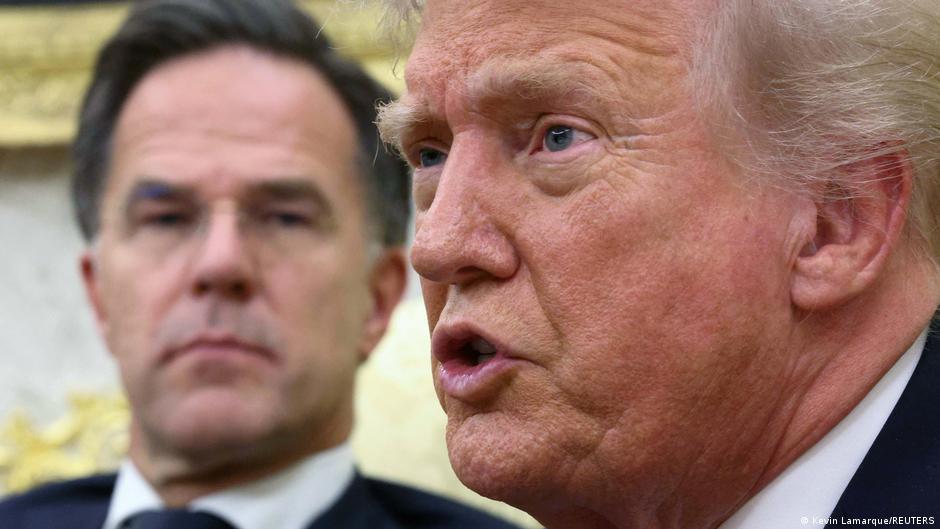
How the hell did this person become secretary for NATO. He's still sucking up to US with this kind of comments for appeasing.
They needed a suck-up so they got one,he has experience gained in fucking things up as prime minister of the Netherlands for 14 years.
Nobody liked him.
 

Saithan

Experienced member
Moderator
Denmark Correspondent
DefenceHub Diplomat
Messages
9,843
Reactions
65 21,984
Nation of residence
Denmark
Nation of origin
Turkey
But they kept electing him over and over again if I remember correct :)
 

Sanchez

Experienced member
Moderator
Think Tank Analyst
DefenceHub Diplomat
Messages
4,181
Reactions
125 19,013
Nation of residence
Turkey
Nation of origin
Turkey


How the hell did this person become secretary for NATO. He's still sucking up to US with this kind of comments for appeasing.
Secretary general's job isn't to create policy; it's to keep everyone on a near footing. His biggest job is keeping Trump happy, Erdoğan in check and Orban non relevant. He's honestly doing a great job so far. I applaud the guy.
 

Saithan

Experienced member
Moderator
Denmark Correspondent
DefenceHub Diplomat
Messages
9,843
Reactions
65 21,984
Nation of residence
Denmark
Nation of origin
Turkey
What's horrible is that reliable news of what is going on is so little that more people are listening to the gambling of Trump.

So when Trump spews out stuff like this, some news should be able to instantly refute such posting
 

Saithan

Experienced member
Moderator
Denmark Correspondent
DefenceHub Diplomat
Messages
9,843
Reactions
65 21,984
Nation of residence
Denmark
Nation of origin
Turkey
 

Saithan

Experienced member
Moderator
Denmark Correspondent
DefenceHub Diplomat
Messages
9,843
Reactions
65 21,984
Nation of residence
Denmark
Nation of origin
Turkey

Guess Türkiye is not part of Europe then :)
 

Nilgiri

Experienced member
Staff member
Administrator
Aviation Specialist
Messages
11,080
Reactions
153 22,629
Nation of residence
Canada
Nation of origin
India
T

TR_123456

Guest

Saithan

Experienced member
Moderator
Denmark Correspondent
DefenceHub Diplomat
Messages
9,843
Reactions
65 21,984
Nation of residence
Denmark
Nation of origin
Turkey

Trump wanted Europe to spend more on defense. He may not like how it’s doing that.​


As European countries spend more on their militaries, they’re not buying American as much as they once did.
A French Air Force Rafale fighter jet performs during an exhibition flight demonstration in Le Bourget, north of Paris.


A French Air Force Rafale fighter jet performs during an exhibition flight in Le Bourget, France, on June 18, 2025.Julien De Rosa / AFP via Getty Images


Jul. 16, 2026, 2:03 PM EDT
By Lily Becker

President Donald Trump spent years telling Europe it couldn’t keep relying on the United States to defend it.
Europe appears to have gotten the message.

Germany is doubling its defense budget over the next four years. NATO members have agreed to work toward spending 5% of gross domestic product on defense. And European governments are cooperating more closely on everything from missile defense to joint weapons procurement.

But Europe isn’t spending more to please Trump. It’s spending because it’s increasingly convinced that the U.S. may no longer be a dependable ally — and that may backfire on the U.S. for decades to come.
The euros are flowing — just not to American defense contractors.
The euros are flowing — just not to American defense contractors as much as they once did. As Europe builds its own defense industrial base, Trump’s push for it to shoulder more of its own defense may be undermining two other priorities: expanding American manufacturing and maintaining America’s military and international influence.

In many ways, his policies are helping unravel the post-World War II bargain under which the U.S. guaranteed Europe’s security while European allies bought American weapons, hosted U.S. troops and anchored an international alliance led by Washington.
The shift in spending is dramatic. Germany’s procurement plan lists 154 major purchases through 2026. Only 8% are going to U.S. suppliers, a dramatic reversal for one of Washington’s biggest defense customers.

The European Union has said it wants 55% of all military purchases to come from European factories by 2030, under a defense plan worth roughly $915 billion. The U.S. share of European arms imports has already fallen to 58% over the last five years, from 64% previously, with contractors in South Korea, France and Israel picking up the difference.


1783685002438_n_mj_europerupture_260710_1920x1080.jpg


European officials frame the shift as necessity, not retaliation. EU foreign policy chief Kaja Kallas has argued that European weapons should come without restrictions on their use, saying militaries need “free hands.”

The scale of the buildup is remarkable for post-Cold War Europe. Germany’s parliament approved a 2026 defense budget of more than more than $120 billion, and Chancellor Friedrich Merz’s government has endorsed plans to push defense and security spending above $230 billion annually by 2030, roughly one-third of the federal budget. Germany increased military spending by 24% last year to $114 billion, the largest increase among European NATO members and the first time since reunification that it exceeded 2% of GDP. To make that possible, Merz exempted military spending from Germany’s constitutional debt brake, overturning decades of fiscal restraint.

Germany is also leading the European Sky Shield Initiative, a continent-wide missile defense system, while exploring closer nuclear deterrence cooperation with France and Britain.

Trump has taken credit for the surge. After NATO allies agreed at last year’s summit at The Hague to work toward the 5% target, he called it a historic achievement, saying the U.S. had long been “carrying much more than our fair share.”


He wasn’t wrong about the scale. European NATO defense spending grew faster in 2025 than at any point since 1953, according to SIPRI.

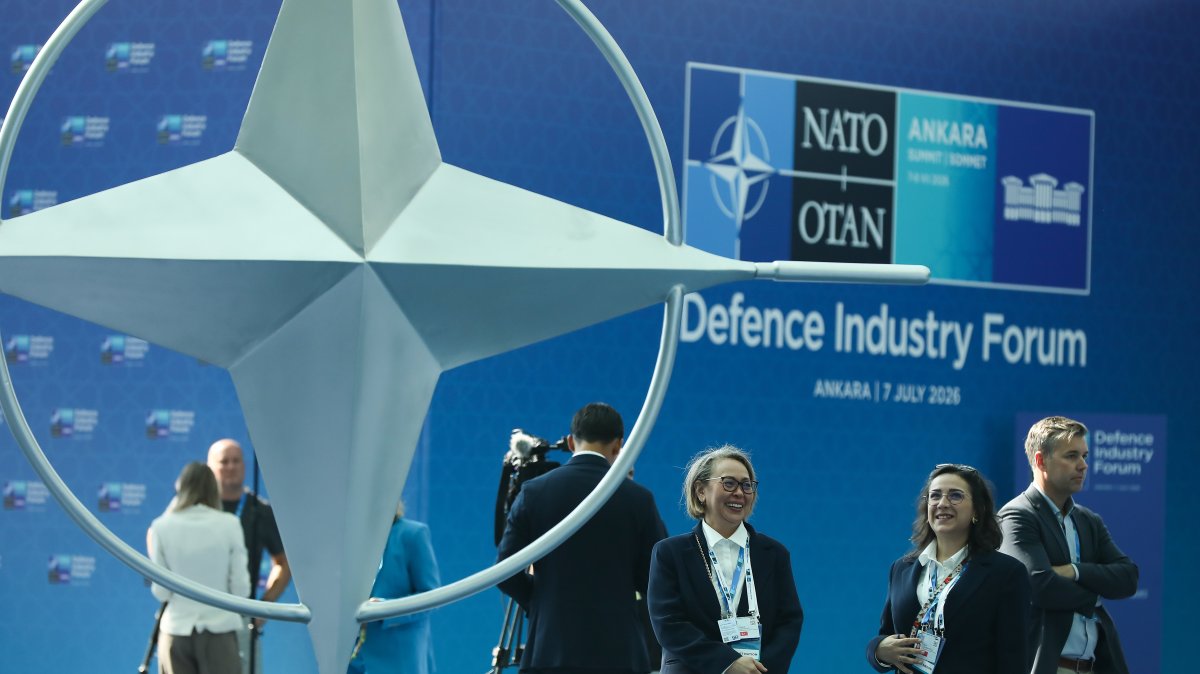
But SIPRI credits more than Trump’s pressure. Researchers point to “the ongoing pursuit of European self-reliance.” Trump’s repeated attacks on allies, combined with a Pentagon strategy that expects Europe to take greater responsibility for its own defense, have convinced many governments that they can no longer count on the U.S. the way they once did. At this month’s follow-up summit in Ankara, Turkey, Trump reinforced that message, calling most European nations “decaying.”

Still, there are limits. Europe will have no homegrown alternative to the F-35 until at least the late 2030s, and a dozen European countries had ordered or selected 466 of the American-made fighters by the end of last year. Even Merz acknowledges that Europe will “remain dependent on the United States of America for a long time to come.”

Still, the trajectory is clear. Trump spent a decade demanding that Europe pay more for its own defense. It is doing exactly that — while increasingly building the factories, technologies and supply chains to sustain that defense on its own.
Historians may ultimately judge this as one of Trump’s most consequential foreign policy achievements, or one of his greatest mistakes.
If the trend continues, historians may ultimately judge this as one of Trump’s most consequential foreign policy achievements, or one of his greatest mistakes. Presidents have long argued about the appropriate troop levels and defense budgets to protect Europe. Trump may be changing something much more fundamental: whether Europe sees the United States as indispensable.
For 80 years, American military power underpinned not just Europe’s security but also America’s global influence. The U.S. didn’t simply defend Europe. It helped shape European defense strategy, sold European militaries much of their equipment and forged alliances that amplified American power far beyond its borders. That bargain was struck when Europe lay devastated by World War II and faced a growing Soviet threat. It would be difficult to re-create today.

A more self-reliant Europe may prove stronger in the long run. But it would also mean an America that is less central to European security and potentially less influential in world affairs.

This is a preview of MS NOW’s Project 47 Newsletter. As President Trump continues implementing his ambitious agenda, get expert analysis on the administration’s latest actions and how others are pushing back sent straight to your inbox
every Tuesday. Sign up now
.


nick.f76

Active member
Messages
41
Reactions
1 2 76
Nation of residence
Greece
Nation of origin
Greece

Donald Trump sends Ukraine's "bill" to Europe, demanding compensation for billions in US aid and signaling a major change in the terms of financing the war and European security
Donald Trump is introducing a new and potentially explosive parameter in relations between the United States and Europe, declaring that Washington intends to ask the Europeans to cover the cost of US military aid provided to Ukraine under the presidency of Joe Biden.

The statement is not just another call by the US president for European allies to increase their defense spending. If it becomes a concrete government policy, it could open a whole new debate about who ultimately pays for the war in Ukraine and, more broadly, European security.

“We will ask for that money”
In a social media post, Trump claimed that “hundreds of billions of dollars” were given to Ukraine and NATO for free, money that, he said, Europe could have paid if the previous US administration had demanded it.

The US president even went a step further, announcing that his administration now intends to request this money, albeit belatedly. He did not specify, however, which European states would be asked to pay, how the amount would be calculated, or what the legal basis for such a request might be.

The last element is crucial. So far, this is a political announcement by Trump and not an announced mechanism for collecting debts from Europe.
The huge American bill
The sums that the United States has mobilized since the start of the Russian invasion are indeed huge, but not all of them are direct transfers of money to Kiev.

According to data cited by Euronews, by the end of March 2026 the US Congress had allocated approximately $195 billion in expenses related to the war in Ukraine. At the same time, the US State Department had reported that the military assistance provided since the Russian invasion of February 2022 amounted to tens of billions of dollars.

This is precisely the model that Trump is trying to overturn. His basic policy position is that Europe has a much greater direct interest than the US in the outcome of the war and therefore Europeans should shoulder a greater share of the financial burden.

The new model has already begun to be implemented
In fact, the cost shift to Europe has already begun.

Central to the initiative is the Prioritised Ukraine Requirements List (PURL), created in 2025. Through the mechanism, allies offer money to purchase critical US military equipment, which is then delivered to Ukraine.

NATO says more than two-thirds of allies have already committed to participating, and together with partners such as Australia and New Zealand, more than $6 billion in US military equipment has been financed through PURL.

It is essentially a different economic model: the weapons remain largely American, but the bill is increasingly being passed on to Europeans and other allies.

Europe’s dependence on US weapons
The problem for Europe is that, despite impressive increases in its defence spending and production, it is not yet in a position to fully replace the US in certain critical categories of weapons systems.

The latest data from the Kiel Institute is typical. In the first half of 2026, European countries procured at least 3 billion euros of military equipment for Ukraine from American defense companies. This amount corresponds to about 30% of European military aid that came from defense industry supplies.

Even greater is the dependence on PURL, where over 90% of the military aid channeled through the mechanism comes from American stocks.

Systems such as the Patriot remain particularly critical, for which the available European alternatives are limited.
This creates a paradox: Europe can take on a larger share of Ukraine’s financing, but it still needs American production lines and military stockpiles to a significant extent.

The other big worry: American stockpiles
Trump’s statements come alongside a second, particularly important debate in Washington: the state of American ammunition stocks.

The US president dismissed reports of serious depletion of stocks and claimed that production is increasing drastically. At the same time, however, he essentially revealed his administration’s priority: some of the ammunition that could otherwise be exported is temporarily kept in the United States.

“We are keeping them for ourselves,” he said, adding that sales to allies would resume soon.

This stance is particularly important given the parallel military demands the US faces. The war with Iran has significantly increased the consumption of advanced American munitions, while Washington must simultaneously maintain reserves for potential crises in other theaters of operations.

Ukraine, Iran and the new American hierarchy
Here lies perhaps the most important geopolitical dimension of the case.

The United States is now being asked to allocate limited military resources across multiple fronts and potential crises. Ukraine needs a steady stream of anti-aircraft missiles and ammunition, the Middle East is absorbing significant quantities of weapons, and Washington cannot ignore the demands of deterrence in the Indo-Pacific.

In this environment, Trump’s logic becomes clearer: the United States will continue to be the West’s main arsenal, but it no longer wants to automatically act as the main financier of European defense.

The bill goes to Europe
For European governments, the message is hard to ignore.

Even if Trump’s demand for retroactive compensation never results in the actual collection of “hundreds of billions,” Washington’s political direction is clear: the era in which the US assumed a large part of the cost of supporting Ukraine without a corresponding European financial burden is considered by the Trump administration to be a thing of the past.

Europe has already begun to adapt. The Kiel Institute records a significant increase in European military commitments, while the new European Ukraine Support Loan of €90 billion for 2026 and 2027 is another indication of the effort to cover a larger part of Ukraine’s needs from European resources.

The real question, therefore, is not only whether Europe will retroactively pay the “bill” announced by Trump.

It is whether it can finance and, above all, produce on its own the weapons that its security requires.

Because the new American approach is gradually shaping a different transatlantic relationship: the United States remains Europe’s most important military partner, but it is increasingly demanding that Europeans not only increase their defense spending, but also pay for the American military power on which they continue to depend.

And this may constitute one of the most significant changes in the structure of NATO and European security since the start of the war in Ukraine.

 

Fatman17

Experienced member
Moderator
Defence News Editor
Pakistan Moderator
Messages
2,489
Reactions
18 2,058
Nation of residence
Pakistan
Nation of origin
Pakistan
The main aim of the alliance is to maintain the security and sovereignty of member states while developing cooperation among partners.

For Türkiye, the key factor behind accession was the need to balance Soviet pressure, particularly Moscow’s claims over the Turkish straits and eastern provinces. Since joining NATO in 1952, however, Türkiye has emerged as a key member of the alliance due to its support for NATO missions, participation in exercises, steadily growing military capabilities and geopolitical importance.

Türkiye enters alliance

Following World War II, the Soviet Union expanded its influence by establishing communist governments across Eastern Europe, laying the foundations of the Cold War.

NATO emerged as a source of hope for Türkiye under these circumstances. From the alliance’s establishment, the Turkish government showed a strong willingness to join. However, some of NATO’s smaller members, as well as the United States, initially opposed Türkiye’s membership over concerns that it could heighten the Soviet threat.

Yet, Türkiye’s geopolitical importance and the performance of Turkish troops deployed during the Korean War in 1950 demonstrated the potential strategic value of bringing the country into NATO. After two previous applications, in May and September 1950, had been rejected, Türkiye was invited to join NATO alongside Greece on Sept. 21, 1951. The U.S. Senate approved the accession of the two countries on Jan. 29, 1952, and the Turkish Grand National Assembly approved Türkiye’s accession to NATO on Feb. 18, 1952.
 
Top Bottom