
You are using an out of date browser. It may not display this or other websites correctly.
You should upgrade or use an alternative browser.
You should upgrade or use an alternative browser.

It's an old nautical term that's been in Turkish for close to a millennium. It's Turkish.And why are we using a Persian name(Fersah)?


That is not entirely true.In modern Turkish, you can't talk a shit without using Persian-Arabic-French words.
If you want to, you can. At least mostly Turkish. There are Turkish versions of almost each and every word. Fersah is a unit of distance covering some 5km.
In English it is “league” which is 3 miles. Fersah is the Arabic version of the Persian word meaning the same.

That is not entirely true.
If you want to, you can. At least mostly Turkish. There are Turkish versions of almost each and every word. Fersah is a unit of distance covering some 5km.
In English it is “league” which is 3 miles. Fersah is the Arabic version of the Persian word meaning the same.
Actually it is but it's not related to the topic and would require long explanations.
You can talk using Turkish words only as you say but it would require a lot of effort.
Oh btw, I'm not saying there are more words from other cultures than ours in Turkish. It's just we use those foreign words more often than ours in our daily lives. So please consider my thoughts on the modern Turkish we use daily. Not all of it. Anyone to say Turkish has no Turkish words should be considered internet troll.
I have to add one more thing; as the populism is taking the youth day by day, they will be using more foreign words in the future and we will end up using a single language with different derivatives in the world. Just like how Europe includes some totally different races but it's too easy to catch words between their languages. It's a long process but www accelerated it. We are a part of the process and we're losing words everyday. They're starting to exist only in dictionaries.
Admins can freely delete this post because it is totally out of topic. Already we're not claiming different things at all. Turkish is Turkish and it's unarguable. Do we use foreign words often and would it be hard to talk without them ? yes.

I think it is so far only meteksan working on fiber-optic based acoustic sensors, that comes light in weight and adaptable in size. While all of those which (Aselsan, Meteksan, Armelsan) relies on Tübitak's sonar crystal tech. So basically, those three companies are not developing the wet-end but dry end parts of the sonar.Making meteksan out of busines in sonar systems
CA96 seems to have same amount of hydrophones as Altas Elektronik's CSU CA that is present on Preveze and Gür Class.Aselsan Fersah submarine sonar solutions:
- Fersah-100S IA Cylindrical Intercept Index
- Fersah-100S FA Lateral Index Sonar
- Fersah-100S AO Active Sonar
- Fersah-100S PA90 Passive Range Finder Sonar
- Fersah-100S CA96 Cylindrical Index Sonar
- Fersah-100S ONAA/ONAH Self Noise Measurement Sonar
View attachment 73550

I really hate Persian and other foreign words, it's really annoying that our language is invaded by so many foreign words even though we have a great language.And why are we using a Persian name(Fersah)?


I have always wondered how Turkish submarines of the MILDEN Series can be built and which energy sources must be used in order to be competitive.
Nuclear energy is out of the question, at least for the time being, because strict restrictions prevent us from getting anything viable in the next 10-15 years.
An AIP system would probably be the best solution, but I personally don't think it's optimal or competitive enough compared to nuclear submarines.
Because you have to refuel after 3-4 weeks.
I find the concept of radionuclide batteries in a cluster (30-40 smaller RTGs) + with multiple high power sodium (natrium) ion batteries + Supercapacitors charged by thermoelectrics much more interesting.
It has a similar characteristic to nuclear submarines in that RTGs can easily provide continuous power to the high power battery system for decades. Although the energy output would be low, the continuous charging would equalize this as you could switch between the battery blocks while charging.
The high-performance batteries would then only have to be replaced every few years due to their natural wear and tear.
The system is absolutely silent in operation.
The submarine can remain under water for months, after which only CO2 filters, food etc. are the decisive factor, as with a nuclear submarine.
Especially for first strike/counter-strike, espionage and inflation missions in foreign waters it would make more sense.
There are hardly any restrictions on RTGs with a strontium 90 and amercium 241 base, of course you would have to increase the energy density a little further and shield the submarine well because of the radiation from the RTGs, as with a nuclear submarine, but it would certainly be feasible.
The submarine would be larger and heavier overall, but for Turkey it would be the best solution I know of to achieve a similar performance profile to a nuclear submarine and make itself vulnerable to international attack.
Nuclear energy is out of the question, at least for the time being, because strict restrictions prevent us from getting anything viable in the next 10-15 years.
An AIP system would probably be the best solution, but I personally don't think it's optimal or competitive enough compared to nuclear submarines.
Because you have to refuel after 3-4 weeks.
I find the concept of radionuclide batteries in a cluster (30-40 smaller RTGs) + with multiple high power sodium (natrium) ion batteries + Supercapacitors charged by thermoelectrics much more interesting.
It has a similar characteristic to nuclear submarines in that RTGs can easily provide continuous power to the high power battery system for decades. Although the energy output would be low, the continuous charging would equalize this as you could switch between the battery blocks while charging.
The high-performance batteries would then only have to be replaced every few years due to their natural wear and tear.
The system is absolutely silent in operation.
The submarine can remain under water for months, after which only CO2 filters, food etc. are the decisive factor, as with a nuclear submarine.
Especially for first strike/counter-strike, espionage and inflation missions in foreign waters it would make more sense.
There are hardly any restrictions on RTGs with a strontium 90 and amercium 241 base, of course you would have to increase the energy density a little further and shield the submarine well because of the radiation from the RTGs, as with a nuclear submarine, but it would certainly be feasible.
The submarine would be larger and heavier overall, but for Turkey it would be the best solution I know of to achieve a similar performance profile to a nuclear submarine and make itself vulnerable to international attack.
Last edited:
If we add on düfas,hızır and asroc type lightweight torpedo,hisar class with antisubmarine helicopter,roketsan antisub rockets,yakamos sonar,orka torpedos,silent electric motors,she would be pure antisubmarine warship.
Attachments
-
 IMG_1548.jpeg577.8 KB · Views: 193
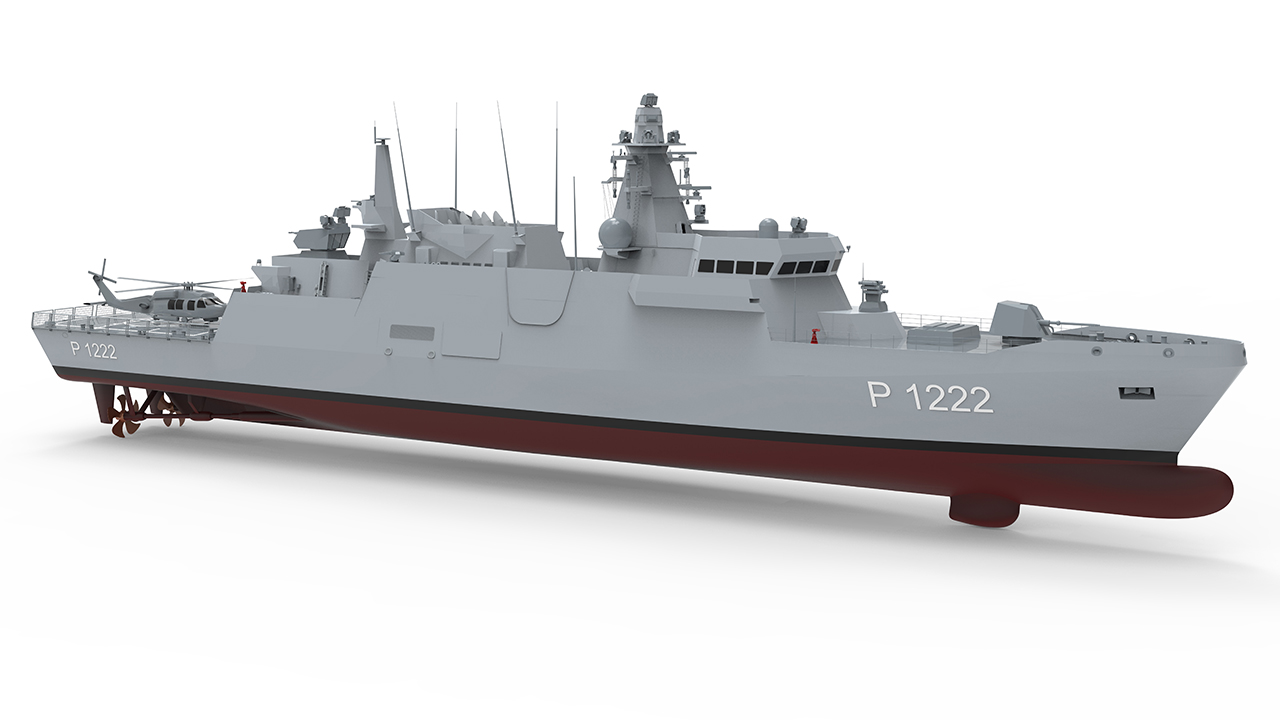
What's the point of calling her an OPV if it's to be armed with 8 cell VLS, it's better armed than Ada Class ships now.
"The Hisar Class Offshore Patrol Ships are considered as an important step towards Turkey's domestic and national defense industry targets. The first ship will be built by Dearsan Shipyard, which is the pilot partner in the project, and the second ship will be built by DESAN Kaptanoğlu Shipyard in modern shipyard facilities in Tuzla. Deliveries under the contract will take place between 2028 and 2029."
 www.7deniz.net
"The Hisar Class Offshore Patrol Ships are considered as an important step towards Turkey's domestic and national defense industry targets. The first ship will be built by Dearsan Shipyard, which is the pilot partner in the project, and the second ship will be built by DESAN Kaptanoğlu Shipyard in modern shipyard facilities in Tuzla. Deliveries under the contract will take place between 2028 and 2029."
DESAN, Hisar Sınıfı açık karakol gemisinin inşasına başladı
Türk savunma sanayiinin yerli ve milli projelerinden Hisar Sınıfı açık deniz karakol gemilerinin üretimi, 20 Ocak 2025’te başladı. Dearsan-Desan-Özata İş Ortaklığı ile Savunma Sanayii Başkanlığı arasında imzalanan anlaşma kapsamında üretilecek gemiler, açık denizlerde keşif, gözetleme ve...
www.7deniz.net
T
TR_123456
Guest
So,what's the difference between them?What's the point of calling her an OPV if it's to be armed with 8 cell VLS, it's better armed than Ada Class ships now.
"The Hisar Class Offshore Patrol Ships are considered as an important step towards Turkey's domestic and national defense industry targets. The first ship will be built by Dearsan Shipyard, which is the pilot partner in the project, and the second ship will be built by DESAN Kaptanoğlu Shipyard in modern shipyard facilities in Tuzla. Deliveries under the contract will take place between 2028 and 2029."
DESAN, Hisar Sınıfı açık karakol gemisinin inşasına başladı
Türk savunma sanayiinin yerli ve milli projelerinden Hisar Sınıfı açık deniz karakol gemilerinin üretimi, 20 Ocak 2025’te başladı. Dearsan-Desan-Özata İş Ortaklığı ile Savunma Sanayii Başkanlığı arasında imzalanan anlaşma kapsamında üretilecek gemiler, açık denizlerde keşif, gözetleme ve...


To be honest I don't see the problem. if our OPV are armed to the teeth for instant warfare. Then that's all good in my book. We can call her light patrol boat for all I care as long as the capabilities and arms are real.
Seeing how things are going to sh.its in the little time Trump has been sitting in his office it's best to be armed and ruthless. Deterrent is the key for our peace the next 4 years.
Seeing how things are going to sh.its in the little time Trump has been sitting in his office it's best to be armed and ruthless. Deterrent is the key for our peace the next 4 years.
Hisar Class OPVs lack the Cenk-S(Cenk-400) radar and ES/EA modules that is found on Istif class ships. They can carry half the amount of ASMs and VLS cells from what's shown. I'm very surprised actually that the design changed considerably to lengthened Istif hull. They probably keep the same propulsion method found on the first two Hisars. @Anmdt any ideas?So,what's the difference between them?
T
TR_123456
Guest
What about the metal used for the hull,is it the same and the overall structure?Hisar Class OPVs lack the Cenk-S(Cenk-400) radar and ES/EA modules that is found on Istif class ships. They can carry half the amount of ASMs and VLS cells from what's shown. I'm very surprised actually that the design changed considerably to lengthened Istif hull. They probably keep the same propulsion method found on the first two Hisars. @Anmdt any ideas?
I think one difference still lies within the operator, yes still it is TN but OPVs will be serving within a different command along with other patrol boats, than what combatants do. Particularly tasked with protection of shores, EEZ and transition zones.What's the point of calling her an OPV if it's to be armed with 8 cell VLS, it's better armed than Ada Class ships now.
"The Hisar Class Offshore Patrol Ships are considered as an important step towards Turkey's domestic and national defense industry targets. The first ship will be built by Dearsan Shipyard, which is the pilot partner in the project, and the second ship will be built by DESAN Kaptanoğlu Shipyard in modern shipyard facilities in Tuzla. Deliveries under the contract will take place between 2028 and 2029."
DESAN, Hisar Sınıfı açık karakol gemisinin inşasına başladı
Türk savunma sanayiinin yerli ve milli projelerinden Hisar Sınıfı açık deniz karakol gemilerinin üretimi, 20 Ocak 2025’te başladı. Dearsan-Desan-Özata İş Ortaklığı ile Savunma Sanayii Başkanlığı arasında imzalanan anlaşma kapsamında üretilecek gemiler, açık denizlerde keşif, gözetleme ve...
+ sensors, MAR-D and AKREP 100N (50km), equipped with KATS but lacks EA,ED antennas. Possibly will be equipped with DUFAS CU and Hizir TKAS TASS unit.
In contrary to that Ada will be upgraded with CENK, AKREP 300N(100km + illumination), KAT, EA + ED and again DUFAS CU or DUFAS, and ofcourse with the gas turbine.
And yes possibly CODOE will be kept but i think they may change the suppliers of the equipment for motors or gears (much less likely, but might happen).
Desan is not quite 'modern' at all. Still wondering why our state agencies saving ass of a shipyard or another which can not secure any contracts on their own.
First got a helping hand from STM for Malaysian MPMS and now an OPV with Dearsan, while obviously Dearsan will use facilities of Desan somewhat like 'renting out'. Did Dearsan somehow acquire Desan unknown to the media or open sources?
As these ships are to be built with VLS, could it be because now that Bozdogan based Goksur system has been successfully fired from what looks like a VLS canister, these ships will have a point defence system based on Goksur VLS?


Thus, they do not need high end radar systems like the Ada Class??
Thus, they do not need high end radar systems like the Ada Class??
Last edited:


Even though plausible, the rendering looks explicitly like MIDLAS and not Göktuğ based VLS, interestingAs these ships are to be built with VLS, could it be because now that Bozdogan based Goksur system has been successfully fired from what looks like a VLS canister, these ships will have a point defence system based on Goksur VLS?
View attachment 73739
View attachment 73740
Thus, they do not need high end radar systems like the Ada Class??
Judging from size VLS on Hisar Class OPVs seem to be Roketsan's MIDLAS. If it was customized VL made by Aselsan or single unit launcher for Hisar-D/O by Roketsan, that was going to be placed mid hull as we have seen before.As these ships are to be built with VLS, could it be because now that Bozdogan based Goksur system has been successfully fired from what looks like a VLS canister, these ships will have a point defence system based on Goksur VLS?
View attachment 73739
View attachment 73740
Thus, they do not need high end radar systems like the Ada Class??
Though judging from the sectional geometry at the spot, the current VLS seems to be shorter than Tactical Length and i believe they will do further adjustments. But i am certain on a matter that, these cells will be quadpack-able and the OPV may carry 32 Hisar DB2 at maximum. Siper D Block1 also seems short enough to fit at a shorter VLS.

I recall only SİPER B2 and later will require strike-length so yeah, SİPER B1 can be put but usage is a different matter with the unchanged sensor package
I guess we could say we have gotten ourselves a mini İstif-class both in looks and functionality
I guess we could say we have gotten ourselves a mini İstif-class both in looks and functionality
We could have the Turkish Karakurt Class with Gezgins insteadThough judging from the sectional geometry at the spot, the current VLS seems to be shorter than Tactical Length


