• Forum restore complete (see latest announcement thread)

TR Navy Naval Programs

Anmdt

Experienced member
Naval Specialist
Professional
Messages
5,805
Solutions
2
Reactions
148 26,911
Nation of residence
Turkey
Nation of origin
Turkey
More shipyards is great and all, but is Aksaz the best place for such an installation for our most strategic vessels, being that close to Crete.
Also defines that Anadolu and other strategic assets have nothing much to do within Aegean, Marmara & Black Sea region, thus they do not need to be in Istanbul. They are destined for overseas.

I am 100% sure some people will be complaining of private shipyards not being utilized for maintenance of large platforms, so in advance i am telling that private shipyard's motive is purely commercial, thus they may shut down, dismantle, sell, demolish large dry docks if they stop turning money in. This is logical move to ensure maintainability of strategic assets.

I like how TN plans these details ahead. This would apply to any country around the world; if you are only hearing numbers and seeing images but seeing little mention or improvement or motives toward securing the maintainability of aforementioned numbers, you are likely to be told some lies and live in a dream.
 

Sanchez

Experienced member
Moderator
Think Tank Analyst
DefenceHub Diplomat
Messages
4,221
Reactions
127 19,128
Nation of residence
Turkey
Nation of origin
Turkey
I am 100% sure some people will be complaining of private shipyards not being utilized for maintenance of large platforms, so in advance i am telling that private shipyard's motive is purely commercial, thus they may shut down, dismantle, sell, demolish large dry docks if they stop turning money in. This is logical move to ensure maintainability of strategic assets.
Let them, we've seen how this played out in US, a disaster. Navy must have the capabilities to maintain its own high value vessels. Smaller ships like coast guard corvettes, OPVs etc can be argued upon, but anything bigger than a frigate should be left to the navy.

Yes, which Gezgin SLCM? The one that will launch from Reis and Gür, or the one that will launch from Milden?
To move the point, Reis Class like any other submarine we currently operate only have 533mm torpedo tubes. 533mm is a tad small for long range cruise missiles. AFAIK, there are no cruise missiles launched from 533mm tubes in any NATO country. Israel handled this with 4 additional purpose built 650mm tubes next to the 6 533mm tubes and is theorized to use them for the nuclear capable Popeye Turbo missiles. But it is also claimed that even Israel is moving to VLS equipped boats with the last Dolphin 2 Class Drakon, which have a much larger sail.

A Gezgin that is fit to made into 533mm tubes would have to be smaller in diameter and there already are length limits. It basically would have to be a lesser performance munition. I would go as far to claim that a Gezgin designed to fit into a 533mm tube would be drastically different in size and performance next to a VLS one, you can basically call them two different missiles. You can even the first one "Gezgin 0.50"
 

valarmogu

Active member
Messages
45
Reactions
2 202
Nation of residence
Turkey
Nation of origin
Turkey
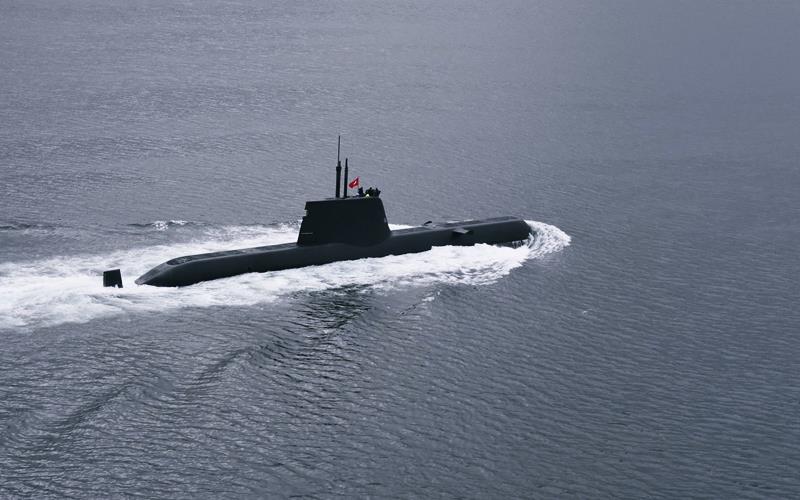
Türkiye's newest Reis-class air-independent-propulsion submarine S330 Pirireis has officially been commissioned to the Turkish Navy.

Thanks to its hydrogen fuel-cell technology, Pirireis can stay submerged for up to 3 weeks and carries a large array of cutting-edge sensors and indigenous weapon systems including Akya & Orka torpedoes, Atmaca antiship missiles as well as Gezgin cruise missiles.


OPTIMUS

Committed member
Messages
261
Reactions
2 594
Nation of residence
Germany
Nation of origin
Turkey
Refilling/refueling AIP is a difficult process comparable to refueling a space rocket. It needs specialized facilities and well-trained crews. Any mistakes and things can go wrong really quickly.
The Turkish AIP submarines are being refueled in Italy (for now). This costs the Turkish Navy about 200,000€.

the Greek AIP submarines are refueled in Germany (forever because, due to construction).This costs the Greek navy 350.000€
 

TheInsider

Experienced member
Professional
Messages
4,894
Solutions
1
Reactions
51 17,040
Nation of residence
Turkey
Nation of origin
Turkey
SSB plans to put another 3 I class frigates on the keel after launching the first 3 I class frigates. This will reduce the time to deliver all 8 ordered ships.
 

Anmdt

Experienced member
Naval Specialist
Professional
Messages
5,805
Solutions
2
Reactions
148 26,911
Nation of residence
Turkey
Nation of origin
Turkey
Let them, we've seen how this played out in US, a disaster. Navy must have the capabilities to maintain its own high value vessels. Smaller ships like coast guard corvettes, OPVs etc can be argued upon, but anything bigger than a frigate should be left to the navy.


To move the point, Reis Class like any other submarine we currently operate only have 533mm torpedo tubes. 533mm is a tad small for long range cruise missiles. AFAIK, there are no cruise missiles launched from 533mm tubes in any NATO country. Israel handled this with 4 additional purpose built 650mm tubes next to the 6 533mm tubes and is theorized to use them for the nuclear capable Popeye Turbo missiles. But it is also claimed that even Israel is moving to VLS equipped boats with the last Dolphin 2 Class Drakon, which have a much larger sail.

A Gezgin that is fit to made into 533mm tubes would have to be smaller in diameter and there already are length limits. It basically would have to be a lesser performance munition. I would go as far to claim that a Gezgin designed to fit into a 533mm tube would be drastically different in size and performance next to a VLS one, you can basically call them two different missiles. You can even the first one "Gezgin 0.50"
MdCN fits to the 533mm torpedo tube as far as i know, and Tomahawk also fits within a 533mm tube, but not the torpedo tube itself. A vertically packed tube that can be replenished at shore, not through hatches within the submarine.

There are two matters from the perspective i see it;

- Since we are fitting a long range cruise missile, entire of 533mm needs to be utilized and this gets a capsule discarded. Without a capsule now our missile has to endure all hydrodynamics and launching loads, and transition from water to air with ease and deploy the fins/canards and do this all safely with a well controlled CoG and forces.

- Length of missile, lack of shrouds for installing, on board equipment may indicate that a Gezgin may not be loaded into a torpedo tube from within the submarine and has to be reloaded at shore, therefore if the submarine is destined for such a role at least few tubes will be occupied by Gezgin, pre-loaded. Either torpedo tube gets taller to accomodate the missile or the missile / booster gets shorter. Recently we have heard that Gür class submarine's torpedo tube has lengtheneded to accomodate Akya torpedo, but i believe this wasn't the sole reason.

- A forgotten point: Also design of the missile, shroud may affect the swim out methodology, whether it will swim out by its own propulsion or pushed by pneumatic systems or a mechanical system. Setting a safe distance to turn on the rocket booster to emerge from water etc. Without a capsule these all becomes a challenge.

Atmaca is fitted into a torpedo tube through a capsule. Imo this is a necessity in 21st century to provide a decent swim-out distance and flexibility in engagement. This is not necessary when your missile can reach 1000 km+ distances.

So a torpedo tube and vertical tube launched versions may share similarities but at least the booster design length and/or missile length may need to be varied. Or its canards and nose will be different from the air / surface launched versions to operate both in submerged swim speed and in flight speed.

 

OPTIMUS

Committed member
Messages
261
Reactions
2 594
Nation of residence
Germany
Nation of origin
Turkey
Are the Germans the only one capabaly of delivering AIP refulling station solutions ?
NO!!

After TKMN paid a punishment of 100 million Euros to Turkey, the Germans insisted that the Turkish submarines must be refueled in Germany. But they didn't get through.

The Turkish submarines can get maintenance in Turkey but Greek submarines have to go to Germany.

AIP is a very valuable commodity in the submarine. You have to use this technology very sparingly. That's why AIP is primarily intended for creeping speed. Charging takes a very, very long time. Each additional knot reduces the underwater duration of the oversized. It also depends on the discipline of the crew. The Japanese have done 30 days underwater with their first SORYU's. For the Germans 16 days, for Italians 13 days, for the Greeks 11 days. The Japanese may have broken the record with their new SORYU's. Quite possibly. I am curious how long you Turkish submariners could stay under water.
 
Last edited:

Afif

Experienced member
Moderator
Bangladesh Correspondent
DefenceHub Diplomat
Bangladesh Moderator
Messages
5,142
Reactions
104 10,062
Nation of residence
Bangladesh
Nation of origin
Bangladesh
@Anmdt i think British Astute can Launch tomahawk through its 533mm torpedo tubes.
 

Afif

Experienced member
Moderator
Bangladesh Correspondent
DefenceHub Diplomat
Bangladesh Moderator
Messages
5,142
Reactions
104 10,062
Nation of residence
Bangladesh
Nation of origin
Bangladesh
Seawolves don't have the VLS but I believe could launch TLAMs from the torpedo tubes.

Seawolf has unique 660mm tubes afaik. That's why I mentioned Astute.
 

OPTIMUS

Committed member
Messages
261
Reactions
2 594
Nation of residence
Germany
Nation of origin
Turkey
In my opinion, AIP technology with fuel cells is the wrong way for submarines, although it has been used in several countries. The future is lithium-ion operation.

1) Very long underwater operation,
2) very direct response to the command,
3) very high underwater speed,
4) very short charging time,
5) low maintenance,
6) Known and more controllable technology,
7) Ease of construction and
8) Placement in submarine bodies.


Fuel cell operation is exactly the opposite of these.

The Japanese have realized this and equipped their last three SORYU class submarines and new Taygay class submarines with Li-Ion technology.
 

Chocopie

Contributor
South Korea Correspondent
Messages
634
Reactions
37 2,298
Nation of residence
Germany
Nation of origin
South Korea
Korean SLCMs are all launched through 533 mm torpedo tubes.
From KSS-II (Korean Type 214 version) and heavier KSS-III as well (VLS reserved for SLBMs).

Hyunmoo 3C long-range CM (2012)
533 mm diameter submarine (600 mm ship/land launched)
6.2 m length
1,360 kg launch mass
max. 1.2 mach speed
1,500 km range
450 kg warhead
< 2 m CEP

Test video at 0:20 min. you can see the air-pressure launched orange capsule piercing the sea surface, opening of top cap and igniting turbojet engine from a KSS-II Son Won-Il class sub.
 

TheInsider

Experienced member
Professional
Messages
4,894
Solutions
1
Reactions
51 17,040
Nation of residence
Turkey
Nation of origin
Turkey
In my opinion, AIP technology with fuel cells is the wrong way for submarines, although it has been used in several countries. The future is lithium-ion operation.

1) Very long underwater operation,
2) very direct response to the command,
3) very high underwater speed,
4) very short charging time,
5) low maintenance,
6) Known and more controllable technology,
7) Ease of construction and
8) Placement in submarine bodies.


Fuel cell operation is exactly the opposite of these.

The Japanese have realized this and equipped their last three SORYU class submarines and new Taygay class submarines with Li-Ion technology.
Koreans also chose li-ion(KSS-III Batch II). We should go that way. We can use Lithium Iron Phosphate batteries (200Wh/kg) that are safe for underwater use. If we want to be super extra safe we can go for Lithium Titanate (180Wh/kg). Medical tools have Lithium Titanate batteries because they satisfy the safety requirements of medical tools. We should replace all lead-acid batteries immediately. It is not a difficult process to replace existing batteries.
 

Chocopie

Contributor
South Korea Correspondent
Messages
634
Reactions
37 2,298
Nation of residence
Germany
Nation of origin
South Korea
Koreans also chose li-ion. We should go that way. We can use Lithium Iron Phosphate batteries (200Wh/kg) that are safe for underwater use. If we want to be super extra safe we can go for Lithium Titanate (180Wh/kg). Medical tools have Lithium Titanate batteries because they satisfy the safety requirements of medical tools. We should replace all lead-acid batteries immediately. It is not a difficult process to replace existing batteries.
Koreans have chosen diesel engine + fuel cell AIP + Li-Ion for now (KSS-III Batch II).

They don‘t believe in Li-Ion solely like the Japanese who deployed outdated Stirling AIP instead of fuel cell AIP for their first batch of Soryu class subs.

For later Soryu and Taigei class subs they didn‘t want to invest heavily in fuel cell AIP technology …
 
Last edited:

TheInsider

Experienced member
Professional
Messages
4,894
Solutions
1
Reactions
51 17,040
Nation of residence
Turkey
Nation of origin
Turkey
Koreans have chosen diesel-electric + fuel cell AIP + Li-Ion for now ( KSS-III Batch II).

They don‘t believe in Li-Ion solely like the Japanese who deployed outdated Stirling AIP instead of fuel cell AIP for their first batch of Soryu class subs.

For later Soryu and Taigei class subs they didn‘t want to invest heavily in fuel cell AIP technology …
IMHO, AIP is unnecessary for mid-sized submarines like the Reis class. It is not worth the cost or the risks involved. Li-Ion batteries will provide enough underwater endurance. For heavier subs with VLS capability, the AIP system might be a good addition.
 

OPTIMUS

Committed member
Messages
261
Reactions
2 594
Nation of residence
Germany
Nation of origin
Turkey
Koreans have chosen diesel engine + fuel cell AIP + Li-Ion for now ( KSS-III Batch II).

They don‘t believe in Li-Ion solely like the Japanese who deployed outdated Stirling AIP instead of fuel cell AIP for their first batch of Soryu class subs.

For later Soryu and Taigei class subs they didn‘t want to invest heavily in fuel cell AIP technology …
The first SORYU class boat with Stirling engine (SS 501-Soryu) cost $510 million.
11. SORYU class boat with Li-ion propulsion (SS 511- Oryu) cost $601.3 million.
 
Top Bottom