National technologies are ready to take to the field for 5G
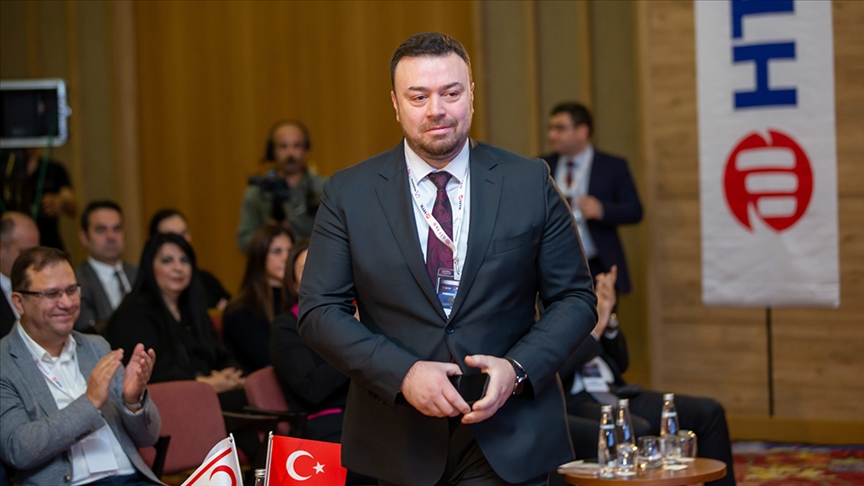
Communication Technologies Cluster (HTK) organized the TRNC Communication Technologies Summit with the support of the Cyprus Entrepreneurship and Technology Investment Association (GİTYAD), the main sponsor of the Mobilefest Fair, and the sponsorship of TRNC Turkcell and TRNC Telsim.
Cluster President, ULAK Communication Board Member and ASELSAN Deputy General Manager Mustafa Yaman answered the AA reporter's questions about the work carried out by HTK members and national communication technologies within the scope of the summit.
Stating that the cluster established within Ostim in 2017 brings together local and national companies working in the field of communication technologies, Mustafa Yaman said that they currently have more than 150 members.
Stating that they aim to create cooperation and unity among their members through clustering, Yaman stated that bringing their members together with customers, operators or other businesses that can use these products is among their priority duties.
Stating that they organized various events for these purposes, Yaman said that the summit in TRNC was an important part of them.
Pointing out that TRNC has recently switched to 4.5G and that it is aimed to switch to 5G within 3 years, Yaman evaluated that TRNC stands out as a good market due to these developments.
Explaining that they brought together their members with operators, regulatory institutions, companies and universities in TRNC at the event, Yaman stated that they discussed possible opportunities in a number of areas, from increasing service quality to developing the ecosystem and human resources.
In response to the question about the goals of HTK and its members in TRNC, Mustafa Yaman said:
"We are committed to everything that will be done here from now on. As Communication Technologies Cluster companies, we are committed to all the work to be done in this field. There may have been contributions to the work done, but we want more. We aim for more from now on. We want them to give us the next infrastructure installations and deliver them. This is We are as assertive as we are. Our request is to use our local and national technology here both in the development and dissemination of 4.5G and in the transition to 5G. Our companies are making intense efforts for this. They are trying to make progress in this regard. If a task is given, we will believe that the development here will accelerate even more and now Turkish We believe that companies will also become big players. We want to be given a region in TRNC or Turkey. We want to install this end-to-end technology here.
It makes no difference to us whether this happens here or in Turkey. If it happens here, it will be an advantage for Turkey, as a result, a little more progress will be made and it will go to Turkey in a more developed state and this place will also be updated. There is also an advantage to leaving early. It would be much more advantageous to start here since it is a controllable area. We will discuss this with the ministry, institutions and operators in TRNC. After that, if they trust us and give us this job, we would like to start here. "We are competent to fulfill this task and we are willing to do it."
Yaman stated that they will evaluate the expansion of fiber optic infrastructure in TRNC with their members.
"The key should be with local and national companies"
Stating that within the scope of the "end-to-end 5G project" that started in Turkey in 2018, companies have developed various products and have reached a certain stage, and that development work continues, Yaman said that new products continue to be released.
Stating that they made new evaluations in the light of these developments, Yaman said:
"We will evaluate whether we have any shortcomings or not. Our goal is not to have everything from needle to thread to be local. Because this is not always appropriate and doable. There is no point in localizing some things because they are not critical. That's why other products can be used in some areas. "We are not against it. The important thing is that the dominance is local and national. Communication should be handled holistically and created locally and nationally, and the remaining parts should be completed with different manufacturers if necessary. The key here should be local and national companies."
"We can become a center of attraction"
"When the cake is small, the shares are also small. We need to make the cake bigger." Mustafa Yaman said, pointing out that the way to achieve this is through exports.
Stating that both HTK and its members are making efforts in this regard, Yaman emphasized that the contribution and support of state officials in exports is also very important.
Stating that communication technologies are included in all infrastructures and are of very critical importance, Yaman said, "Health, agriculture, food security and defense... All of these are based on communication infrastructure. We attach great importance to local and nationality here. That is why, as Turkey, we should take control of our infrastructures as soon as possible." "We need to hire more engineers and we need to work harder for this. In this way, we can keep more engineers in the country, train better engineers, create more employment, our earnings will increase and I think we can become a center of attraction." said.
"We must have the chip"
Pointing out that the way to achieve the goals in communication technologies is to make products cost-effective, Mustafa Yaman said:
"Cost effectiveness depends on making the products more compact. You need to be able to do the work you do in large blocks with a chip. Communication technologies are one of the most suitable areas for this work. Therefore, we need to advance in chip technologies. We will develop more products, we will turn the blocks into chips in the products. Chip Hopefully, design and chip production will be done in Turkey in the future. This is how a country develops. Systems are now located on a chip. If you cannot have a chip, your products will not be preferred tomorrow. That is why we definitely need to switch to chip technology.
We have a company working on this in the cluster. They are trying to move forward with various supports and projects. We need to create jobs and provide income for them. Because chip design is expensive, chip production is more expensive. These infrastructures need to be established. We have some way to go in this regard, but we are persistent and I believe we will move forward. The development of the defense industry in the last 20 years is obvious. Trusting the companies, it was said that these works could be done in Turkey, and Turkish engineers succeeded in this job. The situation we have reached after 20 years is obvious. Here too, if it is reliable, this sector will progress like the defense industry and make a name for itself in the world."
 www.aa.com.tr
Communication Technologies Cluster (HTK) organized the TRNC Communication Technologies Summit with the support of the Cyprus Entrepreneurship and Technology Investment Association (GİTYAD), the main sponsor of the Mobilefest Fair, and the sponsorship of TRNC Turkcell and TRNC Telsim.
Cluster President, ULAK Communication Board Member and ASELSAN Deputy General Manager Mustafa Yaman answered the AA reporter's questions about the work carried out by HTK members and national communication technologies within the scope of the summit.
Stating that the cluster established within Ostim in 2017 brings together local and national companies working in the field of communication technologies, Mustafa Yaman said that they currently have more than 150 members.
Stating that they aim to create cooperation and unity among their members through clustering, Yaman stated that bringing their members together with customers, operators or other businesses that can use these products is among their priority duties.
Stating that they organized various events for these purposes, Yaman said that the summit in TRNC was an important part of them.
Pointing out that TRNC has recently switched to 4.5G and that it is aimed to switch to 5G within 3 years, Yaman evaluated that TRNC stands out as a good market due to these developments.
Explaining that they brought together their members with operators, regulatory institutions, companies and universities in TRNC at the event, Yaman stated that they discussed possible opportunities in a number of areas, from increasing service quality to developing the ecosystem and human resources.
In response to the question about the goals of HTK and its members in TRNC, Mustafa Yaman said:
"We are committed to everything that will be done here from now on. As Communication Technologies Cluster companies, we are committed to all the work to be done in this field. There may have been contributions to the work done, but we want more. We aim for more from now on. We want them to give us the next infrastructure installations and deliver them. This is We are as assertive as we are. Our request is to use our local and national technology here both in the development and dissemination of 4.5G and in the transition to 5G. Our companies are making intense efforts for this. They are trying to make progress in this regard. If a task is given, we will believe that the development here will accelerate even more and now Turkish We believe that companies will also become big players. We want to be given a region in TRNC or Turkey. We want to install this end-to-end technology here.
It makes no difference to us whether this happens here or in Turkey. If it happens here, it will be an advantage for Turkey, as a result, a little more progress will be made and it will go to Turkey in a more developed state and this place will also be updated. There is also an advantage to leaving early. It would be much more advantageous to start here since it is a controllable area. We will discuss this with the ministry, institutions and operators in TRNC. After that, if they trust us and give us this job, we would like to start here. "We are competent to fulfill this task and we are willing to do it."
Yaman stated that they will evaluate the expansion of fiber optic infrastructure in TRNC with their members.
"The key should be with local and national companies"
Stating that within the scope of the "end-to-end 5G project" that started in Turkey in 2018, companies have developed various products and have reached a certain stage, and that development work continues, Yaman said that new products continue to be released.
Stating that they made new evaluations in the light of these developments, Yaman said:
"We will evaluate whether we have any shortcomings or not. Our goal is not to have everything from needle to thread to be local. Because this is not always appropriate and doable. There is no point in localizing some things because they are not critical. That's why other products can be used in some areas. "We are not against it. The important thing is that the dominance is local and national. Communication should be handled holistically and created locally and nationally, and the remaining parts should be completed with different manufacturers if necessary. The key here should be local and national companies."
"We can become a center of attraction"
"When the cake is small, the shares are also small. We need to make the cake bigger." Mustafa Yaman said, pointing out that the way to achieve this is through exports.
Stating that both HTK and its members are making efforts in this regard, Yaman emphasized that the contribution and support of state officials in exports is also very important.
Stating that communication technologies are included in all infrastructures and are of very critical importance, Yaman said, "Health, agriculture, food security and defense... All of these are based on communication infrastructure. We attach great importance to local and nationality here. That is why, as Turkey, we should take control of our infrastructures as soon as possible." "We need to hire more engineers and we need to work harder for this. In this way, we can keep more engineers in the country, train better engineers, create more employment, our earnings will increase and I think we can become a center of attraction." said.
"We must have the chip"
Pointing out that the way to achieve the goals in communication technologies is to make products cost-effective, Mustafa Yaman said:
"Cost effectiveness depends on making the products more compact. You need to be able to do the work you do in large blocks with a chip. Communication technologies are one of the most suitable areas for this work. Therefore, we need to advance in chip technologies. We will develop more products, we will turn the blocks into chips in the products. Chip Hopefully, design and chip production will be done in Turkey in the future. This is how a country develops. Systems are now located on a chip. If you cannot have a chip, your products will not be preferred tomorrow. That is why we definitely need to switch to chip technology.
We have a company working on this in the cluster. They are trying to move forward with various supports and projects. We need to create jobs and provide income for them. Because chip design is expensive, chip production is more expensive. These infrastructures need to be established. We have some way to go in this regard, but we are persistent and I believe we will move forward. The development of the defense industry in the last 20 years is obvious. Trusting the companies, it was said that these works could be done in Turkey, and Turkish engineers succeeded in this job. The situation we have reached after 20 years is obvious. Here too, if it is reliable, this sector will progress like the defense industry and make a name for itself in the world."
Milli teknolojiler 5G için sahaya çıkmaya hazır
Haberleşme teknolojileri alanında faaliyet gösteren Türk şirketleri, başta çekirdek şebeke olmak üzere tüm altyapıda sahip oldukları kabiliyetle Türkiye ve yurt dışında 5G'ye geçişi gerçekleştirmeye hazır. - Anadolu Ajansı
www.aa.com.tr