• Forum restore complete (see latest announcement thread)

TR Sensors and Detector Programs

I_Love_F16

Contributor
France Correspondent
Messages
932
Reactions
18 2,004
Nation of residence
France
Nation of origin
France
It is interesting how easy Baykar has access to those hard earned things but a lot of companies denied access to those components. A Turkish EOTS startup wanted to buy Aselsan FPAs but Aselsan rejected. Baykar doesn't need to do anything it seems the all of the Turkish defense industry companies will work for them.

Being the son in law of the president must help for sure.
 

Radko

Experienced member
Messages
1,521
Reactions
14 2,872
Nation of residence
Turkey
Nation of origin
Bosnia & Herzegovina
Local contribution is very low in Baykar's EOTS systems. They are basically outsourcing nearly everything. Baykar assamble them inhouse to create the end product but Baykar is developing its own software and AI suite this is where added value comes. Eventually local contribution will get better but Baykar won't ever produce a FPA in house just like Baykar can't produce single crystal blades for their own engines.

Fergani acquired DeltaV's research on hybrid rocket engines. DeltaV supposed to develop orbit transfer vehicle and hybrid launch system bu now Baykar Fergani is developing them. DeltaV is owned by SSB so it is handed to a private company for free. Baykar will probably buy single crystal blades from TEI for their engines and will probably buy FPAs from Aselsan. It is interesting how easy Baykar has access to those hard earned things but a lot of companies denied access to those components. A Turkish EOTS startup wanted to buy Aselsan FPAs but Aselsan rejected. Baykar doesn't need to do anything it seems the all of the Turkish defense industry companies will work for them.
Comparing a startup to Baykar is a bit stretch yeah?

Also that startup used smaller arrays dont they? And main problem was that ASELSAN couldn't supply to them given that ASELSAN needs the arrays themselves first
 

Agha Sher

Experienced member
DefenceHub Diplomat
Messages
2,909
Reactions
14 9,764
Nation of residence
Denmark
Nation of origin
Afghanistan
You think Baykar can it better and faster than Aselsan?
I believe it to be plausible. Aselsan is an R&D focused organisation and like TAI have a hard time scaling production. Baykar is a mass-production focused organisation.
 

Anmdt

Experienced member
Naval Specialist
Professional
Messages
5,804
Solutions
2
Reactions
148 26,908
Nation of residence
Turkey
Nation of origin
Turkey
I believe it to be plausible. Aselsan is an R&D focused organisation and like TAI have a hard time scaling production. Baykar is a mass-production focused organisation.
Baykar = / = Turkish Defense Industry

They are only a fraction of it in terms of the R&D budget, man-hour and facilities.

Baykar produces the systems through brute force unlike TAI or suppliers like TEI, Aselsan, Roketsan. That is another reason why TAI does 5 tests with ANKA III and catches up, then goes ahead of Baykar's KE. How many prototypes Baykar produced up until now and hasn't been on pace with KE in terms of avionics. This is doctrinal approach, Baykar puts R&D aside and only utilizes what is essentially necessary to make things 'appear', burn cash, gain confidence of the public, use soft power, boost morale of the workers and move on to the second iteration. They infused most of the subcontractors with this manner, but in some it didn't reallg yield the expected results. For example recently they have signed an agreement with TEI for TJ60 as opposed to what they have been using, IdeaLab.

Baykar is far more privilieged than we all believe, it is fine with land allocation, incentives but acess to the resources, facilities of beyond our imagination ( i know some, i won't talk of it ); this now begins to damage the Defense industry.
 

Quasar 

Contributor
Moderator
Messages
920
Reactions
54 4,037
Nation of residence
Nethelands
Nation of origin
Turkey
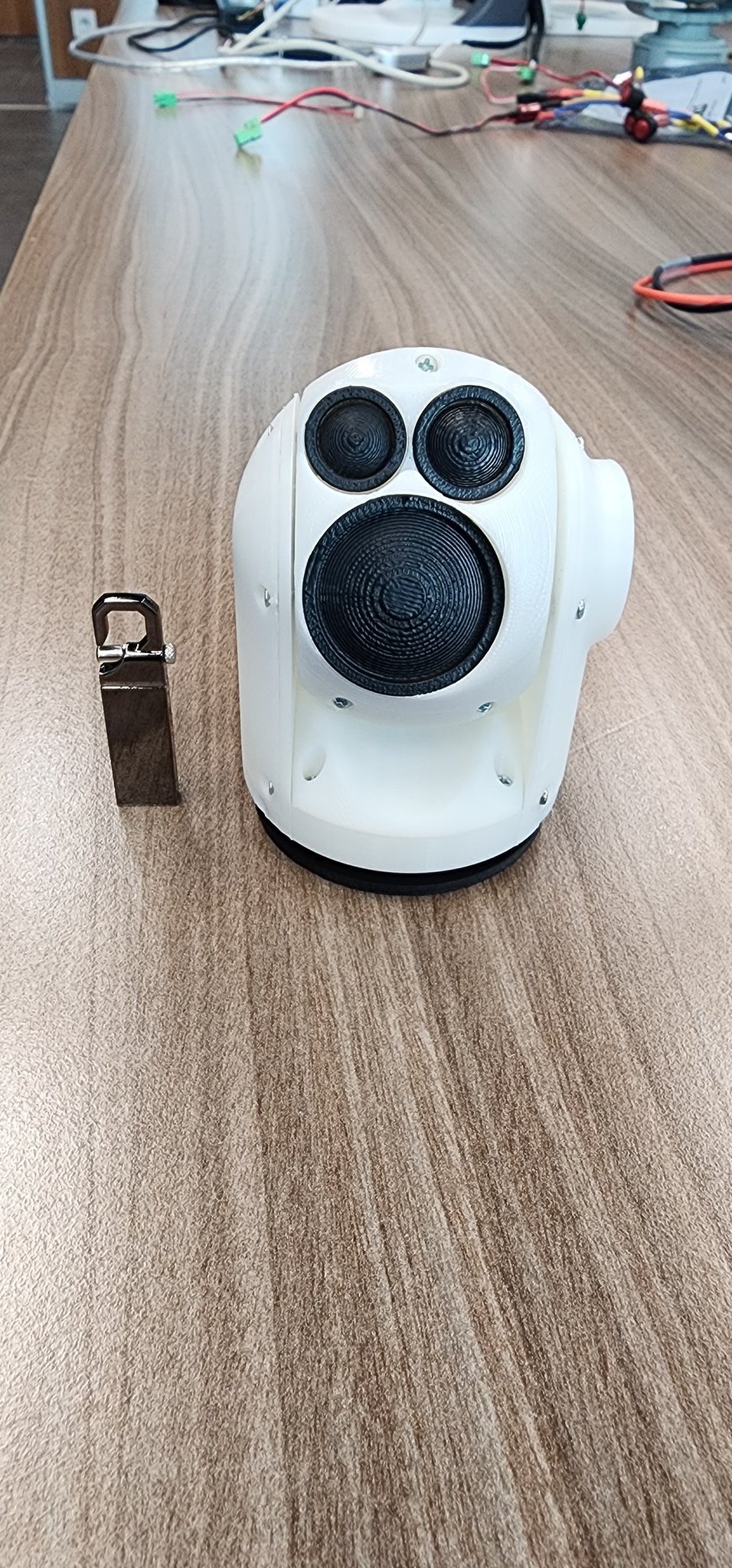
A product that is almost the size of two USB sticks (9x6cm), has 3 cameras (2xEO, 1xIR) and provides a stabilized image from a distance of approximately 2km is coming. With all its features, it will be the lightest and smallest in the world in its field. We will soon see it in the air

Ga5Q1INXQAAOWLN
 

Tuvan

Member
Messages
10
Reactions
2 34
Nation of residence
Turkey
Nation of origin
Turkey
🗺 Bayraktar Imaging

• Efficient, Smart, Precise
• 100 times higher resolution than satellites
• 100 times more coverage than quadcopter drones

Bringing the imaging system of the future into the present, Bayraktar Imaging provides instant information by collecting a large amount of data, as in earthquake damage assessment surveys in 2023.


GIS (Geographical Information System) pods probably most unrecognized yet one of the most important capability of UAVs. Baykar had a another company focused on rapid mapping capabilities.

Baykar, in fact, can compete with some of the mapping companies like Maxar. I think we can assert ourselves in the civilian sector by having or providing up to date images in developing countries along with GIS services (Basarsoft services as an example). It will also boost attractiveness of already existing military systems/platforms.
 

IC3M@N FX

Contributor
Messages
701
Reactions
3 30 1,432
Nation of residence
Germany
Nation of origin
Turkey
I hope it's a competitive radar system! Aircraft, fly-by-wire, radar, EW, friend-or-foe detection with target acquisition, avionics, communications systems that are non-jammable and tap-proof + countermeasures, missile/laser warning system.
We have never produced such a highly complex system that is so interconnected.
I'm really worried about whether the software is good enough, because that will be the Achilles heel: How fast and safe is it in real time in a combat situation? For example in close combat (dogfight) & beyond visual range combat or surveillance missions, is this data really reliable, can the pilot really rely on this data...
The other countries have decades of development of such systems behind them and therefore experience. We are talking here about evolutionary leaps from radar systems to new radar systems or from operating systems and software to new operating systems and software. We are practically starting from scratch.
I hope that it will not only be a competitive fighter aircraft on paper, but also in reality. ASELSAN & Co can say a lot about what this or that system can do, but it also has to deliver, and better than or at least equal to all other systems, otherwise the result of a conflict will be the death of the pilot.
 

Afif

Experienced member
Moderator
Bangladesh Correspondent
DefenceHub Diplomat
Bangladesh Moderator
Messages
5,139
Reactions
104 10,047
Nation of residence
Bangladesh
Nation of origin
Bangladesh
I hope it's a competitive radar system! Aircraft, fly-by-wire, radar, EW, friend-or-foe detection with target acquisition, avionics, communications systems that are non-jammable and tap-proof + countermeasures, missile/laser warning system.
We have never produced such a highly complex system that is so interconnected.
I'm really worried about whether the software is good enough, because that will be the Achilles heel: How fast and safe is it in real time in a combat situation? For example in close combat (dogfight) & beyond visual range combat or surveillance missions, is this data really reliable, can the pilot really rely on this data...
The other countries have decades of development of such systems behind them and therefore experience. We are talking here about evolutionary leaps from radar systems to new radar systems or from operating systems and software to new operating systems and software. We are practically starting from scratch.
I hope that it will not only be a competitive fighter aircraft on paper, but also in reality. ASELSAN & Co can say a lot about what this or that system can do, but it also has to deliver, and better than or at least equal to all other systems, otherwise the result of a conflict will be the death of the pilot.

I mean there is a reason why they do years of digital and real world testings. Aslesan had a good learning and growth curve. From Kalkan I in 2000s to all types new generation ESA (electronically scanned array) sensors in 2020s. MURAD is only constrained by its cooling capacity. Which unfortunately seems to be a bit low.
 

TheInsider

Experienced member
Professional
Messages
4,894
Solutions
1
Reactions
51 17,040
Nation of residence
Turkey
Nation of origin
Turkey
I mean there is a reason why they do years of digital and real world testings. Aslesan had a good learning and growth curve. From Kalkan I in 2000s to all types new generation ESA (electronically scanned array) sensors in 2020s. MURAD is only constrained by its cooling capacity. Which unfortunately seems to be a bit low.
I heard slightly different things about that issue. Murad has state of the art efficiency which means less power is turned into heat. Also since it is a pulsed radar, the average power is way lower than the total theoretical output power (1152*30W=34.56 kW).

Assume that we have 2 incandescent light bulbs (%10 efficiency) with 100W power draw. One of them is always on and the other one is switched on and of really fast (for pulses of light) and average on-time is only half of the other light bulb. The first one will draw 100W power, it will create 90W of heat and 10W will be radiated as light with a %10 efficiency. The second one will draw 50W power 45W heat and 5W light. Now assume that we have a light bulb with %50 efficiency and similar pulsed operation the amount of heat created will be 25W.
 

Afif

Experienced member
Moderator
Bangladesh Correspondent
DefenceHub Diplomat
Bangladesh Moderator
Messages
5,139
Reactions
104 10,047
Nation of residence
Bangladesh
Nation of origin
Bangladesh
I heard slightly different things about that issue. Murad has state of the art efficiency which means less power is turned into heat. Also since it is a pulsed radar, the average power is way lower than the total theoretical output power (1152*30W=34.56 kW).

Assume that we have 2 incandescent light bulbs (%10 efficiency) with 100W power draw. One of them is always on and the other one is switched on and of really fast (for pulses of light) and average on-time is only half of the other light bulb. The first one will draw 100W power, it will create 90W of heat and 10W will be radiated as light with a %10 efficiency. The second one will draw 50W power 45W heat and 5W light. Now assume that we have a light bulb with %50 efficiency and similar pulsed operation the amount of heat created will be 25W.

Of course, all radars of this type are pulsed radars. Continuous wave fire control/illumination radar has no relevant to this discussion. If we do some brainstorming with few rules of thumbs that we know, then this is what we get-

GaAs HPA (high power amplifier) can achieve power added efficiency (PAE) of around 40%. And GaN HPA can achieve PAE of around 50%. However, given there are others elements consuming power on T/R modules, such as switching circuitry, module control circuit, etc, overall module efficiency becomes much lower than PAE of only GaAs or GaN amplifiers, according to this paper.


Let's say if Aselsan achieved some 50%+ efficiency of its GaN amplifiers,
then overall T/R module efficiency could be reasonably around 33%.

So now, if MURAD wants to operate at 300KHz PRF then it means, it will draw some 10.3KW power assuming 1 microsecond pulse width. That means around 6.8KW turning into heat waste. And we know that MURAD's liquid cooling system is capable of 4.5KW cooling. If we left out 1.5KW for back-end hardware like estimated with APG-83 in the paper above, then 3KW cooling capacity is left for the array. So, now MURAD has to operate at less then 150 KHz PRF. And if it wants to emmit wider pulses (like two microsecond) then PRF is slashed further by half.

Maybe they can increase the cooling capacity with further updgrade potential as you said before. Or could it be that F16's 5.5kw air cooling capacity remains unchanged with Ozgur program along with built-in 4.5kw liquid cooling system of MURAD? Could it work like that? I don't know.

 
Last edited:

TheInsider

Experienced member
Professional
Messages
4,894
Solutions
1
Reactions
51 17,040
Nation of residence
Turkey
Nation of origin
Turkey
Of course, all radars of this type are pulsed radars. Continuous wave fire control/illumination radar has no relevant to this discussion. If we do some brainstorming with few rules of thumbs that we know, then this is what we get-

GaAs HPA (high power amplifier) can achieve power added efficiency (PAE) of around 40%. And GaN HPA can achieve PAE of around 50%. However, given there are others elements consuming power on T/R modules, such as switching circuitry, module control circuit, etc, overall module efficiency becomes much lower than PAE of only GaAs or GaN amplifiers, according to this paper.


Let's say if Aselsan achieved some 50%+ efficiency of its GaN amplifiers,
then overall T/R module efficiency could be reasonably around 33%.

So now, if MURAD wants to operate at 300KHz PRF then it means, it will draw some 10.3KW power assuming 1 microsecond pulse width. That means around 6.8KW turning into heat waste. And we know that MURAD's liquid cooling system is capable of 4.5KW cooling. If we left out 1.5KW for back-end hardware like estimated with APG-83 in the paper above, then 3KW cooling capacity is left for the array. So, now MURAD has to operate at less then 150 KHz PRF. And if it wants to emmit wider pulses (like two microsecond) then PRF is slashed further by half.

Maybe they can increase the cooling capacity with further updgrade potential as you said before. Or could it be that F16's 5.5kw air cooling capacity remains unchanged with Ozgur program along with built-in 4.5kw liquid cooling system of MURAD? Could it work like that? I don't know.
Yeah, this is very close to the info I have. The end-to-end efficiency of Murad radar is given from %35-%39 depending on broadcast frequency. 4.5 kW liquid cooling cools the radar antenna, modules and back-end hardware while military-grade fans and heat pipes cool the LRUs associated with the radar like processors etc. That package stays inside the limits of current cooling capacity of F-16. PRF is indeed 150 kHz for F-16 variant but i highly doubt 1.5 kW figure for the back end hardware. APG-83 is an old AESA radar at this point and shouldn't be taken as an example.
 

Afif

Experienced member
Moderator
Bangladesh Correspondent
DefenceHub Diplomat
Bangladesh Moderator
Messages
5,139
Reactions
104 10,047
Nation of residence
Bangladesh
Nation of origin
Bangladesh
Yeah, this is very close to the info I have. The end-to-end efficiency of Murad radar is given from %35-%39 depending on broadcast frequency. 4.5 kW liquid cooling cools the radar antenna, modules and back-end hardware while military-grade fans and heat pipes cool the LRUs associated with the radar like processors etc. That package stays inside the limits of current cooling capacity of F-16. PRF is indeed 150 kHz for F-16 variant but i highly doubt 1.5 kW figure for the back end hardware. APG-83 is an old AESA radar at this point and shouldn't be taken as an exampe.

Well, by back-end hardware I meant associated LRUs like REP. If it is cooled separately by other systems as you say and all of 4.5KW capacity of liquid cooling system is dedicated to the array (antennas and TRM packs), then this is great.

On another note, will KE use the same cooling system for its MURAD variant?
 

TheInsider

Experienced member
Professional
Messages
4,894
Solutions
1
Reactions
51 17,040
Nation of residence
Turkey
Nation of origin
Turkey
Well, by back-end hardware I meant associated LRUs like REP. If it is cooled separately by other systems as you say and all of 4.5KW capacity of liquid cooling system is dedicated to the array (antennas and TRM packs), then this is great.

On another note, will KE use the same cooling system for its MURAD variant?
Only the F-16 version of MURAD is finalized right now. F-16 version won't see any changes including cooling. Even though a MURAD prototype is flying on Akıncı, Akıncı version is still not finalized.

Kızılelma and a possible Anka-3 version will be different as those will work fully compatible with frequency-selective stealth radomes i expect some frequency bands to be blocked by hardware or software.

Hurjet might have a scaled-down version but the latest modification of the Hurjet nose suggests that it might have the same F-16 version.
 
Last edited:

Radko

Experienced member
Messages
1,521
Reactions
14 2,872
Nation of residence
Turkey
Nation of origin
Bosnia & Herzegovina
Well, by back-end hardware I meant associated LRUs like REP. If it is cooled separately by other systems as you say and all of 4.5KW capacity of liquid cooling system is dedicated to the array (antennas and TRM packs), then this is great.

On another note, will KE use the same cooling system for its MURAD variant?
it is only for the array iirc
 

TheInsider

Experienced member
Professional
Messages
4,894
Solutions
1
Reactions
51 17,040
Nation of residence
Turkey
Nation of origin
Turkey
Murad radar will draw ~6.5kW of power from the F-16 just like we calculated so we are on a good trajectory.
I also learned that everything except the signal processor is hooked up to the liquid cooling system. 4.5kW liquid cooling won't be maxed when radar draws 6.5kW energy there is some headroom. A small headroom is left due to dust accumulating on the radiator and refrigerant fluid loss in time.

Green is air-cooled, and blue is liquid. The antenna side is obviously liquid-cooled so I didn't put any circle. The antenna also loses heat naturally. Nearly the whole antenna assembly is copper.

muradliquid.jpg
 
Last edited:
Top Bottom