• Forum restore complete (see latest announcement thread)

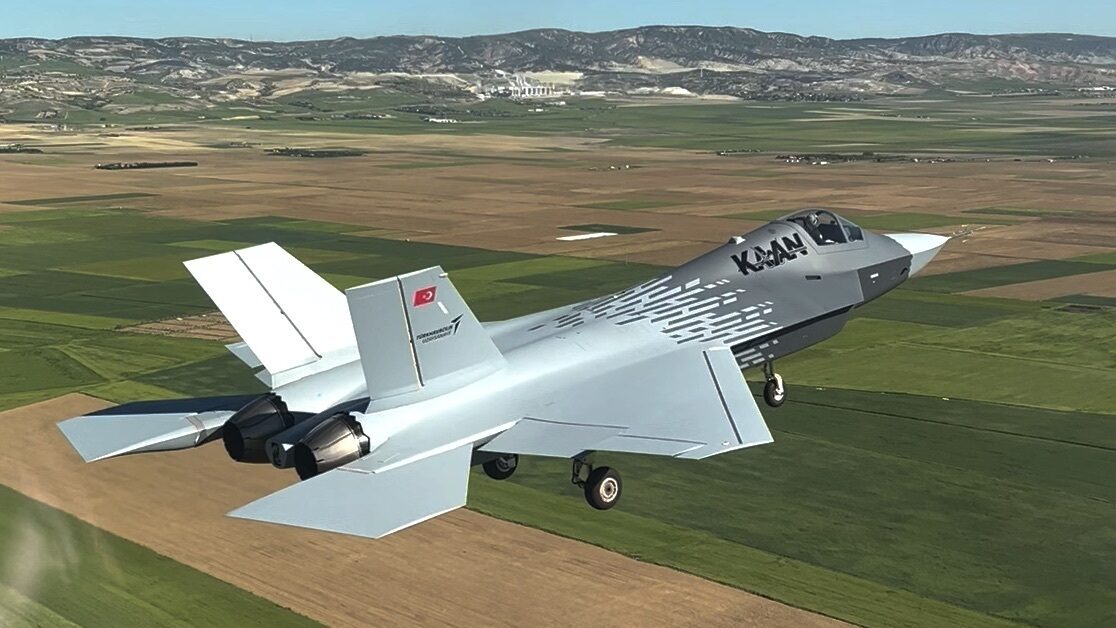
TR Air-Force TF-X KAAN Fighter Jet

Yasar_TR

Experienced member
Staff member
Administrator
Messages
4,280
Reactions
263 22,349
Nation of residence
United Kingdom
Nation of origin
Turkey
In this case, there are two possibilities: Either the WS-15 wasn't ready in 2006 and they lied to everyone, or they're so incompetent that they haven't yet been able to get the engine to the thrust level they're aiming for.
WS10,WS15 and all their siblings are engines developed from taking Russian AL31 class engines as a model and starting point. Chinese have had help from Safran as well in their quest for jet engine manufacturing. There is a crux where you hit the right note in engineering. Due to the deficiencies and contradictions present in Russian engine designs and the involvement of Safran which is in the western school of jet engine designs, they have not progressed as quickly as you would expect. Same happened to the Russians. They just couldn’t achieve transition from directionally solidified crystals to single crystals in their AL31 and AL41 series of engines.

First of all, TF 6000 engine was designed and developed from start to be a 6k lbf engine but it took years of work before it could even run reliably at 3,800 lbf.
When TF6000 program was started in 2017, Turkiye was negotiating with RR for the KAAN engine and only a year before that the UK prime minister had taken out all stops in helping us in our quest for 5th generation planes and engines.
Hence developing and producing TF6000 had no urgency attached to it. So it wasn’t until 2022 when the first prototype production was started. Had it not been for the under cover embargoes on auxiliary parts we had to manufacture ourselves, the engine’s first firing would have been in 2023 and not in 2024. So it wasn’t “ years of work” as you put it. Also as both the TF6000 and TF10000 won’t be propelling planes that carry human lives, their integration in to planes will most likely take place in much shorter a time.

When it comes to TF35000, TEI has enough expertise under its belly to overcome the difficulties that may lie ahead.
After all just look at the list of parts TEI produces for the F110 engine:

Specific F110 Engine Parts Produced by TEI:

  • Front Frame
  • Fan Stator
  • #2 Bearing Housing
  • Fan Rotor
  • Fan Frame
  • High Pressure Compressor Rotor (HPCR)
  • HPCR Forward Stator
  • HPCR Rear Stator
  • Combustion Diffuser Nozzle (CDN)
  • High Pressure Turbine (HPT) Shroud
  • HPT Nozzle
  • High Pressure Turbine Rotor (HPTR)
  • Low Pressure Turbine (LPT) Rotor
  • LPT Stage 1 Nozzle
  • LPT Stage 2 Nozzle
  • Turbine Frame
  • Bell Crank
  • Accessory Gearbox
  • Outer Duct
  • Exhaust Nozzle
  • Augmentor
As per Dr Aksit’s words they produce more than 50% of this engine. What is left is parts that come n from other subcontractors around the world. The only part GE provides is probably the 4th generation single crystal blades. TEI already achieved the manufacturing feat of 3rd generation Crystal blades.
 

Merzifonlu

Contributor
Think Tank Analyst
DefenceHub Diplomat
Messages
815
Reactions
28 2,496
Nation of residence
Turkey
Nation of origin
Turkey
I suggested using the TF35000 engine at lower power, but there's another risk. That's this: The TF35000 engine components contain elements like cobalt that aren't easily sourced from abroad. If we're producing these rare elements under license for the F110, we can obtain them through the USA.

BTW, claiming "Let's produce a domestic variant of the F110" is therefore unreasonable also. Anyway, let's continue.

For the TF35000, we need to source these rare elements ourselves, either through domestic production or by importing them. However, domestic production of these elements is unlikely to be viable by 2033, let alone 2029. While we've located the ore, the facilities are still under construction.
 
Last edited:

Zoth

Active member
Messages
144
Reactions
6 294
Nation of residence
Greece
Nation of origin
Turkey
WS10,WS15 and all their siblings are engines developed from taking Russian AL31 class engines as a model and starting point. Chinese have had help from Safran as well in their quest for jet engine manufacturing. There is a crux where you hit the right note in engineering. Due to the deficiencies and contradictions present in Russian engine designs and the involvement of Safran which is in the western school of jet engine designs, they have not progressed as quickly as you would expect. Same happened to the Russians. They just couldn’t achieve transition from directionally solidified crystals to single crystals in their AL31 and AL41 series of engines.


When TF6000 program was started in 2017, Turkiye was negotiating with RR for the KAAN engine and only a year before that the UK prime minister had taken out all stops in helping us in our quest for 5th generation planes and engines.
Hence developing and producing TF6000 had no urgency attached to it. So it wasn’t until 2022 when the first prototype production was started. Had it not been for the under cover embargoes on auxiliary parts we had to manufacture ourselves, the engine’s first firing would have been in 2023 and not in 2024. So it wasn’t “ years of work” as you put it. Also as both the TF6000 and TF10000 won’t be propelling planes that carry human lives, their integration in to planes will most likely take place in much shorter a time.

When it comes to TF35000, TEI has enough expertise under its belly to overcome the difficulties that may lie ahead.
After all just look at the list of parts TEI produces for the F110 engine:

Specific F110 Engine Parts Produced by TEI:

  • Front Frame
  • Fan Stator
  • #2 Bearing Housing
  • Fan Rotor
  • Fan Frame
  • High Pressure Compressor Rotor (HPCR)
  • HPCR Forward Stator
  • HPCR Rear Stator
  • Combustion Diffuser Nozzle (CDN)
  • High Pressure Turbine (HPT) Shroud
  • HPT Nozzle
  • High Pressure Turbine Rotor (HPTR)
  • Low Pressure Turbine (LPT) Rotor
  • LPT Stage 1 Nozzle
  • LPT Stage 2 Nozzle
  • Turbine Frame
  • Bell Crank
  • Accessory Gearbox
  • Outer Duct
  • Exhaust Nozzle
  • Augmentor
As per Dr Aksit’s words they produce more than 50% of this engine. What is left is parts that come n from other subcontractors around the world. The only part GE provides is probably the 4th generation single crystal blades. TEI already achieved the manufacturing feat of 3rd generation Crystal blades.
What im trying to emphasize is not whether TEI can build an engine at the level of TF35K or not, cutting the engine to 30k from 35k lbf would change nothing in terms of time of development, that was the whole emphasize.

Edit: if you want to compare TF6k time production to TF35K, also include TF10K, which will be the engine with afterburner.
 
Last edited:

Afif

Experienced member
Moderator
Bangladesh Correspondent
DefenceHub Diplomat
Bangladesh Moderator
Messages
5,139
Reactions
104 10,047
Nation of residence
Bangladesh
Nation of origin
Bangladesh
WS10,WS15 and all their siblings are engines developed from taking Russian AL31 class engines

Actually, WS10 is based on CFM56 civilian engine core.

As for WS15, it is an indigenous design utilises indigenous single crystal blade technology. Which Russian AL31 doesn't afaik. That's why it took so long to develop compared to WS10 iterations.
 

TheInsider

Experienced member
Professional
Messages
4,894
Solutions
1
Reactions
51 17,040
Nation of residence
Turkey
Nation of origin
Turkey
Actually, WS10 is based on CFM56 civilian engine core.

As for WS15, it is an indigenous design utilises indigenous single crystal blade technology. Which Russian AL31 doesn't afaik. That's why it took so long to develop compared to WS10 iterations.
WS-10 is an upgraded/modified AL31 with CFM56 technologies. As you wrote, WS-15 is a different engine. WS-10 has better overhaul/MTBF period compared to AL31. WS-15 is comparable to Western engines, such as the F-110.
 

Ripley

Contributor
Think Tank Analyst
DefenceHub Diplomat
Messages
1,431
Reactions
51 4,581
Nation of residence
United States of America
Nation of origin
Turkey
I wouldn't say that. We have only seen a part of the airframe previously. They probably added many components by now.
And yet they gave a full tour of the assembly hall to Istanbul Chamber of Commerce members! Why would they do that 😅

This show off or propaganda or whatever they call it, is getting ridiculous by the day. It must be stopped.
 

Sanchez

Experienced member
Moderator
Think Tank Analyst
DefenceHub Diplomat
Messages
4,193
Reactions
127 19,054
Nation of residence
Turkey
Nation of origin
Turkey
Wind tunnel miniature.

Looks like the vertical stabs moved to the sides?

1761391569939.png


1761391581588.png


begturan

Well-known member
Messages
346
Reactions
4 633
Nation of residence
Turkey
Nation of origin
Turkey
We are not going to have 40 Kaan by 2030, even in the best case scenario and trying to use Akıncı for a2a combat would be like trying to use bicycle to fight a tank. And Hürjet is trainer first, we don't even know if its light attack version will be ready by then; not that it would matter, it will always be inferior to proper fighters whether 4th gen or 5th.

A common statement from TAI executives and Defense Industry officials is that the first phase targets 20 KAAN (block 10) aircraft, often referred to as 2028 delivery.

This alone guarantees 20. The same sources also mention production ramp-ups ("2 aircraft per month in 2029" or a rapid increase between 2029 and 2030) and TAI's plans to transition to mass production; if this pace is maintained, an additional 20 aircraft (40 total) are possible between 2028 and 2030.

Furthermore, external orders (such as the Indonesian 48-unit agreement) could impact the production schedule. Therefore, 20–40 aircraft is a reasonable short-term range.


We seem to be underestimating the Akıncı. After all, this aircraft can stay airborne 24 hours a day, can carry sufficient air-to-air munitions under its fuselage, and has an EW pod and AESA radar. The first aircraft to spot it on radar fires the first shot, and the first aircraft to fire usually shoots down the enemy aircraft.

As for the Hürjets, yes, they are planned as trainers, but in times of urgent need or when we want to sufficiently saturate the air force, we can convert them to a light attack version as a reserve force. Technically, the Hürjet is not much different from the T50.

As Iskander noted, even aircraft from World War II were called into service in the Ukrainia/Russia war. Saturation is a very important parameter in wartime. With proper planning, where air forces act in coordination, each aircraft becomes a force multiplier. The more technology is a deterrent, the more numbers are a deterrent.
 

Zafer

Experienced member
Messages
5,654
Reactions
15 8,712
Nation of residence
Turkey
Nation of origin
Turkey
A common statement from TAI executives and Defense Industry officials is that the first phase targets 20 KAAN (block 10) aircraft, often referred to as 2028 delivery.

This alone guarantees 20. The same sources also mention production ramp-ups ("2 aircraft per month in 2029" or a rapid increase between 2029 and 2030) and TAI's plans to transition to mass production; if this pace is maintained, an additional 20 aircraft (40 total) are possible between 2028 and 2030.

Furthermore, external orders (such as the Indonesian 48-unit agreement) could impact the production schedule. Therefore, 20–40 aircraft is a reasonable short-term range.


We seem to be underestimating the Akıncı. After all, this aircraft can stay airborne 24 hours a day, can carry sufficient air-to-air munitions under its fuselage, and has an EW pod and AESA radar. The first aircraft to spot it on radar fires the first shot, and the first aircraft to fire usually shoots down the enemy aircraft.

As for the Hürjets, yes, they are planned as trainers, but in times of urgent need or when we want to sufficiently saturate the air force, we can convert them to a light attack version as a reserve force. Technically, the Hürjet is not much different from the T50.

As Iskander noted, even aircraft from World War II were called into service in the Ukrainia/Russia war. Saturation is a very important parameter in wartime. With proper planning, where air forces act in coordination, each aircraft becomes a force multiplier. The more technology is a deterrent, the more numbers are a deterrent.
Isn't a Hürjet LCA already planned for 2027, yes it is. Based on this we even offered our Hürjet LCA to Malaysia against the T50 but we were still in development so we lost. If the Malaysians knew that we would progress so rapidly they would have probably chosen Hürjet instead. We had even started to acclimatize ourselves to the palm oil payment that was part of the tender requirements.
 
Last edited by a moderator:

Lool

Experienced member
Messages
3,547
Reactions
20 5,862
Nation of residence
Albania
Nation of origin
Albania
A common statement from TAI executives and Defense Industry officials is that the first phase targets 20 KAAN (block 10) aircraft, often referred to as 2028 delivery.

This alone guarantees 20. The same sources also mention production ramp-ups ("2 aircraft per month in 2029" or a rapid increase between 2029 and 2030) and TAI's plans to transition to mass production; if this pace is maintained, an additional 20 aircraft (40 total) are possible between 2028 and 2030.

Furthermore, external orders (such as the Indonesian 48-unit agreement) could impact the production schedule. Therefore, 20–40 aircraft is a reasonable short-term range.

Bro, the most recent statements from TAI indicated that KAAN first serial production fighters wont be available except on 2032
Here is the most recent time schedule

🔺️2026- firing of the TEI-TF 10000 and second & third KAAN prototypes running on foreign engines
🔺️2027- fourth and fifth (possibly) KAAN prototype and firing of TEI-TF35000
🔺️2029- delivery of the first domestic TEI TF-35000 to be incorporated into KAAN for testing
🔺️2029 till 2032- testing of the domestic engines on KAAN
🔺️2032- if everything goes smoothly, first KAAN fighters with domestic engines to be supplied to the TAF

The US clearly refused to either give the Turks the rights for developing serial production engines for KAAN or even selling engines made in the US thx to greek and jewish lobbies

Last month, TAI officials clearly said that KAAN will only fly with a domestic engine and that only the prototypes will fly with foreign engines

Thus, I still cant understand how will 20 KAANs will be delivered on 2028, which is 3 years from now, when there is only one prototype available till date. Just look how long the KF-21 test took the koreans till date and yet it still hasnt entered serial production and this is while considering the fact that they have 4-5 prototypes already
 
Last edited:

begturan

Well-known member
Messages
346
Reactions
4 633
Nation of residence
Turkey
Nation of origin
Turkey
Bro, the most recent statements from TAI indicated that KAAN first serial production fighters wont be available except on 2032
Here is the most recent time schedule

🔺️2026- firing of the TEI-TF 10000 and second & third KAAN prototypes running on foreign engines
🔺️2027- fourth and fifth (possibly) KAAN prototype and firing of TEI-TF35000
🔺️2029- delivery of the first domestic TEI TF-35000 to be incorporated into KAAN for testing
🔺️2029 till 2032- testing of the domestic engines on KAAN
🔺️2032- if everything goes smoothly, first KAAN fighters with domestic engines to be supplied to the TAF

The US clearly refused to either give the Turks the rights for developing serial production engines for KAAN or even selling engines made in the US thx to greek and jewish lobbies

Last month, TAI officials clearly said that KAAN will only fly with a domestic engine and that only the prototypes will fly with foreign engines
I missed that part, thanks for the info. I was thinking that once the F404 engines were approved, the F110 engines would probably be sold as well. So, the project has been rescheduled without the F110 engines. Everything depends on the success of the TF35000, then.
 

Zafer

Experienced member
Messages
5,654
Reactions
15 8,712
Nation of residence
Turkey
Nation of origin
Turkey
I missed that part, thanks for the info. I was thinking that once the F404 engines were approved, the F110 engines would probably be sold as well. So, the project has been rescheduled without the F110 engines. Everything depends on the success of the TF35000, then.
F110 engines won't make Kaan a top stealth fighter so they will probably be sold.
 

Brokengineer

Committed member
Messages
242
Reactions
1 497
Nation of residence
Turkey
Nation of origin
Turkey
EF deal reduced some pressure on the KAAN project in terms of f110 engine acquisition. KAAN's frames will be tested on f110 engines currently available, then there will ve tf35000 switch for serial production hopefully. TF35000 is massive milestone in both Turkish Defense and Engine development history. So it will be better a little late than never.
 

Radko

Experienced member
Messages
1,521
Reactions
14 2,872
Nation of residence
Turkey
Nation of origin
Bosnia & Herzegovina
EF deal reduced some pressure on the KAAN project in terms of f110 engine acquisition. KAAN's frames will be tested on f110 engines currently available, then there will ve tf35000 switch for serial production hopefully. TF35000 is massive milestone in both Turkish Defense and Engine development history. So it will be better a little late than never.
How does it reduce the pressure? Kaan and EF are not at the same level of capability. Urgency of Kaan remains the same as before
 

Ripley

Contributor
Think Tank Analyst
DefenceHub Diplomat
Messages
1,431
Reactions
51 4,581
Nation of residence
United States of America
Nation of origin
Turkey
How does it reduce the pressure? Kaan and EF are not at the same level of capability. Urgency of Kaan remains the same as before
Urgency of Kaan is obviously unquestionable but also there’s a bit of truth in what he says. Acquisition of EFs will provide some room to TurAF to breathe in by gaining some capabilities which it lacks and lagging behind other air forces in the region.
This in return will remove some pressure off the TurAF but Kaan is and will always stay the priority of Turkish defense industry.
 
Top Bottom