• Forum restore complete (see latest announcement thread)

TR Air-Force TF-X KAAN Fighter Jet

godel44

Committed member
Messages
167
Reactions
8 505
Nation of residence
Turkey
Nation of origin
Turkey
Here in this interview on Kaner’s channel, around 11:45 mark, Özgür Ekşi says that he once asked military technicians in Eskisehir if the F-110 engines in F-16s can be used in dual engine mode for Kaan and they answered they can easily make it work. It was sometimes said here this is not technically possible due to FADEC software and turning direction of the engines but it seems to be technically very feasible. Other obvious problems like legal licensing and F-16 availability notwithstanding of course.
 

Yasar_TR

Experienced member
Staff member
Administrator
Messages
4,280
Reactions
263 22,349
Nation of residence
United Kingdom
Nation of origin
Turkey
Here in this interview on Kaner’s channel, around 11:45 mark, Özgür Ekşi says that he once asked military technicians in Eskisehir if the F-110 engines in F-16s can be used in dual engine mode for Kaan and they answered they can easily make it work. It was sometimes said here this is not technically possible due to FADEC software and turning direction of the engines but it seems to be technically very feasible. Other obvious problems like legal licensing and F-16 availability notwithstanding of course.
If enough time and energy is spent on conversion they can be used.
But remember that KAAN’s motor connections to body and F16’s are in totally different positions. You can’t just swap. Also FADEC as you mentioned needs to be programmed to suit a twin engined performance. FADEC (Full Authority Digital Engine/Electronics Control) controls the engine‘s air and fuel mix, controls pilot’s inputs and makes sure engines work in optimum and most efficient manner during flight when the plane undertakes difficult manoeuvres. These changes from plane to plane a hell of a lot. So specific sensors for specific planes sends info to FADEC. And FADEC makes sure the engine performs as it is required from it.

Rotation direction is wrong info. All f110 engines rotate in counterclockwise when look ed at it from the front, as all GE and P&W engines do ; be it single or twin engined. Yet most RR engines rotate in clockwise direction. That includes the EJ200 on Typhoon.

Legal issue is also a point.
 
Last edited:

hugh

Contributor
Messages
567
Reactions
17 1,533
Nation of residence
Turkey
Nation of origin
Turkey
it feels weird to share the words of opposition leader as a source but he says he was told at TUSAŞ that KAAN will fly with indigenous engines in 2032-2033.


Give it a watch. he pretty much nailed it. some factions of CHP are pretty dumb and have an inferiority complex that runs deep when it comes to national projects. This perspective was a breath of fresh air which I hope could cure some of his followers.
 

Lool

Experienced member
Messages
3,547
Reactions
20 5,862
Nation of residence
Albania
Nation of origin
Albania
it feels weird to share the words of opposition leader as a source but he says he was told at TUSAŞ that KAAN will fly with indigenous engines in 2032-2033.


Give it a watch. he pretty much nailed it. some factions of CHP are pretty dumb and have an inferiority complex that runs deep when it comes to national projects. This perspective was a breath of fresh air which I hope could cure some of his followers.
What the guys at TUSAS meant is that serial production of KAAN with the national engine will begin in 2032/2033 which is something all of us knew from the beginning of the year

From what I remember, KAAN's first engine firing by TEI/TR Motor will be in 2026 and after 2-3 years of testing (depending on results), the engine will be incorporated into KAAN during the end of 2028/2029 for more testing till 2032/2033 (depending on test results) followed by serial production

The timeline remains unchanged.
 

hugh

Contributor
Messages
567
Reactions
17 1,533
Nation of residence
Turkey
Nation of origin
Turkey
What the guys at TUSAS meant is that serial production of KAAN with the national engine will begin in 2032/2033 which is something all of us knew from the beginning of the year

From what I remember, KAAN's first engine firing by TEI/TR Motor will be in 2026 and after 2-3 years of testing (depending on results), the engine will be incorporated into KAAN during the end of 2028/2029 for more testing till 2032/2033 (depending on test results) followed by serial production

The timeline remains unchanged.
To my recollection, i have never seen any info on TF35000's first firing or the start of a prototype building. What we were told is that some early tests will be conducted in 2026. That doesn't mean a prototype. It will be a test article for early testing before committing to a prototype. So it's a part of the engine that will be tested on a specialized rig. It could belong to the compressor, combustion chamber, turbine section and what not.

When they start to build the prototype, it will take 1.5-2 years before it's completed and perform its first firing. We will be shown its full-scale mock-up before the prototype. But that requires an advanced stage in development. The program is still in preliminary-design phase. I for one would feel ecstatic if they could fire the engine first time by 2028.
 

Spitfire9

Contributor
Think Tank Analyst
Messages
1,272
Reactions
17 1,665
Nation of residence
United Kingdom
Nation of origin
United Kingdom
To my recollection, i have never seen any info on TF35000's first firing or the start of a prototype building. What we were told is that some early tests will be conducted in 2026. That doesn't mean a prototype. It will be a test article for early testing before committing to a prototype. So it's a part of the engine that will be tested on a specialized rig. It could belong to the compressor, combustion chamber, turbine section and what not.

When they start to build the prototype, it will take 1.5-2 years before it's completed and perform its first firing. We will be shown its full-scale mock-up before the prototype. But that requires an advanced stage in development. The program is still in preliminary-design phase. I for one would feel ecstatic if they could fire the engine first time by 2028.
If things work out IMO KAAN will have very good sales prospects when it becomes available with TF35000. Su-75 looks like it will never progress past being a dream. If KF-21 is still stuck with GE F414 in ten years' time, the US will have a veto on who buys it. Same for AMCA, which is unlikely to have a non-US engine until around 2040 IMO.

I you don't want F-35 or cannot buy it, KAAN looks like it will be the best (and perhaps only) 5G choice for you for quite a few years from the early 2030's.
 

Huelague

Experienced member
Messages
5,381
Reactions
19 5,413
Nation of residence
Germany
Nation of origin
Turkey
How tho.

There will lots of pressure and sanctions in the process and currently Turkiye is a member of NPT.
As we can see around us in the world, intentional agreements and contracts means a fack! Worthless like the paper on they were written.
 

Samba

Committed member
Messages
254
Reactions
4 422
Nation of residence
Turkey
Nation of origin
Turkey
As we can see around us in the world, intentional agreements and contracts means a fack! Worthless like the paper on they were written.
Yeah they work only if they benefit us and Israel. Since Türkiye getting nukes will work for Israel and us treaties, sanctions will be put onto effect including the last letter.
 

Zoth

Active member
Messages
144
Reactions
6 294
Nation of residence
Greece
Nation of origin
Turkey
it feels weird to share the words of opposition leader as a source but he says he was told at TUSAŞ that KAAN will fly with indigenous engines in 2032-2033.


Give it a watch. he pretty much nailed it. some factions of CHP are pretty dumb and have an inferiority complex that runs deep when it comes to national projects. This perspective was a breath of fresh air which I hope could cure some of his followers.
Kaan may fly with indigenous engines in 2032-2033 for test purpose, similar to other countries' tests, 1 f110 + f1 tf35k, but that does not mean those engines will be ready at 2032-2033.

If the information given is coming from a politician, i would think 10 times before trusting on what the politican said, they are the least educated on these topics, even less than normal citizens.
 

Rooxbar

Contributor
Think Tank Analyst
Messages
944
Reactions
71 2,897
Nation of residence
Nethelands
Nation of origin
Turkey
What the guys at TUSAS meant is that serial production of KAAN with the national engine will begin in 2032/2033 which is something all of us knew from the beginning of the year

From what I remember, KAAN's first engine firing by TEI/TR Motor will be in 2026 and after 2-3 years of testing (depending on results), the engine will be incorporated into KAAN during the end of 2028/2029 for more testing till 2032/2033 (depending on test results) followed by serial production

The timeline remains unchanged.
Yes, some people act like the 2028/29 date is the date of full maturation and incorporation into a block of Kaans. 2028/29 is the date for incorporation into a Kaan for further testing and maturation, which is still an ambitious timeline for such a project but it has been hinted at that the engine itself will also be a work in progress in terms of technologies and generational capacity, hence the first iteration will probably be more akin to a F110 than to a F135, a factor which would make the timeline more plausible. Even then I think it will be delayed to 2031, with full maturation coming sometime in the second half of 2030s.
 

2033

Committed member
Messages
204
Reactions
4 417
Nation of residence
Turkey
Nation of origin
Turkey
Is it feasible to use the Tf35000 engine in the initial blocks of Kaan before it’s fully matured? Some Twitter experts(!) suggest that once the engine reaches 2/3 of its power, it could already fly the Kaan.
 

BalkanTurk90

Contributor
Messages
921
Reactions
5 1,355
Nation of residence
Albania
Nation of origin
Turkey
All of u are talking about KAAN engine which we are developing it , it can take 10 years from now to fully mature (2035) but i want answers about what will happen wşth f404 of hurjets & Lm 2500 of warships ?
 

Merzifonlu

Contributor
Think Tank Analyst
DefenceHub Diplomat
Messages
815
Reactions
28 2,496
Nation of residence
Turkey
Nation of origin
Turkey
Is it feasible to use the Tf35000 engine in the initial blocks of Kaan before it’s fully matured? Some Twitter experts(!) suggest that once the engine reaches 2/3 of its power, it could already fly the Kaan.
I'm not an expert, but I would suggest the same.

My reference for this is Prof. Akşit's statement about the TF-6000: "Our TF-6000 engine has already achieved 3800 lbf of thrust. It is even capable of being used in its current state during an emergency." This means that engines like the TF-6000 can quickly reach two-thirds of their targeted thrust level and can even be used in this state in an emergency.

If this can happen with the TF-6000 engine, why not with the TF35000 engine?
 
Last edited:

Zoth

Active member
Messages
144
Reactions
6 294
Nation of residence
Greece
Nation of origin
Turkey

Rooxbar

Contributor
Think Tank Analyst
Messages
944
Reactions
71 2,897
Nation of residence
Nethelands
Nation of origin
Turkey
I'm not an expert, but I would suggest the same.

My reference for this is Prof. Akşit's statement about the TF-6000: "Our TF-6000 engine has already achieved 3800 lbf of thrust. It is even capable of being used in its current state during an emergency." This means that engines like the TF-6000 can quickly reach two-thirds of their targeted thrust level and can even be used in this state in an emergency.

If this can happen with the TF-6000 engine, why not with the TF35000 engine?
I think the Chinese might be doing something like this with WS-15, for all we know. It's funny though that they announced the engine is ready back in 2006 and it still hasn't been fully integrated.
 

Merzifonlu

Contributor
Think Tank Analyst
DefenceHub Diplomat
Messages
815
Reactions
28 2,496
Nation of residence
Turkey
Nation of origin
Turkey
I think the Chinese might be doing something like this with WS-15, for all we know. It's funny though that they announced the engine is ready back in 2006 and it still hasn't been fully integrated.
In this case, there are two possibilities: Either the WS-15 wasn't ready in 2006 and they lied to everyone, or they're so incompetent that they haven't yet been able to get the engine to the thrust level they're aiming for.
 

Zoth

Active member
Messages
144
Reactions
6 294
Nation of residence
Greece
Nation of origin
Turkey
I'm not an expert, but I would suggest the same.

My reference for this is Prof. Akşit's statement about the TF-6000: "Our TF-6000 engine has already achieved 3800 lbf of thrust. It is even capable of being used in its current state during an emergency." This means that engines like the TF-6000 can quickly reach two-thirds of their targeted thrust level and can even be used in this state in an emergency.

If this can happen with the TF-6000 engine, why not with the TF35000 engine?
Ah, i don't know from where to start to explain, let's start.

First of all, TF 6000 engine was designed and developed from start to be a 6k lbf engine but it took years of work before it could even run reliably at 3,800 lbf. The big chunk of time wasn't about getting the last 2,000 lbf; it was about getting the core architecture right in the first place.


TF6000 Engine Simplified Timeline:

2017: Project Start

2023: Critical Design Review (CDR)

2024/2025: First Prototype

2025+: Testing Begins

202X: Mass Production?

And this is an engine that is not AB capable, that will be the TF10K which we heard nothing of, do i have to say how many extra years will it take for it to finish?

Same story with the TF35000. Saying "we'll use it at 2/3 power(23K lbf) for the first planes" sounds good, and it's probably the plan. But that doesn't magically shave years off the schedule. You still have to go through the entire, long process of designing, building, and testing the core just to get it to that stable 23,000 lbf state.

So yeah, the idea is right, but the clock doesn't reset. The core R&D is the fixed timeline, whether you're targeting full power or a partial one. You still gotta build the whole house before you can decide to only furnish the ground floor.


Where this approach really saves us is if we hit a wall with materials. If we can't yet make the turbine blades and composites that can handle the full stress and heat of 35,000 lbf, we can still fly. We just dial back the power and use the engine at a thrust level our current materials can handle. It gets the jet in the air while we continue to develop the tougher parts for the full-power version.

TLDR;
The engine wont be ready before at least 2035, if TEI makes the unimaginable, at the best case scenario we will see matured TF3X00 engine not before 2032-2033.
 

Fuzuli NL

Experienced member
Germany Correspondent
Messages
3,587
Reactions
60 10,080
Nation of residence
Germany
Nation of origin
Turkey


Spain Shocks NATO: F-35 Fighter Deal Scrapped, Turkey’s KAAN Stealth Jet Emerges as Strategic Alternative​


Spain’s dramatic cancellation of the F-35 Lightning II programme has thrown NATO’s airpower plans into disarray, with analysts now pointing to Turkey’s KAAN stealth fighter as a potential strategic alternative.​


ImageEnglishInternationalNews
By admin On Oct 4, 2025


KAAN
KAAN


Share


(DEFENCE SECURITY ASIA) — Spain’s unexpected decision to abandon its long-discussed acquisition of the U.S.-built F-35 Lightning II has sent shockwaves through Europe’s defence and security community.

The announcement, formally confirmed by the Spanish Ministry of Defence in August 2025, represents one of the most dramatic reversals in European airpower procurement in recent memory.

Norway
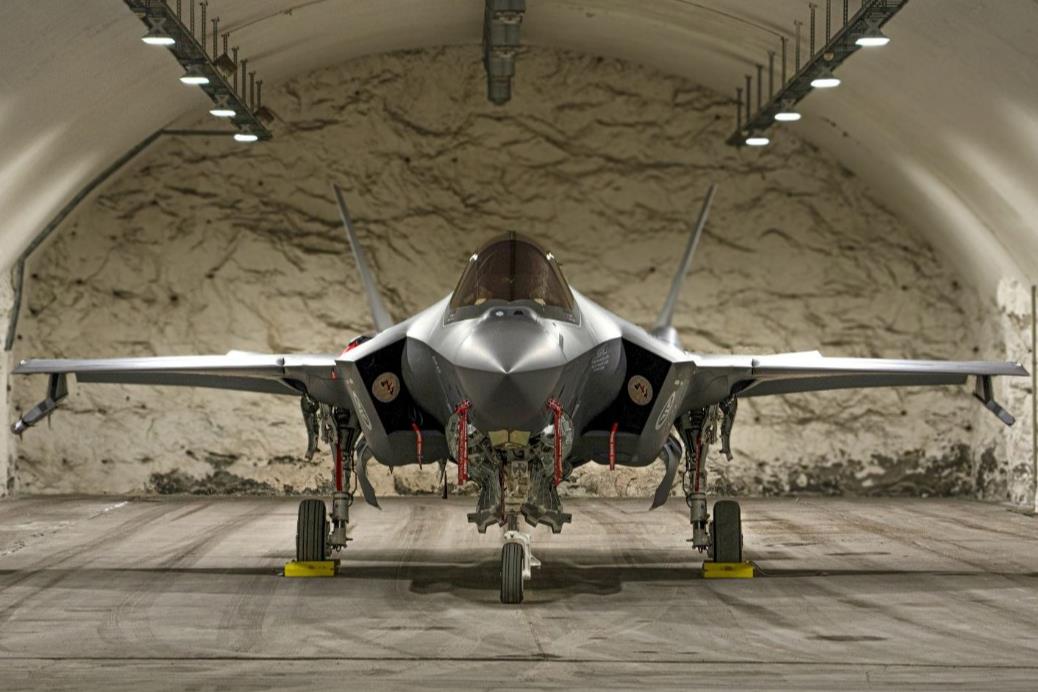
Norwegian F-35 inside the Bardufoss Mountain Air Station.
For years, Washington had considered Madrid a likely F-35 customer, particularly for the F-35B variant to replace Spain’s aging Harrier fleet.


Yet, in a move reflecting shifting strategic priorities, Spain has chosen to chart an alternative path that avoids dependence on U.S. technology.

This vacuum of choice has sparked intense debate among analysts about what options Spain might pursue to maintain its aerial combat credibility.

Among the contenders now attracting serious attention is Turkey’s ambitious fifth-generation KAAN stealth fighter, a project that Ankara has been positioning as a viable alternative to Western platforms.


Spanish defence commentators argue that KAAN could serve as a stopgap bridge until the European-led Future Combat Air System (FCAS) matures in the 2040s.


The possibility of Spain turning to a Turkish-developed platform highlights the growing diversification of procurement strategies within NATO.


It also underscores Europe’s wider struggle between reliance on U.S. defence dominance and the drive for technological sovereignty across the continent.

In essence, Spain’s F-35 cancellation has not only reshaped its national defence trajectory but also elevated Turkey’s KAAN into the spotlight as a potential strategic alternative with profound implications for NATO’s future airpower balance.


Spain’s F-35 Ambitions and Their Abrupt Cancellation​


Spain’s flirtation with the F-35 program dates back to 2023, when its government allocated approximately €6.25 billion ($7.24 billion) to modernise its combat air fleet.

The Spanish Navy had been particularly eager to secure the F-35B short takeoff and vertical landing (STOVL) variant, which was seen as the only viable successor to its aging Harrier AV-8B “Matador” fleet that is set to retire by 2030.

Meanwhile, the Spanish Air Force had considered the F-35A variant as a transitional stopgap while awaiting the Future Combat Air System (FCAS), a Franco-German-Spanish sixth-generation project plagued by delays and internal squabbling.

On 6 August 2025, however, the Ministry of Defence stunned observers by announcing that Madrid would no longer pursue the F-35.


Instead, it pledged to redirect funds into strengthening its Eurofighter Typhoon fleet and expediting its participation in FCAS.

The reversal was the product of three interlinked dynamics: cost, geopolitics, and sovereignty.
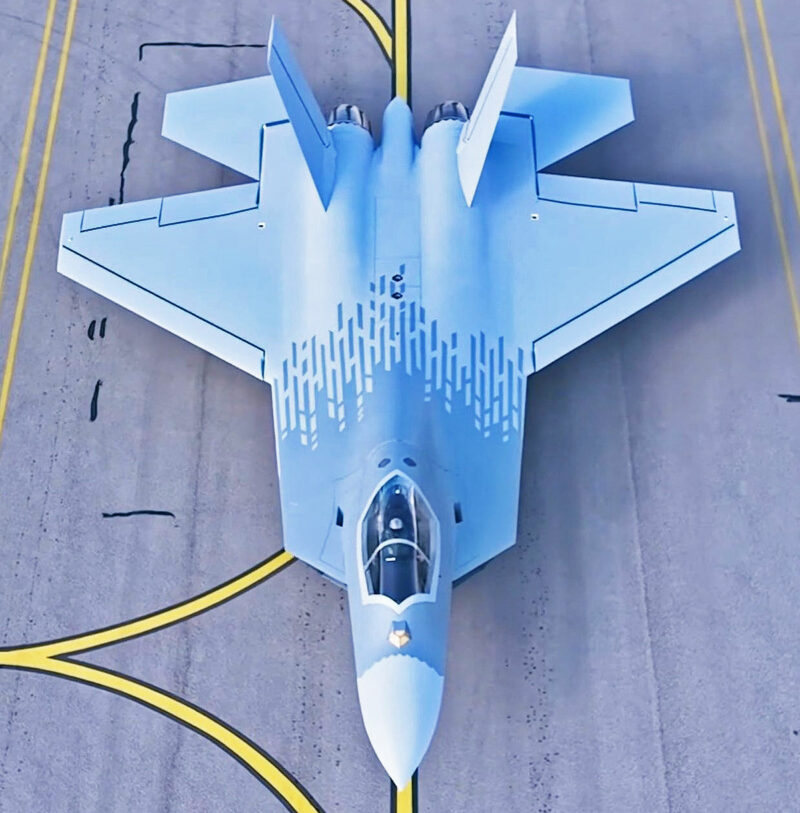
KAAN
“KAAN”.
Crucially, Spanish defence planners concluded that investing further in the Eurofighter—an aircraft co-produced by Airbus, BAE Systems, and Leonardo—would not only extend the fighter’s operational relevance through the planned ECRS Mk2 radar and electronic warfare upgrades but also safeguard thousands of domestic aerospace jobs.

At the same time, Madrid’s withdrawal from the F-35 procurement reflects a growing European consensus that the continent should not be perpetually dependent on U.S.-driven defence ecosystems, especially at a moment when transatlantic relations are strained by divergent political and economic priorities.


Analysts also highlight that Spain’s choice carries implications for NATO’s force posture, since the absence of the F-35B narrows the alliance’s pool of STOVL-capable jets—leaving Italy and the United Kingdom as the only European operators able to deploy such fighters from light carriers and amphibious ships.

Finally, the Spanish decision has been interpreted in Ankara as a strategic opportunity, with Turkish officials privately suggesting that KAAN’s future navalised variant could one day serve aboard Spain’s next-generation aircraft carrier, thereby filling the STOVL gap with a different technological trajectory.


Cost and Budgetary Priorities​


The F-35 has long been criticised for its escalating lifecycle expenses.


Although Lockheed Martin advertises the jet’s unit cost at around $82 million for the F-35A, real-world acquisition and sustainment costs for foreign customers often exceed $100–120 million per aircraft.

For Spain, analysts calculated that the total programme—including maintenance, logistics, and software upgrades—could balloon well beyond €10 billion.

This figure clashed with Spain’s defence budgetary priorities, especially given its commitment to allocate the bulk of its €10.5 billion 2025–2030 defence spending increase toward European collaborative projects.

Madrid’s fiscal calculus aligned with an emerging trend across NATO: escalating concerns over the long-term financial sustainability of the F-35 fleet.


Adding to this pressure, U.S. Government Accountability Office (GAO) reports from mid-2025 confirmed that the global F-35 fleet continues to face mission-capable rates below 60 percent, with rising sustainment costs outpacing initial forecasts.

European operators such as Norway and the Netherlands have already flagged the financial strain of maintaining F-35 availability, with some analysts warning that smaller air forces may ultimately be forced to scale down their fleets.

For Spain, committing to such a costly platform risked siphoning funds from its domestic aerospace industry, where Airbus-led projects like the Eurofighter Typhoon and FCAS are seen as critical to sustaining technological sovereignty.

By choosing to sideline the F-35, Madrid positioned itself to reinvest in long-term European capabilities while avoiding the budgetary “black hole” increasingly associated with the Lightning II’s sustainment cycle.

Geopolitical Considerations: Autonomy vs. Dependency​


The decision was also shaped by geopolitical considerations.


Spain’s policymakers were alarmed by Washington’s increasingly unpredictable trade policies, particularly under the looming prospect of a second Trump presidency.

Analysts warned that U.S. tariffs on European defence exports could undercut Spain’s industrial participation in transatlantic ventures.

There were also concerns that Washington might leverage technology transfer restrictions as a political tool, leaving Spain’s sovereignty hostage to U.S. policy shifts.

By rejecting the F-35, Madrid signaled its alignment with the broader European push for defence autonomy—a narrative long championed by Paris and increasingly embraced by Berlin.

This trend echoes Switzerland’s internal backlash to its own controversial F-35 procurement in 2021, which faced criticism for compromising national independence.


Technological and Political Risks​


Spain’s Defence Ministry was also wary of the F-35’s closed architecture.

Access to its mission-critical source codes, electronic warfare suites, and sensor fusion software remains tightly restricted by Washington, even to close NATO allies.

This lack of operational sovereignty risked locking Spain into a system where upgrades and combat readiness were perpetually dependent on U.S. approval.

Meanwhile, the FCAS project, though riddled with political disputes over work-share between Dassault Aviation, Airbus, and Indra, was still viewed as the future backbone of European airpower.

Spain’s leaders calculated that any interim platform should not compromise its political leverage within FCAS.


Rejecting the F-35 was thus a strategic choice to preserve its bargaining power in Europe’s sixth-generation effort.

The KAAN Fighter: Turkey’s Ambitious Fifth-Generation Project​


Enter Turkey’s KAAN fighter, formerly known as TF-X—a twin-engine stealth multirole aircraft developed by Turkish Aerospace Industries (TAI).

First launched in 2010, KAAN has become the centerpiece of Ankara’s drive for aerospace sovereignty following its 2019 expulsion from the F-35 programme over the purchase of Russian S-400 air defence systems.

The aircraft’s first prototype was unveiled in March 2023, with initial flight testing beginning in early 2024.

Turkey aims to have the platform fully operational by the early 2030s, with serial production starting by 2028.


Significantly, Turkish Aerospace has accelerated integration of indigenous systems such as ASELSAN’s active electronically scanned array (AESA) radar and HAVELSAN’s mission software, ensuring KAAN is not reliant on Western black-box technologies.

In July 2025, Turkish defence officials confirmed that the second prototype is undergoing avionics calibration and structural testing, marking an important step toward validating stealth performance and combat survivability.

Industry sources also report that Ankara is in advanced talks with Pakistan and Azerbaijan to become early export customers, with co-production opportunities under discussion to reduce per-unit costs.

If KAAN achieves its development milestones on schedule, it could emerge as the only non-U.S., non-Chinese fifth-generation fighter available on the export market by the early 2030s, giving Turkey a rare strategic edge in the global aerospace sector.

KAAN incorporates advanced radar-absorbing materials and a low-observable airframe optimised for stealth operations against modern integrated air defence systems.

It is projected to achieve a maximum speed of Mach 1.8 and boasts supercruise capabilities without afterburners—an attribute that rivals the F-22 Raptor.

The fighter will initially be powered by U.S.-made General Electric F110 engines, though Ankara is accelerating work on an indigenous TRMotor powerplant.

Its avionics suite is dominated by Turkish-developed technologies, including an AESA radar by ASELSAN, advanced electronic warfare systems, and sensor-fusion software designed to enable network-centric warfare.

Turkey positions KAAN as a cost-effective fifth-generation alternative.

At an estimated $100 million per unit, the fighter undercuts the F-35 in lifecycle costs while promising greater operational sovereignty for export clients.


Potential buyers include Pakistan, Azerbaijan, Egypt, and Indonesia—all nations seeking advanced fighters but reluctant to rely on U.S. systems.

The aircraft’s success would catapult Turkey into the ranks of top-tier aerospace exporters, challenging entrenched players like Dassault, Saab, and Lockheed Martin.

Spanish Analysts Float KAAN as a Potential Alternative​


Following Madrid’s cancellation of the F-35, Spanish defence media began to speculate on KAAN as a possible stopgap solution.

A defence analyst said that KAAN “could provide Spain with a critical bridge until the FCAS reaches maturity around 2040.”

He argued that both the Spanish Air Force and Navy could benefit, with the latter exploring the possibility of a navalised KAAN variant compatible with CATOBAR operations.

Such a variant could eventually equip Spain’s next-generation aircraft carrier, envisioned as the successor to the Juan Carlos I amphibious assault ship.

Turkish defence outlets quickly amplified these suggestions, framing them as evidence of growing European interest in KAAN.

By September 2025, speculation had even migrated to social media platforms like X (formerly Twitter), where defence enthusiasts proposed a “Hürjet → Eurofighter → KAAN” pipeline for Spain’s future airpower.

Foundations of Spanish-Turkish Defence Collaboration

While official confirmation of KAAN negotiations remains absent, Spain and Turkey already share cooperative defence links.


Earlier in 2025, Madrid signed a memorandum of understanding with TAI for the acquisition of 24–30 Hürjet trainer jets, developed jointly with Airbus.

This collaboration could easily expand into KAAN, with possibilities of technology transfer in avionics, composite materials, and stealth design.

For Turkey, Spanish participation would grant credibility to its fifth-generation programme.

For Spain, it could serve as a hedge against the uncertainties of FCAS while strengthening ties with an increasingly assertive NATO ally on Europe’s southern flank.

Strategic and Geopolitical Implications​


Spain’s F-35 exit reverberates far beyond Madrid.

At the NATO level, the decision highlights growing fractures between European defence ambitions and U.S. dominance in alliance procurement.

A shift toward KAAN would symbolically elevate Turkey within NATO’s defence ecosystem, especially as Ankara continues to balance relations with both Washington and Moscow.

It would also add momentum to Europe’s diversification of suppliers—a trend underscored by rising Rafale exports to Croatia, Greece, and Indonesia.

However, KAAN’s unproven status raises doubts.

Despite impressive mockups and early flight tests, critical questions remain about its engine development, stealth performance, and production scalability.


For Madrid, embracing KAAN would be a gamble: trading a proven but costly U.S. aircraft for a cheaper, sovereign-friendly platform still in its infancy.

Washington’s Unease and European Caution

The U.S. has reacted with unease to Spain’s decision, fearing it could embolden other allies to abandon the F-35 in favour of indigenous alternatives.

Lockheed Martin executives have privately lobbied European capitals, warning that reliance on unproven platforms like KAAN could undermine NATO’s interoperability.

France, meanwhile, has seized the moment to promote Dassault’s Rafale as a proven European solution.

But Spain’s interest in KAAN suggests a willingness to explore riskier but potentially more rewarding industrial partnerships.

Outlook: Speculation or Future Reality?​


As of October 2025, Spain has not formalised any procurement path involving KAAN.

The country continues to invest in Eurofighter upgrades while committing political capital to the troubled FCAS programme.

Yet, the cancellation of the F-35 signals an openness to alternatives that would have been unthinkable a decade ago.

Whether Madrid ultimately embraces KAAN will depend on multiple factors: the pace of FCAS development, Spain’s budgetary constraints, Turkey’s progress in delivering a combat-ready platform, and the geopolitical winds within NATO.
 
Top Bottom