• Forum restore complete (see latest announcement thread)

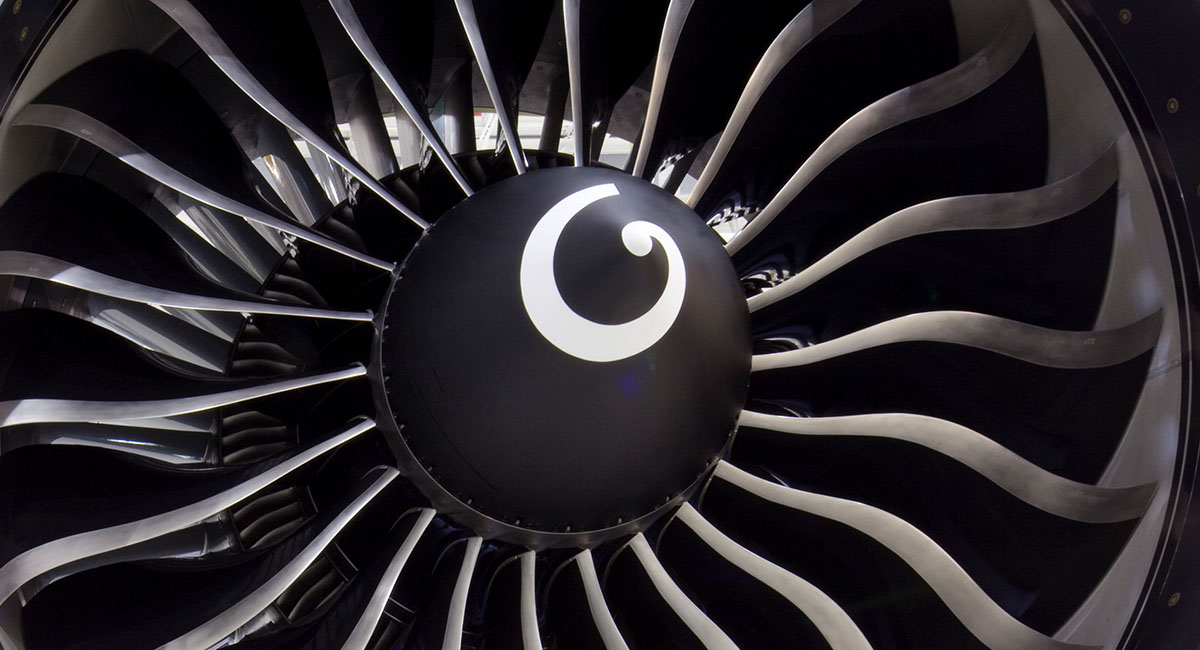
TR TF35000 Turbofan Engine

Spitfire9

Contributor
Think Tank Analyst
Messages
1,267
Reactions
17 1,661
Nation of residence
United Kingdom
Nation of origin
United Kingdom
Is TF35000 being designed with massive electrical power generation in mind?

This video about the engine being developed for the GCAP fighter looks at the importance of electrical power generation in its design.


Huelague

Experienced member
Messages
5,379
Reactions
19 5,410
Nation of residence
Germany
Nation of origin
Turkey
Is TF35000 being designed with massive electrical power generation in mind?

This video about the engine being developed for the GCAP fighter looks at the importance of electrical power generation in its design.

They want to add laser weapon in the future, so yes.
 

Yasar_TR

Experienced member
Staff member
Administrator
Messages
4,270
Reactions
258 22,300
Nation of residence
United Kingdom
Nation of origin
Turkey
Is TF35000 being designed with massive electrical power generation in mind?

This video about the engine being developed for the GCAP fighter looks at the importance of electrical power generation in its design.

Bro, each aircraft has a specific engine that suits its planned capability.

GCAP engine being built by RR, is supposed to propel a 6th generation stealth aircraft. In all honesty I was expecting an adaptive cycle engine to be used in GCAP. But the designers must know better what they expect from the plane. Hence as a result, hopefully an engine that is commensurate with those expectations is being built. They foresee extensive electrical power generation is important for their vision of a 6th generation aircraft.

There is not much revealed about the TF35000 apart from the final AB thrust it will generate. We don’t even know the value of dry thrust they are aiming for which is more important in reality. What we know is that it is an engine that is suitable for a 5th generation stealth fighter.
Having said that the Kaan fighter is being designed to carry very large radars and sensors. It will probably have directed energy weapons too in days to come. All of which need large electrical power supply.
 

Merzifonlu

Contributor
Think Tank Analyst
DefenceHub Diplomat
Messages
814
Reactions
28 2,496
Nation of residence
Turkey
Nation of origin
Turkey
I am very skeptical about the future of adaptive engines. Because IMO they are unnecessarily complex and their maintenance presents significant difficulties.
 

Nilgiri

Experienced member
Staff member
Administrator
Aviation Specialist
Messages
11,078
Reactions
153 22,627
Nation of residence
Canada
Nation of origin
India
I am very skeptical about the future of adaptive engines. Because IMO they are unnecessarily complex and their maintenance presents significant difficulties.

There are challenges for sure, but there is lot of RnD going on so we shall see what comes of it.

These same type of challenges and some pessimism (in say the 80s) existed regd technologies in today's turbofan that are now matured and taken for granted.

Also when we talk military domain, there is much more leeway compared to commercial sector as to compromises you are ready to take in order to get the premium edge (the old ferrari vs corrola concept I've brought up before).

i.e one can say the blackbird's engine is old 60s adaptive engine (essentially ramjet bypass, so a ramjet-turbojet hybrid in end) that presented unacceptable complexity and costs to a commercial use....but it made lot of sense for a military application at the time.
 

Nutuk

Contributor
Think Tank Analyst
Messages
1,086
Reactions
12 3,864
Nation of residence
Nethelands
Nation of origin
Turkey
I am very skeptical about the future of adaptive engines. Because IMO they are unnecessarily complex and their maintenance presents significant difficulties.
Sure, agree!

If it was easy everyone would develop it, no? Only a few countries will get to 6th gen. in the next decade, the best of the best.
 

Zafer

Experienced member
Messages
5,650
Reactions
15 8,712
Nation of residence
Turkey
Nation of origin
Turkey
GCAP engine has two integral alternators around the main shaft of the engine while the Kaan engine has add on alternator(s) outside the engine shroud AFAIK. This configuration gives around a half of the GCAP engine power but makes for a more maintenance friendly engine arguably.
 

Yasar_TR

Experienced member
Staff member
Administrator
Messages
4,270
Reactions
258 22,300
Nation of residence
United Kingdom
Nation of origin
Turkey
I am very skeptical about the future of adaptive engines. Because IMO they are unnecessarily complex and their maintenance presents significant difficulties.
They may become the engine of choice for super expensive fighter jets for a while. But the future of jet propulsion is with CRDE (Continuously Rotating Detonation Engine)
No moving parts. No single crystal blades. No compressors. No rotating parts.
Engines will become lighter, smaller and more efficient. (Even at low pressure levels, CRDE can develop very high thrust)
The whole system is self sustaining once ignited. Plus it doesn’t need initial high speed to get a kick start like ramjet/scramjet.
Powered by this engine, fighter jets (with internal O2/H2 tanks) can fly in to space theoretically.
 
Last edited:

Spitfire9

Contributor
Think Tank Analyst
Messages
1,267
Reactions
17 1,661
Nation of residence
United Kingdom
Nation of origin
United Kingdom
GCAP engine being built by RR, is supposed to propel a 6th generation stealth aircraft. In all honesty I was expecting an adaptive cycle engine to be used in GCAP.
I, too, wondered if it would be an adaptive cycle engine. I suspect that was ruled out to reduce the risk of the aircraft missing its in service date of 2035, a Japanese requirement.
 

TR_123456

Active member
Staff member
Administrator
Messages
92
Reactions
299
Nation of residence
Nethelands
Nation of origin
Turkey
They may become the engine of choice for super expensive fighter jets for a while. But the future of jet propulsion is with CRDE (Continuously Rotating Detonation Engine)
No moving parts. No single crystal blades. No compressors. No rotating parts.
Engines will become lighter, smaller and more efficient. (Even at low pressure levels, CRDE can develop very high thrust)
The whole system is self sustaining once ignited. Plus it doesn’t need initial high speed to get a kick start like ramjet/scramjet.
Powered by this engine, fighter jets (with internal O2/H2 tanks) can fly in to space theoretically.
Who is developing such an engine?
 

Yasar_TR

Experienced member
Staff member
Administrator
Messages
4,270
Reactions
258 22,300
Nation of residence
United Kingdom
Nation of origin
Turkey
Who is developing such an engine?
Many are.
Basically:
Key Developers and Organizations
D-Propulse (Deep Propulse Aerospace): Indian defense and DRDO facility in Hyderabad.
RTX Corporation (Raytheon & Pratt & Whitney): Collaborating with the Air Force Research.
GE Aerospace & Lockheed Martin: Already has working demonstrators for high-speed and hypersonic speeds.
SpaceWorks & Astrobotic: U.S.-based companies
L3Harris Technologies: USA
MBDA (France):
Research Institutions:
India at Madras

NASA:Tested an RDE prototype for over 10 minutes, generating over 4,000 lbs of thrust

GE has covered a lot of ground in development


1787829882052.jpeg

A continuously rotating detonation engine (which involves combustion that happens at a supersonic rate) instead “starts with one cylinder inside another larger one, with a gap between them and some small holes or slits through which a detonation fuel mix can be pushed,” according to a past article on the general concept from New Atlas. “Some form of ignition creates a detonation in that annular gap, which creates gases that are pushed out one end of the ring-shaped channel to produce thrust in the opposite direction. It also creates a shockwave that propagates around the channel at around five times the speed of sound, and that shockwave can be used to ignite more detonations in a self-sustaining, rotating pattern if fuel is added in the right spots at the right times.”
 
Last edited:

DBdev

Well-known member
Messages
308
Reactions
8 540
Nation of residence
Turkey
Nation of origin
Turkey
I want to look past the next step and rethink where all this is actually going and where should we be focusing instead. Propulsion wise.


Directed energy weapons feel like the direction things are heading, though there are plenty of hurdles.


Laser weapons benefit a lot from high-altitude operation — the higher, the better. Lower altitude means fighting through thick storm cloud cover, thermal protection, and laser-reflective coatings, which makes it much harder to destroy incoming missiles or fighter jets fast enough. Even if radar picks up a target while it's still inside cloud cover, thermal blooming dissipates the laser's energy in denser air. And on the platform side, air-breathing jet engines need much bigger air intakes at high altitude, since the air is thinner there.


Combining high-altitude positioning with space-based radar coverage could be a real game-changer — effectively an always-on global AWACS. SpaceX has already built Starshield, its military-focused satellite line, and it's a safe bet that capability keeps expanding. Lasers are most efficient at high altitude, so if you can generate power for them via space-based solar and store it with better battery technology, you start to get toward serious global reach — potentially making fighter jets and ground-based air defense far less central than they are today.


I also think Raptor, or something even better, could eventually reshape parts of the aviation industry — not as an "engine" for planes, but through Starship-style point-to-point travel replacing some long-haul routes. If SpaceX gets to very high launch cadences over the next couple of decades, economies of scale could make that kind of travel dramatically cheaper and faster than commercial flight. Right now Starship has flown only a handful of times, so this is still a bet on a steep trajectory rather than something already happening — but if it plays out, are we investing in aviation the way people invested in propeller planes right before jets took over?


I think we're at risk of badly underestimating how fast this shifts — and not seeing it until it's already happened.
 

Zafer

Experienced member
Messages
5,650
Reactions
15 8,712
Nation of residence
Turkey
Nation of origin
Turkey
The world is investing in every field, turbofan engines on the top of the list.

We are investing on everything too; we have 3 space launch programs by three companies. We are investing in people who will get to make space dreams a reality. When first launches are accomplished we will be in the game.
 
Top Bottom